Character Sketch of Narrator, Jacopo, Nicola and Narrator’s Companion from class 10 communicative English chapter 1 Two gentlemen of Verona
In this post, we explain the character sketch of the Narrator, Jacopo, Nicola and Narrator’s Companion from Class 10 English (Communicative) Chapter 1 Two gentlemen of Verona. This post covers everything you need to know about the Narrator, Jacopo, Nicola and Narrator’s Companion from the lesson. We provide answers to questions related to the character sketch of the Narrator, Jacopo, Nicola and Narrator’s Companion, including their traits, personalities, and motivations. Our explanations are easy to understand, and we offer examples from the lesson to support our points. Whether you’re a student looking to study for your exams or a teacher seeking to explain the lesson to your students, our post can be very helpful. So, read on and learn all about the character sketch of the Narrator, Jacopo, Nicola and Narrator’s Companion.
- Character Sketch of the Narrator
- Questions related to the Character of the Narrator
- Character Sketch of Jacopo
- Questions related to the Character of Jacopo
- Character Sketch of Nicola
- Questions related to the character of the Character of Nicola
- Questions related to the character of the Narrator’s Companion
Related:
- Two Gentlemen of Verona Summary, Explanation
- Two Gentlemen of Verona Question Answers
- Two Gentlemen of Verona MCQs
- Two Gentlemen of Verona Previous Years Question with Answers
Character Sketch of the Narrator
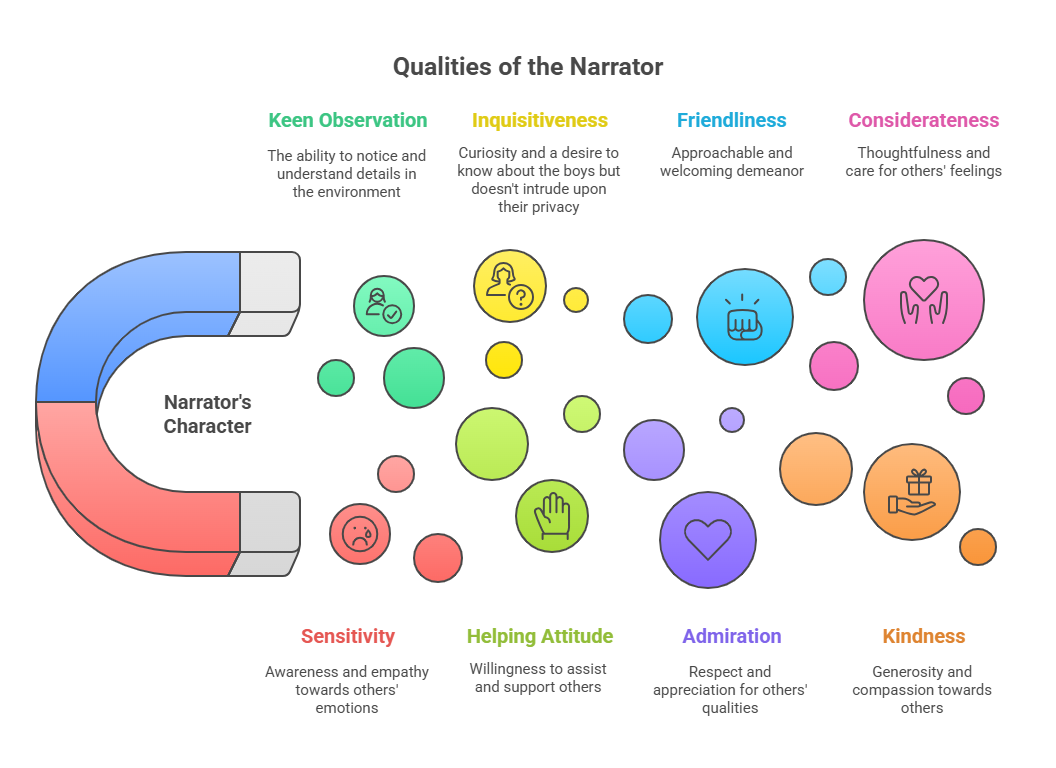
Questions related to the Character of the Narrator
Question 1: How does the Narrator show his keen observation and sensitivity toward the two boys?
Ans. The narrator demonstrates keen observation by looking beyond the boys’ shabby clothes and seeing their gentleman-like qualities and remarkable dedication. He is sensitive enough to notice their hardships without making them feel pitied or embarrassed. He admires their dignity and integrity from their very first meeting, showing that he is a man who judges people by their character rather than their appearance or social status.

Question 2: How does the Narrator show kindness and consideration toward Nicola and Jacopo?
Ans. The narrator shows genuine kindness by employing the boys for various tasks and driving them thirty kilometres to Poleta without expecting anything in return. He never treats them with condescension or pity but with genuine respect and warmth. His consideration is most beautifully shown when he discovers their secret but chooses not to mention it, protecting their dignity and allowing them to feel proud of their achievement.
Question 3: How does the Narrator respect the privacy and dignity of the two boys?
Ans. The narrator demonstrates extraordinary respect for the boys’ privacy by never intruding into their personal lives despite his natural curiosity. Even after learning the heartbreaking truth about their tuberculosis-ridden sister he does not utter a single word about it. He gives them the pleasure of believing their secret is still safe, showing that true kindness sometimes means knowing when to be silent rather than when to speak.
Question 4: What important life lessons does the Narrator teach us through his character?
Ans. The narrator teaches us that true gentlemanliness lies not in wealth or social status but in sensitivity kindness and deep respect for others’ dignity. He shows us that genuine helping means empowering others without making them feel small or pitied. His silent protection of the boys’ secret teaches us that sometimes the greatest gift we can give someone is the dignity of their own privacy and the quiet pride of their own achievement.
Top
Character Sketch of Jacopo
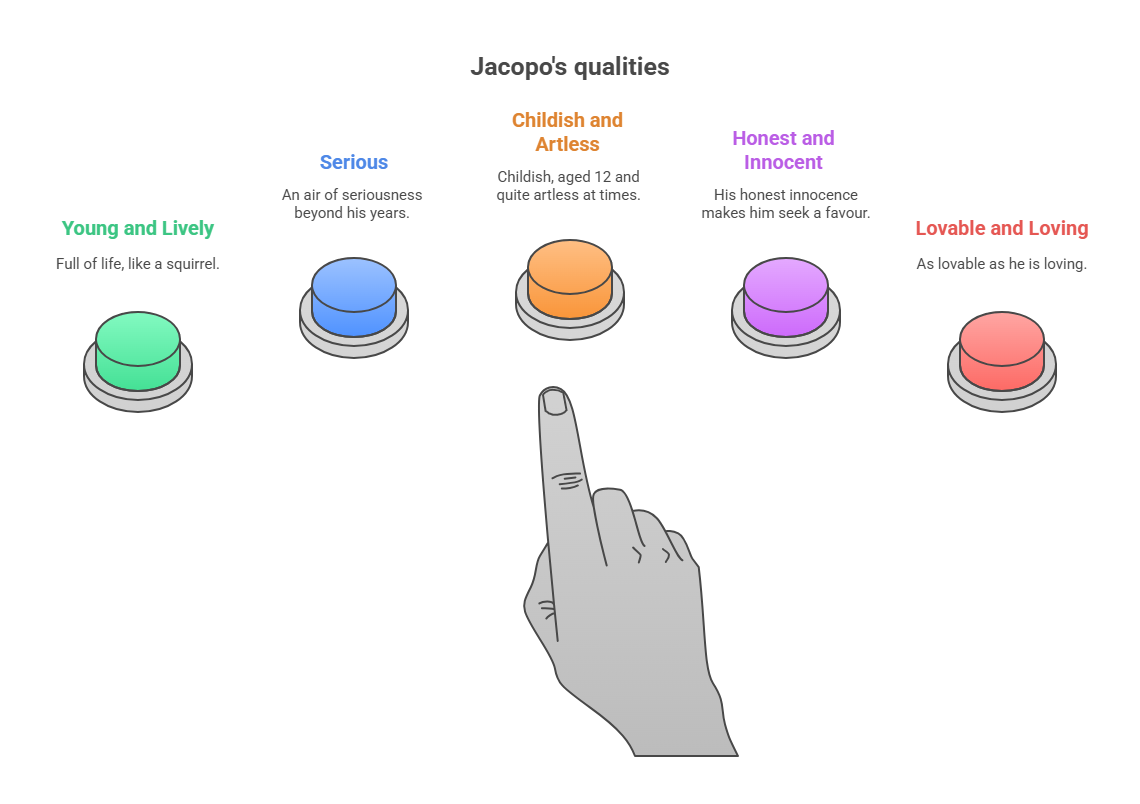
Questions related to the Character of Jacopo
Question 1: How does Jacopo show his lively and energetic nature throughout the story?
Ans. Jacopo is described as “lively as a squirrel”, always energetic enthusiastic and full of cheerful energy despite the difficult circumstances of his life. He throws himself into every job with enthusiasm and dedication. His lively nature brings warmth and lightness to the story showing that genuine joy and energy can exist even in the most challenging and painful life situations that a young child can face.
Question 2: How does Jacopo show maturity and seriousness beyond his young age?
Ans. Jacopo demonstrates remarkable maturity by working multiple jobs alongside his brother and contributing seriously to their sister’s treatment fund despite being only twelve years old. He approaches serious responsibilities with a gravity and dedication far beyond what his young age would normally suggest. His seriousness shows that difficult life circumstances can develop extraordinary maturity and responsibility in even the youngest and smallest of children.

Question 3: How does Jacopo show innocence and honest artlessness in the story?
Ans. Jacopo’s most endearing quality is his honest innocent artlessness, it is this natural quality that leads him to approach the narrator directly and simply ask for a favour to drive them to Poleta. He has no cunning or hidden agenda, just the pure honest directness of a child who trusts in human kindness. His innocent approach ultimately leads to the narrator discovering the beautiful and heartbreaking truth about the brothers’ extraordinary devotion to their sick sister.
Question 4: What important life lessons does Jacopo teach us through his character?
Ans. Jacopo teaches us that genuine love and devotion can make even the smallest and youngest person capable of extraordinary courage and hard work. He shows us that innocence and honest directness are precious qualities that deserve to be respected and protected rather than exploited. His cheerful dedication despite personal hardship teaches us that a loving heart and willing spirit can face any difficulty with grace energy and remarkable resilience.
Top
Character Sketch of Nicola
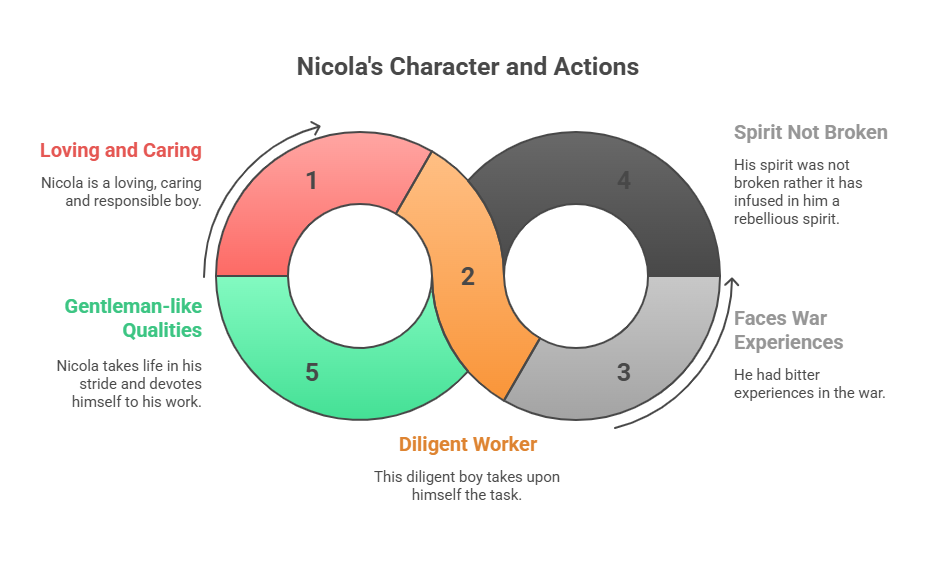
Questions related to the character of the Character of Nicola
Question 1: How does Nicola show responsibility and loving care for his brother and sister?
Ans. Nicola demonstrates extraordinary responsibility by taking complete charge of funding his sister’s tuberculosis treatment while simultaneously caring for his younger brother with gentle motherly love. He often lets Jacopo sleep while he continues working late into the night, always putting others’ needs before his own. His selfless devotion to both his siblings shows a depth of love and responsibility that would be remarkable in any adult let alone a young boy.
Question 2: Being hardened by wartime experiences, how does Nicola show resilience and unbroken spirit?
Ans. Nicola demonstrates extraordinary resilience by refusing to let bitter wartime experiences break his spirit or diminish his determination. Rather than surrendering to self-pity or hopelessness, the hardships of war infused in him a quiet rebellious determination to work hard and succeed. He takes life completely in his stride devoting himself to his work with such remarkable dedication that even a complete stranger immediately recognizes his gentleman-like qualities and deep inner strength.
Question 3: How does Nicola show dignity and self-respect by guarding his personal secret?
Ans. Nicola demonstrates remarkable dignity and self-respect by choosing never to reveal the heartbreaking reason behind all his hard work. He does not want sympathy or charity, he wants to earn everything through his own honest effort. By keeping his sister’s illness a carefully guarded secret he preserves both his own pride and his siblings’ dignity. His refusal to seek pity shows a depth of character and self-respect that is genuinely extraordinary for someone his young age.
Question 4: What important life lessons does Nicola teach us through his character?
Ans. Nicola teaches us that true strength lies not in physical power but in selfless love devoted hard work and quiet unbreakable dignity. He shows us that genuine responsibility means putting others’ needs consistently before our own without complaint or self-pity. His remarkable character demonstrates that even the most difficult circumstances cannot break a person who is driven by deep love and honest determination. He teaches us that true gentlemanliness has nothing to do with wealth or privilege but everything to do with character integrity and devoted love.
Top
Questions related to the character of the Narrator’s Companion
Question 1: How does the Narrator’s Companion show her warm and sympathetic nature?
Ans. The narrator’s companion shows her warm sympathetic nature immediately by insisting on buying the strawberries from Jacopo when she notices the brothers selling them. This simple spontaneous act reveals a genuinely kind and generous heart that responds naturally to the needs of others. Her growing admiration for the boys’ hard work and dedication throughout the story shows that her sympathy is deep genuine and based on real respect for their extraordinary character.
Question 2: How does the Narrator’s Companion show her admiration for the two boys?
Ans. The narrator’s companion gradually develops deep admiration for Nicola and Jacopo as she observes them performing multiple jobs with remarkable dedication and dignity. She notices that they shine shoes sell fruit hawk newspapers conduct tourist tours and run errands — all without complaint or self-pity. Her admiration grows from simple sympathy into genuine respect as she realizes the extraordinary depth of character and selfless devotion that drives these two shabbily dressed but truly remarkable young boys.
Question 3: How does the Narrator’s Companion contribute to our understanding of the two boys?
Ans. The narrator’s companion contributes to our understanding of the boys by providing an additional sympathetic and observant perspective on their character and situation. Her immediate attraction to Jacopo and her insistence on buying their strawberries shows us that the boys’ genuine goodness is immediately apparent to sensitive and kind-hearted people. Her observations help reinforce the story’s central message that true gentlemanliness transcends social class appearance and difficult circumstances entirely.
Question 4: What important lesson does the Narrator’s Companion teach us through her character?
Ans. The narrator’s companion teaches us that genuine compassion means responding naturally and warmly to others’ dignity and hard work without condescension or pity. She shows us that recognizing goodness in others regardless of their social status or shabby appearance is itself a mark of true character and sensitivity. Her warm generous response to the boys reminds us that small acts of kindness like buying strawberries can carry deep human significance and genuine respectful recognition of another person’s dignity and worth.
Top
Also See:
- Character Sketch of Julius Caesar, Calpurnia, Mark Antony, Marcus Brutus, Decius Brutus and Cassius | Julius Caesar
- Character Sketch of Poet and Snake | Snake
- Character Sketch of Mariner, Wedding Guest and Albatross Bird | The Rime of the Ancient Mariner
- Character Sketch of Frog and Nightingale | The frog and the nightingale
- Character Sketch of John Hallock, Helen, Jenkins (Ghost), Lavinia and Gladolia| A Shady Plot
- Character Sketch of Amelia Slater, Henry Slater, Victoria Slater, Elizabeth Jordan, Ben Jordan and Abel Merryweather | The Dear Departed
- Character Sketch of Mrs Packletide, Loona Bimberton and Miss Mebbin | Mrs Packletide’s Tiger
- Character Sketch of Ali, Miriam, Lakshmi Das and Postmaster | The Letter
- Character Sketch of Patol Babu, Nishikanto Ghosh, Naresh Dutt, Baren Mullick and Gogon Pakrashi | Patol Babu, Film star
- Character Sketch of Michael, Sebastian Shultz and Narrator’s Dad | Virtually True
- CBSE Class 10 English Communicative Important Questions
- CBSE Class 10 English Literature Reader (Communicative) Lesson Explanation, Notes
- CBSE Class 10 English Communicative word meaning
- CBSE Class 10 English Communicative Study Guide
- Descriptive Writing Class 10 Format, Examples
- Class 10 Communicative English Syllabus
- Email Writing Class 10, 12 Formal, Informal Email Writing Format
- Article Writing for Class 10