
Hamara Bharat —Incredible India! Summary and Explanation
CBSE Class 6 English Unit 5- Culture And Tradition Chapter 1- Hamara Bharat —Incredible India! Summary, Explanation along with Difficult Word Meanings from Poorvi Book
Hamara Bharat —Incredible India! Summary – Are you looking for the summary, theme and lesson explanation for CBSE Class 6 English Unit 5- Culture And Tradition Chapter 1 – Hamara Bharat —Incredible India! from English Poorvi Book. Get Lesson summary, theme, explanation along with difficult word meanings
- Hamara Bharat —Incredible India! Introduction
- Hamara Bharat —Incredible India! Summary
- Hamara Bharat —Incredible India! Summary in Hindi
- Hamara Bharat —Incredible India! Theme
- Hamara Bharat —Incredible India! Explanation
Related:
CBSE Class 6 English Poorvi Book Unit 5 – Culture And Tradition Chapter 1 – Hamara Bharat —Incredible India!
Hamara Bharat —Incredible India! Introduction
The lesson sensitizes the young readers about the unity in diversity of India. India is a wonderful and unique country where different cultures, traditions and religions co-exist. This gives us rich cultural heritage and also, unites us.
Hamara Bharat —Incredible India! Summary
The story is set in the hall of a school. The students are excited about the programme titled “Ek Bharat, Shreshtha Bharat”. A video is played where children are peeping out of windows and telling the viewers about the folk art and craft of their region. The aim of the programme is to create awareness that India is a land of diverse cultures and traditions. This makes us a unique country. Unity in diversity is our biggest strength.
The first one was by Aakansha from Uttarakhand who wished everyone. She spoke about a folk art of her area called ‘Aipan’. It consisted of an art-work which had beautiful geometric and mathematic-based designs. These were made with a paste of rice flour. These were drawn on the walls of pooja rooms and floor outside the entrance of the house. The walls were first coloured with a red powder called Geru to give them a fresh look. The women of the family made the art. The designs of the art and the method of making them were based on their traditions and the manner in which they observed nature.
The next speaker in the video was Priyarajan from Odisha. The audience was greeted. The speaker belonged to a tribe that had been practicing Dhokra, a craft with metal for the last 4000 years. First, a figure or shape was made with clay. Next, it was covered with a layer of wax. Then finer details of the figure were carved on the wax. Then it was again covered in a layer of clay and put in fire. Gradually the wax melted and came out from the tiny openings. Then small old used pieces of brass were melted and poured into the empty spaces created. Gradually, the liquid metal took the shape of the wax. Then the outer layer of clay was removed and they got the desired shape made in metal. This was the art form called Dhokra.
The next speaker in the video was Chitra who was from Kerala. She gave information about a craft called coconut shell craft. A brown coconut shell was first cleaned well. It was smoothened with sandpaper or with a machine. Then it was given the desired shape and stability by adding a base. Finally, the surface was polished to make it shine. Household articles like bowls, jewellery were made by using coconut shells in such a manner. This craft was biodegradable because natural material was used in making it.
The next speaker is Balamurali who belongs to Andhra Pradesh. He gives information about the 400-year-old art form of making toys which was in practise in his village Kondapalli. Soft wood from nearby hills was carved separately to make different parts of the toy. A paste made of tamarind seed powder and sawdust, called Makku, was used to stick the parts together. Various paints like oil based paints, water colours, vegetable dyes and enamel paints were used to colour the toys. Various toys based on the folk tales, animals seen around, and rural life were made. As shown in the image, fine details were added to the toys to make them realistic. They were made tastefully.
Summary of the Lesson Hamara Bharat —Incredible India! in Hindi
कहानी एक स्कूल के हॉल में सेट की गई है। छात्र “एक भारत, श्रेष्ठ भारत” नामक कार्यक्रम को लेकर उत्साहित हैं। एक वीडियो चलाया जाता है जिसमें बच्चे खिड़कियों से झांकते हैं और दर्शकों को अपने क्षेत्र की लोक कला और शिल्प के बारे में बताते हैं। कार्यक्रम का उद्देश्य जागरूकता पैदा करना है कि भारत विविध संस्कृतियों और परंपराओं का देश है। यह हमें एक अनूठा देश बनाता है। विविधता में एकता हमारी सबसे बड़ी ताकत है।
सबसे पहले उत्तराखंड की आकांक्षा ने सभी को शुभकामनाएं दीं। उन्होंने अपने क्षेत्र की एक लोक कला ‘ऐपन’ के बारे में बात की। इसमें एक कलाकृति शामिल थी जिसमें सुंदर ज्यामितीय और गणितीय-आधारित डिज़ाइन थे। इन्हें चावल के आटे के पेस्ट से बनाया गया था। इन्हें पूजा कक्षों की दीवारों और घर के प्रवेश द्वार के बाहर फर्श पर बनाया गया था। दीवारों को पहले गेरू नामक लाल पाउडर से रंगा गया ताकि उन्हें नया रूप दिया जा सके। परिवार की महिलाओं ने कलाकृति बनाई। कला के डिजाइन और उन्हें बनाने की विधि उनकी परंपराओं और जिस तरह से वे प्रकृति को देखती हैं, उस पर आधारित थी।
वीडियो में अगले वक्ता ओडिशा के प्रियराजन थे। श्रोताओं का अभिवादन किया गया। वक्ता एक जनजाति से थे जो पिछले 4000 वर्षों से धातु के साथ ढोकरा नामक शिल्प का अभ्यास कर रहे थे। सबसे पहले, मिट्टी से एक आकृति या आकार बनाया गया था। इसके बाद, इसे मोम की एक परत के साथ कवर किया गया था। फिर मोम पर आकृति के बारीक विवरण उकेरे गए। फिर इसे फिर से मिट्टी की एक परत में ढक दिया गया और आग में डाल दिया गया। धीरे-धीरे मोम पिघल गया और छोटे छिद्रों से बाहर आ गया। फिर छोटे पुराने इस्तेमाल किए गए पीतल के टुकड़ों को पिघलाया गया और बने खाली स्थानों में डाला गया। धीरे-धीरे, तरल धातु ने मोम का आकार ले लिया। फिर मिट्टी की बाहरी परत को हटा दिया गया और उन्हें धातु में वांछित आकार बना दिया गया। यह ढोकरा नामक कला थी। वीडियो में अगली वक्ता चित्रा थीं जो केरल से थीं। उन्होंने नारियल खोल शिल्प नामक एक शिल्प के बारे में जानकारी दी। कटोरे, आभूषण जैसे घरेलू सामान इस तरह से नारियल के खोल का उपयोग करके बनाए जाते थे। यह शिल्प बायोडिग्रेडेबल था क्योंकि इसे बनाने में प्राकृतिक सामग्री का उपयोग किया गया था। अगले वक्ता बालमुरली हैं जो आंध्र प्रदेश से हैं। वह खिलौने बनाने की 400 साल पुरानी कला के बारे में जानकारी देते हैं जो उनके गांव कोंडापल्ली में प्रचलित थी। खिलौने के विभिन्न हिस्सों को बनाने के लिए पास की पहाड़ियों की नरम लकड़ी को अलग से तराश कर बनाया गया था। इमली के बीज के पाउडर और चूरा से बने पेस्ट, जिसे मक्कू कहा जाता है, का इस्तेमाल हिस्सों को एक साथ चिपकाने के लिए किया जाता है। खिलौनों को रंगने के लिए तेल आधारित पेंट, पानी के रंग, वनस्पति रंग और तामचीनी पेंट जैसे विभिन्न पेंट का इस्तेमाल किया गया था। लोक कथाओं, आस-पास देखे जाने वाले जानवरों और ग्रामीण जीवन पर आधारित विभिन्न खिलौने बनाए गए ।
Themes of the Lesson Hamara Bharat —Incredible India!
Patriotism
The lesson shows the enthusiasm of the children who are bonding together as Indians. The story gives a powerful message that even though we are different, we are united.
Unity in Diversity
The lesson talks of a programme organised in a school. The topic of the programme is “Ek Bharat, Shreshtha Bharat”. It gives a strong message to the school students that India houses several cultures but they are all united. This unique feature makes India a wonderful place.
Hamara Bharat —Incredible India! Lesson Explanation
I
Passage: “So, are you ready to meet your friends from all over the country?” the teacher asked the students sitting in the big hall.
“Yes!” was the loud answer from the class.
“Can someone tell me for which programme are we here?” the teacher asked.
“Ek Bharat, Shreshtha Bharat”, the students answered together again.
“Please raise your hand to tell me what it is all about,” the teacher said.
Many hands went up and some were jumping to answer. The teacher asked Renu. With a smile on her face, she said, “It is to know that we all belong to one nation and that is the bond we share. And our unity in diversity makes us the most wonderful country in the world.”
Word meanings:
Bond: a relationship between people or groups based on shared feelings, interests, or experiences
unity in diversity: an expression of peacefulness and unity between dissimilar individuals or groups
Explanation of the passage- The teacher asked the students if they were ready to meet friends from the different parts of India. They were gathered together in a big room. The class replied together in a loud affirmative. She asked again if any student could tell the name of the programme for which they had gathered in the hall. Several students answered in a group and said that the name of the programme was “Ek Bharat, Shreshtha Bharat”. She asked them to lift their hand up in order to answer her question that what the programme was about. Several students were curious to answer her question. They raised hands and were even jumping with excitement. The teacher asked one of the students named Renu for her reply. Renu smiled and said thst the programme aimed at making them realize that they belonged to one country and so, to promote unity among them. The fact that several different cultures thrived in India and were united by the fact of their nationality was unique for India.
II
Passage: The teacher smiled at her as everyone clapped. Just then, Bala pointed out, “Look! The video has started!” The big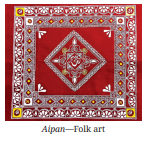 screen now had little windows each with a smiling child. Each child had something to share.
Pranam! I am Aakansha from Uttarakhand. I am going to tell you about Aipan, our folk art, that we draw on family functions and festivals. It is done with white rice flour paste on brick-red walls coloured with geru. It is made on floors and walls of puja rooms, and outside the main door of the home. It is an art form made by the women in the family. The designs are very beautiful and mathematical, and are based on our cultural traditions, and observations of nature.
Word meanings:
geru: red clay used as colour
Explanation of the passage- Everyone smiled on hearing Renu’s reply and the teacher clapped with delight. Another student named Bala mentioned that the big screen was turned on and the video had started. There were small windows with a child smiling and peeping out of each of them. Each child had a story for the viewers. The first one was by Aakansha from Uttarakhand who wished everyone. She spoke about a folk art of her area called ‘Aipan’. It consisted of an art work which had beautiful geometric and mathematic based designs. These were made with a paste of rice flour. These were drawn on the walls of pooja rooms and floor outside the entrance of the house. The walls were first coloured with a red powder called Geru to give them a fresh look. The women of the family made the art. The designs of the art and the method of making them were based on their traditions and the manner in which they observed nature.
Passage: Suprabhat! I am Priyaranjan from Odisha. My tribe practises a 4000-year-old metal craft named Dhokra. To begin,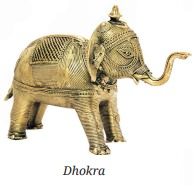 we make a figure with clay, dry it, and cover it with a layer of wax. Then, we carve the fine details on the wax. After that, we cover the figure with clay, and put it in the fire. The wax melts and comes out of small openings. Next, brass scrap is melted and poured into the empty space. The liquid metal takes the same shape as the wax. Finally, we remove the outer layer of clay and finish the metal figure as we want.
Word meanings:
Wax: a solid, fatty substance that softens and melts at a low temperature.
Clay: a stiff, sticky fine-grained earth that can be moulded when wet
carve: to make design with sharp tool
scrap: small unwanted pieces
Explanation of the passage- The next speaker in the video was Priyarajan from Odisha. The audience was greeted. The speaker belonged to a tribe that had been doing Dhokra, a craft with metal for the last 4000 years. First a figure or shape was made with clay. Next, it was covered with a layer of wax. Then finer details of the figure were carved on the wax. Then it was again covered in a layer of clay and put in fire. Gradually the wax melted and came out from the tiny openings. Then small old used pieces of brass were melted and poured into the empty spaces created. Gradually, the liquid metal took the shape of the wax. Then the outer layer of clay was removed and they got the desired shape made in metal. This was the art form called Dhokra.
Passage: Suprabhaatam! I am Chitra from Kerala. I want to tell you about coconut shell craft. First, we clean the outside and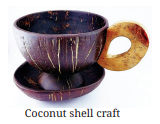 inside of a brown coconut shell. After that, we make it smooth by using sandpaper or a machine. Then we give it the shape we want, and make it stable by fixing a base under it. At last, we polish it using wood polish to make it shine. We make household things like bowls and even jewellery from the coconut shells. It is a biodegradable craft.
Word meanings:
stable: not able to move
biodegradable: something that will not harm the environment
Explanation of the passage- The next speaker in the video was Chitra who was from Kerala. She gave information about a craft called coconut shell craft. A brown coconut shell was first cleaned well. It was smoothened with sandpaper or with a machine. Then it was given the desired shape and stability by adding a base. Finally, the surface was polished to make it shine. Household articles like bowls, jewellery were made by using coconut shells in such a manner. This craft was biodegradable because natural material was used in making it.
Passage: Subhodayam! I am Balamurali from Andhra Pradesh. I want to tell you about the 400-year-old art of making toys in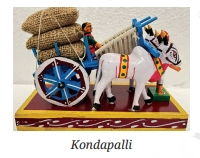 my village, Kondapalli. To make the toys, we take soft wood from the nearby hills. After that, we carve each part of the toy separately. Then, we use makku—a paste of tamarind seed powder and sawdust to join the pieces together. Next, we add details and finish the toys. Finally, we use oil and water-colours or vegetable dyes and enamel paints to colour them. These toys are based on folk stories, animals, birds, bullock carts, rural life, etc.
Word meanings:
tamarind: an edible sour fruit
sawdust: dust of wood
dyes: colours
enamel: paints that form a protective layer
Explanation of the passage- The next speaker is Balamurali who belongs to Andhra Pradesh. He gives information about the 400 year old art form of making toys which was in practise in his village Kondapalli. Soft wood from nearby hills was carved separately to make different parts of the toy. A paste made of tamarind seed powder and sawdust, called Makku, was used to stick the parts together. Various paints like oil based paints, water colours, vegetable dyes and enamel paints were used to colour the toys. Various toys based on the folk tales, animals seen around, and rural life were made. As shown in the image, fine details were added to the toys to make them realistic. They were made tastefully.
Conclusion
The lesson Incredible India educates us about the uniqueness of Indian culture which has unity in diversity. This post helps students with the summary and explanation of the lesson. The meanings of difficult words have also been added for students’ convenience.