
Spectacular Wonders Summary and Explanation
CBSE Class 8 English Unit 3 Mystery And Magic Chapter 3 – Spectacular Wonders Summary, Explanation along with Difficult Word Meanings from Poorvi Book
Spectacular Wonders Summary– Are you looking for the summary, theme and lesson explanation for CBSE Class 8 English Unit 3 Mystery And Magic Chapter 3 – Spectacular Wonders from English Poorvi Book. Get Lesson summary, theme, explanation along with difficult word meanings
CBSE Class 8 English Unit 3 Mystery And Magic Chapter 3 – Spectacular Wonders
This chapter is about the spectacular natural wonders of our beautiful and diverse country. Seven spectacular wonders are discussed in great detail.
- Spectacular Wonders Summary
- Spectacular Wonders Summary in Hindi
- Spectacular Wonders Theme
- Spectacular Wonders Explanation
Related:
Spectacular Wonders Summary
India is a beautiful country that has landscapes that are so strange and surprising that they evoke our imagination and curiosity. The seven spectacular wonders are the Valley of Flowers, the Living Root Bridges, the Lonar Crater Lake, the Magnetic Hills, the Glowing Waters of Kerala, the Sundarbans, and the Chandipur Beach. The Valley of Flowers National Park, located in Uttarakhand, has 600 exotic species of flowers, rare wildlife species, spectacular views of beautiful waterfalls and wild streams, and the backdrop of the mighty Himalayan ranges. The Living Root Bridges, located in Meghalaya, are bridges 20 to 50 feet in the air not made of wood and concrete. It is proof of how cultural knowledge of local people can surpass the knowledge of engineering. The Lonar Crater Lake is a circular geographical structure of basaltic rocks made by a meteorite impact. In the circular depression lies a salt lake. Therefore, the Lonar Crater Lake is a blend of celestial impact and terrestrial beauty. The Magnetic Hills in Leh Ladakh, particularly the Magnetic Road, show an optical illusion of cars rolling upwards due to the angle of the horizon and the slope of the hill. The Glowing Waters of Kerala, found 15 km from Kochi in the Kumbalangi Village, have backwaters that glow at night. This is due to the bioluminescence of microplanktons present in the water. The Sundarbans is a mangrove forest located in West Bengal, in the delta region of three rivers—the Ganga, the Meghna, and the Brahmaputra. The Chandipur Beach is where the sea plays hide-and-seek with its visitors. The sea disappears completely during the ebb period and finally appears during the high tide.
Summary of the Lesson Spectacular Wonders in Hindi
भारत एक खूबसूरत देश है जिसके परिदृश्य इतने विचित्र और आश्चर्यजनक हैं कि वे हमारी कल्पना और जिज्ञासा को जगाते हैं। सात शानदार अजूबे हैं फूलों की घाटी, लिविंग रूट ब्रिज, लोनार क्रेटर झील, मैग्नेटिक हिल्स, केरल का चमकता पानी, सुंदरवन और चांदीपुर बीच। उत्तराखंड में स्थित वैली ऑफ फ्लावर्स नेशनल पार्क में 600 विदेशी प्रजातियों के फूल, दुर्लभ वन्यजीव प्रजातियां, खूबसूरत झरनों और जंगली नदियों के शानदार दृश्य और शक्तिशाली हिमालय पर्वतमाला की पृष्ठभूमि है। मेघालय में स्थित लिविंग रूट ब्रिज, लकड़ी और कंक्रीट से नहीं बने 20 से 50 फीट हवा में बने पुल हैं। यह इस बात का प्रमाण है कि स्थानीय लोगों का सांस्कृतिक ज्ञान इंजीनियरिंग के ज्ञान से कैसे आगे निकल सकता है। लोनार क्रेटर झील, उल्कापिंड के प्रभाव से बनी बेसाल्टिक चट्टानों की एक गोलाकार भौगोलिक संरचना है। इस गोलाकार अवसाद में एक खारे पानी की झील स्थित है। इसलिए, लोनार क्रेटर झील खगोलीय प्रभाव और पार्थिव सौंदर्य का एक अद्भुत मिश्रण है। लेह लद्दाख में चुंबकीय पहाड़ियाँ, विशेष रूप से चुंबकीय सड़क, क्षितिज के कोण और पहाड़ी की ढलान के कारण ऊपर की ओर लुढ़कती कारों का एक प्रकाशीय भ्रम उत्पन्न करती हैं। कोच्चि से 15 किलोमीटर दूर कुंबलंगी गाँव में पाए जाने वाले केरल के चमकते जल में ऐसे बैकवाटर हैं जो रात में चमकते हैं। यह सूक्ष्म प्लवकों की जैव-प्रकाशिकता के कारण है। सुंदरवन पश्चिम बंगाल में तीन नदियों – गंगा, मेघना और ब्रह्मपुत्र – के डेल्टा क्षेत्र में स्थित एक मैंग्रोव वन है। चांदीपुर समुद्र तट अपने आगंतुकों के साथ लुका-छिपी का खेल खेलता है। ज्वार के दौरान समुद्र पूरी तरह से गायब हो जाता है और अंततः उच्च ज्वार के दौरान प्रकट होता है।
Theme of the Lesson Spectacular Wonders
The chapter is centred around the strange natural phenomenon. Nature is a powerful force that continues to surprise and intrigue humans. Scientists and engineers are often amazed by how nature can disregard the known and proven laws of science. Nature is stunning and amazing, and the chapter portrays that by describing seven of the many spectacular wonders of India. These wonders and landscapes spark imagination and curiosity.
Spectacular Wonders Lesson Explanation
Passage: India is home to some of the most mystifying natural phenomena that surprise and spark our imagination.
Word-meanings:
mystifying: strange or impossible to explain
Explanation: India is a beautiful country which has strange but mesmerising natural phenomena. The natural phenomena surprise everyone and start up our imagination and curiosity.
Passage:
1. The Valley Of Flowers, Uttarakhand

The Valley of Flowers is an eye-catching spectacle with around 600 species of exotic flowers, including orchids, poppies, primulas, marigold, daisies, and anemones. It is a place where nature blooms in its full glory offering an attractive view. The trek to the valley offers spectacular views of beautiful waterfalls and wild streams. The valley is also home to rare wildlife species like the grey langur, flying squirrel, red fox, lime butterfly, and snow leopard, to name a few.
With a stunning backdrop of the mighty Himalayan ranges, the Valley of Flowers National Park presents an unforgettable experience for visitors. Spread over a huge area in the Chamoli district, the Valley of Flowers National Park is a UNESCOWorld Heritage Site. Between the months of May and October, this area turns into a botanical wonderland!
Word-meanings:
eye-catching: appealing in a sense that it catches someone’s eye
glory: magnificence or great beauty
spectacle: an unusual sight that attracts interest
exotic: uncommon
botanical: relating to plants
Explanation: The Valley of Flowers or the Valley of Flowers National Park is a UNESCO heritage site located in the Chamoli district, Uttarakhand. It is a beautiful place which offers 600 species of exotic flowers, rare wildlife species, and radiant views of waterfalls and streams. The backdrop of the magnificent Himalayan ranges makes the view more serene and brilliant. To reach the valley, visitors have to trek to the valley and cross stunning water forms. From May to October, the area offers orchids, poppies, primulas, marigold, daisies, anemones, grey langur, flying squirrel, red fox, lime butterfly, snow leopard and many more.
Passage:
2. The Living Root Bridges, Meghalaya

Imagine building a bridge without the use of cement, stones, concrete, etc. Is it possible? The living root bridges are incredible feats of engineering built by the indigenous people of Meghalaya. The living root bridges are one of Meghalaya’s most beautiful tangible UNESCO world heritage sites.
Crossing the many waterways without bridges was difficult for people in the past, during monsoons.
Word-meanings:
feats: tasks difficult to achieve, especially those involving a lot of skill
indigenous: native
tangible: noticeable
Explanation: The Living Root Bridges are a UNESCO World Heritage Site in Meghalaya, built by the native people of Meghalaya. It is a massive achievement in engineering because the bridge is not built with cement, stones, concrete, etc. In earlier times, it was not possible to cross waterways without bridges, especially during rainy weather.
Passage: Attempts to use bamboo or wooden bridges across these waterways proved futile as these bridges could not last long in the heavy rains and strong waters. Living root bridges are an innovative and indigenous solution to solve this age-old problem.
They are made of intertwined roots which are a sort of magic, but they aren’t imaginary. These bridges have been built for centuries by the indigenous people of the land. It is a naturally built ecosystem of local flora. It also symbolises the relationship and knowledge that the local people have over their region and the cultural significance that it holds for them. Under ideal conditions, a root bridge is thought to be able to persist for hundreds of years. These bridges frequently rise 50 to 100 feet in the air. The state’s longest living root bridge is said to be a whopping 175 feet in length. There are approximately 100 or so known living root bridges across different villages.
Word-meanings:
futile: useless
innovative: advanced and original
intertwined: twisted together
persist: continue to exist
whopping: huge
Explanation: The old native Meghalayans tried to make bridges out of bamboo, and then out of wood. However, both of the bridges did not work properly. The bamboo and wood bridges did not last in the heavy rains and strong waters. The living root bridges are made of roots twisted together firmly. According to the current knowledge of science and engineering, the living roots seem like they are made out of magic. The living root bridges are proof that local people and cultural significance can lead to advanced solutions that science cannot give. This shows that science is not the only way to solve problems. A root bridge can last for centuries, and can rise 50 to 100 feet in the air. Meghalaya’s longest living root bridge is 175 feet long. In total, there are more than 100 living root bridges in the state which connect the villages.
Passage:
3. The Lonar Crater Lake, Maharashtra

The Lonar Crater Lake is a geological wonder, nestled in the town of Lonar in Buldhana district, Maharashtra. It is believed to have been formed thousands of years ago. This ancient landform, consisting of a giant hole, came into existence when a colossal meteorite, blazing at an extremely high speed, crashed into the Earth, leaving behind a stunning mark. It is the only crater in India formed in basaltic rock by a meteorite impact and ranks as the third largest in the world, placing it among the top five largest craters globally.
The crater’s perfectly circular depression cradles a unique saline lake at its core, creating a striking visual contrast against the surrounding rugged terrain. This site is a rare and extraordinary blend of celestial impact and terrestrial beauty. The rim of the meteor crater offers a breath-taking spectacle of nature’s power and the enduring allure of our planet’s ancient past.
Word-meanings:
nestled: situated in a half-hidden or sheltered position
colossal: extremely large
depression: a sunken or hollow place
cradles: holds
rugged: rough
terrestrial: on or related to earth
rim: the upper or outer edge of a circular object
allure: attraction
Explanation: The Lonar Crater Lake is located in the Buldhana District, Lonar, Maharashtra. It amazes geologists as it exceeds the present knowledge of geology. It was formed a thousand years ago. The landform is a giant hole, which was created by an extremely large meteorite. The meteorite left a circular hollow region, which now holds a salt lake in the centre of it. Therefore, Lonar Crater Lake is a unique and breathtaking merge of celestial and terrestrial wonders. Visitors can stand on the edge of the crater and observe the allure of two very different wonders—one from outer space and one on earth, blending perfectly. Basalt is a common, fine-grained, dark-colored igneous rock formed from cooled volcanic lava or magma, rich in iron and magnesium-bearing minerals. The Lonar Crater Lake is the only crater in India formed in land made of basaltic rock. It is also the third-largest crater in the world.
Passage:
4. Magnetic Hills In Leh District, Ladakh
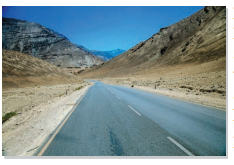
In the travels around Leh-Ladakh, is a fascinating sight which arouses curiosity to no end—the Magnetic Hill, a place where gravity takes a backseat!
Lying at a distance of around 30 km from Leh, the Magnetic Hill is marked by a yellow signboard which reads ‘The Phenomenon That Defies Gravity’. It also instructs visitors to park vehicles in the box marked with a white point on the road, which is known as the Magnetic Road. When the vehicles are parked at the indicated spot, they begin moving forward at a speed of almost 20km/h. This unusual place creates an optical illusion where vehicles appear to roll uphill, a sight that has left tourists in disbelief for years, caused by the peculiar alignment of surrounding slopes and the horizon line.
Word-meanings:
arouse: to awake, cause or evoke something
defy: refuse to obey
optical illusion: something that tricks your eyes and makes you see it differently from how it really is
Explanation: The Magnetic Hills are located in Leh District, Ladakh. The place offers a new phenomenon that disobeys the laws of physics- particularly the laws of gravity. There is a Magnetic Road, where visitors can park vehicles in marked boxes. When the visitors observe the Magnetic Road, it looks like the cars are moving up the hill at a speed of almost 20km/h. This strange optical illusion always fills the visitors with disbelief. This illusion is caused by the strange land alignment of slopes and the horizon. The angle and the illusion evokes a feeling of curiosity.
Passage:
5. Glowing Waters Of Kerala
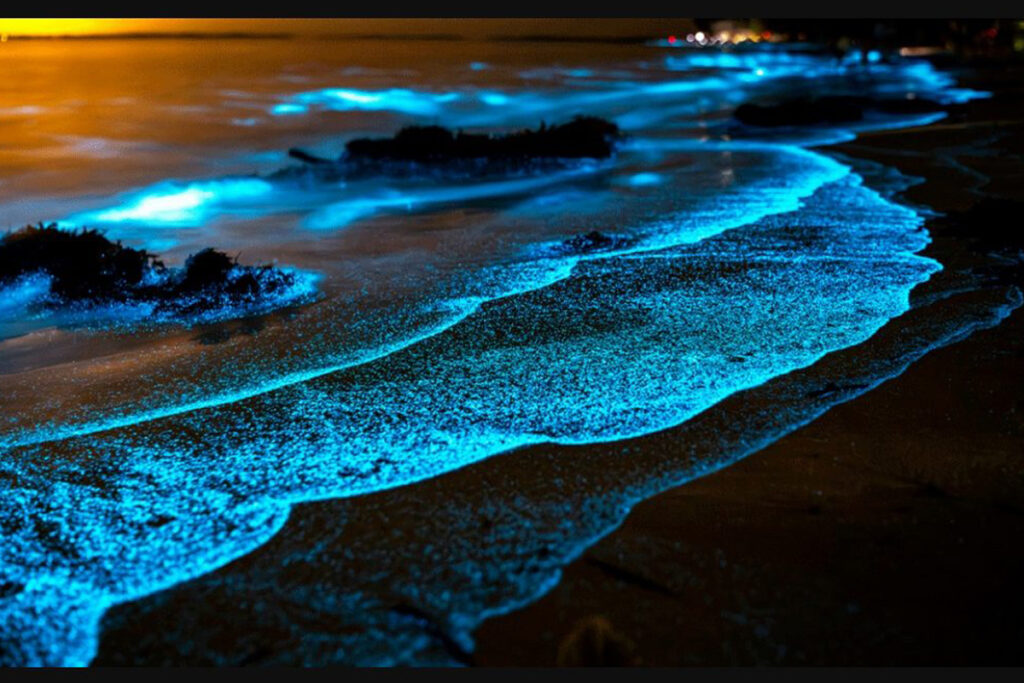
Situated 15 kms from Kerala’s Kochi town, Kumbalangi is a beautiful village with vast green vegetation. In the serene backwaters of Kumbalangi village, one can see magically glowing waters in the night.
This phenomenon is called bioluminescence, and is caused by a high concentration of micro-planktons in the sea, which are small organisms found in marine and freshwater. This beautiful sight has captured the attention of locals as well as tourists, making Kumbalangi an eco-tourism village in India. One can experience the village life in all its beauty and simplicity, and acquaint oneself to their cuisine and culture.
Word-meanings:
serene: calm
backwaters: a part of a river where the water does not flow
bioluminescence: light produced inside the body of a living organism by a chemical reaction
eco-tourism: tourism that is responsible towards preserving the environment
acquaint: to become familiar with something
Explanation: The Glowing Waters of Kerala is located in the Kumbalangi village, Kochi, Kerala. Kumbalangi village is located 15 kms away from Kochi, which offers a wide area of vegetation and calming backwaters. Backwaters is a part of a river where the water does not flow. During the night, visitors can see the backwaters magically glow due to a natural phenomenon called bioluminescence. Microplanktons are microscopic organisms found in water bodies. Due to a chemical reaction, the microplanktons produce light inside their bodies which cause them to glow, thereafter causing the backwaters to glow. The glowing waters have made Kumbalangi an environmental attraction for tourists. The area offers the simple beauty of the Kumbalangi village and the magical beauty of its backwaters.
Passage:
6. The Sundarbans
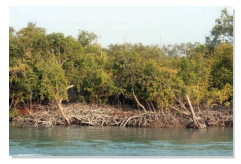
Can a forest exist in a coastal zone? Yes, they are called mangrove forests, where trees take root under water in the low-oxygen soil. The roots slow down the movement of tidal waters, stabilising the coastline and reducing erosion. The Sundarbans is one such mangrove forest spread over 1,400 kms in West Bengal, lying in the delta of rivers, such as the Ganga, the Brahmaputra, and the Meghna. The name is derived from sundari trees that are plentiful in the area.
The area is also populated by an extensive range of flora and fauna, including many bird species, the majestic Bengal tiger, and other threatened species, such as the estuarine crocodile and the Indian python.
Word-meanings:
delta: triangular form
estuarine: living in an estuary (an area where a freshwater river meets the ocean)
Explanation: The Sundarbans is a forest located in West Bengal. It is spread over 1,400 km of West Bengal and surrounded by three rivers—the Ganga, the Brahmaputra, and the Meghna. The forest is a mangrove forest, where the trees have their roots under water where the soil has low oxygen levels. Most of the trees are sundari trees, which gives the name the Sundarbans. The area is populated by a wide range of flora and fauna, like bird species, Bengal tigers, and threatened species like the estuarine crocodile and the Indian python. Not only that, but the mangrove trees have a major ecological importance because the roots slow down the movement of tidal waters. Therefore, the Sundarbans prevent various natural disasters and reduce erosion.
Passage:
7. The Invisible Chandipur Beach, Odisha
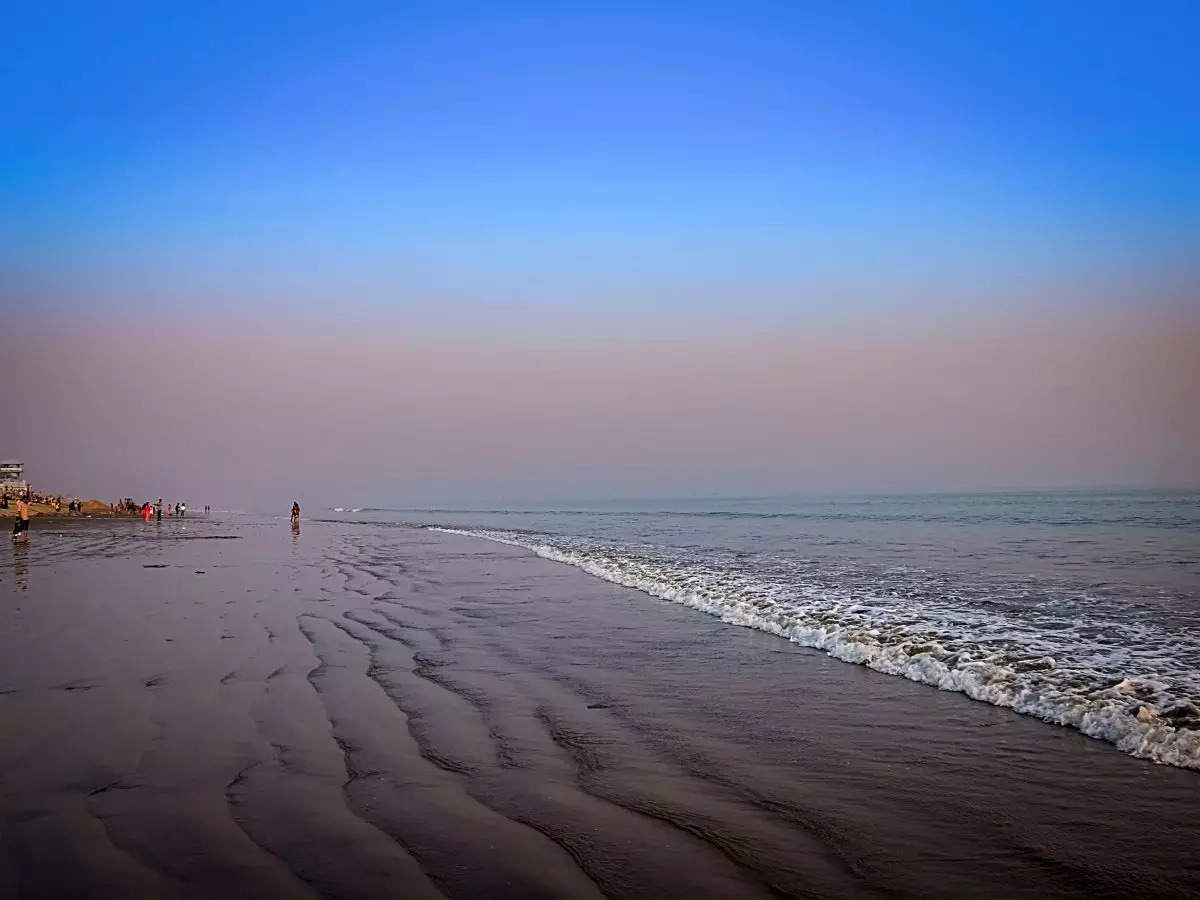
Have you seen things disappearing in front of your eyes? Well, such things happen at times, when we keep things at some place, and just forget where we have kept them. But, what if there’s a sea that disappears?
This happens in Odisha. It is a beach in the Balasore district where one can witness the sea disappearing mysteriously—the Chandipur Beach which is known for its unique feature of playing hide-and-seek with its visitors.
The sea can actually be witnessed disappearing and reappearing. This is because the sea water moves. It retreats by 2–5 km during ebb tide, the duration between the high tide and low tide, and comes back to the shore at the time of high tide. This unusual natural phenomenon keeps on happening daily, where one can actually see the sea, and then watch it disappear in front of their eyes!
Word-meanings:
retreats: goes backwards
ebb tide: a period of time when water flows away from the shore
Explanation: The Chandipur Beach is located in the Balasore district, Odisha. We sometimes keep things at some place and forget where they are. At that time, we think that the thing has disappeared. Similarly, the sea at the Chandipur Beach tends to disappear and plays hide-and-seek with its visitors. The movement of seawater explains the appearance and disappearance of the sea. Unlike other seas, the seawater of the Chandipur Beach goes back a large distance during the ebb tide. The ebb tide is the period of time when water flows away from the shore. The ebb period lies between the high tide and the low tide. The sea covers the large distance of 2 to 5 km during the time of high tide. It is the time when the sea flows close to the shore. So during the ebb period, the sea disappears because it goes backwards at 2 to 5 km. Then during the high tide, it recovers the distance and the sea finally appears.
Passage: These awe-inspiring natural wonders of India highlight the mystique of the country’s landscapes, each phenomenon telling its own story of nature’s artistic flair and enigmatic charm. They challenge our understanding of the natural world and captivate our senses. They serve as a reminder of the extraordinary forces that shape our environment, blending scientific intrigue with the magic of folklore.
Word-meanings:
highlight: draw special attention to
mystique: mystery
flair: stylishness
enigmatic: puzzling
intrigue: interest
folklore: the traditional beliefs, customs, and stories of a community, passed through the generations by word of mouth
Explanation: The natural wonders of India draw special attention to India’s mysterious and beautiful landscapes. The varied phenomenon behind each landscape or spectacular wonder shows nature’s charm and style. It shows that nature is mysterious and puzzling, and it challenges our current knowledge and understanding of the world and science. These wonderful landscapes are a mix of magical culture and folklore, and scientific curiosity and interest.
Conclusion
This post on NCERT Class 8 English Poorvi book Unit 3 Mystery And Magic Chapter 3 – Spectacular Wonders provides the summary, difficult word meanings and explanation of the lesson. Students can check out the summary, word meanings and explanation of the lesson to get a better grasp and answer questions in the exam.