
Neem Baba Summary and Explanation
CBSE Class 6 English Unit 3 – Nurturing Nature Chapter 1 – Neem Baba Summary, Explanation along with Difficult Word Meanings from Poorvi Book
Neem Baba Summary – Are you looking for the summary, theme and lesson explanation for CBSE Class 6 English Unit 3 – Nurturing Nature Chapter 1 – Neem Baba from English Poorvi Book. Get Lesson summary, theme, explanation along with difficult word meanings
- Neem Baba Introduction
- Neem Baba Summary
- Neem Baba Summary in Hindi
- Neem Baba Theme
- Neem Baba Explanation
Related:
CBSE Class 6 English Unit 3 – Nurturing Nature Chapter 1 – Neem Baba
Adapted from Neem Baba by S. I. Farooqi
Neem Baba Introduction
Neem Baba is a conversation between a young girl named Amber and a neem tree which is called “Neem Baba” by her. The dialogue is informative about the importance of the neem tree, its several benefits and blessings.
Neem Baba Summary
A young girl named Amber comes home from school and sits under the shady Neem tree planted in the garden. She feels that the tree whispered to her, as if it wanted to talk. She looked at the tree and asked permission to talk to it. The tree replied that it knew her since she was a child and played in its shade. It offered her to call it Neem Baba.
The curious kid said that she had seen several neem trees around and asked about its origin. The neem tree first grew either in north India or Myanmar, several million years ago. Later it spread to areas outside India and then it reached as far as Africa and even America.
As it first grew in India, it had a Sanskrit name Arishta meaning the one who cures disease. It was also called Nimba and Nimbaca. “Neem” was the name given by the Iranians while in Hindi it was called “Nimb”. In other parts of India, its name varied to Nim, Leemba, Nimori, Nimbamond, Nimbe and Nimo.
Due to its several benefits, it was called a bitter grace of God, nature’s gift to man and cleanliness-parting tree. Amber knew that people used the branches to clean teeth and the dry leaves were added to clothes while storing them. She asked the neem tree that once when her brother was affected by Measles, why did the doctors advise to place neem leaves on his bed. The tree replied that it killed insects and germs which caused itching in Measles and so, it was prescribed by doctors. Amber added that once when she suffered from cough and difficulty in breathing, her grandma gave her a medicine made with neem bark. Once when her dad suffered from itchy eyes, he used a kajal made with neem flowers. The tree was glad that she had such deep knowledge but warned her to use these treatments under the guidance of experts.
Amber asked about the benefits for farmers. The tree replied that the powder of neem seeds, mixed with water was sprinkled on plants and crops to save them from locusts. It was added in rice fields where standing water was found. It prevented attacks by termites and even promoted a good crop.
Amber added that then this mixture could be added to any bodies of stagnant water aaround houses to stop the growth of mosquitoes. The tree added that people used the seed powder to save stored grains from insects. Neem oil was added to soaps and toothpastes to make them effective germ killers. Neem wood was used to make furniture which was termite-proof. It was used as an air purifier and there could be several other uses which had not been found yet. Abmer assured the tree that she would grow up and work on to find more benefits of the neem tree.
Summary of the lesson Neem Baba in Hindi
अंबर नाम की एक छोटी लड़की स्कूल से घर आती है और बगीचे में लगे छायादार नीम के पेड़ के नीचे बैठ जाती है। उसे लगता है कि पेड़ उससे फुसफुसा रहा है, जैसे कि वह बात करना चाहता हो। उसने पेड़ की तरफ देखा और उससे बात करने की अनुमति मांगी। पेड़ ने जवाब दिया कि वह उसे तब से जानता है जब वह एक बच्ची थी और उसकी छाया में खेलती थी। उसने उसे नीम बाबा कहने का सुझाव दिया।
जिज्ञासु बच्ची ने कहा कि उसने आस-पास कई नीम के पेड़ देखे हैं और इसकी उत्पत्ति के बारे में पूछा। नीम का पेड़ सबसे पहले कई मिलियन साल पहले उत्तर भारत या म्यांमार में उगता था। बाद में यह भारत के बाहर के इलाकों में फैल गया और फिर यह अफ्रीका और यहां तक कि अमेरिका तक पहुंच गया। चूंकि यह सबसे पहले भारत में उगा था, इसलिए इसका संस्कृत नाम अरिष्ट था जिसका अर्थ है रोग को ठीक करने वाला। इसे निम्बा और निम्बका भी कहा जाता था। “नीम” ईरानियों द्वारा दिया गया नाम था जबकि हिंदी में इसे “निम्ब” कहा जाता था। भारत के अन्य हिस्सों में, इसका नाम निम, लीम्बा, निमोरी, निम्बामंड, निम्बे और निमो था। इसके अनेक लाभों के कारण इसे ईश्वर की कड़वी कृपा, मनुष्य को प्रकृति का उपहार तथा स्वच्छता-विभाजक वृक्ष कहा जाता है। अंबर जानती थी कि लोग इसकी शाखाओं का उपयोग दांत साफ करने के लिए करते हैं तथा सूखी पत्तियों को कपड़ों में रखते समय इस्तेमाल करते हैं। उसने नीम के पेड़ से पूछा कि एक बार जब उसका भाई खसरे से पीड़ित था, तो डॉक्टरों ने उसके बिस्तर पर नीम के पत्ते रखने की सलाह क्यों दी थी। पेड़ ने उत्तर दिया कि यह खसरे में खुजली पैदा करने वाले कीड़ों और कीटाणुओं को मारता है, इसलिए डॉक्टरों ने इसे निर्धारित किया था।
अंबर ने कहा कि एक बार जब उसे खांसी और सांस लेने में कठिनाई हुई, तो उसकी दादी ने उसे नीम की छाल से बनी दवा दी। एक बार जब उसके पिता की आंखों में खुजली हुई, तो उन्होंने नीम के फूलों से बने काजल का इस्तेमाल किया। पेड़ को खुशी हुई कि उसे इतना गहरा ज्ञान है, लेकिन उसने उसे चेतावनी दी कि इन उपचारों का उपयोग विशेषज्ञों के मार्गदर्शन में ही करें। अंबर ने किसानों के लिए लाभों के बारे में पूछा। पेड़ ने उत्तर दिया कि नीम के बीजों के पाउडर को पानी में मिलाकर पौधों और फसलों पर टिड्डियों से बचाने के लिए छिड़का जाता है। इसे चावल के खेतों में डाला जाता है, जहां पानी खड़ा होता है। इससे दीमकों के हमले को रोका जा सकता है और अच्छी फसल भी पैदा होती है। एम्बर ने कहा कि फिर इस मिश्रण को मच्छरों की वृद्धि को रोकने के लिए घरों के आस-पास के किसी भी स्थिर पानी में डाला जा सकता है।
पेड़ ने कहा कि लोग संग्रहीत अनाज को कीड़ों से बचाने के लिए बीज के पाउडर का इस्तेमाल करते हैं। नीम के तेल को साबुन और टूथपेस्ट में मिलाकर उन्हें प्रभावी कीटाणुनाशक बनाया जाता है। नीम की लकड़ी का इस्तेमाल फर्नीचर बनाने के लिए किया जाता था जो दीमक-रोधी होता था। इसका इस्तेमाल हवा को शुद्ध करने के लिए किया जाता था और इसके कई अन्य उपयोग हो सकते थे जो अभी तक नहीं खोजे गए थे। एबमर ने पेड़ को आश्वासन दिया कि वह बड़ी होकर नीम के पेड़ के और अधिक लाभ खोजने के लिए काम करेगी।
Theme of the Lesson – Neem Baba
Importance of nature’s gifts
The story highlights the benefits of neem tree which is a boon for mankind. It has several medicinal and anti-fungal properties which make the neem tree a widely used organic remedy. The story gives details of the benefits of neem tree to make the readers respect and care for nature.
Neem Baba – Lesson Explanation
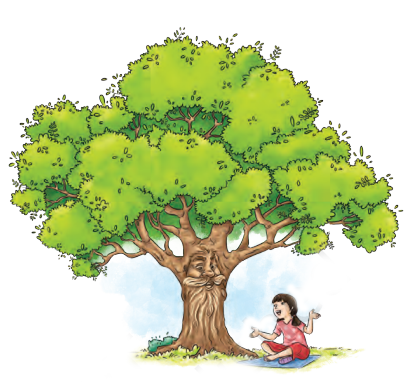
Passage: Amber returned from school and sat down in the shade of the neem tree in her courtyard. She felt that the tree was whispering to her. She looked at the tree and spoke to the tree.
Word meanings:
Courtyard: an open area which maybe surrounded by walls and is a part of a house or building
Whispering: speak in a low hush sound
Explanation: A young girl named Amber returned home from school and sat in the shade of the neem tree that was located in the garden. Amber had a feeling that the neem tree was saying something in a low sound so she looked towards it and started talking to it.
I
Passage: Amber : Namaste! I am Amber. I would like to talk to you. May I?
Neem Baba : Sure, dear Amber. I know you. You played in my shade in your childhood. You may call me ‘Neem Baba’.
Amber : I have seen you almost everywhere. Please tell me something more about yourself.
Neem Baba : I am very old. I was born millions of years ago somewhere in North India or Myanmar. Soon, my family spread outside India.
Amber : Outside India? Where else can neem be found?
Neem Baba : My family can be found in many Asian and African countries and even in some parts of America.
Explanation: Amber greeted the neem tree and sought its permission to talk to it. The neem tree permitted and added that it recognized her as she used to play in the tree’s shady area as a kid. Due to this old connection, the neem tree asked Amber to call it by the name “Neem Baba”.
Amber said that the neem trees were very common and she had seen several of them. She asked the tree to tell her more about itself. The tree said that it was very old and the oldest neem tree was born several million years ago. The neem trees first grew in north India or Myanmar but now they could be found outside India too, in areas as far as Africa and America.
Passage: Amber : That’s wonderful! Who gave you your name?
Neem Baba : The story of my name is very thought-provoking. I was born in India and given Sanskrit names such as Arishta (the one who cures diseases), Nimba and Nimbaca. The name ‘Neem’ is given by the Iranians.
Amber : Really?
Neem Baba : Yes, in Hindi, my name is Nimb. In India, I have other names—Nim,
Leemba, Nimori, Nimbamond, Nimbe and Nimo.
Word meanings:
thought provoking: interesting
Explanation: Amber found this news to be amazing. Then she asked about the naming of the tree. The neem tree replied that the story behind its name was detailed and would put her to think. As the neem tree had originated in India, it got the Sanskrit name Arishta, meaning the one who treats diseases. Nimba and Nimbaca were the other Sanskrit names. The news that the name “Neem” was kept by Iranians was surprising for Amber. In Hindi, it was called “Nimb” while in other parts of India, its name varied to Nim, Leemba, Nimori, Nimbamond, Nimbe and Nimo.
Passage:
Amber : You are so well known! That is wonderful.
Neem Baba : Dear Amber, we become well known for what we do. People find us useful and that is why they know us. Scientists call us ‘bitter grace of God’, ‘nature’s gift to man’, and ‘cleanliness-parting tree’. Some even call us ‘magic tree’ and ‘the tree of the twentieth century’.
Word meanings:
grace: blessing
Explanation: Amber was happy to know about the popularity that the neem tree enjoyed. The tree replied that it was famous because of the benefits that it gave. Many scientists had called the tree to be a bitter grace of God, nature’s gift to man and cleanliness-parting tree. This shows the various benefits that the neem tree has. The phrase “bitter grace of God” is an oxymoron where the adjective ‘bitter’ meaning something that tastes awful is used for grace of god which is a blessing. So, it is a bitter blessing but a blessing should be pleasant and so, it is an oxymoron. However, the phrase refers to the bitter taste of the neem tree. The emphasis is on the fact that maybe it tastes bitter but it is a blessing by God because of its medicinal properties which cure people. By calling it “nature’s gift to man”, we can see the immense respect given to the neem tree because it has several important properties like it prevents growth of microorganisms, kills germs and mosquitoes. It is also called the tree which does magic and the tree of the 20th century.
II
Passage: Amber : I know that people clean teeth with your twigs and protect clothes with your leaves. Sometime back, when my brother had measles, the doctor told us to put neem leaves on his bed and make him lie down on them. Can you explain why?
Neem Baba : The doctors know that neem leaves have chemical properties that destroy germs. Measles cause itching all over the body. Neem leaves give comfort and do not allow germs to breed. Neem leaves, bark, flowers, fruits and even roots can be used to make medicines to cure many diseases.
Word meanings:
twigs: small thin branches
measles: disease with fever and red spots on skin
itching: feeling the need to scratch
breed: grow
Explanation: Amber knew the various uses of Neem tree. The branches were used to clean teeth, the leaves were used to protect clothes from bugs. Once when her brother was struck by Measles, they put neem leaves on his bed. She asked the neem tree the reason for doing so. The tree replied that the doctors know that neem tree can destroy germs which cause itching sensation when one is struck by Measles. The leaves are relaxing and stop germs from growing. It added that all the parts of the tree were useable to prepare medicines for different ailments.
Passage: Amber : Yes, I once had a cough and I could not breathe properly. My grandmother cured me with a medicine made from neem bark. And when my father had itching in the eyes, she prepared a kajal from neem flowers, which cured him.
Neem Baba : Oh, little Amber, you know so much. Remember, these remedies are to be used only by people who are well trained and have a lot of experience.
Amber : Yes, I will. Tell me Neem Baba, is there any use of neem for the farmers?
Neem Baba : Yes. If the powder of neem seeds is mixed in water and sprayed on plants and trees, then locusts don’t eat them. If it is used in rice fields, where water remains standing, it stops mosquito breeding and helps to increase crop yield. It also saves the crop from termites, which eat roots of the crop, and it also stops breeding of other insects that eat crops.
Word meanings:
locusts: flying insects that damage crops
termites: insects that damage wood and buildings
Explanation: Amber confirmed this because once when she had cough, and faced difficulty in breathing, her grandma gave her a medicine made of the trunk of the neem tree. Once when her father suffered from itchy eyes, a kajal made of the flowers of neem tree helped him. The tree was glad that Amber had such deep knowledge but warned her that such remedies must be prepared and given by trained and experienced people like Ayurvedic practitioners and doctors. Amber confirmed that she would keep that in mind and asked the benefits of neem for farmers. The tree replied that a powder of its seeds when mixed in water and sprayed on trees and plants, saved them from a type of insect called locust. If this solution is added to rice fields which have standing water, it prevents the growth of mosquitoes and helps to increase the productivity of the crop. The growth of termites which eat the roots of the crop is also prevented.
Passage: Amber : That means, if we put the powder of neem seeds in stagnant water around our homes, mosquitoes won’t breed in them! This must be a cost-effective method to stop mosquitoes from breeding. Please tell me other uses of neem in our daily life.
Neem Baba : Of course. People save their stored grains from insects by adding neem seed powder to them. Neem oil is also used to make soaps and toothpaste. Furniture made from neem wood is not eaten by termites. Neem also purifies the air. There are many qualities yet to be discovered. Will you discover them when you grow up?
Amber : Yes, Neem Baba. I will. Thank you for your time today!
Neem Baba : Bless you, my child!
Word meanings:
stagnant: not flowing
cost-effective: good outcome in least amount of resources
purifies: removes harmful particles
Explanation: Amber added that it meant that if the neem seed powder was added to still water which often collected around houses, it could prevent growth of mosquitoes. This could be a pocket-friendly method to prevent growth of mosquitoes. She was curious to know other uses of the neem tree. The tree replied that neeem seed powder was mixed to stored grains to save them from insect attack. Neem oil was added to soaps and toothpastes so that these items help people by effective cleaning. Neem wood used to make furniture was termite-proof. Neem was used as an air purifier. There could be several other uses which were not yet discovered. He asked Amber if she would work on it when she grew up. She replied that certainly she would and thanked the tree for its time. The tree blessed her.
Conclusion
The story titled “Neem Baba” is informative about the importance of the neem tree, its several benefits and blessings. Students can take help of the post to understand the lesson and also learn the difficult word meanings to get a better grasp. This lesson includes the summary of Neem Baba which will help students of class 6 to get a quick recap of the story.