
Harvest Hymn Summary and Explanation
CBSE Class 8 English Unit 4 Environment Chapter 2 Harvest Hymn Summary, Explanation along with Difficult Word Meanings from Poorvi Book
Harvest Hymn Summary– Are you looking for the summary, theme and lesson explanation for CBSE Class 8 English Unit 4 Environment Chapter 2 Harvest Hymn from English Poorvi Book. Get Lesson summary, theme, explanation along with difficult word meanings
CBSE Class 8 English Unit 4 Environment Chapter 2 Harvest Hymn
By Sarojini Naidu
The poem is about a hymn farmers sing to the gods and goddesses for a good harvest season.
- Harvest Hymn Summary
- Harvest Hymn Summary in Hindi
- Harvest Hymn Theme
- Harvest Hymn Explanation
- Harvest Hymn Poetic Devices
Related:
Harvest Hymn Summary
The hymn is in three sections: the first part, which men sing, the second part, which women sing, and the third part, which everyone sings together. Men praise Goddess Lakshmi, the goddess of lotus, harvest, and prosperity. They praise her generosity, nurturing nature, and prosperity. Men praise Surya, the God of Sun, for his radiant sunlight with songs, garlands, fields, crops, and music from cymbals and flutes. God Varuna, the god of water, brings forth rainbows, gives natural irrigation in the furrows, and encourages the development of crops with rain. Lord Varuna is praised with cymbal and pipe. Women praise Mother Earth, her fertility and nurturing nature. They hail Earth with love, luxurious tributes, and music from cymbals and drums. Then, everyone praises and hails Lord Brahma, the lord of life and the universe, for their support, guidance, advice and care during hardships. They are grateful for the life Lord Brahma instilled in them. They hail them with cymbals and hymns.
Summary of the Poem Harvest Hymn in Hindi
यह भजन तीन भागों में है: पहला भाग, जिसे पुरुष गाते हैं, दूसरा भाग, जिसे महिलाएँ गाती हैं, और तीसरा भाग, जिसे सभी मिलकर गाते हैं। पुरुष कमल, फसल और समृद्धि की देवी, देवी लक्ष्मी की स्तुति करते हैं। वे उनकी उदारता, प्रकृति के पोषण और समृद्धि की प्रशंसा करते हैं। पुरुष सूर्यदेव, सूर्यदेव की स्तुति उनके उज्ज्वल सूर्यप्रकाश के लिए गीतों, मालाओं, खेतों, फसलों और झांझ-बाँसुरी के संगीत के साथ करते हैं। जल के देवता, वरुण, इंद्रधनुष बनाते हैं, नालों में प्राकृतिक सिंचाई करते हैं, और वर्षा द्वारा फसलों के विकास को प्रोत्साहित करते हैं। भगवान वरुण की स्तुति झांझ और बांसुरी से की जाती है। महिलाएँ धरती माता, उनकी उर्वरता और पोषण करने वाली प्रकृति की स्तुति करती हैं। वे प्रेम, भव्य श्रद्धांजलि और झांझ व ढोल के संगीत से पृथ्वी का अभिवादन करती हैं। फिर, सभी लोग जीवन और ब्रह्मांड के स्वामी भगवान ब्रह्मा की स्तुति और अभिवादन करते हैं, जिन्होंने कठिनाइयों के समय उनका साथ, मार्गदर्शन, सलाह और देखभाल की। वे भगवान ब्रह्मा द्वारा उनमें डाले गए जीवन के लिए कृतज्ञ हैं। वे झांझ और भजनों के साथ उनका अभिवादन करती हैं।
Theme of the Poem Harvest Hymn
The chapter is centered around respect, admiration, and gratitude for good harvest, crops, and other things farmers live for. It describes the rural culture and how divine powers are believed to have a major role in agriculture.
Harvest Hymn Poem Explanation
Poem:
Men’s Voices:
Lord of the lotus, lord of the harvest,
Bright and munificent lord of the morn!|
Thine is the bounty that prospered our sowing,
Thine is the bounty that nurtured our corn.
Word-meanings:
munificent: showing great generosity
morn: morning
thine: yours
bounty: treasure
prospered: to make something successful
Explanation: The following hymn is in men’s voices, meaning that only men sing this part of the hymn. They sing to the lord of the lotus and harvest, who is Goddess Lakshmi. She is the goddess who brings prosperity and success. The men call her the bright and generous lord of the morning. Morning brings in new opportunities and energy to work and achieve success. Therefore, Goddess Lakshmi brings forth opportunities and energy to become successful. She brings treasure to the farmers by blessing their crops. She blesses the corn and nurtures it to become healthy crops.
Poem:
We bring thee our songs and our garlands for tribute,
The gold of our fields and the gold of our fruit;
O giver of mellowing radiance, we hail thee,
We praise thee, O Surya, with cymbal and flute.
Word-meanings:
tribute: an act, statement, or gift that is intended to show gratitude, respect, or admiration
mellowing: relaxing
radiance: light radiated or emitted
hail: praise enthusiastically
thee: you
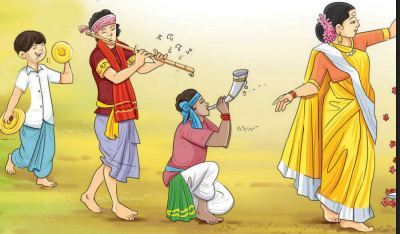
Explanation: The men sing songs and put flower garlands as a gift to the lords. They also bring the golden crops and the fruits of their labour. They praise the lord of the Sun, the one who gives relaxing and warm sunlight to grow their crops, with music played from the cymbal and flute.
Poem:
Lord of the rainbow, lord of the harvest,
Great and beneficent lord of the main!
Thine is the mercy that cherished our furrows,
Thine is the mercy that fostered our grain.
Word-meanings:
beneficent: generous
cherish: to protect and care for lovingly
furrow: a long, narrow trench made in the ground by a plough, especially for planting seeds or irrigation
foster: encourage the development of
Explanation: The men sing to the great and generous lord of the rainbow and harvest, praying for the lord to have mercy and bless their harvest. They pray for the lord to protect and take care of the furrows where the seeds are sown. They sing for the lord to bless and develop their growing crops.
Poem:
We bring thee our thanks and our garlands for tribute,
The wealth of our valleys, new-garnered and ripe;
O sender of rain and the dewfall, we hail thee,
We praise thee, Varuna, with cymbal and pipe.
Word-meanings:
new-garnered: newly collected or gathered
dewfall: the formation of dew on an area
Explanation: The farmers bring the gods and lords garlands, money, and new and ripe crops to express their gratitude. They praise lord Varuna, the God of water, the one who causes rainfall and dewfall, with cymbal and pipe. Lord Varuna blesses the farmers with rain for the growth and development of their crops.

Poem:
Women’s Voices:
Queen of the gourd-flower, queen of the harvest,
Sweet and omnipotent mother, O Earth!
Thine is the plentiful bosom that feeds us,
Thine is the womb where our riches have birth.
Word-meanings:
gourd-flower: a flower symbolising fertility
omnipotent: a deity having unlimited power
bosom: a woman’s chest or breasts
Explanation: The women call Mother Earth the queen of the gourd-flower, the queen of harvest, and a deity who is a sweet and powerful mother. Mother Earth feeds not just the crops but also the farmers. Mother Earth’s womb gives birth to humans, nature, soil, and the harvest.
Poem:
We bring thee our love and our garlands for tribute,
With gifts of thy opulent giving we come;
O source of our manifold gladness, we hail thee,
We praise thee, O Prithvi, with cymbal and drum.
Word-meanings:
thy: your
opulent: luxurious
manifold: various
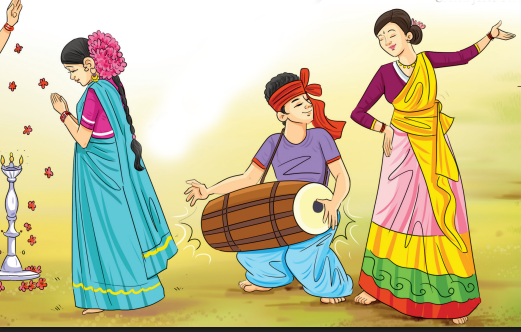
Explanation: The women also bring their love, garlands, and luxurious gifts as a sign of respect, gratitude, and admiration to Mother Earth. The Earth is the source of huge amounts of happiness. They praise the Earth with cymbal and drums.
Poem:
All Voices:
Lord of the Universe, Lord of our being,
Father eternal, ineffable Om!
Thou art the Seed and the Scythe of our harvests,
Thou art our Hands and our Heart and our Home.
Word-meanings:
eternal: something or someone that lives forever
ineffable: too great or extreme to be expressed or described in words
thou: you
Explanation: Everyone comes together and sings to the lord of the entire universe, their existence, and the father who lives forever. The lord is so extremely powerful and all-mighty, that it cannot be described in words. The lord lies in the seeds of our crops. The lord lies in the tool that is used to harvest the crops. The lord is the hands, heart, and homes of the farmers.
Poem:
We bring thee our lives and our labours for tribute,
Grant us thy succour, thy counsel, thy care.
O Life of all life and all blessing, we hail thee,
We praise thee, O Bramha, with cymbal and prayer.
Word-meanings
succour: assistance and support in times of hardship and distress
counsel: advice
Explanation: They bring their lives and their hard work as tribute. They plead the lord of creation for their assistance, advice, guidance and care. They praise Lord Brahma for their blessings with cymbal and prayers.

Harvest Hymn Poetic Devices
- Rhyming Scheme: For Stanza 1, the rhyming scheme is abcbdded. For Stanzas 2, 3 and 4, it is abcbdefe.
- Alliteration: It is the repetition of one consonant sound at the start of two or more consecutive words, which creates an impactful rhythm. For example, “We bring thee our lives and our labours for tribute.”
- Repetition: It is a phrase or multiple phrases which are repeated in each stanza to make the poem more lyrical. This poetic device is particularly useful, as it is a hymn. For example: “we hail thee, We praise thee,”.
- Anaphora: It is a poetic device similar to repetition, but it is a phrase or word used repeatedly only at the beginning of the lines in the stanzas. For example: “Thine is the bounty that prospered our sowing, Thine is the bounty that nurtured our corn” in Stanza 1. “Thine is the mercy that cherished our furrows, Thine is the mercy that fostered our grain” in Stanza 2. “Thine is the plentiful bosom that feeds us, Thine is the womb where our riches have birth” in Stanza 3. “Thou art the Seed and the Scythe of our harvests, Thou art our Hands and our Heart and our Home” in Stanza 4.
- Personification: It is when human abilities are attributed to a non-living object. For example, Earth is given the human attribute of birth and motherly nurturance and care.
- Symbolism: It is when objects or characters are used to symbolise a quality or abstract noun. For example: Lord Surya symbolises the power of the sun.
- Metaphor: Qualities of a person or object are described by comparison to the qualities of another person or object. For example: “Thou art the Seed and the Scythe of our harvests, Thou art our Hands and our Heart and our Home.”
- Imagery: It is the vivid description of a scene or person which leads to the formation of the image of the scene or person in the reader’s mind. For example: “We bring thee our songs and our garlands for tribute, The gold of our fields and the gold of our fruit;”
Conclusion
This post on NCERT Class 8 English Poorvi book Unit 4 Environment Chapter 2 Harvest Hymn. Students can check out the summary, word meanings and explanation of the lesson to get a better grasp and answer questions in the exam.
This plateform is perfect for study. I was happy with this plateform