
Bibha Chowdhuri: The Beam Of Light That Lit The Path For Women In Indian Science Summary and Explanation
CBSE Class 8 English Unit 5 Science and Curiosity Chapter 3 Bibha Chowdhuri: The Beam Of Light That Lit The Path For Women In Indian Science Summary, Explanation along with Difficult Word Meanings from Poorvi Book
Bibha Chowdhuri: The Beam Of Light That Lit The Path For Women In Indian Science Summary– Are you looking for the summary, theme and lesson explanation for CBSE Class 8 English Unit 5 Science and Curiosity Chapter 3 Bibha Chowdhuri: The Beam Of Light That Lit The Path For Women In Indian Science from English Poorvi Book. Get Lesson summary, theme, explanation along with difficult word meanings
CBSE Class 8 English Unit 5 Science and Curiosity Chapter 3 – Bibha Chowdhuri: The Beam Of Light That Lit The Path For Women In Indian Science
This chapter is about the phenomenal Indian female scientist Bibha Chowdhuri, her work, her accomplishments, and her legacy.
- Bibha Chowdhuri Summary
- Bibha Chowdhuri Summary in Hindi
- Bibha Chowdhuri Theme
- Bibha Chowdhuri Explanation
Related:
- Bibha Chowdhuri Question Answers
- Bibha Chowdhuri Character Sketch
- Class 8 English Poorvi Book Lesson Notes
Bibha Chowdhuri: The Beam Of Light That Lit The Path For Women In Indian Summary
The chapter is about Bibha Chowdhuri, India’s first woman physicist. She paved the way for Indian female scientists in the male-dominated STEM field. She was born in Kolkata in the year 1915. At that time, women were not given any education and had to face various oppressive societal expectations. However, Bibha Cowdhuri not only got the same level of education as men, but also got accepted into Bose University, where she experienced exclusion from her male counterparts. She was the first Indian woman to conduct research in high-energy particle physics. She was then accepted into the University of Manchester, UK, in 1945. Nobel Prize holder Patrick M.S. Blackett guided her, and she worked on cosmic rays for her PhD thesis. Her thesis earned her local recognition, the newspapers describing her as ‘India’s New Woman Scientist—She has an eye for Cosmic Rays’. Her discovery of pi-mesons earned her a nomination for the 1950 Nobel Prize by the extraordinary scientist Erwin Schrödinger. In 1949, Bibha Chowdhuri returned to India. Homi J. Bhabha, father of the Indian nuclear programme, recognised her spark and selected her to work at the Tata Institute of Fundamental Research (TIFR), making her the first woman faculty member at the TIFR. Bibha’s work on cosmic rays and subatomic particles extended across multiple research institutes. She worked for the Physical Research Laboratory under the mentorship of Vikram Sarabhai, who was titled the father of the Indian space program. However, she was never rewarded or awarded. Her uphill battle of quiet but resolved determination ended when she passed away in 1991. Although her contributions were not proudly celebrated before, her career journey was brought to light posthumously. A star in the constellation Leo was named after her name, meaning ‘a beam of light.’ The Government of India awarded a chair professorship on her name in 2020. Her legacy lives on, inspiring women to rise and be on the same level a men in not just physics but in all the fields. For example, in ISRO, women lead cosmic missions like Chandrayaan-3.
Summary of the Lesson Bibha Chowdhuri: The Beam Of Light That Lit The Path For Women In Indian Science in Hindi
यह अध्याय भारत की पहली महिला भौतिक विज्ञानी बिभा चौधरी के बारे में है। उन्होंने पुरुष-प्रधान STEM क्षेत्र में भारतीय महिला वैज्ञानिकों के लिए मार्ग प्रशस्त किया। उनका जन्म 1915 में कोलकाता में हुआ था। उस समय, महिलाओं को कोई शिक्षा नहीं दी जाती थी और उन्हें कई दमनकारी सामाजिक अपेक्षाओं का सामना करना पड़ता था। हालाँकि, बिभा चौधरी ने न केवल पुरुषों के समान शिक्षा प्राप्त की, बल्कि बोस विश्वविद्यालय में भी प्रवेश लिया, जहाँ उन्हें अपने पुरुष समकक्षों से अलग-थलग महसूस किया गया। वह उच्च-ऊर्जा कण भौतिकी में शोध करने वाली पहली भारतीय महिला थीं। इसके बाद 1945 में उन्हें ब्रिटेन के मैनचेस्टर विश्वविद्यालय में प्रवेश मिला। नोबेल पुरस्कार विजेता पैट्रिक एम.एस. ब्लैकेट ने उनका मार्गदर्शन किया और उन्होंने अपनी पीएचडी थीसिस के लिए कॉस्मिक किरणों पर काम किया। उनकी थीसिस ने उन्हें स्थानीय स्तर पर पहचान दिलाई, अखबारों ने उन्हें ‘भारत की नई महिला वैज्ञानिक—कॉस्मिक किरणों पर उनकी नज़र’ बताया। पाई-मेसॉन की उनकी खोज ने उन्हें असाधारण वैज्ञानिक इरविन श्रोडिंगर द्वारा 1950 के नोबेल पुरस्कार के लिए नामांकित किया। 1949 में, बिभा चौधरी भारत लौट आईं। भारतीय परमाणु कार्यक्रम के जनक होमी जे. भाभा ने उनकी प्रतिभा को पहचाना और उन्हें टाटा इंस्टीट्यूट ऑफ फंडामेंटल रिसर्च (TIFR) में काम करने के लिए चुना, जिससे वे TIFR में पहली महिला संकाय सदस्य बनीं। ब्रह्मांडीय किरणों और उप-परमाण्विक कणों पर बिभा का काम कई शोध संस्थानों में फैला हुआ था। उन्होंने विक्रम साराभाई, जिन्हें भारतीय अंतरिक्ष कार्यक्रम का जनक कहा जाता है, के मार्गदर्शन में भौतिक अनुसंधान प्रयोगशाला में काम किया। हालाँकि, उन्हें कभी कोई पुरस्कार या सम्मान नहीं मिला। 1991 में उनके निधन के साथ ही शांत लेकिन दृढ़ निश्चयी उनकी कठिन लड़ाई समाप्त हो गई। हालाँकि उनके योगदान को पहले कभी गौरवान्वित नहीं किया गया था, लेकिन उनके करियर की यात्रा को मरणोपरांत प्रकाश में लाया गया। सिंह तारामंडल के एक तारे का नाम उनके नाम पर रखा गया है, जिसका अर्थ है ‘प्रकाश की किरण’। भारत सरकार ने 2020 में उनके नाम पर एक चेयर प्रोफेसरशिप प्रदान की। उनकी विरासत आज भी जीवित है, महिलाओं को न केवल भौतिकी में, बल्कि सभी क्षेत्रों में पुरुषों के समान स्तर पर आगे बढ़ने और आगे बढ़ने के लिए प्रेरित करती है। उदाहरण के लिए, इसरो में, महिलाएं चंद्रयान-3 जैसे अंतरिक्ष मिशन का नेतृत्व कर रही हैं।
Theme of the Lesson Bibha Chowdhuri: The Beam Of Light That Lit The Path For Women In Indian Science
The chapter is themed on women’s empowerment. The story shows how women must determinedly break the gender barriers to uplift fellow females and the future generation. It also shows the importance of quiet determination. It portrays that stories do not remain silent forever, and hard work and persistence always pay off in the end.
Bibha Chowdhuri: The Beam Of Light That Lit The Path For Women In Indian Science Lesson Explanation
Passage: In a world where women’s potential in science, technology, engineering, and mathematics (STEM) is being recognised beyond doubt, India has seen its share of trailblazers who paved the way. Today, the women behind ISRO’s Mars Orbiter Mission and Chandrayaan-3 are celebrated for their brilliance and achievements. However, the foundation was laid by early pioneers like Bibha Chowdhuri—India’s first woman physicist—who carved a path in the male-dominated field of physics.
Word-meanings:
potential: latent qualities or abilities that may be developed and lead to future success or usefulness
trailblazers: people who are the first to do something that other people do later
foundation: starting point
carve: cut into a hard material
Explanation: STEM is a field that stands for four domains, namely, Science, Technology, Engineering, and Mathematics. All four domains are male-dominated. However, for a long time, women all around the world have been breaking gender-based stereotypes and gaining recognition for their potential. India has also contributed to the trailblazers of women scientists in STEM, which inspires the next generation of women. At the current time, the women behind ISRO’s Mars Orbiter Mission and Chandrayaan-3 are the leaders of female Indian scientists. However, the first step was taken by Bibha Cowdhuri. Bibha Chowdhuri is India’s first woman physicist who took a step into the field of physics, which was and still is male-dominated.
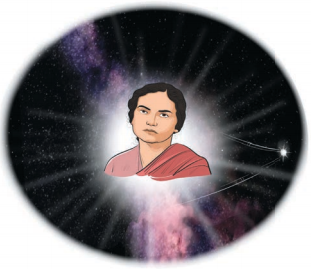
Passage: At a time when Indian women struggled to seek knowledge and equitable access to education, Bibha Chowdhuri emerged as a rare beam of light—a woman who defied the odds and lit a path for others to follow. Born in 1913 in Kolkata, in an India that still followed the traditional path. Bibha’s story was anything but ordinary. She was a scientist who rose not only against the societal expectations of women but also amidst the towering giants of science—men whose names the world would come to celebrate, while hers was whispered only in the halls of those who recognised her brilliance.
Word-meanings:
equitable: treating everyone fairly and in the same way
defied the odds: achieved something despite difficulties
towering: very high or great
Explanation: Bibha Chowdhuri rose to the top at a time when women were generally not given the same level of education as men. She was born in 1913 in Kolkata, and in those times, it was next to impossible for women to have the same privileges as men had. Yet, Bibha Chowdhuri overcame the obstacles by making her life story unusual but inspiring. She was a physicist who broke through all the gender expectations. She also rose so high up that she was as reputable as the male physicists surrounding her. The only difference was the gender, which was why men were celebrated proudly, and her name was simply whispered in the quiet halls.
Passage: Bibha’s persistence eventually earned her a place at the Bose Institute. She had already begun to chip away at the walls of exclusion, becoming the first Indian woman to excel in high-energy particle physics.
Word-meanings:
persistence: ability to keep doing something difficult
exclusion: the state of being excluded or not considering and including someone in a group or place
Explanation: Bibha kept rising, even though her journey was extremely taxing. Her persistence was rewarded with a place for her at the Bose Institute. Women were generally pushed away from the group of scientists. However, Bibh Chowdhuri did not conform to the exclusion and become discouraged by it. She was the first one to start breaking through the exclusionary walls by becoming the first Indian woman to excel in high-energy particle physics.
Passage: Breaking Boundaries
In 1945, Bibha’s academic journey took her to the University of Manchester. Under the guidance of the celebrated Nobel Laureate, Patrick M.S. Blackett, she delved deeper into the field of cosmic rays. Her Ph.D. thesis on cosmic rays earned local recognition, with newspapers introducing her as ‘India’s New Woman Scientist—She has an eye for Cosmic Rays’. This title reflected the awe she inspired in a world still sceptical of her capabilities.
Word-meanings:
laureate: a person who is honoured with an award for outstanding creative or intellectual achievement
delved: examined something in detail to find information
sceptical: doubtful
Explanation: Bibha is an icon for breaking boundaries. In 1945, Bibha studied the cosmic rays at the University of Manchester under the guidance of Patrick M.S. Blackett, who holds a Nobel Prize. Bibha’s PhD thesis on cosmic rays earned her fame in the area. The newspapers introduced her as India’s new woman scientist. While the observers were in surprised by her achievements, a majority of the world was still doubtful of her capabilities because she was a woman.
Passage: In an era marked by towering scientific discoveries, Bibha was often on the cusp of greatness but remained in the shadows of her male counterparts. Her most notable contribution was the discovery of pi-mesons, a subatomic particle. Her nomination for a Nobel Prize in 1950 by Erwin Schrödinger, though unsuccessful, reflected her remarkable talent. Her life, full of challenges and struggles, was marked by an uphill battle to be heard and seen in the field of science. Chowdhuri never received any awards during her lifetime, but continued her work tirelessly.
Word-meanings:
Towering: increasing
cusp: a point of transition
notable: remarkable
uphill battle: a task or goal that is very difficult to achieve because of resistance, obstacles, or unfavourable circumstances
Explanation: Other major discoveries and innovations marked the era in which she tried to reach the top. Bibha was always about to be on the very top, but male scientists always overshadowed her. Her most remarkable scientific discovery of pi-mesons, which is a subatomic particle. Her work was so impactful that she was nominated for 1950 Nobel Prize by the extraordinary scientist Erwin Schrödinger. However, she did not win the award. She did not bag any awards during her lifetime, making her career a constant uphill battle. She did not get discouraged though, and continued to work tirelessly.
Passage: In 1949, upon her return to India, she became the first woman faculty member at the Tata Institute of Fundamental Research (TIFR), personally selected by Homi J. Bhabha. Chowdhuri’s contributions spanned across research institutes like the Physical Research Laboratory in Ahmedabad and the Saha Institute of Nuclear Physics in Kolkata. This is where she continued her work on cosmic rays and subatomic particles. Through decades of crucial research, from Kolar Gold Mines to the Physical Research Laboratory under the mentorship of Vikram Sarabhai, Bibha’s work went on quietly, as she remained in the periphery of Indian scientific acclaim. She passed away in 1991, her story untold, her name largely forgotten.
Word-meanings:
span: extend across
periphery: boundary
acclaim: praise
Explanation: In 1949, Bibha Chowdhuri returned to India. Homi J. Bhabha, father of the Indian nuclear programme, recognised her spark and selected her to work at the Tata Institute of Fundamental Research (TIFR). Bibha then became the first woman faculty member at the TIFR. Bibha’s work on cosmic rays and subatomic particles extended across multiple research institutes. Some of them are the Physical Research Laboratory in Ahmedabad and the Saha Institute of Nuclear Physics in Kolkata. She worked hard, her research ranging from Kolar Gold Mines to the Physical Research Laboratory under the mentorship of Vikram Sarabhai, who was titled father of Indian space program. Her work was not widely and proudly appreciated, and she remained in the quiet corners of India’s scientific contributions. She passed away in 1991, forgotten and unappreciated.
Passage: The Legacy of Bibha Chowdhuri and Today’s Women in Indian Science
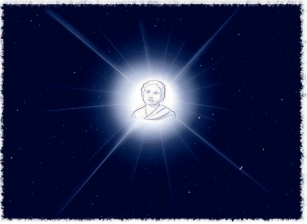
The stars are not meant to remain hidden forever. In 2019, the International Astronomical Union (IAU) honoured her legacy by renaming a star in the constellation Leo—HD 86081—as ‘Bibha,’ meaning ‘beam of light.’ Fittingly, she is now a ‘star in heaven,’ a symbol of the light she brought to Indian science. A fitting tribute to a woman whose life was a radiant example of tenacity, brilliance, and quiet determination. In 2020, the Government of India declared a chair professorship in her name.
Word-meanings:
tenacity: determination to continue what you are doing
chair professorship: an honorific title for a leading faculty member
Explanation: This passage describes Bibha Chowdhuri’s role in gaining attention for today’s women in the field of Indian science through her legacy in physics. Even though she was not rewarded appropriately in the past, her contributions have now come forward and she is being recognised posthumously. The International Astronomical Union (IAU) renamed a star in the constellation Leo from HD 86081 to her name ‘Bibha’ meaning ‘a beam of light’. The star is now described to be a star in heaven, which symbolises how Bibha brought her own unique light to the world of science. In the year 2020, the Government of India has named a chair professorship in her name to honor her as a leading faculty member. She is truly a bright icon of determination and brilliance.
Passage: Fast forward to the present day, and the advancements made by women in Indian science reflect Chowdhuri’s pioneering spirit and the progress she helped ignite. Women in ISRO, for instance, are no longer participants but leaders in missions that make global headlines.
Word-meanings:
pioneering: involving new ideas or methods
ignite: arouse
Explanation: Today, women contribute to Indian science, portraying Chowdhuri’s legacy. Women today show the same spirit of novelty and brilliance as Bibha Chowdhuri. In fact, women are no longer the supporting cast. They are leaders in missions of ISRO and making as many global headlines just like male scientists.
Passage: One such luminary is Dr. Ritu Karidhal Srivastava, popularly referred to as the ‘Rocket Woman of India.’ Her pivotal role in ISRO’s Mars Orbiter Mission and subsequent leadership in Chandrayaan-2 and Chandrayaan-3 reflect the leaps women have made in STEM in India. Over 50 women contributed to Chandrayaan-3, and their success is built upon the shoulders of pioneers like Bibha Chowdhuri. Their roles in developing autonomous systems for spacecraft and managing mission-critical operations highlight the capabilities of women in pushing India’s space programme forward.
Word-meanings:
luminary: a person who inspires or influences others
pivotal: of crucial importance in relation to the development or success of something else
autonomous: independent
Explanation: One of the examples of the ISRO Women is Dr. Ritu Karidhal Srivastava, popularly referred to as the ‘Rocket Woman of India.’ She is an inspiration to others, and her role in ISRO’s Mars Orbiter Mission was crucial for its success. She then led the missions Chandrayaan-2 and Chandrayaan-3. In fact, over 50 women worked on the Chandrayaan-3 mission. They developed independent systems for spacecraft and managed mission-critical operations.
Passage: From Shadows to the Stars
The journey from Bibha Chowdhuri’s era to today’s women scientists has been long and arduous, but it is also inspiring. The struggles Chowdhuri faced are a stark reminder of how far we’ve come—and how much further we have to go. But with every cosmic achievement—be it landing on the moon or reaching Mars—these women prove that the journey is well worth it.
Word-meanings:
arduous: difficult, needing a lot of effort and energy
stark: clear
Explanation: The journey of Bibha Chowdhuri from the shadows of her male counterparts to today’s women growing in the light of her legacy is inspiring. Her career journey was difficult, but it shows that hard work always pays off in one way or another. Her struggles clearly remind us how far women have progressed and how much more we need to progress to break the gender disparity completely.
Passage: Bibha Chowdhuri’s legacy lives on. Her story continues to inspire young women to pursue their passions, break barriers, and leave their mark on the world. Whether exploring cosmic rays or sending rockets to Mars, India’s women scientists are writing the next chapter in a story that Bibha Chowdhuri helped begin.
As the stars of Indian science shine brighter, Bibha Chowdhuri, the beacon-‘beam of light,’ will always guide the way.
Word-meanings:
beacon: a good example that gives people hope and encouragement
Explanation: Bibha’s legacy lives on in honour of her memory. Her story inspires today’s women and the new generation to do what they wish to do, break the gender barriers, and become prominent enough to be part of history that will live on forever. Her story is a source of inspiration to women from all fields.
Conclusion
This post on NCERT Class 8 English Poorvi book Unit 5 Science And Curiosity Chapter 3 Bibha Chowdhuri – The Beam Of Light That Lit The Path For Women In Indian Science. Students can check out the summary, word meanings and explanation of the lesson to get a better grasp and answer questions in the exam.