
CBSE Class 6 English Unit 4 – Sports and Wellness Chapter 2 – The Winner Important Question Answers from Poorvi Book
Class 6 English The Winner Question Answers – Looking for questions and answers for CBSE Class 6 English Unit 4 – Sports and Wellness Chapter 2 – The Winner? Look no further! Our comprehensive compilation of important questions will help you brush up on your subject knowledge. Practising Class 6 English question answers can significantly improve your performance in the exam. Improve your chances of scoring high marks by exploring Unit 4 – Sports and Wellness Chapter 2 – The Winner now. The questions listed below are based on the latest CBSE exam pattern, wherein we have given NCERT solutions to the chapter’s extract-based questions, multiple choice questions and Extra Question Answers
Also, practising with different kinds of questions can help students learn new ways to solve problems that they may not have seen before. This can ultimately lead to a deeper understanding of the subject matter and better performance on exams.
- The Winner NCERT Solutions
- The Winner Extra Question Answers
- The Winner Multiple Choice Questions
- The Winner Extract Based Questions
- The Winner Grammar Exercise
Related:
The Winner Textbook Questions (NCERT Solutions)
Let us do these activities before we read.
1. Look at this picture.
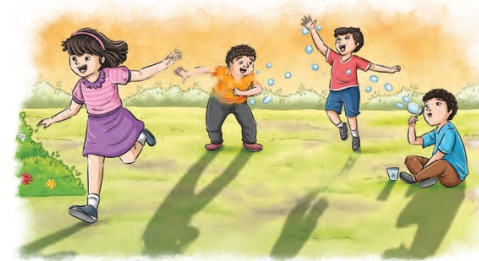
(a) What are these children doing?
(b) Where do you think they are?
(c) What is the time of the day?
Ans.
(a) The children are playing.
(b) They are in the park.
(c) Afternoon
2. Discuss the given questions with your classmates and teacher. You may begin your sentences with—
I go to …
I play with …
The place I go to for playing …
I like playing …
Sometimes I come back …
(a) When do you go to play after school?
(b) Who do you play with?
(c) Where do you go to play in the evening?
(d) Which games do you like playing?
(e) When do you come back home?
Ans.
(a) I go to play in the evening.
(b) I play with my friends.
(c) I go to the park to play with my friends.
(d) I like playing with the ball.
(e) Sometimes I come back home at night.
Let us discuss
1. Read the given lines from the poem. Write the meaning of the lines by identifying the words/expressions in them.
| S.No. | Lines from the poem | Meaning |
| 1. | next to the creek Clue: a small body of water. |
|
| 2. | I can’t even catch my breath. Clue: the child has been running. |
|
| 3. | When blue dark turns to black Clue: the colour of the sky changes from blue to black. What does it mean? |
|
| 4 | trees creep close Clue: it is evening time. Why do you think the trees seem close? |
Ans.
| S.No. | Lines from the poem | Meaning |
| 1. | next to the creek Clue: a small body of water. |
The poetess and her friends were playing near the small river in the neighbour’s field. |
| 2. | I can’t even catch my breath. Clue: the child has been running. |
The poetess with her friends were running so fast that they were left breathless. |
| 3. | When blue dark turns to black Clue: the colour of the sky changes from blue to black. What does it mean? |
The poetess implies the transition from evening ‘blue dark’ to night’s dark ‘black’. |
| 4 | trees creep close Clue: it is evening time. Why do you think the trees seem close? |
The trees seem to encroach nearer due to their dark shadows and the night darkness. |
2. Read the poem. Complete the following based on the poem.
The children play ______________ in the ______________ in the neighbour’s ____________. They run so ______________ that they run out of breath. They continue to play till the evening when the blue sky turns ______________, and the trees are not clearly visible. They can feel their feet ______________,now that it is cold. Finally, they stop ______________ and go home as it is night.
Ans. The children play ball in the evening in the neighbour’s field. They run so fast that they run out of breath. They continue to play till the evening when the blue sky turns black, and the trees are not clearly visible. They can feel their feet ache, now that it is cold. Finally, they stop playing and go home as it is night.
Let us think and reflect
1. Read the given lines and answer the questions that follow.
(a) We run so fast
I
can’t
even
catch
my
breath.
(i) Complete the sentence given below with the correct option.
The speaker needs to catch her breath because _______________________________.
a. everyone decides to walk
b. all the friends wish to go home
c. running fast results in being breathless
d. they need to do breathing exercises
(ii) Is the speaker alone? Why do you say so?
(iii) What does the pattern in the lines tell us?
Ans.
(i) c. running fast results in being breathless
(ii) No, the speaker is with her friends as she refers to them as ‘we’.
(iii) The short phrases in the lines depict the breathlessness of the poetess after running.
(b) When blue dark turns to black,
cold grass aches our feet,
trees creep close—
game’s over.
Night wins!
(i) Give one reason why the grass is cold.
(ii) Complete the sentence suitably.
The children’s feet are aching because_________________.
(iii) Why does ‘Night’ win?
Night wins because the ___________________________.
a. time for play has ended
b. children are tired
c. time to play at home begins
d. night follows day
Ans.
(i) The grass is cold because it’s night time and the temperature drops during this time.
(ii) The children’s feet are aching because the grass is cold.
(iii) a. time for play has ended
CBSE Class 6 English Poorvi Book Unit 4 – Nurturing Nature Chapter 2 – The Winner Extra Question and Answers
Q 1. What are the themes of Georgia Heard’s poem ‘The Winner’?
Ans. George Heard explored the themes of nature, childhood experiences, the race against time, and the simplicity of life.
Q 2. Why were the poetess and her friends running fast?
Ans. The poetess and her friends were running fast as they were playing a game with the ball and chasing it.
Q 3. Who won the game?
Ans. The night won the game against the poetess and her friends. The poetess and her friends eventually had to end their game.
Q 4. What does the poetess mean by ‘game’s over’?
Ans. The ‘game’s over’ signifies the ending of the game, the poetess and her friends were playing. Metaphorically, it signifies the ending of childhood days in the poetess’s life.
Q 5. How was the poetess’ life in her childhood?
Ans. The poetess’ childhood days were full of joy and excitement. The poetess and her friends were playing with the ball. They were running fast which left the poetess breathless. Moreover, the poetess was sad that the game came to an end as it was nighttime.
Class 6 The Winner Multiple Choice Questions
Q 1. Where were the poetess and her friends playing?
A. In the park
B. Near the neighbour’s park
C. In front of poetess home
D. Near the creek of the poetess’ neighbour’s field.
Ans. D. Near the creek of the poetess’ neighbour’s field.
Q 2. Which thing were they playing with?
A. Balloons
B. Nothing
C. Ball
D. Frisbee
Ans. C. Ball
Q 3. Who was out of breath?
A. Poetess
B. No one
C. Everyone who was playing the game
D. Poetess’s friends
Ans. A. Poetess
Q 4. What stopped their game?
A. Night
B. Parents
C. Rain
D. Storm
Ans. A. Night
Q 5. Who wins in the end?
A. Poetess
B. Poetess’s friends
C. Rain
D. Night
Ans. D. Night
Q 6. What was the reaction of the poetess in the end?
A. Sad and disappointed
B. Happy
C. Excited
D. Anger
Ans. A. Sad and disappointed
Q 7. Why were the poetess and her friends out of breath?
A. They were doing yoga
B. They were playing hide-and-seek
C. They were running after each other
D. They were running after the ball
Ans. D. They were running after the ball.
.
Q 8. What does the poetess mean when she says ‘When blue dark turns to black’?
A. Morning
B. Afternoon
C. Night
D. Evening
Ans. C. Night
Q 9. Who is the poetess of the poem ‘ The Winner’?
A. William Wordsworth
B. W. B. Yeats
C. Anonymous
D. Georgia Heard
Ans. D. Georgia Heard
Q 10. What does the poet mean when she says ‘cold grass aches our feet’?
A. The drop in the temperature caused pain to their feet
B. The grass relieved their feet
C. The grass has medical properties
D. The grass took away their pain
Ans. A. The drop in the temperature caused pain to their feet
Q 11. Which poetic device is used in ‘Creep Close’?
A. Symbolism
B. Alliteration
C. Personification
D. Imagery
Ans. B. Alliteration
Q 12. Which Poetic device is used in ‘When blue dark turns to black’?
A. Imagery
B. Personification
C. Alliteration
D. Repetition
Ans. A. Imagery
Q 13. When did the poetess start the game with her friends?
A. Evening
B. Night
C. Morning
D. Afternoon
Ans. A. Evening
Q 14. What does the evening symbolise in the poem ‘The Winner’?
A. Childhood days of poetess
B. Teenager days of poetess
C. Equality
D. Sunrise
Ans. A. Childhood days of the poetess
Q 15. What does the night symbolize in the poem ‘ The Winner’?
A. Teenage days
B. Childhood days
C. Light
D. Day
Ans. Teenage days
Q 16. What is the theme of the poem ‘The Winner’?
A. Parenthood
B. Politics
C. Education
D. Theme of nature and childhood
Ans. D. Theme of nature and childhood
Q 17. What does the ‘cold’ grass symbolise?
A. Autumn
B. Summers
C. The drop in the temperature
D. Winters
Ans. C. The drop in the temperature
Q 18. What was the poetess’s reaction at the beginning of the poem?
A. Joyful and excited
B. Sad
C. Disappointed
D. Angry
Ans. A. Joyful and excited
Q 19. What was the poetess running for?
A. She loves to run
B. She was running after her dog
C. She was playing with her friends
D. Exercise
Ans. C. She was playing with her friends
Q 20. Who was playing with the poetess?
A. Poetess’s friends
B. She was playing alone
C. Poetess’s parents
D. Siblings
Ans. A. Poetess’s friends
CBSE Class 6 English Chapter The Winner Extract-Based Questions
Answer the following extract-based questions.
A. Evenings,
we play ball
next to the creek
in our neighbour’s field.
Q 1. Who is ‘we’ referred to in the given context?
Ans. The ‘we’ refers to the poetess and her friends.
Q 2. Where was the poetess playing with her friends?
Ans. The poetess and her friends were playing next to the small river of their neighbour’s field.
Q 3. What was the game the poetess and her friends were playing?
Ans. The poetess and her friends were playing with the ball.
Q 4. When did the poetess and her friends start the game?
Ans. In the evening, the poetess and her friends started the game.
Q 5. What do you infer about the poetess’ childhood days?
Ans. The poetess’s childhood days were full of joy and freedom.
B. We run so fast
I
can’t
even
catch
my breath.
Q 1. Why were the poetess and her friends running fast?
Ans. They were playing a game with the ball that left the poetess breathless.
Q 2. Who is left breathless?
Ans. The poetess was left breathless after running fast in the game with her friends.
Q 3. What changes does the poet feel in her body?
Ans. The poet is feeling out of breath because of the excitement and energy of running fast in the game.
Q 4. Why did the poetess use short phrases in this context?
Ans. The poetess has used short phrases to depict the rapid pace of running that leads to her breathlessness.
Q 5. Why did the poetess use enjambment in the given stanza?
Ans. The poetess adds a sense of urgency and movement through the use of enjambment.
C. When blue dark turns to black,
cold grass aches our feet,
trees creep close—
Q 1. What does the transition from evening to night in the poem symbolize?
Ans. The transition from evening to night symbolises the end of the game and their childhood days.
Q 2. Why does the poetess describe the grass as ‘cold’?
Ans. The poetess described the grass as ‘cold’ to emphasise the drop in the temperature which led to pain in their feet.
Q 3. What is the poetic device used in the line ‘When blue dark turns to black’?
Ans. Imagery is used in the line ‘When blue dark turns to black’, to represent the shift from evening to night.
Q 4. What are poetic devices used in the line ‘trees creep close’?
Ans. The poetess has used personification to give human aspects to trees with the word ‘creep’. The poetess has also used alliteration in ‘creep close’.
Q 5. Why did the poetess add spookiness in the last stanza?
Ans. The poetess shifted from evening to night; the elements of spookiness are aspects of the night. The poetess highlights the fear of darkness during her childhood days. It also signifies the shift from childhood to adulthood.
D. game’s over.
Night wins!
Q 1. How does the poetess feel in the given context?
Ans. The poetess felt a sense of loss in the last stanza as the night took over, and eventually, they had to end their game.
Q 2. What does the poetess mean by ‘Night wins!’?
Ans. The ‘Night wins!’ signifies the end of their game. The poetess and her friends were playing a game with the ball, but the night ended their game. It’s time for them to return to their home.
Q 3. What does the poetess mean by ‘game’s over’?
Ans. The poetess metaphorically emphasises the fleeting nature of childhood, which will eventually come to an end.
Q 4. What does the night symbolize in this context?
Ans. The night symbolises the time that always wins against the fleeting childhood. The cyclical nature of time signifies that the poetess’s childhood came to an end. The spookiness in the last stanza, too, represents the trial and tribulation of adulthood.
Q 5. Who wins the game?
Ans. The night wins the game against the poetess and her friends.
The Winner: Grammar Exercises
Let us learn
1. Read the information given in the table and see what the poet has done in the poem ‘The Winner’.
| Lines from the poem | What the poet has done | Other examples |
| I can’t even catch my breath. |
This tells us thatthe children are really out of breath. The pattern is used to highlight them being out of breath. | The leaves are falling, falling, falling. |
| Night wins! | The poet has used human qualities for inanimate things. Here, night has been shown as winning. This is called personification. |
The sun played hide-and-seek with the clouds. |
Now, try to write some examples of your own for both. Use your imagination when creating these examples.
Ans.
(i) I
CAN’T
BEAR
IT
ANYMORE!
The pattern depicts the anger
(ii)The birds are singing the song.
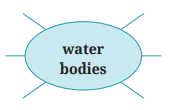
2. The poet talks about a creek in the poem. You now know that a creek is a water body. Complete the word web given below by writing which other water bodies you can think of. Discuss with your teacher.
Ans. Lake, river, sea, ocean, pond, bay
Let us write
Write a paragraph about your playtime, using the clues given below.
What time do I go out to play?
Who do I play with?
What games do we play?
Which is my favourite game?
What do we gain from playing together?
When do we finish playing and go home?
Now, give a title to your paragraph.
Ans. Fun After the School
After school, I excitedly head out to the park to meet my friends and enjoy some fresh air. As soon as I arrive, I can see them gathering near the big tree. We decided to play hide-and-seek, which is my absolute favourite game.
I love the thrill of trying to find the best hiding spots, whether it’s behind the tall trees or tucked away in the playground equipment. My friends and I take turns being ‘it,’ and each round brings a new burst of laughter and playful shouts.
The sunlight starts to fade as we eagerly rush through the games, determined to make the most of our time together. We’re all aware that we need to finish before it gets too dark since we have to complete our homework. Still, these moments of joy make every second worthwhile, leaving us with happy memories.
I like your website it had too many questions by the understanding of the words that how did you explain the questions from the book thank you 😊😊🤗