
CBSE Class 7 English Unit 5 – Bravehearts Chapter 1 A Homage to Our Brave Soldiers Important Question Answers from Poorvi Book
Class 7 English A Homage to Our Brave Soldiers Question Answers – Looking for questions and answers for CBSE Class 7 English Unit 5 – Bravehearts Chapter 1 A Homage to Our Brave Soldiers? Look no further! Our comprehensive compilation of important questions will help you brush up on your subject knowledge. Practising Class 7 English question answers can significantly improve your performance in the exam. Improve your chances of scoring high marks by exploring Unit 5 – Bravehearts Chapter 1 A Homage to Our Brave Soldiers now. The questions listed below are based on the latest CBSE exam pattern, wherein we have given NCERT solutions to the chapter’s extract-based questions, multiple choice questions and Extra Question Answers
Also, practising with different kinds of questions can help students learn new ways to solve problems that they may not have seen before. This can ultimately lead to a deeper understanding of the subject matter and better performance on exams.
- A Homage to our Brave Soldiers NCERT Solutions
- A Homage to Our Brave Soldiers Grammar Exercise
- A Homage to our Brave Soldiers Extract Based Questions
- A Homage to our Brave Soldiers Multiple Choice Questions
- A Homage to our Brave Soldiers Extra Question Answers
Related:
A Homage to Our Brave Soldiers Textbook Questions (NCERT Solutions)
Let us do these activities before we read.
I Homage means ‘something that is said or done to show respect publicly for someone’. Whom should every Indian pay homage to? Share your answers with your classmates and the teacher.
Ans. Every Indian should pay homage to the brave soldiers who guard our borders and enable us to sleep peacefully.
II Work in pairs to complete the table by writing any three ways in which we can celebrate the victories and honour the sacrifices of the soldiers. An example has been done for you. Share your answers with your classmates and the teacher.
| Celebrating their Victories | Honouring their Sacrifices |
| visiting a war memorial | |
Ans
| Celebrating their Victories | Honouring their Sacrifices |
| Being patriotic | visiting a war memorial |
| Attending victory parade | Assisting them |
| Acknowledging their sacrifices | Honour them as real heroes |
Let us discuss
I Complete the table given below. An example has been done for you. Check your answers with the teacher.
| Name of the War Hero | Contribution and Achievement | Award Given |
| Major Somnath Sharma | Battle of Badgam in 1947 | First Param Vir Chakra awarded posthumously |
| Captain Mahendra Nath Mulla | ||
| Lance Naik Albert Ekka | ||
| Major Padmapani Acharya |
Ans.
| Name of the War Hero | Contribution and Achievement | Award Given |
| Major Somnath Sharma | Battle of Badgam in 1947 | First Param Vir Chakra awarded posthumously |
| Captain Mahendra Nath Mulla | Locating and Destroying a Pakistan Submarine in the North Arabian Sea | Decorated with the Maha Vir Chakra |
| Lance Naik Albert Ekka | 1971 Indo Pak War | Param Vir Chakra awarded posthumously |
| Major Padmapani Acharya | 1999 Kargil War | Decorated with the Maha Vir Chakra posthumously |
II Find the paragraph(s) and sentences in the text that evoke the feelings given below.
1. feeling of wonder
Ans. The National War Memorial consists of four concentric circles, which are known as Amar Chakra, Veerta Chakra, Tyag Chakra, and Raksha Chakra around a 15-metre-tall central obelisk with the eternal flame—the Amar Jawan Jyoti. It also houses bronze and stone murals and graphic panels. Isn’t it amazing!
2. heartening
Ans. It was heartening to know that our government has recognised the sacrifice of brave soldiers. Our teacher told us about the 21 bravehearts who were awarded the Param Vir Chakra (PVC), India’s highest wartime gallantry medal, for their service to the nation. She also told us about Maha Vir Chakra (MVC), Kirti Chakra (KC), Vir Chakra (VrC), and Shaurya Chakra (SC).
3. sense of motivation
Ans. I also feel it is our duty to periodically visit such places to honour our valiant soldiers, who have made great sacrifices for us. Their sacrifices enable us to walk freely in our country without fear of enemy threats. It is nice of your teacher and school to arrange this visit to give you all a chance to learn about India’s heroes and also pay your respect to them. The idea of your class to make a presentation at the school and make everyone a part of your experience is wonderful! Best of luck for your presentation, I hope it goes well and motivates the school students to join the Indian Armed Forces.
4. pride
Ans. You can see the obelisk surrounded by wreaths that have been placed as a mark of respect. The lighting design is planned in such a way that it transforms the monument’s landscape as sunlight changes from dawn to dusk. It truly is a majestic site that filled me with pride for our nation.
5. visually inspiring
Ans. We spent the whole day, from morning to evening, at the National War Memorial and the surrounding areas, marked by majestic lawns and grand buildings of Kartavyapath. We were immersed in the ambience that was solemn and a reminder of what a free nation could achieve. The overall environment created an emotive experience that was visually inspiring. I felt as if I had developed a bond with the place.
6. sadness
Ans. I learnt a lot, but I also have to admit that the various discourses during the day brought tears to my eyes. It was sad to think about the massive devastation and loss of life caused by wars.
7. gratitude
Ans. I was happy to hear that you got an opportunity to visit the National War Memorial. I have heard a lot about it. Some people might see a war memorial as just a monument, statue, an edifice to celebrate our war heroes or victory and commemorate those who lost their lives or got injured in the war. In my view, it is also an expression of deep gratitude for the supreme sacrifice made by our brave soldiers defending the sovereignty and integrity of the country. I feel motivated and I am seriously thinking of joining the Armed Forces to serve my motherland.
8. Inspiration
Ans. I must say, I was inspired by your idea of presenting the valorous stories of India’s soldiers.
III Which is India’s highest gallantry award?
Ans. Param Vir Chakra is India’s highest gallantry award.
IV How would Ananda feel after reading this letter?
Ans. Ananda would feel awed and motivated after reading Soumya’s letter. She would have felt a sense of respect and gratitude for the different monuments that were made in homage to the brave soldiers who died for the country.
V Do you think Soumya enjoyed writing this letter? Why or why not?
Ans. Yes, Soumya definitely enjoyed writing the letter where she described the National War Memorial in New Delhi. She had enjoyed her trip and was inspired by the knowledge of different soldiers like Major Somnath Sharma and Lance Naik Albert Ekka. Both Soumya and Ananda enjoy sharing knowledge with each other, and no doubt, Soumya must have enjoyed telling Ananda about such brave soldiers and the significance of the monument she saw on her trip.
VI Why was Ananda reminded of the poem ‘Pushp ki Abhilasha’?
Ans. The Hindi poem ‘Pushp ki Abhilasha’ talks about how a soldier’s selfless and patriotic dedication deserves more flowers than a garland, grave or women’s hair. It talks of the flower’s desire to be on the path of a noble brave soldier, because then, the flower will be used for a noble cause. Ananda is reminded of the poem when she is talking about the Bougainvillea garden in Sector-3 Chandigarh, where the memorials of the soldiers are present amidst beautiful patches of flowers.
VII How does Soumya’s letter help Ananda in pursuing her hobby?
Ans. Letters are accompanied with stamps. People often have a hobby of collecting stamps. So Soumya’s letter not only increases Ananda’s knowledge, but also enriches Ananda’s stamp collecting hobby.
VIII Ananda is inspired to act after reading the letter from Soumya. What actions does she intend to take up? Fill in the table citing the sentences from the text.
| 1. | visit | |
| 2. | mobile app | |
| 3. | sharing ideas | |
| 4. | creating a collage | |
| 5. | joining the army | |
| 6. | website |
Ans.
- visit – We all wish to visit the National War Memorial, Delhi.
- mobile app – We have found out a mobile app ‘National War Memorial and Museum’. This app is very interactive and provides answers to our queries in 21 languages.
- sharing ideas – Next week, I am going to share this idea with my classmates and my teacher.
- creating a collage – I think it would be great to create a collage capturing the lives and stories of people that can inspire us each day.
- joining the army – I aspire to be courageous like him when I join the army!
- website – Here is the website link for National War Memorial https://www.mygov.in. Share it with your friends to learn more about it.
Let us think and reflect
I Read the extracts given below and answer the questions that follow.
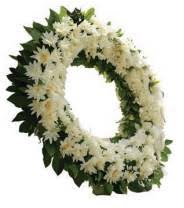
1. You can see the obelisk surrounded by wreaths that have been placed as a mark of respect. The lighting design is planned in such a way that it transforms the monument’s landscape as sunlight changes from dawn to dusk. It truly is a majestic site that filled me with pride for our nation. I was also overwhelmed by the interminable flame as a metaphor for eternal stories of courage and valour.
(i) Complete the analogy with a word from the extract.
flame: valour:: wreath: ______________
Ans. respect
(ii) How does the lighting design make the monument visually appealing?
Ans. The lighting design makes the monument’s landscape transform as the sunlight goes from dawn to dusk. This magical transformation is what makes it visually appealing.
(iii) State whether the following sentence is a fact or an opinion. It truly is a majestic site…
Ans. It is an opinion.
(iv) What does the everlasting flame suggest?
Ans. The everlasting flame suggests that while the soldiers are not here anymore, their stories of courage and valour will shine forever.
(v) Choose the correct option to complete the sentence.
The tone of the writer in this extract is ______________.
A. modest
B. light-hearted
C. admiring
D. nostalgic
Ans. C. admiring
2. I was happy to hear that you got an opportunity to visit the National War Memorial. I have heard a lot about it. Some people might see a war memorial as just a monument, statue, an edifice to celebrate a war or victory and commemorate those who sacrificed their lives or got injured in the war. In my view, it is also an expression of deep gratitude for the supreme sacrifice made by our brave soldiers defending the sovereignty and integrity of the country.
(i) Choose a line from the extract which shows that Ananda was aware about the National War Memorial.
Ans. “I was happy to hear that you got an opportunity to visit the National War Memorial. I have heard a lot about it.” This line suggests that Ananda knew about the National War Memorial and she simply had never seen it in person before.
(ii) What might be the most likely reason for people to consider a war memorial as a monument?
Ans. Some people who do not give much importance to the deeper meaning of statues and symbols, or who are not that patriotic may consider the war memorial to be just a monument, s statue to celebrate a victory.
(iii) Fill in the blank with a suitable word from the extract.
We conduct special competitions at school to ______________ our Independence day.
Ans. celebrate
(iv) Select a phrase from the extract showing that Ananda is expressing an opinion.
Ans. ‘In my view’ means that Ananda is sharing something she feels she has an opinion on, something that she feels but others might have a different view on.
(v) Complete the sentence with a suitable reason.
Ananda refers to the sacrifice of soldiers as ‘supreme’ sacrifice because ______________.
Ans. They died selflessly to protect their motherland.
II Answer the following questions.
1. What is the significance of the National War Memorial?
Ans. National War Memorial is a homage to the soldiers who sacrificed their lives for the sovereignty and integrity of the country in post-independence conflicts like the 1999 Kargil war, Indo-Pak wars and Indo-China conflicts. Tributes like these serve to remind the future generations that their freedom has come at the cost of the lives of countless bravehearts.
2. Lance Naik Albert Ekka is an example of selflessness, determination, and exceptional courage. Elaborate.
Ans. Lance Naik Albert Ekka is an example of selflessness, determination and exceptional courage. He fought valiantly in the 1971 Indo-Pak War. In the war, he was positioned in the left forward company of the Battalion of the Brigade of Guards. The enemy were holding the eastern front of the Gangasagar, and the battalion was to attack this particular enemy defense. Lance Naik Albert Ekka noticed an enemy Light Machine Gun assaulting his comrades. He selflessly charged into the enemy bunker and disarmed the Light Machine Gun and two enemy soldiers. At the end of the objective, he again selflessly charged and disarmed a Medium Machine Gun, while climbing the wall and launching a grenade at the enemy soldiers. He did all of this while enduring severe injuries. He fought with his comrades and only succumbed to his injuries after successfully fulfilling his company’s objective. For this, he was awarded the Param Vir Chakra posthumously.
3. Explain how the National War Memorial and Museum app will be helpful in spreading awareness about war heroes.
Ans. The youth of the nation and the future generations need to know about the soldiers who sacrificed their lives and their own youth to protect the country and give them the freedom that they enjoy today. It is important for them to know about each soldier, for they were bravehearts, not a number lost in the records forgotten. The National War Memorial and Museum app will spread awareness about each precious life that contributed to the freedom, sovereignty and integrity of the present.
4. Why is it our duty to pay homage to our brave soldiers?
Ans. Our brave soldiers gave up their lives and youth to dedicatedly protect us and our country. They show immense selflessness, valour and inspiring endurance to such a patriotic motive. Whatever luxuries and rights we have now, it is all due to them and their fierce determination to keep us safe. They deserve gratitude and respect for their sacrifice and service. Therefore, it is our duty to pay homage to our brave soldiers.
5. What is the main idea of this text? How does it justify the title, ‘A Homage to our Brave Soldiers’?
Ans. The main idea of this text is that the brave soldiers of the country should be appreciated more for their sacrifice and service. It justifies the title ‘A Homage to our Brave Soldiers’ by talking about the different ways the country and educational institutions pay homage to the soldiers who fought in the wars and protected us. For instance, it sheds light on the National War Memorial, Museum app, websites that offer insight to different soldiers, and the different awards given for the soldiers’ gallantry, Param Vir Chakra, and Maha Vir Chakra. Moreover, in the educational institutions, we see that educational trips to different war memorials are often organised for the students and competitions like collage making incur a sense of curiosity in the students which encourages them to know more about our courageous soldiers. Therefore, the text is about giving homage to soldiers and spreading awareness about their sacrifice and service.
6. Why were the students awestruck and humbled? Explain in your own words.
Ans. The National War Memorial, its significance, structure (4 circles or chakras) and visual appeal left the students awestruck and humbled. Everything about the monument was so meticulously dedicated to paying homage to the soldiers that calling it ‘just a monument’ would be plain disrespect. From the 4 chakras to the row of trees planted for each soldier, every detail reminded the students of the sacrifice and service shown by each brave soldier.
A Homage to Our Brave Soldiers Grammar Exercises
Let us learn
Study the following words taken from the text.
disregard, inconsequential, immortal, undaunted
These words are made by adding word beginnings like dis-, in-, im- and unto the root words regard, consequence, mortal, and daunt respectively. Such word beginnings are called prefixes.
• dis-+regard
• im-+mortal
• in-+consequential
• un-+daunted
I Match the prefixes with their meanings and the root words to create a new word in the table given below. An example has been done for you.
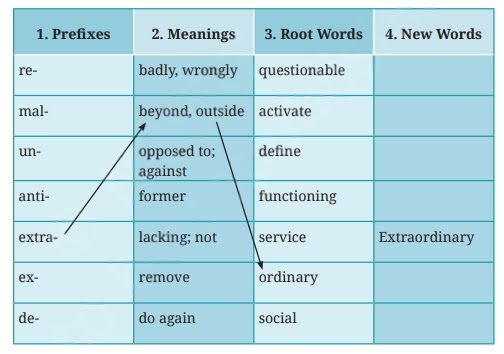
Ans.

Now, complete the paragraph by using the new words created in the table.
Soldiers undergo (i) extraordinary training to prepare for their challenging duties. They learn to (ii) ____________ explosives and handle (iii) ____________ equipment with precision. They stand as a powerful force against (iv) ____________ elements, displaying (v) ____________ bravery. (vi)________ members often share their experiences to inspire new recruits. Their service can continually (vii) ____________ the essence of commitment and sacrifice.
Ans.
i. extraordinary
ii. Deactivate
iii. malfunctioning
iv. antisocial
v. unquestionable
vi. ex-service
vii. redefine
II Find words associated with ‘brave’ by filling in the missing vowels in the boxes given below.

Ans.

III Fill in the blanks with the correct opposite words of ‘brave’ from the box to complete the following sentences.
| fear | cowardly | timid | afraid |
1. Ajay’s ____________ refusal to stand up for his friend was disappointing to everyone.
2. The ____________ child hid behind his mother, too scared to meet the new teacher.
3. Anjali’s ____________ of heights prevented her from climbing the tall ladder.
4. Sushma felt ____________ as she entered the dark, abandoned building alone.
Ans. 1. cowardly
2. timid
3. fear
4. afraid
IV Read the following sentences from the text and divide them into two parts. An example has been done for you.
1. I aspire to be courageous like him when I join the army!
2. They exchange letters and share their feelings of gratitude for the freedom they enjoy because of the sacrifices made by the bravehearts of the country.
3. Though seriously wounded in this encounter, he continued to fight alongside his comrades.
4. The sacrifices of the soldiers make monuments like the National War Memorial extremely important so that we should never forget the cost of freedom.
| Part 1 | Part 2 |
| I aspire to be courageous like him | when I join the army! |
Ans.
| They exchange letters and share their feelings of gratitude for the freedom they enjoy | because of the sacrifices made by the bravehearts of the country. |
| Though seriously wounded in this encounter, | he continued to fight alongside his comrades. |
| The sacrifices of the soldiers make monuments like the National War Memorial extremely important | so that we should never forget the cost of freedom. |
| When the part of a sentence conveys complete meaning and is independent, it is called main clause. The part of the sentence which is dependent on the main clause to make complete sense is the subordinate clause.
The words or phrases that connect the two parts of sentences such as, when, because, though, so that─convey a specific meaning─time, reason, contrast, purpose, respectively. Connecting words are called subordinating conjunctions. |
V Combine the following pairs of sentences using suitable subordinating conjunctions given in the box below.
| because | unless | when | where | though |
1. Wasi burst into tears. He heard the good news.
2. Himani was very nervous. She delivered a great presentation.
3. This is the place. I was born.
4. The students performed very well. They studied diligently.
5. Water the plants. They will die.
Ans.
Wasi burst into tears when he heard the good news.
Himani was very nervous though she delivered a great presentation.
This is the place where I was born.
The students performed very well because they studied diligently.
The plants will die unless you water them.
VI Complete the following sentences with suitable main clause or subordinate clause.
1. Farheen was late to work because ________________.
2. The dog started barking when ________________.
3. She completed the marathon although ________________.
4. ________________ while they were hiking in the mountains.
5. Abhishek received a promotion after ________________.
6. ________________ before the deadline approached.
7. We waited in the car until ________________.
8. ________________ as the waves rushed to the shore.
Ans.
1. Farheen was late to work because he was feeling under the weather.
2. The dog started barking when it sensed an unfamiliar person in the house.
3. She completed the marathon although her foot was injured.
4. It started raining while they were hiking in the mountains.
5. Abhishek received a promotion after he successfully handled many difficult clients this month.
6. I submitted all my tasks before the deadline approached.
7. We waited in the car until the dust storm went away.
8. I could feel the ocean around my feet as the waves rushed to the shore.
Let us listen
You will listen to a girl speak about why she wishes to join the Armed Forces when she grows up. As you listen, answer the questions given below in two–three exact words you hear. (Transcript for the teacher on pg. 223)
1. What type of job does Gunjan think the Armed Forces is?
2. What feature of the Armed Forces fills Gunjan with pride?
3. How does the disciplined life of the Armed Forces impact the body and mind, according to Gunjan?
4. List any one aspect about a job in the Armed Forces that Gunjan feels helps someone grow.
5. State any two things that Gunjan feels life in the Armed Forces teaches.
Ans. 1. Gunjan thinks that the Armed Forces is an honorable, respectful, and dedicated job which will teach a person discipline and organization while helping them keep their family safe and secure.
2. Whenever Gunjan imagines the uniform of the Armed Forces, she feels a surge of pride. The honor of wearing the uniform of the Armed Forces fills Gunjan with pride.
3. To be prepared for the risks and hurdles of a soldier’s life, the aspirants undergo rigorous training that teaches discipline and organization. The physical training helps keep the body fit and alert for anything. Since the mind is exposed to various challenges, a soldier’s mind is tough but also flexible, always alert and composed. Therefore, the disciplined life of the Armed Forces greatly impacts the body and mind.
4. The Armed Forces offers new challenges and adventures, which, according to Gunjan, helps one grow.
5. The Armed Forces teaches you to live a disciplined and organised life.
Let us speak
1. Work in pairs and identify the different professions displayed in the picture.
Ans. Teacher, air force officer, carpenter, cricketer, farmer, doctor, chef, painter, dancer.
2. Imagine that you dream of or wish to pursue some of these professions and vocations. Take turns to express this along with a reason. Do not forget to include what preparation would be required to fulfill the dream. Speak about all the given professions and vocations.
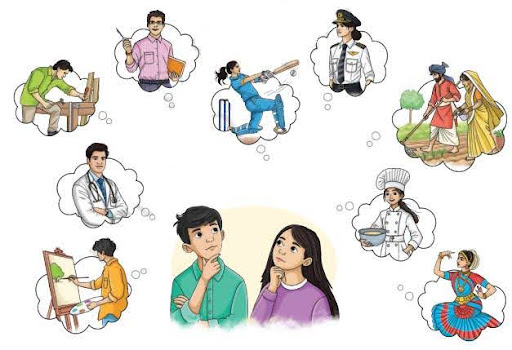
Use the prompts given below.
• I would like to become… because… For this I would have to first…
• I dream of working as a… as… This would involve…
• To become a… has been a childhood dream. This is so because…In order to become a… I would have to…
• One day, I hope to become… Then I would be able to… However, first I would need to…
• It would be great if I could work as… as it would let me… For this I would have to…
Let us write
You have read about the sacrifices made by the Armed Forces during war. However, the Armed Forces also play a key role during peace time. Write a letter to your friend sharing how the Armed Forces contribute their services during the times of natural calamities (floods, earthquakes, etc.), infrastructure development (building bridges in remote areas, etc.) and for welfare initiatives (medical camps, establishment of libraries, etc.)
Ans. House number 50
Sector-A
City
Dear Pari
Hello dear friend. I’m writing to you after a long time and I hope this letter finds you in good spirits. I just finished reading the chapter ‘A Homage to Our Brave Soldiers’ in our English Literature Poorvi Book, and let me tell you, I am completely overwhelmed with gratitude, awe and respect for our brave soldiers. Their dedication to protect us during the war and their fierce, unwavering patriotism has left me stunned.
However, I learned something more about the soldiers outside the chapter. Did you know that the soldiers also help outside of the war? Yes, isn’t that amazing? They help us during natural calamities by saving people stuck in floods, earthquakes and to provide relief to the ones who are injured or have nowhere to go. During infrastructure development, especially in remote areas where the terrain is treacherous, they make sure no innocent life is lost by the changes being made in the area. They make sure the development process is going smoothly without any casualties. They also provide a helping hand in welfare initiatives like opening up of medical camps and libraries.
So not only do they protect us on the borderline, they contribute to the development of the country and save people from natural disasters. After knowing this, I am completely amazed by the Armed Forces. They do so much for us, it’s almost unbelievable that they help the country so much! With every bit of new information I get about them, I feel more and more indebted to them. I want to learn more about their service and sacrifice so I can acknowledge their efforts more properly. If you have some more information, do share with me. I would love to hear your thoughts on them.
Yours truly,
Meena
Let us explore
I Every branch of the Armed Forces has a motto. Read the mottos given below.
| 1. Indian Army | Sevā Paramo Dharmaḥ
(Service Before Self) |
| 2. Indian Air Force | Nabhaḥ Spr̥śaṁ Dīptam
(Touch the Sky with Glory) |
| 3. Indian Navy | Sham No Varunah
(Be Auspicious Unto Us Oh Varuna) |
II India has many other Forces that serve the nation. For example, Central Reserve Police Force (CRPF).
Find out about such Forces and discuss with the teacher.
Ans.
BSF – Border Security Force
ITBP – Indo Tibetan Border Police
CBSE Class 7 English Chapter 2 A Homage to our Brave Soldiers Extract Based Questions
A. Last week I got the answers to some of my questions during an educational trip to New Delhi organised by our school. You may recall, I was looking forward to this trip and our visit to many places of historical and educational significance. I learnt several new and interesting things, and I am excited to share them with you.
Let me begin by asking you to guess the name of the monument that I found most inspiring. Lets see if you can guess? The construction of this monument started in April 2018 and was completed in February 2019. It was envisioned and then inaugurated by India’s Prime Minister Shri Narendra Modi in February 2019. In terms of location and size, it is spread over 40 acres of land near the iconic India Gate. But more importantly, it is a tribute to some of the bravest Indians. I’m sure you’ve guessed! It’s the ‘National War Memorial’. Won’t you say, a long desired aspiration was fulfilled?
Q1. When did the construction of the National War Memorial begin and when was it completed?
Ans: The construction started in April 2018 and was completed in February 2019.
Q2. Who envisioned and inaugurated the National War Memorial?
Ans: It was envisioned and inaugurated by India’s Prime Minister Shri Narendra Modi in February 2019.
Q3. How large is the National War Memorial in terms of area?
Ans: It is spread over 40 acres of land near India Gate.
Q4. What is the significance of the National War Memorial?
Ans: The memorial is a tribute to some of the bravest Indians, honoring their sacrifices.
Q5. Where is the National War Memorial located?
Ans: It is located near the iconic India Gate in New Delhi.
B. Our visit to the National War Memorial began with our teacher explaining that even after independence, India has had to fight many wars to protect itself, and the freedom and security we enjoy today is because of the many brave men and women who have served in the Indian Armed Forces over decades. Sadly, she said, war always takes its toll, and therefore, many brave soldiers have had to sacrifice their lives for the country even after our independence in 1947. This is what makes monuments like the National War Memorial extremely important so that we should never forget the cost of freedom. We are aware, always, of the pain and horrors of war. We learnt that each brick of the memorial is called a tablet, and it bears the names of soldiers who fought for India and made the supreme sacrifice in different wars from 1947 till date, including the Indo-China conflict of 1962, the Indo-Pak Wars in 1965 & 1971 and the Kargil War in 1999. There are 29,000 tablets on which more than 26,000 names of fallen soldiers have been etched.
Q1. Why is the National War Memorial important according to your teacher?
Ans: The National War Memorial is important because it reminds us of the sacrifices made by brave men and women in the Indian Armed Forces and ensures that we never forget the cost of freedom.
Q2. What historical events are commemorated by the names etched on the tablets of the National War Memorial?
Ans: The names commemorate soldiers who fought in wars including the Indo-China conflict of 1962, the Indo-Pak Wars in 1965 and 1971, and the Kargil War in 1999.
Q3. How many names of fallen soldiers are etched on the tablets of the National War Memorial?
Ans: More than 26,000 names of fallen soldiers are etched on the tablets.
Q4. What is each brick of the National War Memorial called?
Ans: Each brick of the memorial is called a tablet.
Q5. How many tablets are there at the National War Memorial?
Ans: There are 29,000 tablets at the National War Memorial.
C. Major Somnath Sharma was posthumously awarded India’s first PVC, in the Battle of Badgam in 1947. Later some more PVCs were awarded for exceptional gallantry during the India-China Conflict of 1962, and the India-Pakistan War of 1965. Besides, a PVC was also awarded for service during the U.N.Peace Keeping Operations in Congo.
In the 1971 war, some of the heroes who were awarded the PVC (posthumously) includes Lance Naik Albert Ekka, Flying Officer Nirmal Jit Singh Sekhon, Second Lieutenant Arun Khetarpal and Major Hoshiar Singh. Some Navy personnel including Captain Mahendra Nath Mulla were also awarded MVC for their exemplary courage and leadership.
Q1. Who was the first recipient of the Param Vir Chakra (PVC), and in which battle?
Ans: Major Somnath Sharma was the first recipient of the Param Vir Chakra (PVC), awarded posthumously for his bravery in the Battle of Badgam in 1947.
Q2. Were any PVCs awarded during the India-China conflict of 1962?
Ans: Yes, some PVCs were awarded for exceptional gallantry during the India-China Conflict of 1962.
Q3. Which personnel were awarded PVCs posthumously in the 1971 India-Pakistan War?
Ans: In the 1971 war, some of the heroes awarded PVCs posthumously were Lance Naik Albert Ekka, Flying Officer Nirmal Jit Singh Sekhon, Second Lieutenant Arun Khetarpal, and Major Hoshiar Singh.
Q4. The UN Peacekeeping operation in which country saw an award of the PVC?
Ans: A PVC was awarded for service during U.N. Peacekeeping Operations in Congo.
Q5. Name the Navy personnel who was awarded the Maha Vir Chakra (MVC) in the 1971 war.
Ans: Captain Mahendra Nath Mulla was awarded the Maha Vir Chakra (MVC) for his exemplary courage and leadership during the 1971 war.
D. The National War Memorial now includes Amar Jawan Jyoti in the obelisk which is surrounded by four chakras. During the inauguration, the Prime Minister lit a new flame to commemorate the fallen heroes. Later, the old flame at India Gate was also merged with the new flame at the National War Memorial. Here is a picture of the new Amar Jawan Jyoti if you haven’t seen it. You can see the obelisk surrounded by wreaths that have been placed as a mark of respect. The lighting design is planned in such a way that it transforms the monument’s landscape as sunlight changes from dawn to dusk. It truly is a majestic site that filled me with pride for our nation. I was also overwhelmed by the interminable flame as a metaphor for eternal stories of courage and valour.
Q1. What surrounds the obelisk at the National War Memorial?
Ans: The obelisk is surrounded by four chakras.
Q2. From where was the Amar Jawan Jyoti shifted?
Ans: From India Gate
Q3. What is placed around the obelisk as a mark of respect?
Ans: Wreaths are placed around the obelisk as a mark of respect.
Q4. How does the lighting design of the National War Memorial transform its landscape?
Ans: The lighting design changes with the sunlight, transforming the landscape from dawn to dusk.
Q5. What metaphor does the interminable flame at the National War Memorial represent?
Ans: The interminable flame serves as a metaphor for the eternal stories of courage and valour.
E. Very recently I read in the newspaper that Captain Anuj Nayyar, MVC, an Indian Army officer of the 17 Jat regiment was posthumously awarded the Maha Vir Chakra, India’s second highest gallantry award, for exemplary valour during the Kargil War in 1999. I look forward to learning more about him. Meanwhile, I learnt that his mother Meena Nayyar has written a memoir titled Tiger of Drass– Capt. Anuj Nayyar – 23 – Kargil Hero which I shall certainly go through. I am sharing with you an excerpt of her interview with IANS.
“Writing about the smallest things about your child who is not with you really used to shake me but gradually I came to terms with it by telling myself that if I didn’t write about him no one in the world would or could, and no one will know about Anuj’s sacrifice,”
Published on : 13 Apr, 2022, 1:59 pm
Q1. Who was Captain Anuj Nayyar, and for what was he posthumously awarded?
Ans: Captain Anuj Nayyar was an Indian Army officer of the 17 Jat regiment, posthumously awarded the Maha Vir Chakra for exemplary valour during the Kargil War in 1999.
Q2. What is the title of the memoir written by Captain Anuj Nayyar’s mother?
Ans: The memoir is titled Tiger of Drass– Capt. Anuj Nayyar – 23 – Kargil Hero.
Q3. Why did Meena Nayyar find writing about her son difficult, according to her interview?
Ans: She found it difficult because writing about her son, who is no longer with her, would deeply shake her.
Q4. How did Meena Nayyar come to terms with writing her son’s memoir?
Ans: She came to terms with it by telling herself that if she didn’t write about him, no one else would, and the world wouldn’t know about Anuj’s sacrifice.
Q5. When was Meena Nayyar’s interview, where she discussed writing the memoir, published by IANS?
Ans: The interview was published on April 13, 2022.
F. I have shared your experience with many of my friends. We all wish to visit the National War Memorial, Delhi. We have found out a mobile app ‘National War Memorial and Museum’. This app is very interactive and provides answers to our queries in 21 languages. The murals on the walls are enchanting. A great learning experience indeed!
Next week, I am going to share this idea with my classmates and my teacher. I think it would be great to create a collage capturing the lives and stories of people that can inspire us each day.
I know that we can email each other. I really like to receive letters from you, not just because of the ideas that you share but also because the envelope of your letters often comes with beautiful stamps, that make me happy. I don’t know if I ever shared it before, but collecting stamps is one of my favourite hobbies. I’ve been doing it for years. But I learnt recently that the act of collecting stamps is called ‘philately’. This time I received a stamp that celebrates India’s independence, a theme related to your letter.
Q1. What is the name of the mobile app that provides interactive information about the National War Memorial?
Ans: The app is called National War Memorial and Museum.
Q2. How many languages does the National War Memorial app support for answering queries?
Ans: The app provides answers in 21 languages.
Q3. What does Soumya plan to share with her classmates and teacher next week?
Ans: Soumya plans to share the idea of creating a collage capturing the lives and stories of inspiring people.
Q4. What hobby has Ananda been pursuing for years?
Ans: Ananda has been collecting stamps, a hobby known as philately.
Q5. What is special about the stamp Ananda recently received?
Ans: The stamp celebrates India’s independence, a theme related to Soumya’s correspondence.
Class 7 A Homage to our Brave Soldiers Multiple Choice Questions
1. What is the main topic of Soumya’s letter to Ananda?
a) The significance of India’s independence
b) Soumya’s school trip to the National War Memorial
c) A discussion about their favorite foods
d) A debate about war and peace
Ans: b) Soumya’s school trip to the National War Memorial
2. When was the National War Memorial inaugurated?
a) 1947
b) 2018
c) 2019
d) 1971
Ans: c) 2019
3. Who inaugurated the National War Memorial?
a) Prime Minister Indira Gandhi
b) Prime Minister Jawaharlal Nehru
c) Prime Minister Narendra Modi
d) Prime Minister Manmohan Singh
Ans: c) Narendra Modi
4. Where is the National War Memorial located?
a) Mumbai
b) Bengaluru
c) New Delhi
d) Kolkata
Ans: c) New Delhi
5. What is the purpose of the National War Memorial according to Soumya’s letter?
a) To display ancient artifacts
b) To honor fallen soldiers who served India
c) To showcase India’s cultural history
d) To celebrate historical monuments
Ans: b) To honor fallen soldiers who served India
6. How many tablets are present in the National War Memorial?
a) 1,000
b) 29,000
c) 10,000
d) 5,000
Ans: b) 29,000
7. How many names of fallen soldiers are etched on the tablets at the National War Memorial?
a) 10,000
b) 50,000
c) 26,000
d) 100,000
Ans: c) 26,000
8. What war is mentioned in relation to Major Somnath Sharma’s sacrifice?
a) Kargil War
b) Indo-Pak War of 1971
c) Battle of Badgam in 1947
d) Indo-China Conflict of 1962
Ans: c) Battle of Badgam in 1947
9. What is the significance of the Amar Jawan Jyoti?
a) It represents the flame of independence
b) It symbolizes the eternal spirit of soldiers
c) It is a tribute to ancient Indian warriors
d) It represents modern Indian architecture
Ans: b) It symbolizes the eternal spirit of soldiers
10. What does the Veerta Chakra at the National War Memorial represent?
a) Circle of Sacrifice
b) Circle of Immortality
c) Circle of Bravery
d) Circle of Protection
Ans: c) Circle of Bravery
11. What medal was Major Somnath Sharma awarded posthumously?
a) Param Vir Chakra
b) Maha Vir Chakra
c) Shaurya Chakra
d) Kirti Chakra
Ans: a) Param Vir Chakra
12. What war is associated with Lance Naik Albert Ekka’s posthumous award of Param Vir Chakra?
a) Indo-Pak War of 1965
b) Kargil War
c) India-China Conflict of 1962
d) Indo-Pak War of 1971
Ans: d) Indo-Pak War of 1971
13. What is the outermost circle of the National War Memorial called?
a) Amar Chakra
b) Raksha Chakra
c) Veerta Chakra
d) Tyag Chakra
Ans: b) Raksha Chakra
14. How many Param Vir Chakra recipients were mentioned during the trip?
a) 21
b) 15
c) 30
d) 10
Ans: a) 21
15. Who wrote a letter quoting the Bhagavad Gita before going into battle?
a) Major Hoshiar Singh
b) Captain Anuj Nayyar
c) Major Padmapani Acharya
d) Lance Naik Albert Ekka
Ans: c) Major Padmapani Acharya
16. What year was the Amar Jawan Jyoti originally lit under the India Gate?
a) 1947
b) 1972
c) 1965
d) 2019
Ans: b) 1972
17. What is the theme of the Tyag Chakra?
a) Bravery
b) Protection
c) Sacrifice
d) Leadership
Ans: c) Sacrifice
18. What is Soumya planning to present in her school assembly?
a) The story of Lance Naik Albert Ekka
b) The history of the National War Memorial
c) The story of Major Padmapani Acharya
d) The architecture of the War Memorial
Ans: c) The story of Major Padmapani Acharya
19. What inspires Soumya to join the army?
a) The beauty of the war memorial
b) The bravery of Lance Naik Albert Ekka
c) The teachings of their teacher
d) The desire to serve the country
Ans: b) The bravery of Lance Naik Albert Ekka
20. What hobby does Ananda share with Soumya in her letter?
a) Photography
b) Philately (stamp collecting)
c) Reading books on history
d) Painting
Ans: b) Philately (stamp collecting)
CBSE Class 7 English Poorvi Book Unit 5 – Bravehearts Chapter 1 A Homage to Our Brave Soldiers Extra Question Answers
Answer the following-
Q1. What inspired Soumya the most during the trip to New Delhi?
Ans: The National War Memorial inspired Soumya the most during the trip, especially because it is a tribute to the brave soldiers who sacrificed their lives for India’s independence and security.
Q2. What does the Amar Jawan Jyoti at the National War Memorial represent?
Ans: The Amar Jawan Jyoti represents an immortal flame that honors the soldiers who sacrificed their lives for the country. It symbolizes the spirit of the fallen soldiers and the nation’s eternal respect for their sacrifices.
Q3. What are the four circles at the National War Memorial, and what do they represent?
Ans: The four concentric circles at the National War Memorial are:
- Amar Chakra (Circle of Immortality): Represents the immortal spirit of the fallen soldiers.
- Veerta Chakra (Circle of Bravery): Exhibits murals showcasing the bravery of Indian Armed Forces.
- Tyag Chakra (Circle of Sacrifice): Represents the sacrifices of soldiers, with each granite tablet dedicated to a fallen hero.
- Raksha Chakra (Circle of Protection): Symbolizes the protection of citizens, with trees representing soldiers protecting the nation.
Q4. Who was awarded the Param Vir Chakra for his bravery during the Battle of Badgam in 1947?
Ans: Major Somnath Sharma was posthumously awarded India’s first Param Vir Chakra for his bravery during the Battle of Badgam in 1947.
Q5. How does Ananda feel after reading Soumya’s letter, and what does Ananda aspire to do?
Ans: Ananda feels motivated and inspired after reading Soumya’s letter. Ananda expresses a serious interest in joining the Armed Forces to serve the motherland, honoring the sacrifices of brave soldiers.
Q6. What is one of Ananda’s hobbies mentioned in the letter, and how is it related to Soumya’s letter?
Ans: One of Ananda’s hobbies is collecting stamps, which is called philately. Ananda received a stamp that celebrates India’s independence, which ties to Soumya’s letter about the National War Memorial and the sacrifices made for the country’s freedom.
Q7. Which monument did Soumya find the most inspiring, and when was it inaugurated?
Ans: Soumya found the National War Memorial the most inspiring. The construction of the memorial started in April 2018 and was inaugurated by Prime Minister Narendra Modi in February 2019.
Q8. What story did Soumya decide to present to her classmates, and what message did it convey?
Ans: Soumya decided to present the story of Major Padmapani Acharya, who fought in the Kargil War and was awarded the Maha Vir Chakra. His letter to his father, quoting the Bhagavad Gita, showed that he was not afraid to sacrifice his life for the nation, emphasizing courage and duty.
Q9. What poem did Ananda recall during his visit to Chandigarh’s war memorial, and what was its message?
Ans: Ananda recalled the poem “Pushp Ki Abhilasha” by Makhanlal Chaturvedi
It is very helpful for us it save our time to write 🥰 it is very very excellent this ❤️🩹 Thank you ✨🎀 very very much 👀💗