
Say The Right Thing Summary and Explanation
CBSE Class 7 English Unit 2 – Wit and Humour Chapter 3 Say The Right Thing Summary, Explanation along with Difficult Word Meanings from Poorvi Book
Say The Right Thing Summary– Are you looking for the summary, theme and lesson explanation for CBSE Class 7 English Unit 2 – Wit and Humour Chapter 3 Say The Right Thing from English Poorvi Book. Get Lesson summary, theme, explanation along with difficult word meanings
CBSE Class 7 English Unit 2 Wit and Humour Chapter 3 – Say The Right Thing
By G.C. Thornley
Say the Right Thing is a funny play about the challenges of social behavior through the mistakes of a young girl named Mary. The story centers on Mrs. Shaw as she teaches her daughter how to act properly before important guests, Mrs. Harding and Mrs. Lee, arrive. However, Mary’s literal interpretations and honest comments cause her mother’s careful plans to fall apart. This leads to many funny misunderstandings and embarrassment for everyone. The play shows how good intentions can fail when honesty clashes with the rules of polite society.
- Say The Right Thing Summary
- Say The Right Thing Summary in Hindi
- Say The Right Thing Theme
- Say The Right Thing Explanation
Related:
- Say The Right Thing Question Answers
- Say The Right Thing Character Sketch
- Class 7 English Summary and Lesson Notes
Say The Right Thing Summary
This humorous play revolves around Mrs. Shaw’s attempt to impress her new wealthy acquaintances, Mrs. Harding and her sister Mrs. Lee, and her daughter Mary’s hilarious blunders.
The play opens with Mrs. Shaw instructing Mary to tidy the room, as Mrs. Harding and Mrs. Lee were due to arrive soon. Mary initially resisted, feeling she wasn’t a child and questioned why the women were visiting. Mrs. Shaw explained that Mrs. Harding was the wife of a wealthy man who had recently bought a large house in Lanfield, and Mrs. Lee was his sister, currently staying with them. When Mary expressed her desire to stay and talk, Mrs. Shaw was hesitant, fearing Mary might not say the right thing.
However, Mary insisted she knew how to converse politely, promising to show her mother. Mrs. Shaw eventually allowed her to stay but cautioned her to be kind, say pleasing things, laugh often, and keep the conversation flowing. She also advised Mary to act sorry when the guests were leaving and ask them to stay longer. Mary confidently assured her mother that she would remember everything.
When Mrs. Harding and Mrs. Lee arrived, Mrs. Shaw tried to make polite conversation about Lanfield. However, when the conversation lulled, Mary immediately blundered by complimenting Mrs. Harding on her “beautiful children,” whom she claimed to have seen, only for Mrs. Harding to state emphatically that she had no children. Mary then innocently persisted, embarrassing her mother, who quickly tried to change the subject.
Mary continued her streak of gaffes by criticizing Mr. Best, a banker, for his long train commute and for only reading newspapers, remarking that bankers “can’t think.” This deeply offended Mrs. Lee, whose brother was also a banker and followed a similar routine. Mary apologized, but her next comment was about Mrs. Best’s poor fashion sense, which ironically offended Mrs. Harding, who wore a blue dress with a red coat.
Further into the visit, Mary questioned Mrs. Cotter’s habit of staying in bed late and visiting the doctor frequently, unaware that Mrs. Harding herself stayed in bed in the mornings and Mrs. Lee often visited the doctor. Mary’s apologies became a running gag.
Her final and perhaps most embarrassing blunder occurred when she critically observed a “dirty” dog outside, only for Mrs. Harding to reveal it was her own pet, Towzer. Mary then made negative remarks about Mr. Pomeroy’s love for horses and shooting, which Mrs. Lee again revealed was characteristic of her brother.
Finally, as Mrs. Harding and Mrs. Lee prepared to leave, expressing that it was “very nice” to have talked, Mrs. Shaw politely asked them to stay longer. However, Mary, in her final hilarious mistake, completely inverted her mother’s instructions, asking, “Oh, must you stay? Can’t you go?” thereby ensuring the guests’ hasty departure and leaving her mother utterly mortified.
Summary of the Lesson Say The Right Thing in Hindi
यह हास्य नाटक श्रीमती शॉ के अपने नए धनी परिचित, श्रीमती हार्डिंग और उनकी बहन श्रीमती ली और उनकी बेटी मैरी की प्रफुल्लित करने वाली गलतियों को प्रभावित करने के प्रयास के इर्द-गिर्द घूमता है।
नाटक की शुरुआत श्रीमती शॉ द्वारा मैरी को कमरे को साफ करने का निर्देश देने के साथ होती है, क्योंकि श्रीमती हार्डिंग और श्रीमती ली जल्द ही आने वाली थीं। मैरी ने शुरू में विरोध किया, यह महसूस करते हुए कि वह एक बच्ची नहीं है और सवाल किया कि ये महिलाएं क्यों आ रही हैं। श्रीमती शॉ ने समझाया कि श्रीमती हार्डिंग एक धनी व्यक्ति की पत्नी थीं, जिन्होंने हाल ही में लैनफील्ड में एक बड़ा घर खरीदा था, और श्रीमती ली उनकी बहन थीं, जो वर्तमान में उनके साथ रह रही हैं। जब मैरी ने रहने और बात करने की इच्छा व्यक्त की, तो श्रीमती शॉ हिचकिचा रही थीं, इस डर से कि मैरी सही बात नहीं कह सकती हैं।
हालाँकि, मैरी ने जोर देकर कहा कि वह अपनी माँ को दिखाने का वादा करते हुए विनम्रता से बात करना जानती है। श्रीमती शॉ ने अंततः उन्हें रहने की अनुमति दी, लेकिन उन्हें दयालु होने, मनभावन बातें कहने, अक्सर हंसने और बातचीत को जारी रखने के लिए आगाह किया। उन्होंने मैरी को यह भी सलाह दी कि जब मेहमान जा रहे थे तो उन्हें खेद व्यक्त करें और उन्हें अधिक समय तक रहने के लिए कहें। मैरी ने आत्मविश्वास से अपनी माँ को आश्वासन दिया कि वह सब कुछ याद रखेंगी।
जब श्रीमती हार्डिंग और श्रीमती ली आईं तो श्रीमती शॉ ने लैनफील्ड के बारे में विनम्र बातचीत करने की कोशिश की। हालाँकि, जब बातचीत रुक गई, तो मैरी ने तुरंत श्रीमती हार्डिंग को उनके “सुंदर बच्चों” के लिए बधाई देते हुए गलती की, जिन्हें उन्होंने देखने का दावा किया था, केवल श्रीमती हार्डिंग ने जोर देकर कहा कि उनकी कोई संतान नहीं थी। मैरी तब अपनी माँ को शर्मिंदा करती रही, जिन्होंने तुरंत विषय बदलने की कोशिश की।
मैरी ने मिस्टर बेस्ट, एक बैंकर की आलोचना करते हुए, उनकी लंबी ट्रेन यात्रा के लिए और केवल समाचार पत्र पढ़ने के लिए, यह टिप्पणी करते हुए कि बैंकर “सोच नहीं सकते”, अपनी गलतियों की लकीर जारी रखी। इससे श्रीमती ली बहुत नाराज हुईं, जिनके भाई भी एक बैंकर थे और इसी तरह की दिनचर्या का पालन करते थे। मैरी ने माफी माँगी, लेकिन उनकी अगली टिप्पणी श्रीमती बेस्ट की खराब फैशन भावना के बारे में थी, जिसने विडंबनापूर्ण रूप से श्रीमती हार्डिंग को नाराज कर दिया, जिन्होंने लाल कोट के साथ नीली पोशाक पहनी थी।
यात्रा में आगे, मैरी ने श्रीमती कोटर की देर तक बिस्तर पर रहने और अक्सर डॉक्टर के पास जाने की आदत पर सवाल उठाया, इस बात से अनजान कि श्रीमती हार्डिंग खुद सुबह बिस्तर पर रहती थीं और श्रीमती ली अक्सर डॉक्टर के पास जाती थीं। मैरी की माफी एक रनिंग गैग बन गई।
उसकी अंतिम और शायद सबसे शर्मनाक गलती तब हुई जब उसने बाहर एक “गंदे” कुत्ते को देखा, केवल श्रीमती हार्डिंग को यह खुलासा करने के लिए कि यह उसका अपना पालतू जानवर, टॉवर था। मैरी ने तब घोड़ों और शूटिंग के लिए श्री पोमेरॉय के प्यार के बारे में नकारात्मक टिप्पणी की, जिसका श्रीमती ली ने फिर से खुलासा किया कि यह उनके भाई की विशेषता थी।
अंत में, जब श्रीमती हार्डिंग और श्रीमती ली जाने के लिए तैयार हुए, यह व्यक्त करते हुए कि बात करना “बहुत अच्छा” था, श्रीमती शॉ ने विनम्रता से उन्हें अधिक समय तक रहने के लिए कहा। हालाँकि, मैरी ने अपनी अंतिम मजेदार गलती में, अपनी माँ के निर्देशों को पूरी तरह से उलटते हुए पूछा, “ओह, तुम्हें रहना चाहिए? क्या तुम नहीं जा सकते? जिससे मेहमानों का जल्दबाजी में प्रस्थान सुनिश्चित होता है और उसकी माँ पूरी तरह से शर्मिंदा हो जाती है।
Theme of the lesson Say The Right Thing
Social Etiquette and Propriety
This is the central theme. The entire play revolves around Mrs. Shaw’s desperate attempt to teach Mary how to behave and speak appropriately in polite society, particularly with new acquaintances. Mary’s consistent failure to adhere to these rules highlights the complexities and often unwritten rules of social conduct.
The Generation Gap and Communication Breakdown
There’s a clear disconnect between Mrs. Shaw’s understanding of social norms (shaped by her desire for upward mobility and new friendships) and Mary’s direct, unfiltered, and somewhat naive perspective. Mary believes she “can talk very well,” but she misunderstands the purpose and nuance of polite conversation, leading to comedic miscommunications.
The Humour of Social Blunders
The play derives its comedy from Mary’s repeated and escalating social gaffes. Each time she opens her mouth, she manages to offend or embarrass the guests, often by stating blunt truths or personal opinions that are inappropriate for the context. This highlights the inherent humor in awkward social situations.
The Desire for Social Acceptance and Connection
Mrs. Shaw’s motivation for having the guests over and for wanting Mary to “say the right thing” is her desire to expand her social circle in Lanfield (“I want to know some more people. I want some more friends here”). She sees the Harding and Lee sisters as a gateway to this.
Childlike Innocence vs. Adult Expectations
Mary, despite claiming not to be a child, often behaves with a childlike innocence and bluntness. She lacks the filter and empathy that adults develop for social situations. Her honesty, while potentially admirable in other contexts, is disastrous in this social setting, emphasizing the transition from childhood directness to adult social finesse.
Appearance vs. Reality
Mrs. Shaw is very concerned with appearances like the cleanliness of the room, Mary’s clean dress, and her polite words. However, Mary’s comments constantly pierce through this facade of politeness, revealing underlying judgments or awkward truths.
The Importance of Empathy and Consideration
Mary’s blunders stem from her lack of empathy. She doesn’t consider how her words might affect others, focusing purely on what she perceives as “truth” or simply saying something to fill the silence. The play implicitly teaches the importance of thinking about others’ feelings.
Say The Right Thing Lesson Explanation
This is a humorous play in which a mother advises her daughter to say the right thing at the right time. However, when guests arrive, the daughter hilariously forgets her mother’s guidance.
Read the play to find out how she commits blunders and embarrasses the guests as well as her mother.
Word meanings
hilariously: in a very funny way
blunders: careless mistakes
embarrasses: makes (the guests) uncomfortable
Explanation of the above passage—This is a funny play about a mom who tells her daughter to be polite and say nice things to guests. But when the guests actually show up, the daughter completely messes up and says all the wrong things! The story shows how she makes silly mistakes that end up embarrassing both the guests and her mom.
Characters
Mary Shaw: a young girl
Mrs. Shaw: Mary’s mother
Mrs. Harding: the wife of Mr. Harding, a wealthy man
Mrs. Lee: Mr. Harding’s married sister
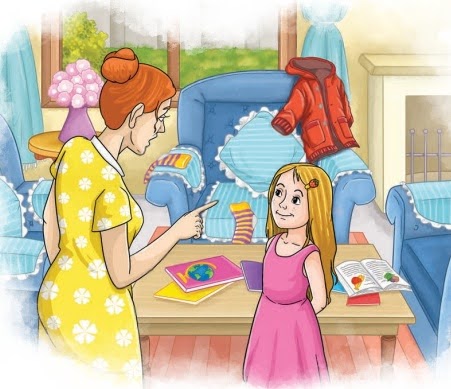
Scene I
Passage
Mrs. Shaw: The room looks cleaner now. Put that coat away in your bedroom. This room isn’t the place for coats. Mrs. Harding and Mrs. Lee will soon be here, and they don’t want to see that.
Mary: You’re always telling me to put things away.
Mrs. Shaw: Yes, I am. You leave your clothes all over the house.
Mary: I’m not a child!
Mrs. Shaw: No, you’re not. So please keep your clothes in your own room.
Mary: Why are those two women coming here? Who’s Mrs. Harding?
Mrs. Shaw: She’s the wife of a wealthy man, Mr. Harding. He has just bought a big house in Lanfield. They lived in London before. She’s coming to have a talk. I met her in a shop and asked her to come.
Mary: Oh, I’ve seen her children. They often come along the road. Who’s Mrs. Lee?
Mrs. Shaw: She’s Mr. Harding’s sister. She has been staying with them for a while.
Word meanings
Put that coat away: To store something in its proper place.
Wealthy: Rich; having a lot of money or possessions.
For a while: For a period of time.
May not say the right thing: Might say something inappropriate or offensive.
Explanation of the above passage—The play begins with Mrs. Shaw saying that the room looked cleaner now. She told Mary to put that coat away in her bedroom because that room was not the place for coats. She added that Mrs. Harding and Mrs. Lee would soon be there, and they wouldn’t want to see it. Mary replied that her mother was always telling her to put things away. Her mother confirmed that she was indeed always telling her that, because Mary left her clothes all over the house. Mary stated that she was not a child. Her mother agreed that she wasn’t, so she requested her to please keep her clothes in her own room. Mary then asked why those two women were coming there and who Mrs. Harding was. Mrs. Shaw explained that Mrs. Harding was the wife of a rich man, Mr. Harding. She said that he had just bought a big house in Lanfield and that they had lived in London before. She added that Mrs. Harding was coming to have a conversation, as Mrs. Shaw had met her in a shop and invited her to come. Mary responded that she had seen Mrs. Harding’s children, who often walked along the road. She then asked who Mrs. Lee was. Mrs. Shaw replied that Mrs. Lee was Mr. Harding’s sister, who had been staying with them for a while.
Passage
Mary: What are you going to talk about?
Mrs. Shaw: I don’t know. All kinds of things. One day you’ll have to go to some of these houses yourself and talk to the people there.
Mary: I can talk now. I’ve been able to talk for a long time.
Mrs. Shaw: Yes, that’s true. You always talk too much. But does anyone want to hear the things that you say?
Mary: I can talk very well when I like. I’ll stay with you today and talk to them when they come.
Mrs. Shaw: Oh, I don’t think so. You can go out for a walk. It will be better if you do that.
Mary: Why?
Mrs. Shaw: If you stay with me, you may not say the right thing.
Mary: I know the right things to say: “Good afternoon”, “How are you?” and things like that. Let me stay today. I can do it very well. I’ll show you. Anyone can talk.
Word meanings
talk for a long time: engaging in a conversation that extends over a significant period, from a casual chat to a formal discussion.
Explanation of the above passage—Mary inquired what they were going to talk about. Mrs. Shaw said she didn’t know, just “all kinds of things”. She added that one day Mary would have to go to some of these houses herself and talk to the people there. Mary asserted that she could talk now and had been able to talk for a long time. Mrs. Shaw acknowledged that was true, but then said Mary always talked too much and questioned if anyone wanted to hear the things she said. Mary insisted she could talk very well when she wanted to. She declared that she would stay with her mother that day and talk to the guests when they came. Mrs. Shaw, however, disagreed, suggesting that Mary should go out for a walk as it would be better. Mary asked why. To this, her mother explained that if Mary stayed, she might not say the right thing. Mary argued that she knew the right things to say, like “Good afternoon,” “How are you?” and similar phrases. She pleaded to stay that day, believing she could do it very well and prove it, stating that anyone could talk.
Passage
Mrs. Shaw: You may stay if you like. But take care. I want to know Mrs. Harding well. I want her to ask me to go to their house. There isn’t much to do here in Lanfield, and I want to know some more people. I want some more friends here. So take care when you say anything.
Mary: Tell me what to say.
Mrs. Shaw: I can’t tell you everything, but you’ll always be right if you’re kind to people. Say things that will please them. Then they’ll like you. Laugh a lot, and try to make them laugh too. And if everyone stops talking, say something to make them talk again. They don’t want to sit here and look at the floor without speaking. Think of something to say.
Word meanings
Take care: Be careful; be cautious.
Pleased: Made happy or satisfied.
Explanation of the above passage—Mrs. Shaw told Mary that she might stay if she wished. However, her mother cautioned her to take care. She explained that she wanted to know Mrs. Harding well because she wanted her (Mrs. Harding) to invite her to their house. Mrs. Shaw lamented that there wasn’t much to do in Lanfield and that she wanted to meet more people and make more friends in Lanfield. Therefore, she repeated her warning to take care when she (Mary) says anything. Mary then asked her mother to tell her what to say. Mrs. Shaw replied that she couldn’t tell her everything, but she assured Mary that she would always be correct if she was kind to people. She advised Mary to say things that would please the guests, as then they would like her. Mrs. Shaw also told Mary to laugh a lot and try to make them laugh too. She further instructed Mary that if everyone stopped talking, she should say something to make them talk again. Mrs. Shaw explained that the guests wouldn’t want to sit there looking at the floor without speaking, so Mary needed to think of something to say.
Passage
Mary: I can do that. There’s always something to say. Must I do anything else?
Mrs. Shaw: When they are ready to leave, don’t jump out of your chair and look gladly at the door. You must look sorry when they want to leave.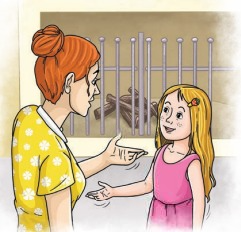
Mary: What shall I do when they want to go?
Mrs. Shaw: Ask them to stay a little while longer. Just say, “Must you go? Can’t you stay?” or something like that. You like them and you want them to stay, and you must let them understand that.
Mary: That’s not very hard, is it? I’ll remember that. “Must you go? Can’t you stay? Must you go? Can’t you stay?”
Mrs. Shaw: That’s right. Now take your coat to your room and change into a clean dress. You must look nice when they come. And if everyone stops talking, say something kind to make them talk again. And don’t say anything that will make them angry.
Mary: I will remember. I’ve often done harder things than this.
Word meanings
Gladly: Happily; with pleasure.
Sorry: Feeling regret or sadness.
A little while longer: For a short additional period of time.
Kind: In a gentle, friendly, or benevolent way.
Angry: Feeling or showing strong annoyance, displeasure, or hostility.
Explanation of the above passage—Mary stated that she could do that and that there was always something to say. She then asked if she had to do anything else. Mrs. Shaw instructed her that when the guests were ready to leave, she should not jump out of her chair and look happy to see them go. Instead, she must have looked sorry when they wanted to leave. Mary asked what she should do when they wanted to go. Mrs. Shaw told her to ask them to stay a little while longer. She advised her to just say, “Must you go? Can’t you stay?” or something similar. She explained that Mary should make them understand that she liked them and wanted them to stay. Mary remarked that that was not very hard, wasn’t it? She promised she would remember that, repeating, “Must you go? Can’t you stay? Must you go? Can’t you stay?” Mrs. Shaw confirmed that was correct. She then told Mary to take her coat to her room and change into a clean dress, emphasizing that she must look nice when the guests came. She reminded Mary that if everyone stopped talking, she should say something kind to make them talk again, and not say anything that would make them angry. Mary assured her mother that she would remember and claimed she had often done harder things than this.
Scene II
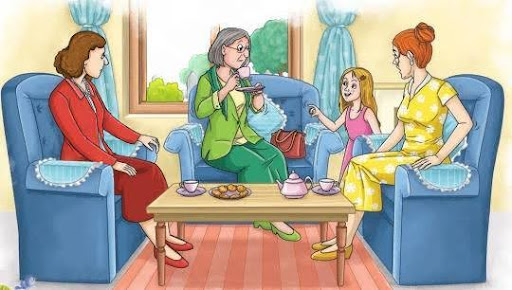
Passage
Mrs. Shaw: So you like Lanfield, Mrs. Harding! I’m very glad.
Mrs. Harding: Yes, we like it very much. It’s not the same as London, but there are some very nice people here, and we’ve found a good house. (No one says anything more, and Mrs. Shaw looks at Mary.)
Mary: What beautiful children you have, Mrs. Harding! I’ve often seen them walking along the road.
Mrs. Harding: Oh, I haven’t any children.
Mary: Oh, yes, you have! I’ve seen them: a little boy and a little girl.
Mrs. Harding: (not very pleased) I have no children; believe me.
Mary: Oh!
Mrs. Shaw: (quietly) They must be someone else’s children. Have you met Mr. Best? He’s a nice man. He lives near you.
Mary: Oh, Mr. Best! He lives here and he works in London. He goes all the way to London by train every morning, and then he comes all the way back by train every night. He lives in trains! (she laughs) What kind of life is that? Why do people do things like that? They do not know how to live. And he reads two newspapers in the train every day. He never reads a book. But he’s only a banker, and bankers can’t think.
Word meanings
Quietly: In a low voice or without much noise.
Explanation of the above passage—Mrs. Shaw expressed her happiness that Mrs. Harding liked Lanfield. Mrs. Harding confirmed that they liked it very much. She said it was not the same as London, but there were some very nice people there, and they had found a good house. No one else spoke after this, and Mrs. Shaw looked at Mary, signaling her to speak. Mary then exclaimed how beautiful Mrs. Harding’s children were, stating that she had often seen them walking along the road. Mrs. Harding, however, replied that she did not have any children. Mary, surprised, insisted that she did, saying she had seen them: a little boy and a little girl. Mrs. Harding, clearly not very pleased, firmly stated that she had no children and asked Mary to believe her.
Mary simply said, “Oh!” Mrs. Shaw then quietly interjected that the children Mary saw must belong to someone else. She quickly changed the subject, asking if they had met Mr. Best, describing him as a nice man who lived near them. Mary then began talking about Mr. Best, saying he lived there but worked in London. She described how he traveled all the way to London by train every morning and came all the way back by train every night, humorously concluding that he “lives in trains!” She laughed and questioned what kind of life that was, wondering why people did such things and claiming they did not know how to live. She also noted that he read two newspapers on the train every day and never read a book, adding dismissively that he was “only a banker, and bankers can’t think.”
Passage
Mrs. Lee: My brother’s a banker. He goes to London by train every morning and comes back every night. He reads two newspapers in the train in the morning, and another every night.
Mary: Oh, I’m sorry. I didn’t know.
Mrs. Shaw: Bankers always have to read a lot of newspapers. Do you know Mrs. Best? She’s a nice woman. I like her.
Mary: But have you seen her clothes? She goes out in a blue dress with a red coat over it. (she laughs)
Mrs. Harding: I have a blue dress, and I often put on my red coat at the same time.
Mrs. Shaw: (quickly) I like blue dresses and red coats. (No one says anything.)
Mary: I saw Mrs. Cotter this afternoon. I met her in the street. No one sees her in the morning because she always stays in bed then. And she’s always asking the doctor to go to see her. I can’t understand women who stay in bed in the morning. And why must she always ask for the doctor? I’ve never been to a doctor in my life.
Word meanings
Banker: A person who works in a bank, often in a financial or managerial role.
Explanation of the above passage—Mrs. Lee stated that her brother was a banker. She explained that he traveled to London by train every morning and returned every night. She also mentioned that he read two newspapers on the train in the morning and another every night. Mary then quickly said she was sorry, stating that she hadn’t known that information. Mrs. Shaw tried to smooth things over by remarking that bankers always had to read a lot of newspapers. She then asked if Mrs. Lee knew Mrs. Best, describing her as a nice woman whom she liked. Mary, however, immediately brought up Mrs. Best’s clothes, asking if anyone had seen them. She described Mrs. Best going out in a blue dress with a red coat over it and laughed. Mrs. Harding then interjected, saying that she herself had a blue dress and often wore her red coat at the same time. Mrs. Shaw quickly added that she liked blue dresses and red coats. No one said anything further. Mary then stated that she had seen Mrs. Cotter that afternoon in the street. She remarked that no one saw Mrs. Cotter in the morning because she always stayed in bed then. Mary added that Mrs. Cotter was always asking the doctor to visit her. Mary expressed her inability to understand women who stayed in bed in the morning and questioned why Mrs. Cotter always needed a doctor, emphasizing that she herself had never been to a doctor in her entire life.
Passage
Mrs. Harding: I stay in bed in the morning myself.
Mrs. Lee: I often go to the doctor.
Mary: Oh, I’m sorry. (No one speaks.)
Mrs. Shaw: Do you know Mrs. Grantley? She’s one of my best friends.
Mary: But she’s so talkative! Talkative women aren’t very interesting, are they?
Mrs. Lee: My mother’s a very talkative woman.
Mary: Oh, I’m sorry. I didn’t know. (No one says anything.)
Mary: (looking out of the window): Oh, there’s that dog again! It always looks very dirty. I don’t like dogs, do you? Who wants a dog? That dog’s always near our house. Why do people keep dogs? Who wants a dog? Why doesn’t its owner keep it clean? Have you seen it?
Mrs. Harding: (looking out of the window) Yes, I’ve seen it. That’s Towzer. It’s our dog.
Word meanings
Talkative: fond of or given to talking
Explanation of the above passage—Mrs. Harding stated that she herself stayed in bed in the morning. Mrs. Lee added that she often went to the doctor. Mary then said, “Oh, I’m sorry.” No one spoke after that. Mrs. Shaw then asked if they knew Mrs. Grantley, whom she described as one of her best friends. Mary, however, immediately commented that Mrs. Grantley was very talkative and questioned if talkative women were very interesting. Mrs. Lee then revealed that her own mother was a very talkative woman. Mary quickly said, “Oh, I’m sorry. I didn’t know.” Again, no one said anything. Mary then looked out of the window and exclaimed that the same dog was there again. She commented that it always looked very dirty. Mary expressed her dislike for dogs and asked who would want one. She noted that the dog was always near their house and questioned why people kept dogs and why its owner didn’t keep it clean. She asked Mrs. Harding if she had seen it.
Mrs. Harding, also looking out of the window, confirmed that she had seen it and stated that it was Towzer, their dog.
Passage
Mary: (with a red face) Oh, I didn’t know! (No one speaks.)
Mary: (still looking out of the window) There’s Mr. Pomeroy on his horse. He’s always talking about horses. He rides a horse every day, and practises shooting. Why must he do that? What have they done to Mr. Pomeroy? Why do some men like horses more than they like people? It’s hard to understand men.
Mrs. Lee: My brother practises shooting when he has the time, and he rides his horse when he can. He sold his house in London and bought a house here because he wanted to ride and practise shooting.
Mrs. Harding: (looking at Mrs. Lee) It’s getting a little late. We must go now, Mrs. Shaw. It has been very nice to have a little talk. (She looks at Mary.)
Mrs. Lee: Very nice. (She looks at Mary.)
Mrs. Shaw: It was very good of you to come to see us. Please stay a little longer.
Mary: (unable to say the right thing even now) Oh, must you stay? Can’t you go?
Word meanings
shooting: the action or practice of shooting with a gun
Explanation of the above passage—Mary’s face turned red, and she exclaimed that she had not known. No one spoke for a moment. Mary then looked out of the window again and started talking about Mr. Pomeroy on his horse. She noted that he was always talking about horses, rode one every day, and practiced shooting. She questioned why he had to do that and wondered what had happened to Mr. Pomeroy. She then pondered why some men liked horses more than they liked people, finding it hard to understand men. Mrs. Lee then explained that her brother practised shooting when he had time and rode his horse when he could. She added that he had sold his house in London and bought one there because he wanted to ride and practise shooting. Mrs. Harding looked at Mrs. Lee and stated that it was getting a little late and they must go now, Mrs. Shaw. She said that it had been “very nice to have a little talk,” and looked at Mary. Mrs. Lee agreed, saying it was “very nice,” and also looked at Mary. Mrs. Shaw responded that it was very good of them to have come to see them and asked them to please stay a little longer. Mary, still unable to say the right thing, asked, “Oh, must you stay? Can’t you go?”
Conclusion
The play Say the Right Thing by G.C. Thornley focuses on Mrs. Shaw as she tries to teach her daughter how to act properly before important guests, Mrs. Harding and Mrs. Lee, arrive. However, Mary’s literal interpretations and honest comments cause her mother’s careful plans to fall apart, leading to many funny misunderstandings and embarrassment for everyone. Students can take help from this post to understand the lesson and also learn the difficult word meanings to get a better grasp over Say the Right Thing. This lesson includes the summary of Say the Right Thing which will help students of class 7 to get a quick recap of the story.
Thank you. very clear