
CBSE Class 7 English Unit 5 – Bravehearts Chapter 3 Rani Abbakka Important Question Answers from Poorvi Book
Class 7 English Rani Abbakka Question Answers – Looking for questions and answers for CBSE Class 7 English Unit 5 – Bravehearts Chapter 3 Rani Abbakka? Look no further! Our comprehensive compilation of important questions will help you brush up on your subject knowledge. Practising Class 7 English question answers can significantly improve your performance in the exam. Improve your chances of scoring high marks by exploring Unit 5 – Bravehearts Chapter 3 Rani Abbakka now. The questions listed below are based on the latest CBSE exam pattern, wherein we have given NCERT solutions to the chapter’s extract-based questions, multiple choice questions and Extra Question Answers
Also, practising with different kinds of questions can help students learn new ways to solve problems that they may not have seen before. This can ultimately lead to a deeper understanding of the subject matter and better performance on exams.
- Rani Abbakka NCERT Solutions
- Rani Abbakka Grammar Exercise
- Rani Abbakka Extract Based Questions
- Rani Abbakka Multiple Choice Questions
- Rani Abbakka Extra Question Answers
Related:
- Rani Abbakka Summary, Explanation
- Rani Abbakka Character Sketch
- Class 7 English Summary and Lesson Notes
Rani Abbakka Textbook Questions (NCERT Solutions)
Let us do these activities before we read.
I Solve the riddle given below and share your answer with your classmates and the teacher.
She was a queen who led the fight,
She fought for her country and her right.
With a shining sword in her hand,
Her son on her back in a cloth band
Remembered as a warrior grand,
She died defending her beloved Motherland.
Who is she?
Ans. Rani Lakshmibai, the Queen of Jhansi, was a brave warrior queen who fought against British rule during the Indian Revolt of 1857.
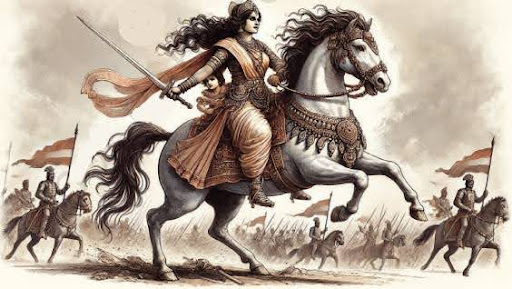
II Think of any other women warriors who made a significant contribution to India’s struggle for Independence. Share your answers with your classmates and the teacher.
Ans. One of the most iconic is Rani Lakshmibai of Jhansi. She was a key figure in the Indian Rebellion of 1857. When the British East India Company tried to annex her kingdom under the Doctrine of Lapse, she refused to surrender. She led her troops bravely in battle against the British, even fighting on horseback with her infant son tied to her back. Her courage and defiance became a symbol of Indian resistance. Another remarkable woman warrior was Rani Chennamma of Kittur. Even before the 1857 rebellion, she led an armed resistance against the British East India Company in 1824, nearly 30 years before Lakshmibai. She fiercely resisted the Doctrine of Lapse and fought valiantly to protect her kingdom’s independence. While not always leading armies directly, Begum Hazrat Mahal also played a crucial role in the 1857 revolt. She was the Begum of Awadh and took charge of the rebellion in the Awadh region after her husband, Nawab Wajid Ali Shah, was exiled. She organized forces and even issued counter-proclamations against the British, showing immense leadership and defiance.
Let us discuss
I Match the words in Column 1 with their meanings in Column 2. Share your answers with your classmates and the teacher.
| Column 1 | Column 2 |
| 1. vassal (n) | (i) extreme anger |
| 2. coronation (n) | (ii) take hold of suddenly or forcibly |
| 3. successor (n) | (iii) happen in a violent way |
| 4. rash (adj.) | (iv) acting or doing something without thinking about the consequences |
| 5. sovereign country (n) | (v) association or partnership |
| 6. league (n) | (vi) a ceremony at which a person is made king or queen |
| 7. wrath (n) | (vii) fearless |
| 8. seize (v) | (viii) capture |
| 9. resolve (n) | (ix) a country with a government having complete authority |
| 10. raged (v) | (x) a country/ state that is controlled by a more powerful country and has to pay money when needed |
| 11. decisive (adj.) | (xi) a person who succeeds another |
| 12. apprehended (v) | (xii) take revenge for |
| 13. dauntless (adj) | (xiii) showing the ability to make decisions effectively |
| 14. avenge (v) | (xiv) determination |
Ans.
| Column 1 | Column 2 |
| 1. vassal (n) | (x) a country/ state that is controlled by a more powerful country and has to pay money when needed |
| 2. coronation (n) | (vi) a ceremony at which a person is made king or queen |
| 3. successor (n) | (xi) a person who succeeds another |
| 4. rash (adj.) | (iv) acting or doing something without thinking about the consequences |
| 5. sovereign country (n) | (ix) a country with a government having complete authority |
| 6. league (n) | (v) association or partnership |
| 7. wrath (n) | (i) extreme anger |
| 8. seize (v) | (ii) take hold of suddenly or forcibly |
| 9. resolve (n) | (xiv) determination |
| 10. raged (v) | (iii) happen in a violent way |
| 11. decisive (adj.) | (xiii) showing the ability to make decisions effectively |
| 12. apprehended (v) | (viii) capture |
| 13. dauntless (adj) | (vii) fearless |
| 14. avenge (v) | (xii) take revenge for |
II Complete the table given below based on your understanding of the story. An example has been done for you. Share your answers with your classmates and the teacher.
| Cause | Effect |
| 1. Ullal had been captured by the Portuguese. | (i) Ullal had to pay a tribute to the colonial power. |
| 2. | (ii) Rani Abbakka’s husband Veera Narsimha felt it was a hasty decision. |
| 3. Veera Narsimha ordered the soldiers to stop Rani Abbakka when she said she would not be frightened by the Portuguese. | (iii) |
| 4. Rani Abbakka addressed a meeting of rajas for their support, who felt they would be no match for the Portuguese army and their power. | (iv) |
| 5. | (v) Rani Abbakka in turn attacked the Portuguese Fort. |
Ans.
| Cause | Effect |
| 1. Ullal had been captured by the Portuguese. | (i) Ullal had to pay a tribute to the colonial power. |
| 2. Rani Abbakka refused to pay tribute to the Portuguese and stopped selling them spices and cloth. | (ii) Rani Abbakka’s husband Veera Narsimha felt it was a hasty decision. |
| 3. Veera Narsimha ordered the soldiers to stop Rani Abbakka when she said she would not be frightened by the Portuguese. | (iii) The soldiers, inspired by Abbakka’s bravery, refused to obey the order. |
| 4. Rani Abbakka addressed a meeting of rajas for their support, who felt they would be no match for the Portuguese army and their power. | (iv) Their lack of support strengthened Abbakka’s resolve to fight the .Portuguese alone. |
| 5. The Portuguese attacked Ullal in response to Rani Abbakka’s defiance. | (v) Rani Abbakka in turn attacked the Portuguese Fort. |
Let us think and reflect
I Read the extract given below and answer the questions that follow.
Portuguese envoy: Our Governor has sent me to remind you that the annual tribute from Ullal is long overdue and…
Rani Abbakka: We are a sovereign country. We don’t pay tribute to Portugal. And we don’t take orders from the Portuguese!
Portuguese envoy: Your Majesty, you will regret your stand.
Abbakka ordered merchant ships to be built and in alliance with the Zamorin of Kozhikode, she defied the Portuguese and established a hugely profitable trading relation with Arabia.
1. What does the word ‘tribute’ mean in this context?
2. Complete the sentence with a suitable reason.
Rani Abbakka says, “We are a sovereign country” because __________.
3. Identify whether the following statement is true or false.
The Portuguese envoy threatened Rani Abbakka.
4. Choose a word given in brackets to replace the underlined word.
“… she defied the Portuguese and established a hugely profitable trading relation with Arabia.” (defeated/disobeyed)
5. Choose the option that lists the qualities of Rani Abbakka, based on this extract.
(i) bold
(ii) thoughtful
(iii) capable
(iv) generous
(v) determined
A. (i), (ii), and (v)
B. (ii), (iii), and (iv)
C. (i), (iii), and (v)
D. (ii), (iv), and (v)
Ans. 1. The word ‘tribute’ in this context means a payment made periodically by one state or ruler to another, especially as a sign of dependence, submission, or to secure peace and protection.
2. Rani Abbakka says, “We are a sovereign country” because she believes her country is independent and has the right to govern itself without external interference or obligations, particularly not to pay tribute to a foreign power like Portugal.
3. True. The Portuguese envoy threatened Rani Abbakka by stating, “Your Majesty, you will regret your stand.”
4. “… she disobeyed the Portuguese and established a hugely profitable trading relation with Arabia.”
5. C. (i), (iii), and (v)
(i) bold: She directly confronts the Portuguese envoy and refuses to pay tribute.
(iii) capable: She orders ships to be built and forms an alliance, establishing profitable trade.
(v) determined: She stands firm against the Portuguese demands and actively works to achieve her goals.
II Answer the following questions.
1. Rani Abbakka spoke to her mother on her deathbed. How might these words have made her mother feel?
Ans. Rani Abbakka’s words, “not to worry” and her promise “that she would not rest until she had forced the Portuguese out of the west coast,” would likely have brought her mother a sense of peace, hope, and pride. Her mother, feeling weak and distressed by the Portuguese control, would have been comforted by her daughter’s strength and unwavering determination. It would have assured her that her legacy and the freedom of their land would be fought for, easing her dying moments.
2. What does the support of the people of Ullal and the soldiers for Rani Abbakka suggest about their mindset?
Ans. The “great loyalty and support” of the people, cheering “Victory to Rani Abbakka Devi!”, and the soldiers’ refusal to capture her, choosing instead to “follow their brave leader,” suggest a mindset of fierce patriotism, deep respect for their queen, and a strong desire for freedom. They likely harbored resentment towards the Portuguese occupation and saw Rani Abbakka as their best hope for liberation. Their unwavering support indicates a shared belief in her vision and a willingness to fight for their independence.
3. How might the people of Ullal have felt when the mighty Portuguese were defeated?
Ans. When the mighty Portuguese were defeated, the people of Ullal would have felt an overwhelming sense of triumph, immense relief, and immense pride. This victory would have been a monumental moment, signifying the end of foreign oppression and the restoration of their sovereignty. They would have felt vindicated and inspired by their queen’s bravery and their collective success against a powerful enemy.
4. Why do you think Rani Abbakka’s victory against the Portuguese would have inspired other rulers to go against a foreign power?
Ans. Rani Abbakka’s victory against the Portuguese would have profoundly inspired other rulers to resist foreign powers by fundamentally altering the perception of European invincibility. Prior to her triumph, many local rulers were either subdued by the Portuguese might or were convinced that their military superiority was insurmountable, leading to fear and reluctance to challenge them. Abbakka, with her small kingdom and fierce determination, demonstrated that strategic alliances, unwavering courage, and a united populace could indeed defeat a seemingly overwhelming foreign force. Her success shattered the myth of Portuguese invincibility, offering a tangible example that resistance was not futile, but rather a viable path to regaining sovereignty. This would have emboldened other rulers, who might have been suffering under foreign dominance, to consider their own military capabilities and forge similar alliances, recognizing that a collective or even audacious individual stand could turn the tide against colonial ambitions.
Rani Abbakka Grammar Exercises
Let us learn
I Study the following words from the text.
seize, sovereign, their, soldiers
The spelling of the given words have ‘ei’ and ‘ie’ in them.
Spelling tip: ‘i’ before ‘e’ except after ‘c’
For example: receive, deceive
Now, fill in the blanks with ‘ie’ or ‘ei’ for the following words.
1. c___ling 2. bel___ve 3. th___f 4. ach___ve 5. perc___ve 6. prot___n 7. soc___ty 8. sh___ld 9. w___ght 10. fr___nd
Ans. 1. ceiling
2. believe
3. thief
4. achieve
5. perceive
6. protein
7. society
8. shield
9. weight
10. friend
II Study the highlighted word in the following sentence from the text.
…; and Bangadi too may have to face their wrath.
Was the initial letter ‘w’ pronounced?
There are many words in the English language where certain letters are not pronounced but are spelt. They are called ‘silent letters’.
For example :
campaign, knowledge, pneumonia, honour, calm
Now, find more words with silent letters.
Ans. No, in the word wrath, the initial letter ‘w’ is not pronounced. In the following words, the consonants ‘b’ are silent: thumb, lamb, debt, subtle and doubt. The consonant ‘c’ is silent in words like muscle, scissors, acquire, fascinate and scenery.
III Read the following expressions from the text.
laughing stock, last laugh
Use the dictionary page given below to find the meanings of the following.
burst out laughing, don’t make me laugh, laugh until you cry, have a good laugh.
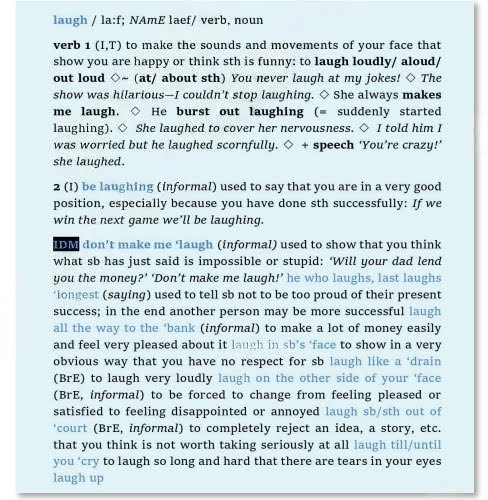
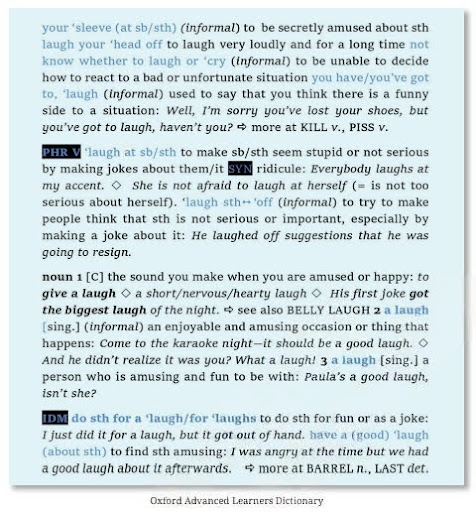
Now, use these expressions in sentences of your own.
Ans. burst out laughing: When the cat accidentally knocked over the elaborate tower of blocks, the children burst out laughing.
don’t make me laugh: You think you’re going to finish that entire project in one hour? Don’t make me laugh!
laugh until you cry: The comedian was so hilarious that the entire audience was laughing until they cried.
have a good laugh: After a stressful week, it was nice to watch a silly movie and just have a good laugh.
IV Read the following dialogues from the text.
• Rani Abbakka said, “I will make them pay for this.”
• The merchants said to the Arabians, “Visit us again, brother.”
The given sentences are the direct words of the speaker; hence, they are in direct speech.
The reported forms or indirect forms of speech for the given sentences are:
• Rani said that she would make them pay for that.
• The merchants told the Arabian brothers to visit them again.
While reporting direct speech to indirect speech, we make certain modifications related to time, place, and person.
• Time (Tense): Verbs are typically shifted back from a present tense to a past form in reported speech to reflect the change in time.
• Place (Adverbs of Place): Words indicating place are adjusted to fit the new context.
• Person: Pronouns and subjects are modified to align with the perspective of the reporter.
Changes made with reference to time (tense)
| Direct Speech | Indirect Speech |
| Present Tense | Past Tense |
| Past Tense | Past Perfect Tense |
| Past Perfect Tense | No change |
| Present Progressive Tense | Past Progressive Tense |
| Past Progressive Tense | Past Perfect Progressive Tense |
| Past Perfect Progressive Tense | No change |
| Present Perfect Tense | Past Perfect Tense |
| Present Modal | Past Modal |
| Past Modal | No change |
Changes made in pronouns
| Direct Speech | Indirect Speech |
| I | she, he |
| you (singular) | she, he |
| you (plural) | they |
| we | they |
| my | her, his |
| our | their |
| your | her, his, their |
| me | her, him |
| us | them |
| mine | hers, his |
| ours | theirs |
| yours | hers, his, theirs |
Changes in time and place expressions
| Direct Speech | Indirect Speech |
| now | then |
| ago | before |
| today | that day |
| tomorrow | the day after/the following day |
| yesterday | the day before/the previous day |
| next week/month/year | the following week/month/year |
| here | there |
| this | that |
| these | those |
Rewrite the following sentences in direct speech to indirect speech.
Remember to make the necessary changes.
1. The teacher said, “Women of valour have made significant contributions throughout history.”
The teacher remarked that _________________________________.
Ans. The teacher remarked that women of valour had made significant contributions throughout history.
2. “I enjoy reading historical novels,” said Smitha.
Smitha shared that _________________________________.
Ans. Smitha shared that she enjoyed reading historical novels.
3. The captain said to the coach, “Our team won the championship last year.”
The captain told the coach that _________________________________.
Ans. The captain told the coach that their team had won the championship the previous year.
4. The class teacher said, “Please turn off the lights when you leave.”
The class teacher requested _________________________________.
Ans. The captain requested the coach that their team had won the championship the previous year.
5. “Finish the work before dinner,” said mother to Ravi.
Mother advised _________________________________.
Ans. Mother advised Ravi to finish the work before dinner.
6. The vet said to the pet owner, “Take the dog for a walk.”
The vet instructed _________________________________.
Ans. The vet instructed the pet owner to take the dog for a walk.
V Read the conversation between the Captain and the team.
Captain: We need to focus on our strategy for the final match.
Player : I have some ideas on how we can improve our strategy.
Captain: Make sure to share those ideas with the team during practice.
Complete the following paragraph by transforming the dialogue in the indirect form of speech.
The Captain remarked that 1. ________________________________________.
To which one of the players replied that 2. ___________________________.
The Captain advised the player to 3. _________________________________.
Ans. The Captain remarked that they needed to focus on their strategy for the final match.
To which one of the players replied that he/she had some ideas on how they could improve their strategy.
The Captain advised the player to make sure to share those ideas with the team during practice.
Let us listen
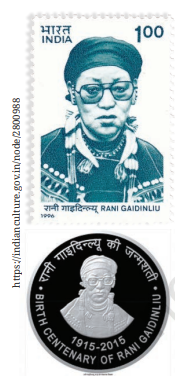
You will listen to the teacher speak about a braveheart. As you listen, complete the bio-table given below. (Transcript for the teacher on pg. 224)
| Information | Details |
| Full Name | Rani Gaidinliu |
| Date of Birth | January 1. ________ 1915 |
| Place of Birth | Tamenglong district, 2. ___________ |
| Tribe | Rongmei (Kabui) |
| Age when joined the Hereka Movement | 3. ________ |
| Main aim of Movement | Revival of Naga tribal religion and self-rule (Naga Raj) |
| Year of Arrest | 4. _________ |
| Age of Arrest | 5. _________ |
| Sentence | Life imprisonment |
| Years of Imprisonment | 1932 – 1947 |
| Title Given | ‘Daughter of the Hills’, 6. ‘____________’ |
| Award | 7. ___________________, Birsa Munda Award |
| Year of Death | 1993 |
| Honour in Silchar, Assam | Park and 8. _____________ |
| Postal Stamp Issued | 1996 |
| Commemorative Coin Issued | 9. _________ |
Ans.
| Information | Details |
| Full Name | Rani Gaidinliu |
| Date of Birth | January 1. 26 1915 |
| Place of Birth | Tamenglong district, 2. Manipur |
| Tribe | Rongmei (Kabui) |
| Age when joined the Hereka Movement | 3. 13 |
| Main aim of Movement | Revival of Naga tribal religion and self-rule (Naga Raj) |
| Year of Arrest | 4. 1932 |
| Age of Arrest | 5. 16 |
| Sentence | Life imprisonment |
| Years of Imprisonment | 1932 – 1947 |
| Title Given | ‘Daughter of the Hills’, 6. ‘Rani’ |
| Award | 7. Padma Bhushan (1982), Birsa Munda Award |
| Year of Death | 1993 |
| Honour in Silchar, Assam | Park and 8. Statue |
| Postal Stamp Issued | 1996 |
| Commemorative Coin Issued | 9. 2015 |
Let us speak
Some of the words from the story ‘Rani Abbakka’ are given in the table below. Work in pairs and pronounce these words by referring to the notes given below. Emphasise the highlighted syllable.
Remember, single syllable (monosyllabic) words do not have any stress.
| Words | Pronunciation | Notes |
| 1. vassal (n) | va-sul (two syllables) | The /a/ sound in va is similar to van.
The word vassal rhymes with apple. |
| 2. successor (n) | suhk·seh·suh (three syllables) | The /r/ sound in the end of the word is not pronounced. |
| 3. rash (adj.) r | rash (monosyllabic) | The /a/ sound is similar to rat. |
| 4. league (n) | leeg (monosyllabic) | Use the long -ee sound, as in seed. |
| 5. wrath (n) | roth (monosyllabic) | The -w is silent. |
| 6. seize (v) s | seez (monosyllabic) | Not to be confused with ‘size’. |
| 7. resolve (n) | ri-zolv (two syllables) | The -s becomes the /z/ sound. |
Let us write
India’s past was heroic, and at present, the pace of her development is inspiring. Women play a significant role in it. These women are around us, inspiring us all the time.
With these thoughts, write a conversation between two students, Pratap and Tarana, discussing the role played by women in forming India’s identity as a strong nation.
You may begin like this:
Pratap : Tarana, I have a lot of respect for women like…
Tarana : I believe in the capabilities of women. Did you…?
Complete the conversation in about six to eight sentences for each of them and share your answers with your classmates and the teacher.
Ans. Pratap: Tarana, I have a lot of respect for women like Rani Abbakka, who fought so bravely against foreign invaders, shaping our history with their courage. Their stories really make you think about India’s strength.
Tarana: I believe in the capabilities of women. Did you know that it’s not just historical figures, but also modern women who are incredibly instrumental in building India’s identity today? Think about all the women excelling in STEM fields, healthcare, and even entrepreneurship.
Pratap: You’re right! It’s truly inspiring to see women like Kalpana Chawla or Dr. Tessy Thomas, the “Missile Woman of India,” pushing boundaries in science and defense. They show the world India’s intellectual prowess and commitment to progress.
Tarana: Absolutely! And it’s not just in those high-profile fields. Even at the grassroots level, women are leading self-help groups, empowering communities, and driving economic development. Their collective efforts are silently strengthening the nation’s fabric.
Pratap: That’s a great point. So, while we admire the valor of historical queens, we should also acknowledge the everyday heroism of women who are contributing to India’s identity as a strong, developing nation right now. They are truly the backbone of our society.
Tarana: Exactly! From the farms to the boardrooms, and from ancient battlefields to modern laboratories, women’s unwavering spirit and contributions are foundational to who India is. It’s their resilience and innovation that truly reflect our nation’s progress and strength.
CBSE Class 7 English Chapter 3 Rani Abbakka Extract-Based Questions and Answers
Answer the following extract-based questions.
A.
Rani Abbakka:I need your whole-hearted cooperation to make ullal stronger, secure, free!
Crowd: We are with you, your majesty.
Victory to rani abbakka devi!
(After Coronation, Rani Abbakka spoke to her husband, Veera Narasimha.)
Rani Abbakka: I will stop paying tribute to the portuguese. I will not sell them spices, and cloth either.
Veera Narasimha: Isn’t that a rather hasty decision?
Q1: What was Rani Abbakka’s first act after being crowned Queen of Ullal?
Ans. She spoke to the crowd, asking for their complete and honest cooperation to make Ullal strong, safe, and free.
Q2. How did the crowd respond to Rani Abbakka’s address at her coronation?
Ans. The crowd responded by saying they were with her, showing their loyalty and support, and someone even exclaimed “victory to Rani Abbakka Devi!”
Q3. What two specific actions did Rani Abbakka tell her husband she planned to take regarding the Portuguese?
Ans. She planned to stop paying taxes (tribute) to the Portuguese and would also stop selling them spices and cloth.
Q4. What was Veera Narasimha’s initial reaction to Rani Abbakka’s plans?
Ans. He questioned if it wasn’t a rather hasty decision, indicating his worry or belief that she was acting too quickly.
Q5. What does the crowd’s response at the coronation reveal about their feelings towards Rani Abbakka?
Ans. It reveals their loyalty and support for her leadership and her vision for Ullal.
B.
Veera Narsimha: And a dangerous one—for me! the Portuguese might think that I am in league with her; and bangadi, too, might face their wrath. I must make her change her mind.
Rani Abbakka: You may be afraid of the portuguese. But I refuse to be intimidated by them.
(As abbakka walked away.)
Veera Narsimha: (shouted) Stop her! Seize her!!
(But such was the spell cast by the brave queen, not a soldier stirred. They decided to follow their brave leader.)
Rani Abbakka addressed a meeting of Rajas.
Rani Abbakka: If we unite and fight, we could drive the Portuguese out of our land.
First Raja: Impossible! We are no match for them.
Second Raja: I would advise you not to provoke them.
Q1. Why was Veera Narasimha worried about Rani Abbakka’s decision to stop tribute and trade with the Portuguese?
Ans. He feared the Portuguese would suspect he was collaborating with her, which could lead to their anger falling upon his own kingdom, Bangadi.
Q2. How did Rani Abbakka respond to her husband’s attempt to convince her to change her decision?
Ans. She responded by saying he might be scared, but she refused to be intimidated by the Portuguese, showing her bravery and determination.
Q3. What was the outcome when Veera Narasimha ordered his soldiers to stop Rani Abbakka?
Ans. None of the soldiers moved because of Rani Abbakka’s powerful effect on them; instead, they chose to follow her.
Q4. What was Rani Abbakka’s proposal to the other Rajas at their meeting?
Ans. She proposed that if they united and fought together, they could drive the Portuguese out of their land.
Q5. How did some of the Rajas react to Rani Abbakka’s idea of uniting and fighting the Portuguese?
Ans. One Raja replied it would be impossible, and another advised her not to provoke the Portuguese, showing their lack of confidence or fear.
C.
Rani Abbakka: We are a sovereign country. we don’t pay tribute to portugal. and we don’t take orders from the portuguese!
Portuguese Envoy: Your majesty, you will regret your stand.
(Abbakka ordered merchant ships to be built and in alliance with the zamorin of kozhikode. She hindered the Portuguese and established a highly profitable trading relation with arabs.)
Arab Merchant: Visit us again, Brother!
Ullal Merchant: God Willing, We will.
Rani Abbakka: Mother, this is the beginning, and I believe that the end will soon follow.
Q1. How does Rani Abbakka assert Ullal’s independence to the Portuguese envoy?
Ans. She firmly states that Ullal is a sovereign country, and they would not pay tribute to Portugal or take orders from them.
Q2. What was the Portuguese envoy’s reaction to Rani Abbakka’s defiance?
Ans. The Portuguese envoy threatened her by saying she would regret her stand.
Q3. Name two strategic actions Rani Abbakka took to counter Portuguese influence.
Ans. She ordered merchant ships to be build in an alliance with the Zamorin of Kozhikode and established a highly profitable trading relation with Arabs.
Q4. What does the phrase “hindered the Portuguese” imply about Rani Abbakka’s actions?
Ans. It implies that she created difficulties or obstructed the Portuguese’s activities, likely in trade or influence.
Q5. What future prediction does Rani Abbakka make while reminiscing about her mother?
Ans. She predicts that the trade between Arabs and Ullal is just the beginning, and the Portuguese’s end will soon follow.
D.
(All of the ships were apprehended on their return by the Portuguese navy. They fought bravely and all the ships returned except Abbakka’s commander. this deeply angered the queen.)
Ullu Envoy: Your majesty, our commander kept them busy while we escaped. His ship must have been captured by the enemy.
Rani Abbakka: I will make them pay for this.
(Abbakka sent an envoy to Mangalore, the Portuguese base.)
(The Portuguese replied however, by attacking. abbakka stood watching as the cannons boomed from across the river.)
Rani Abbakka: So the Portuguese have replied! Mother, bless me. the time to avenge your defeat has come.
(Abbakka in turn unleashed her forces and they attacked the Portuguese fort.)
Ribero: I will get help from Goa and we will yet have the last laugh.
(Ribero, the Portuguese commander, escaped with his life.)
Ullu Forces: Victory to Abbakka!
Q1. What significant loss did Rani Abbakka’s forces suffer, despite fighting bravely?
Ans. Her commander’s ship was captured by the Portuguese Navy.
Q2. How did Rani Abbakka initially react to the loss of her commander’s ship?
Ans. She was deeply angered and vowed to “make them pay.”
Q3. What was the Portuguese response to Rani Abbakka sending an envoy to their base in Mangalore?
Ans. Their response was aggressive; they launched an attack with cannon fire from across the river, initiating a direct military confrontation.
Q4. What was the immediate action taken by Rani Abbakka after the Portuguese launched their attack?
Ans. She unleashed her forces and launched an offensive attack on the Portuguese fort.
Q5. What was Portuguese commander Ribeiro’s defiant hope during the battle for the fort?
Ans. He hoped to get help (reinforcements) from Goa and believed that they (the Portuguese) would “have the last laugh” (ultimately win).
Class 7 Rani Abbakka Multiple-Choice Questions
Q1. Which kingdom did Rani Abbakka rule?
A. Goa
B. Mangalore
C. Ullal
D. Bangadi
Ans. C. Ullal
Q2. What did Ullal become to the Portuguese when Abbakka’s mother was dying?
A. An ally
B. A trading partner
C. A sovereign state
D. A vassal
Ans. D. A vassal
Q3. What was Rani Abbakka’s promise to her dying mother?
A. To seek revenge on her husband.
B. To never rest until the Portuguese were forced out of the west coast.
C. To pay all the overdue tributes.
D. To form an alliance with the Portuguese.
Ans. B. To never rest until the Portuguese were forced out of the west coast.
Q4. What was the first major decision Rani Abbakka made after being crowned queen?
A. To sell more spices to the Portuguese.
B. To pay all taxes to the Portuguese.
C. To stop paying taxes (tribute) to the Portuguese.
D. To surrender to the Portuguese.
Ans. C. To stop paying taxes (tribute) to the Portuguese.
Q5. Who was Rani Abbakka’s husband?
A. Venkatappa Nayak
B. Shivappa Nayak
C. Veera Narasimha
D. Ribeiro
Ans. C. Veera Narasimha
Q6. Why was Rani Abbakka’s husband worried about her decision?
A. He feared she would lose money.
B. He thought she was being too friendly with the Portuguese.
C. He feared the Portuguese would think he was working with her and attack his kingdom.
D. He believed she was making a smart move.
Ans. C. He feared the Portuguese would think he was working with her and attack his kingdom.
Q7. How did the soldiers react when Veera Narasimha ordered them to stop Rani Abbakka?
A. They immediately obeyed him.
B. They ran away in fear.
C. They refused to move and decided to follow Rani Abbakka.
D. They captured Rani Abbakka.
Ans. C. They refused to move and decided to follow Rani Abbakka.
Q8. What did Rani Abbakka propose to other Rajas at a meeting?
A. To pay more tribute to the Portuguese.
B. To surrender to the Portuguese.
C. To unite and fight to drive the Portuguese out of their land.
D. To form trade agreements with the Portuguese.
Ans. C. To unite and fight to drive the Portuguese out of their land.
Q9. How did some other rulers (Rajas) react to Abbakka’s proposal?
A. They enthusiastically agreed.
B. They advised her not to provoke the Portuguese, stating it was impossible to fight them.
C. They offered her military support immediately.
D. They ignored her completely.
Ans. B. They advised her not to provoke the Portuguese, stating it was impossible to fight them.
Q10. What was Rani Abbakka’s determination after hearing the fearful reactions of the Rajas?
A. She decided to give up the fight.
B. She decided to negotiate with the Portuguese.
C. She declared she would fight the Portuguese alone if needed.
D. She sought help from her husband again.
Ans. C. She declared she would fight the Portuguese alone if needed.
Q11. What did the Portuguese officer sent by their Governor demand from Rani Abbakka?
A. A trade agreement.
B. An alliance.
C. The overdue annual tribute.
D. Her surrender.
Ans. C. The overdue annual tribute.
Q12. How did Rani Abbakka respond to the Portuguese officer’s demand for tribute?
A. She agreed to pay immediately.
B. She asked for more time.
C. She firmly stated Ullal was sovereign and would not pay tribute or take orders.
D. She offered a smaller payment.
Ans. C. She firmly stated Ullal was sovereign and would not pay tribute or take orders.
Q13. What strategic action did Abbakka take after the Portuguese threat?
A. She built more palaces.
B. She ordered merchant ships to be built and allied with the Zamorin of Kozhikode.
C. She surrendered to the Portuguese.
D. She fled Ullal.
Ans. B. She ordered merchant ships to be built and allied with the Zamorin of Kozhikode.
Q14. With whom did Rani Abbakka establish a highly profitable trading relationship?
A. The Portuguese
B. The British
C. The Arabs
D. The French
Ans. C. The Arabs
Q15. What happened to Rani Abbakka’s commander’s ship on its return journey?
A. It successfully returned with goods.
B. It was welcomed by the Portuguese.
C. It was captured by the Portuguese Navy.
D. It sank in a storm.
Ans. C. It was captured by the Portuguese Navy.
Q16. How did the Portuguese react to Rani Abbakka sending an envoy to their base in Mangalore?
A. They agreed to negotiations.
B. They offered a peace treaty.
C. They launched an aggressive attack with cannon fire.
D. They returned her commander’s ship.
Ans. C. They launched an aggressive attack with cannon fire.
Q17. What was Rani Abbakka’s immediate retaliation after the Portuguese attack?
A. She surrendered.
B. She launched an offensive against a Portuguese fort.
C. She sought more allies.
D. She rebuilt her lost ships.
Ans. B. She launched an offensive against a Portuguese fort.
Q18. What was the name of the Portuguese commander who fought fiercely but eventually lost the fort?
A. Venkatappa Nayak
B. Shivappa Nayak
C. Veera Narasimha
D. Ribeiro
Ans. D. Ribeiro
Q19. How long did the final decisive battle between Ullal and the Portuguese rage?
A. One day
B. One month
C. Four days
D. Ten days
Ans. C. Four days
Q20. Who eventually drove the Portuguese completely out of Mangalore, with Abbakka’s help?
A. Veera Narasimha
B. The Zamorin of Kozhikode
C. Shivappa Nayak
D. Ribeiro
Ans. C. Shivappa Nayak
CBSE Class 7 English Poorvi Book Unit 5 – Bravehearts Chapter 3 Rani Abbakka Extra Question Answers
Answer the following questions.
Q1. What was the main reason Rani Abbakka decided to go against the Portuguese?
Ans. Rani Abbakka decided to go against the Portuguese because they had taken control of her kingdom, Ullal, forcing it to become a “vassal” state that paid tribute, and she promised her dying mother she would free Ullal from their control.
Q2. How did Rani Abbakka’s husband, Veera Narasimha, react to her initial decision to stop paying tribute to the Portuguese?
Ans. Veera Narasimha reacted with worry, considering it a “hasty decision” because he feared that the Portuguese might think he was allied with her, which could lead to his own kingdom, Bangadi, suffering their anger.
Q3. What unique ability did Rani Abbakka demonstrate when her husband tried to have her stopped by his soldiers?
Ans. Rani Abbakka demonstrated a powerful influence over the soldiers; none of them moved to stop her, and instead, they chose to follow her, showing her strong leadership and courage.
Q4. Besides direct military confrontation, what other strategies did Rani Abbakka employ to counter Portuguese influence?
Ans. Rani Abbakka employed strategic actions such as ordering the building of merchant ships, forming an alliance with the Zamorin of Kozhikode, and establishing highly profitable trading relations with Arab merchants.
Q5. What was the ultimate outcome of the four day battle between Ullal and the Portuguese, as described in the play?
Ans. The ultimate outcome was a decisive victory for Ullal; the Portuguese were defeated and forced to make a hasty retreat to Goa, never to trouble Ullal again, signifying Ullal’s freedom and independence.