
Ode to a Nightingale Summary and Explanation
CBSE Class 11 English (Elective) Poem 8- Ode to a Nightingale Summary, Explanation along with Difficult Word Meanings from Woven Words Book
Ode to a Nightingale Summary – Are you looking for the summary, theme and lesson explanation for CBSE 11 English (Elective) Poem 8 – Ode to a Nightingale from English Woven Words Book . Get Ode to a Nightingale Poem summary, theme, explanation along with difficult word meanings
CBSE Class 11 English (Elective) Poem 8 – Ode to a Nightingale
By John Keats
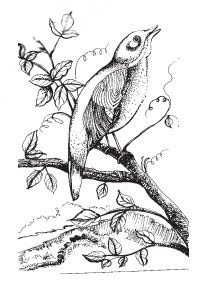
“Ode to a Nightingale” explores what it means to be human. The speaker thinks about life, death, beauty, and the impact of art, all while being charmed by the beautiful song of a nightingale. The nightingale’s song serves as a symbol of beauty, immortality, and art, contrasting with the speaker’s own mortality.
- Ode to a Nightingale Summary
- Ode to a Nightingale Summary in Hindi
- Ode to a Nightingale Theme
- Ode to a Nightingale Explanation
- Ode to a Nightingale Poetic Devices
Related:
Ode to a Nightingale Summary
Ode to a Nightingale describes a speaker’s intense emotional state, brought on by listening to the beautiful song of a nightingale.
In the first stanza, the speaker feels a deep sadness, almost like he has taken a drug that numbs him. He clarifies that this feeling isn’t because he envies the nightingale’s happiness. Instead, he feels very sad because the nightingale is so happy in its easy, full-throated song of summer, sitting among the green trees. He longs to share that pure joy.
In the second stanza, the speaker wishes for a glass of old, cool wine. He imagines this wine tasting of nature, dance, joy, and poetry, like the warm South of France. He desires to drink this wine to escape the world and disappear into the dim forest with the nightingale.
The third stanza reveals why the speaker wishes to escape. He wants to forget the weariness, fever, and fret that the nightingale, as an immortal bird, has never known. He describes the human world as a place full of suffering, where people groan, grow old and sick, and youth dies. It’s a place where simple thinking leads to sorrow and despair, and even beauty and new love are fleeting.
In the fourth stanza, the speaker declares that the nightingale is an “immortal Bird” because its song lives on through generations, having been heard by people throughout history, from emperors to common folk. He imagines this same timeless song once comforted Ruth, who felt homesick and sad in a foreign land. It’s also the same song that has opened magical windows onto perilous, mythical seas in forgotten fairy lands.
Finally, in the last stanza, the speaker is pulled back to reality. The word “Forlorn” (which means sad and lonely) acts like a bell, reminding him of his solitary self. He bids farewell to the nightingale, realizing that his imagination can’t keep him in this dream world any longer. The nightingale’s sorrowful song slowly fades away over the meadows, across the stream, and up the hillside until it’s gone. The speaker is left wondering if his experience was real or just a dream, unsure if he’s truly awake or still sleeping, as the music has completely vanished.
Summary of the Poem Ode to a Nightingale in Hindi
ओड टू ए नाइटिंगेल एक वक्ता की तीव्र भावनात्मक स्थिति का वर्णन करता है, जो एक नाइटिंगेल के सुंदर गीत को सुनने से सामने आती है।
पहले छंद में, वक्ता को एक गहरा दुख महसूस होता है, जैसे कि उसने एक दवा ली है जो उसे सुन्न कर देती है। वह स्पष्ट करता है कि यह भावना इसलिए नहीं है क्योंकि वह नाइटिंगेल की खुशी से ईर्ष्या करता है। इसके बजाय, वह बहुत दुखी महसूस करता है क्योंकि नाइटिंगेल हरे पेड़ों के बीच बैठे, गर्मी के अपने आसान, पूरे गले वाले गीत में बहुत खुश है। वह उस शुद्ध आनंद को साझा करने के लिए तरसता है।
दूसरे छंद में, वक्ता एक गिलास पुरानी, ठंडी शराब की कामना करता है। वह फ्रांस के गर्म दक्षिण की तरह प्रकृति, नृत्य, आनंद और कविता के इस शराब स्वाद की कल्पना करता है। वह दुनिया से बचने के लिए इस शराब को पीना चाहता है और नाइटिंगेल के साथ मंद जंगल में गायब हो जाता है।
तीसरे छंद से पता चलता है कि वक्ता क्यों भागना चाहता है। वह उस थकान, बुखार और चिंता को भूलना चाहता है जिसे एक अमर पक्षी के रूप में नाइटिंगेल कभी नहीं जानता था। वह मानव जगत को पीड़ा से भरे स्थान के रूप में वर्णित करते हैं, जहाँ लोग कराहते हैं, बूढ़े और बीमार हो जाते हैं, और युवा मर जाते हैं। यह एक ऐसी जगह है जहाँ सरल सोच दुख और निराशा की ओर ले जाती है, और यहाँ तक कि सुंदरता और नया प्यार भी क्षणभंगुर है।
चौथे छंद में, वक्ता घोषणा करता है कि नाइटिंगेल एक “अमर पक्षी” है क्योंकि इसका गीत पीढ़ियों से जीवित है, जिसे सम्राटों से लेकर आम लोगों तक, पूरे इतिहास में लोगों द्वारा सुना गया है। वह उसी कालातीत गीत की कल्पना करता है जो एक बार रूथ को सांत्वना देता था, जो एक विदेशी भूमि में घर की कमी और दुखी महसूस करती थी। यह वही गीत है जिसने भूल गए परियों की भूमि में खतरनाक, पौराणिक समुद्रों पर जादुई खिड़कियां खोल दी हैं।
अंत में, अंतिम छंद में, वक्ता को वास्तविकता की ओर वापस खींचा जाता है। “बेसहारा” शब्द (जिसका अर्थ है दुखी और अकेला) एक घंटी की तरह काम करता है, जो उसे अपने अकेलेपन की याद दिलाता है। वह नाइटिंगेल को अलविदा कहता है, यह महसूस करते हुए कि उसकी कल्पना उसे अब इस सपनों की दुनिया में नहीं रख सकती है। नाइटिंगेल का दुखद गीत धीरे-धीरे घास के मैदानों पर, धारा के पार और पहाड़ी के ऊपर तब तक गायब हो जाता है जब तक कि यह नहीं चला जाता। वक्ता यह सोचकर रह जाता है कि क्या उसका अनुभव वास्तविक था या सिर्फ एक सपना था, अनिश्चित है कि वह वास्तव में जाग रहा है या अभी भी सो रहा है, क्योंकि संगीत पूरी तरह से गायब हो गया है।
Theme of the Poem Ode to a Nightingale
Escape and the Desire for Transcendence
This theme explores the speaker’s intense longing to leave behind the painful human world. He wishes to “fade far away” with the nightingale, escaping from the “weariness, fever, and the fret” of human life. He considers using wine as a way to achieve this escape, hoping it will make him forget his sorrows and let him disappear “unseen” into the natural world of the bird. This shows a deep desire to rise above everyday suffering and find a perfect, peaceful existence.
Immortality versus Mortality
The poem sharply contrasts the eternal nature of the nightingale’s song with the short, suffering life of humans. The speaker calls the bird “immortal” because its voice has been heard throughout history by all kinds of people, from ancient emperors to common folk, suggesting that the song itself never truly dies. In contrast, human life is full of aging, sickness (“youth grows pale, and spectre-thin, and dies”), and the fading of beauty and love, emphasizing human mortality.
The Power and Limits of Imagination
Keats explores how imagination can transport us beyond reality. The speaker tries to use his “fancy” (imagination) to join the nightingale’s world, creating vivid scenes of ancient times and “faery lands forlorn.” This shows imagination’s incredible power to create beauty and provide temporary relief from pain. However, the poem also shows imagination’s limits, as the speaker is ultimately “tolled back” to his own sad reality, realizing that imagination “cannot cheat so well” forever.
The Relationship Between Beauty and Suffering
A central idea is that profound beauty and deep suffering are closely linked. The speaker experiences pain not because he envies the nightingale, but because its pure, effortless happiness makes him more acutely aware of human misery. The poem suggests that to fully appreciate intense beauty, one must also understand and confront the reality of suffering, which the “immortal” bird does not know. Human beauty and love are also shown to be fleeting, adding to the sorrow.
Reality versus the Ideal/Dream
The poem constantly shifts between the harsh, suffering reality of the human world and the perfect, ideal world represented by the nightingale’s song. The nightingale’s existence seems like a beautiful dream, free from all human ailments. The speaker attempts to cross into this ideal state through his imagination and by considering wine. However, the poem ends with him being pulled back to his real life, leaving him to question whether his profound experience was a true “vision” or just a “waking dream,” highlighting the difficulty of maintaining an ideal escape.
Ode to a Nightingale Poem Explanation
Stanza
My heart aches, and a drowsy numbness pains
My sense, as though of hemlock I had drunk,
Or emptied some dull opiate to the drains
One minute past, and Lethe-wards had sunk:
’Tis not through envy of thy happy lot,
But being too happy in thine happiness,
That thou, light-winged Dryad of the trees,
In some melodious plot
Of beechen green, and shadows numberless,
Singest of summer in full-throated ease.
Word meanings
Drowsy: feeling sleepy
Numbness: a lack of sensation
Hemlock: A highly poisonous plant, historically used to execute people.
Opiate: A drug (like opium) that causes sleep or dulls the senses and reduces pain.
Drains: throwing something away completely, emptying it.
Lethe: in ancient Greek mythology, an imaginary river whose water, when drunk, was thought to make the dead forget their life on Earth.
Thy: An old form of “your.”
Thine: An old form of “your” or “yours”
Thou: An old form of “you.”
Light-winged: Having light or delicate wings.
Dryad: in stories, a female spirit that lives in a tree.
melodious: a pleasant musical sound.
beechen: Made of wood from a beech tree, or referring to a place with beech trees.
singest: An old form of “sings.”
full-throated ease: singing strongly, clearly, and effortlessly, with no strain.
Explanation of the above stanza—The speaker begins by describing a strong feeling of pain and a sleepy numbness in his mind and body. He feels as if he has recently (just a minute ago) drunk a poisonous liquid like hemlock, or poured out a dull, sleep-inducing drug and then drifted towards a state of forgetting, similar to the mythical river Lethe. He quickly clarifies that this painful numbness isn’t because he is jealous of the nightingale’s joyful situation. Instead, he feels this way because he is so overwhelmed by the nightingale’s happiness. He sees the nightingale as a light-winged tree spirit (Dryad) singing effortlessly of summer in a beautiful, green, shady place full of beech trees (‘shadows numberless’).
Stanza
O, for a draught of vintage! that hath been
Cool’d a long age in the deep-delved earth,
Tasting of Flora and the country green,
Dance, and Provencal song, and sunburnt mirth!
O, for a beaker full of the warm South,
Full of the true, the blushful Hippocrene,
With beaded bubbles winking at the brim,
And purple-stained mouth;
That I might drink, and leave the world unseen,
And with thee fade away into the forest dim.
Word meanings
Draught: a drink
Vintage: wine of high quality from a particular year.
Hath been: Has been
Deep-delved earth: Earth that has been dug deep down.
Tasting of Flora: the taste or essence of flowers.
Provencal: (pronounced Provensaal) of the district of Provence in France, known for its bards and its grapevines.
Sunburnt mirth: Joy or merriment associated with being out in the sun
Beaker: A large cup or goblet, often used for drinking.
Warm South: Refers to the sunny, vibrant regions of southern Europe (like Provence),
Hippocrene: a fountain in Mount Helicon associated with poetry; in the poem it refers to the wine that inspires poetic ability.
Beaded bubbles winking at the brim: Tiny, sparkling bubbles that appear and disappear quickly at the very edge of the glass, like winking eyes.
Purple-stained mouth: A mouth colored purple from drinking red wine.
Forest dim: A forest that is dark and shadowy.
Explanation of the above stanza—The speaker strongly wishes for a drink of very old, high-quality wine. He imagines this wine has been kept cool for a very long time deep underground. He pictures this wine tasting like flowers and the freshness of the countryside, like dancing, and like the lively songs of Provence (a region in France known for its wine and poetry), and joyful, tanned faces (sunburnt mirth). He repeats his wish, this time for a large glass of wine that feels like the “warm South” (a sunny, vibrant southern region, like Provence). He wants a glass filled with the pure, reddish wine from Hippocrene (a mythical fountain that inspires poetry). He imagines tiny bubbles sparkling and disappearing at the edge of the glass, and that drinking it would stain his mouth purple. His ultimate desire is to drink this wine so he can quietly leave the real world without anyone seeing him, and then disappear with the nightingale into the dark, shadowed forest.
Stanza
Fade far away, dissolve, and quite forget
What thou among the leaves hast never known
The weariness, the fever, and the fret
Here, where men sit and hear each other groan;
Where palsy shakes a few, sad, last gray hairs,
Where youth grows pale, and spectre-thin, and dies;
Where but to think is to be full of sorrow
And leaden-eyed despairs,
Where Beauty cannot keep her lustrous eyes,
Or new Love pine at them beyond tomorrow.
Word meanings
fade far away: to gradually disappear into the distance
What thou among the leaves hast never known: What the nightingale, living among the leaves, have never experienced or understood.
Weariness: fatigue
Fever: a state of restless excitement, agitation, or a restless illness, not necessarily a high body temperature.
Fret: To be constantly worried or anxious; to feel agitated.
Groan: To make a deep, mournful sound, usually expressing pain or despair.
Palsy: A medical condition that causes shaking or uncontrolled trembling, often associated with old age.
Spectre-thin: Extremely thin, like a ghost or skeleton.
Leaden-eyed despairs: Feelings of hopelessness that make one’s eyes look heavy, dull, and lifeless (as if made of lead).
Pine at them: To suffer emotional or physical decline because of longing or grief; here, to yearn for beauty but be unable to keep it.
Beyond tomorrow: lasting beyond a very short period of time; implying fleetingness.
Explanation of the above stanza—The speaker expresses a strong desire to disappear, melt away, and completely forget all the suffering that the nightingale, living freely among the leaves, has never experienced. He is talking about human suffering. The feeling of being very tired, the restless agitation, and constant worry. He describes the human world as a place where people sit around and listen to each other complain and suffer. It’s a place where old age brings a shaking illness (palsy) that affects the last few sad, gray hairs. It’s also a place where young people become sickly, thin like ghosts, and eventually die. In this human world, just thinking about things is enough to fill one with sorrow and heavy, despairing feelings. Even beauty cannot last or keep its bright, shining eyes, and new love, no matter how strong, cannot last beyond tomorrow’s inevitable end.
Stanza
Thou wast not born for death, immortal Bird!
No hungry generations tread thee down;
The voice I hear this passing night was heard
In ancient days by emperor and clown:
Perhaps the self-same song that found a path
Through the sad heart of Ruth, when, sick for home,
She stood in tears amid the alien corn;
The same that oft-times hath
Charm’d magic casements, opening on the foam
Of perilous seas, in faery lands forlorn.
Word meanings
Immortal Bird: the nightingale’s song and its species, not an individual bird’s literal immortality.
Hungry generations: New generations coming after, eager to replace the old ones.
Tread thee down: To crush you or suppress you
Passing night: The current night that is going by.
Ancient days: A very long time ago, in the past.
Emperor: A ruler of an empire, a very powerful person.
Clown: A common, ordinary person; someone of low social status
Self-same song: The exact same song.
Ruth: a woman in the Bible who left her own people to live with her mother-in-law, Naomi. After the death of her husband, marries Boaz and is the ancestor of King David.
Amid the alien corn: In the middle of unfamiliar fields of grain
Oft-times hath: Often has (archaic).
Magic casements: Magical windows, especially those that open outwards.
Faery lands forlorn: Distant, deserted, or lonely mythical lands of fairies.
Explanation of the above stanza—The speaker addresses the nightingale directly, saying that it was not created to die; it is an “immortal Bird.” He means that while individual nightingales might die, the species and, more importantly, its beautiful song, seem to live forever. No new generations coming after it will destroy or replace it. The speaker then reflects on the timelessness of the nightingale’s song. He believes the very voice he is hearing this night has been heard throughout history by all kinds of people, from powerful emperors to humble clowns. He imagines that it might even be the exact same song that once brought comfort to the sad heart of Ruth (a woman from the Bible), who felt deeply homesick and cried while working among unfamiliar crops in a foreign land. The speaker also suggests that this same song has often had the power to charm and open magical windows (“magic casements”) that look out onto dangerous seas in lost or forgotten fairy tales lands.
Stanza
Forlorn! the very word is like a bell
To toll me back from thee to my sole self!
Adieu! the fancy cannot cheat so well
As she is fam’d to do, deceiving elf.
Adieu! adieu! thy plaintive anthem fades
Past the near meadows, over the still stream,
Up the hill-side; and now ’tis buried deep
In the next valley-glades:
Was it a vision, or a waking dream?
Fled is that music:—Do I wake or sleep?
Word meanings
Forlorn: Feeling sad and lonely, abandoned, or deserted.
Toll me back: To call or draw him back, like a bell ringing to signal a return.
Sole self: His single, lonely self
Adieu: Goodbye
Fancy: Imagination personified as a female entity.
Fam’d to do: Famous or well-known for doing something.
Deceiving elf: An elf that tricks or misleads; refers to imagination’s ability to create illusions.
Plaintive: Sounding sad and mournful.
Anthem: A song, usually a hymn or a song of praise. Here, it refers to the nightingale’s characteristic song.
Still stream: A quiet, slow-moving stream.
’Tis: It is (an old contraction of “it is”).
Valley-glades: Open, grassy clearings within valleys.
Vision: Something seen in a dream or trance; a supernatural sight.
Waking dream: A dream experienced while one is awake; a vivid daydream.
Fled is that music: That music has gone away or disappeared.
Explanation of the above stanza—The speaker is suddenly pulled out of his dreamy state. He says that the word “Forlorn” itself acts like a bell, ringing to bring him back from his imaginative journey with the nightingale to his lonely, real self. He then says goodbye (“Adieu!”) to the nightingale, realizing that his imagination, which is usually good at tricking him, isn’t working as well as it’s known for. He calls his imagination a “deceiving elf” that couldn’t keep him in the fantasy world. He says goodbye again to the nightingale. Its sad song (its “plaintive anthem”) slowly disappears. He describes the sound fading away past nearby meadows, over a quiet stream, and up the hillside. Finally, the song becomes completely silent, as if it’s buried deep in the next valley’s clearings. The speaker is left feeling confused, wondering if his entire experience of hearing the nightingale was a true vision or just a vivid dream he had while awake. He notes that the music is now gone, and he’s uncertain whether he is truly awake or still dreaming.
Ode to a Nightingale Poetic Devices
Oxymoron
An oxymoron is a figure of speech that combines two words that seem to contradict each other. The poem starts with an oxymoron: “drowsy numbness pains.” “Numbness” usually means no feeling, but here it “pains,” showing a complex and confusing state. Another example is “waking dream,” which combines being awake with being in a dream, highlighting the blurred line between reality and imagination.
Apostrophe
Apostrophe is a direct address to someone or something that is absent, dead, or cannot respond. The entire poem is an extended example of apostrophe because the speaker talks directly to the nightingale (“Thou, light-winged Dryad,” “immortal Bird!”) even though the bird cannot talk back. This creates a strong sense of personal connection and intensity in the speaker’s feelings.
Allusion
Allusion is a reference to a well-known person, place, event, literary work, or myth outside the poem. Keats uses many allusions that add depth to his work. For instance, he mentions “Lethe,” a mythical river in Greek mythology that makes the dead forget. He also refers to “Flora,” the Roman goddess of flowers, and “Hippocrene,” a mythical fountain that inspires poetry. The mention of “Ruth” from the Bible connects the nightingale’s song to a universal human experience of homesickness and sorrow.
Personification
Personification is giving human qualities or actions to inanimate objects or animals. The poem gives human traits to non-human things, like “beaded bubbles winking at the brim,” as if the bubbles have eyes and can blink. Also, “Beauty cannot keep her lustrous eyes” gives beauty the human ability to have eyes and keep them bright. This makes the non-human elements feel more alive and relatable.
Simile
A simile is a comparison between two different things using the words “like” or “as.” The poet uses a simile when he says his “sense, as though of hemlock I had drunk,” comparing his feeling of numbness to the effect of a deadly poison. Later, when he is pulled back to reality, he says, “Forlorn! the very word is like a bell / To toll me back,” comparing the sudden, jarring feeling to the sound of a bell.
Metaphor
A metaphor is a figure of speech where a word or phrase is applied to an object or action to which it is not literally applicable, suggesting a resemblance without using “like” or “as.” For example, the poet calls the nightingale a “light-winged Dryad of the trees,” directly comparing the bird to a mythical tree spirit. When he talks about a “beaker full of the warm South,” he is metaphorically describing the wine as embodying the warmth and spirit of a vibrant southern region.
Imagery
Imagery is a poetic device that uses descriptive language to create vivid pictures and sensations in the reader’s mind, appealing to the five senses: sight, sound, smell, taste, and touch. The poem features rich visual imagery, depicting lush scenes like “beechen green, and shadows numberless” in the forest and the enticing description of wine with “beaded bubbles” and a “purple-stained mouth.” It conveys human sadness through phrases like “youth grows pale” and “Beauty cannot keep her lustrous eyes,” highlighting loss. The “magic casements” evoke a sense of adventure. Auditory imagery is prominent, emphasizing the nightingale that “Singest of summer in full-throated ease,” against the background of men who “groan” in suffering. The word “Forlorn!” serves as a somber reminder of reality. Taste and smell are also present, with mentions of “hemlock” and wine “Tasting of Flora and the country green,” suggesting nature’s vibrant essence. Tactile and kinesthetic imagery add depth, describing the speaker’s “drowsy numbness” and the wine’s “Cool’d a long age in the deep-delved earth.” Human suffering is illustrated through sensations of “weariness, fever, and fret,” while the nightingale’s graceful movements are evoked as it “darts away,” reflecting the speaker’s desire to “fade far away.”
Consonance
Consonance is a literary device where the same consonant sound is repeated in nearby words. This repetition can happen anywhere in the words – at the beginning, in the middle, or at the end. Some of the instances of consonance in the poem are ‘drowsy numbness pains’, ‘though of hemlock’, ‘envy of thy happy’,’Tis not through’, ‘too happy in thine happiness,/That thou’, ‘shadows numberless,/Singest of summer’,’draught of vintage’, ‘that hath’, ‘light-winged’, ‘deep-delved’, ‘country green’, ‘Dance, and Provencal song, and sunburnt mirth’, ‘the blushful Hippocrene’, ‘beaded bubbles’, ‘with thee fade away into the forest’, quite forget/What thou’, ‘palsy shakes a few, sad, last gray hairs’, ‘And leaden-eyed despairs’, ‘never known’, ‘Thou wast not born for death’, ‘immortal Bird!’, ‘hungry generations tread thee’, ‘The voice I hear this passing night was heard’, ‘Through the sad heart of Ruth’, ‘She stood in tears, The same that oft-times hath’, ‘Charm’d magic casements’, ‘perilous seas’, ‘in faery lands forlorn’, ‘Forlorn! the very word’, ‘fancy cannot cheat’, ‘thy plaintive anthem’, ‘buried deep’.
Assonance
Assonance is the repetition of similar vowel sounds within words that are close to each other. Some of the instances of Assonance in the poem are ‘though of hemlock’, ‘emptied some dull opiate’, ‘light-winged’, ‘some melodious plot’, ‘beechen green’, ‘that hath’, ‘the deep-delved earth’, ‘leave the world unseen’, ‘Fade far away’, ‘The weariness, the fever, and the fret’, ‘new Love pine’, ‘beyond tomorrow’, ‘Thou wast not born for death, immortal’, ‘generations tread thee’, ‘Charm’d magic casements’, ‘opening on the foam, fancy cannot cheat’, ‘plaintive anthem fades/Past the near meadows’, ‘buried deep’.
Alliteration
Alliteration is the repetition of the same starting sound in words that are close together. This creates a musical effect and draws attention to certain phrases. Some of the instances of alliteration in the poem are ‘Singest of summer’, ‘deep-delved’, ‘song, and sunburnt’, ‘beaded bubbles’, ‘Fade far’, ‘self-same song’, ‘tread thee’, ‘do, deceiving’, ‘still stream’ and ‘sole self’.
Onomatopoeia
Onomatopoeia is the use of words that imitate the sounds they describe. While not as heavily used as other devices, there are subtle instances. When the poet mentions men who “groan,” the word itself mimics the sound of pain or despair. Similarly, the word “toll” in “like a bell / To toll me back” imitates the deep, slow sound of a bell, emphasizing its impact on the speaker.
Conclusion
Ode to a Nightingale is a poem by John Keats explores what it means to be human. The speaker thinks about life, death, beauty, and the impact of art, all while being charmed by the beautiful song of a nightingale. The nightingale’s song serves as a symbol of beauty, immortality, and art, contrasting with the speaker’s own mortality. Students can take help from this post to understand the poem and also learn the difficult word meanings to get a better grasp of Ode to a Nightingale. This lesson includes a summary of Ode to a Nightingale, which will help students in class 11 to get a quick recap of the poem.