
Hawk Roosting Summary and Explanation
CBSE Class 11 English (Elective) Poem 7 – Hawk Roosting Summary, Explanation along with Difficult Word Meanings from Woven Words Book
Hawk Roosting Summary – Are you looking for the summary, theme and lesson explanation for CBSE 11 English (Elective) Poem 7 – Hawk Roosting from English Woven Words Book . Get Hawk Roosting Poem summary, theme, explanation along with difficult word meanings
CBSE Class 11 English (Elective) Poem 7 – Hawk Roosting
Ted Hughes
The poem “Hawk Roosting ” by Ted Hughes is a dramatic monologue spoken by a hawk. The bird proudly describes its strength, sharp vision, and control over everything around it. Sitting high in the trees, it sees itself as the ruler of nature, with the power to kill and dominate. The poem shows the harsh and powerful side of nature, not just its beauty. It also reflects how some human leaders think, they are proud, selfish, and controlling, like the hawk. Through the hawk’s voice, Hughes explores deep ideas about power, pride, and the natural instinct to survive.
- Hawk Roosting Summary
- Hawk Roosting Summary in Hindi
- Hawk Roosting Theme
- Hawk Roosting Explanation
- Hawk Roosting Poetic Devices
Related:
Hawk Roosting Summary
The poem “Hawk Roosting ” by Ted Hughes is a powerful poem where a hawk speaks in its own voice and describes how it sees the world. It is written as a dramatic monologue, meaning the hawk talks to us directly and expresses its thoughts and feelings. At the start of the poem, the hawk says it is sitting at the top of a tree with its eyes closed, not dreaming, just resting. Even in sleep, it thinks about perfect kills and eating its prey. This shows that hunting is natural to it, it is part of who it is. The hawk then talks about how everything in nature helps it. The high trees, the air’s lightness, the sun’s rays, and even the earth facing upward all make its life easier. It feels that everything was made for its benefit. Next, the hawk describes its strong claws gripping the bark and proudly says that all of creation worked hard to make each part of its body. Now, by standing in the tree, it feels like it holds the whole of creation in its foot. This shows the hawk’s sense of pride and power. The hawk then explains how it flies and kills wherever it wants, because it believes everything belongs to it. It does not need to explain or justify its actions, there is no clever talk or excuses in its body. Its way is simple and direct: it kills to survive.
In the final part of the poem, the hawk says nothing has changed since it began. Its sharp eyes allow no change. It plans to keep things just the way they are, showing its desire for control and dominance.
Summary of the Poem Hawk Roosting in Hindi
टेड ह्यूजेस की कविता “हॉक रोस्टिंग” एक शक्तिशाली कविता है जिसमें एक बाज अपनी आवाज़ में बोलता है और बताता है कि वह दुनिया को कैसे देखता है। यह एक नाटकीय एकालाप के रूप में लिखा गया है, जिसका अर्थ है कि बाज हमसे सीधे बात करता है और अपने विचारों और भावनाओं को व्यक्त करता है। कविता की शुरुआत में, बाज कहता है कि वह एक पेड़ की चोटी पर अपनी आँखें बंद करके बैठा है, सपने नहीं देख रहा है, बस आराम कर रहा है। नींद में भी, वह अपने शिकार को मारने और खाने के बारे में सोचता है। इससे पता चलता है कि शिकार करना उसके लिए स्वाभाविक है, यह उसका हिस्सा है। बाज फिर बात करता है कि प्रकृति में सब कुछ उसकी मदद कैसे करता है। ऊंचे पेड़, हवा की रोशनी, सूरज की किरणें और यहाँ तक कि ऊपर की ओर धरती भी उसके जीवन को आसान बनाती है। उसे लगता है कि सब कुछ उसके लाभ के लिए बनाया गया था। इसके बाद, बाज छाल को पकड़ने वाले अपने मजबूत पंजों का वर्णन करता है और गर्व से कहता है कि पूरी सृष्टि ने उसके शरीर के प्रत्येक भाग को बनाने के लिए कड़ी मेहनत की है। अब, पेड़ पर खड़े होकर, उसे ऐसा लगता है जैसे उसने पूरी सृष्टि को अपने पैर में थाम रखा है। यह बाज के गर्व और शक्ति की भावना को दर्शाता है। बाज फिर बताता है कि वह कैसे उड़ता है और जहाँ चाहे वहाँ मारता है, क्योंकि उसे लगता है कि सब कुछ उसका है। उसे अपने कार्यों को समझाने या उचित ठहराने की ज़रूरत नहीं है, उसके शरीर में कोई चालाकी भरी बातें या बहाने नहीं हैं। उसका तरीका सरल और सीधा है: वह जीवित रहने के लिए मारता है। कविता के अंतिम भाग में, बाज कहता है कि उसके शुरू होने के बाद से कुछ भी नहीं बदला है। उसकी तीखी आँखें किसी भी बदलाव की अनुमति नहीं देती हैं। वह चीजों को वैसे ही रखने की योजना बनाता है जैसे वे हैं, जो नियंत्रण और प्रभुत्व की उसकी इच्छा को दर्शाता है।
Theme of the Poem Hawk Roosting
The poem “Hawk Roosting ” by Ted Hughes revolves around the following themes:-
Power and Control
The hawk sees itself as the ultimate authority over life and death. It believes it has absolute power over its surroundings. This theme is reinforced by lines like “I kill where I please because it is all mine” and “Now I hold Creation in my foot.” The bird claims complete control over nature, and by extension, the universe itself.
Nature and Violence
The poem explores the brutality that is part of the natural order. The hawk’s killing is not emotional or cruel, it is instinctive. Nature is not portrayed as peaceful or gentle but as driven by survival and domination. Hughes shows that violence in nature is raw and unapologetic.
Pride and Arrogance
The hawk speaks with intense pride in its physical abilities, claiming divine authority. It views the world as something made for its benefit. This arrogance reflects a blind self-confidence that borders on megalomania, which could also be interpreted as a critique of tyrannical leaders.
Survival and Instinct
The hawk survives by following its instincts, killing to eat and flying to dominate. Its body and behaviour are perfectly adapted to survival. There is no guilt, no reasoning, only the cold logic of instinct and natural design.
Hawk Roosting Poem Explanation
Poem:
I sit in the top of the wood, my eyes closed.
Inaction, no falsifying dream
Between my hooked head and hooked feet:
Or in sleep rehearse perfect kills and eat.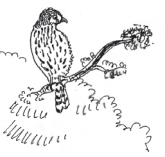
Word Meanings:
Inaction (n): lack of action or activity
falsifying (v): to change something in order to deceive people
hooked (adj.): A hooked nose is large and curved
rehearse (v): to practice something
Explanation of the stanza: The poem begins with the hawk sitting quietly at the top of a tree, with its eyes closed. It is calm and still, not moving at all. When the hawk says, “no falsifying dream,” it means that it does not dream or imagine things that are not real, everything about it is honest, clear, and focused on reality. Even when the hawk is resting or sleeping, its mind is still sharp. It is thinking about hunting, practicing perfect kills in its mind, and imagining eating its prey. This shows that the hawk is always ready to kill and survive, even when it appears to be resting. The lines show the hawk’s confidence, control, and natural instinct to hunt, showing how powerfully its body and mind are connected.
Poem:
The convenience of the high trees!
The air’s buoyancy and the sun’s ray
Are of advantage to me;
And the earth’s face upward for my inspection.
Word Meanings:
convenience (n): the fact that something is suitable for your purposes and causes
buoyancy (n): the ability to float
inspection (n): the act of looking at something carefully
Explanation of the stanza: The hawk talks about how perfect its position in nature is. It says that sitting in the high trees is very convenient, it gives the hawk a better view of everything below and keeps it safe. The “air’s buoyancy” means the air is light and helps the hawk to fly easily. The “sun’s ray” gives it light and warmth, making hunting and living easier. Finally, the hawk says the earth is turned upward, like it is presented for the hawk to watch and control. This shows the hawk believes that everything in nature exists to serve it, and it sees itself as superior and in charge of the world.
Poem:
My feet are locked upon the rough bark.
It took the whole of Creation
To produce my foot, my each feather:
Now I hold Creation in my foot.
Word Meanings:
bark (n): the hard outer covering of a tree
feather (n): one of the many soft, light things that cover a bird’s body, consisting of a long, thin, central part with material like hairs along each side
Explanation of the stanza: The hawk goes on to describe how its sharp, strong feet are tightly gripping the rough bark of a tree. It proudly says that the entire process of creation, meaning everything in nature and evolution, is to make each part of its body, especially its powerful foot and every feather. When the hawk says, “Now I hold Creation in my foot,” it means that it feels powerful and in control of the world, because its body is the result of everything nature has created. This shows how proud and confident the hawk is as it believes that nature made it perfect and gave it power over life and death.
Poem:
Or fly up, and revolve it all slowly—
I kill where I please because it is all mine.
There is no sophistry in my body:
My manners are tearing off heads.
Word Meanings:
revolve (v): to move in a circle
sophistry (n): the clever use of arguments that seem true but are really false, in order to deceive people
Explanation of the stanza: The hawk describes how it can fly up high and slowly circle around, observing everything beneath it. It feels very powerful and confident because it can kill wherever and whenever it wants, believing that everything in its world belongs to it. The hawk says there is “no sophistry in my body,” meaning it does not rely on tricks, lies, or false ideas, it is straightforward and honest in its purpose. Its behavior is simple and direct, focused solely on hunting and killing. The phrase “my manners are tearing off heads” shows the hawk’s brutal and violent nature, revealing its raw power and natural instinct to survive.
Poem:
The allotment of death.
For the one path of my flight is direct
Through the bones of the living.
No arguments assert my right.
Word Meanings:
allotment (v): to give something, especially a share of something available, for a particular purpose
assert (v): to say that something is certainly true
Explanation of the stanza: The hawk talks about how it is responsible for spreading death. It says that its flight has only one clear purpose which is to kill living creatures, flying straight and directly through them. The hawk does not need to explain or argue why it has this right to kill; it simply acts because it believes it is naturally entitled to do so. This shows the hawk’s sense of power and confidence, as well as the harsh reality of life and death in nature.
Poem:
The sun is behind me.
Nothing has changed since I began,
My eye has permitted no change.
I am going to keep things like this.
Word Meanings:
permitted (v): to allow something
Explanation of the stanza: The poem concludes with the hawk saying that the sun is always behind it, symbolizing strength and support. It believes that nothing in the world has changed since it first existed, and its sharp, watchful eye has allowed no changes to happen. The hawk is determined to maintain control and keep everything the same. This shows the hawk’s desire to stay powerful and dominant, refusing to let anything disrupt the natural order it believes it rules over.
Hawk Roosting Poetic Devices
The poem “Hawk Roosting ” by Ted Hughes consists of the following poetic devices:-
Imagery
Imagery is used to make readers perceive things involving their five senses.
- “My feet are locked upon the rough bark.”
Hughes uses vivid, sensory language to describe the hawk’s power and the natural world. This evokes the sense of touch and stability, emphasizing control.
Personification
Personification is the representation of an abstract quality or idea in the form of a person, creature, etc., as in art and literature.
- “My eye has permitted no change.”
The hawk is given human qualities, such as the ability to reason, reflect, and speak.
Metaphor
It is a figure of speech in which an implied comparison is made between objects that are different in nature.
- “Now I hold Creation in my foot.”
The hawk becomes a metaphor for authoritarian power or dictatorship. This line implies control over life, nature, and even divine creation.
Symbolism
It is the use of an object, person, situation or word to represent something else, like an idea, in literature.
- The hawk symbolizes dominance, violence, and an unchallenged power, possibly reflecting human tyranny. Its features, actions, and worldview all contribute to this symbolic role.
Conclusion
This post provides the students with a comprehensive understanding of the Poem 7 – Hawk Roosting By Ted Hughes from the CBSE Class 11 English Woven Words Book. It provides the students with the introduction, theme, summary, lesson explanation with word meanings, ensuring that the students comprehend the chapter effectively.