
The Case of the Fifth Word Summary and Explanation
CBSE Class 8 English Unit 3 Mystery And Magic Chapter 1 – The Case of the Fifth Word Summary, Explanation along with Difficult Word Meanings from Poorvi Book
Updated for the CBSE 2026-27 session as per the rationalised syllabus.
The Case of the Fifth Word Summary– Are you looking for the summary, theme and lesson explanation for CBSE Class 8 English Unit 3 Mystery And Magic Chapter 1 – The Case of the Fifth Word from English Poorvi Book. Get Lesson summary, theme, explanation along with difficult word meanings
CBSE Class 8 English Unit 3 Mystery And Magic Chapter 1 – The Case of the Fifth Word
By Donald J. Sobol (ADAPTED)
Encyclopedia Brown was a young boy who lived in Idaville, USA. His father was the Chief of Police. Even though he was so young, he helped his father solve mysteries that even the police found difficult to solve.
- The Case of the Fifth Word Summary
- The Case of the Fifth Word Summary in Hindi
- The Case of the Fifth Word Theme
- The Case of the Fifth Word Explanation
Related:
- The Case of the Fifth Word Question Answers
- The Case of the Fifth Word Character Sketch
- Class 8 English Poorvi Book Lesson Notes
The Case of the Fifth Word Summary
The story was about a boy named Leroy Brown. His mother was a high school teacher and his father was the Chief of the police force. Leroy Brown was nicknamed Encyclopedia by his friends because he read a lot and remembered each and every fact. He liked to use his genius brain to help his father, Chief Brown. Whenever Chief Brown got a difficult case, he went back home at dinner and then laid out the case during dinnertime with the help of his wife. One night, he came back with the case of Nolan’s death. Tim Nolan met Daniel Davenport in a prison in South Carolina. They became friends due to shared interests. Upon release, they robbed the Diamond Mart and stole millions worth of jewellery. During the robbery, Nolan’s mask slipped slightly and the clerk recognized his face. However, during the questioning, Nolan was not arrested due to lack of evidence. When Nolan was released, he went to Idaville and started a palm-tree nursery. Davenport went underground to avoid being suspected and they decided to hide the loot till things cooled down.
Now, five years after the robbery, Nolan died due to a stroke but the jewellery was still hidden and undiscovered. Nolan’s will, found in the kitchen, said all of his possessions were now Davenport’s possessions. The mystery was the torn page of the desk calendar on which four words, ‘Nom,’ ‘Utes’, ‘Sweden’ and ‘Hurts’ were written. Encyclopedia deduced that the words pointed to a young fir tree in the nursery. Mrs. Brown took a practical approach to it and described each word. ‘Nom’ could be a short form of ‘nominative’. ‘Utes’ was an American Indian tribe. ‘Sweden’ was a country in Europe. ‘Hurts’ was a verb. However, both the parents could not understand how the four words led to the fir tree. Encyclopedia explained that the four words were the days of the week. Remove the ‘d-a-y’ and then jumble the word and: Mon became Nom, Tues became Utes, Wednes became Sweden, and Thurs became Hurts. The next word would be the next day of the week without ‘d-a-y’: Fri. Jumbling Fri gave Fir, which was where the jewellery was hidden.
Summary of the Lesson The Case of the Fifth Word in Hindi
कहानी लेरॉय ब्राउन नाम के एक लड़के की थी। उसकी माँ एक हाई स्कूल शिक्षिका थीं और उसके पिता पुलिस बल के प्रमुख थे। लेरॉय ब्राउन को एनसाइक्लोपीडिया उपनाम दिया गया था क्योंकि वह बहुत पढ़ता था और हर तथ्य को याद रखता था। वह अपने दोस्तों और अपने पिता, चीफ ब्राउन की मदद करने के लिए अपने प्रतिभाशाली दिमाग का इस्तेमाल करना पसंद करता था। जब भी चीफ ब्राउन को कोई मुश्किल मामला मिलता, तो वह रात के खाने के समय घर लौटता और फिर अपनी पत्नी की मदद से खाने के दौरान ही मामले की रूपरेखा तैयार करता। एक रात, वह नोलन की मौत का मामला लेकर वापस आया। टिम नोलन की मुलाकात डैनियल डेवनपोर्ट से दक्षिण कैरोलिना की एक जेल में हुई। समान रुचियों के कारण वे दोस्त बन गए। रिहा होने के बाद, नोलन इडाविल गया और एक ताड़ के पेड़ की नर्सरी शुरू की। जब उसे गुज़ारा करने लायक नहीं मिला, और डेवनपोर्ट भी रिहा हो गया, तो उन्होंने डायमंड मार्ट को लूट लिया और लाखों के गहने चुरा लिए। डकैती के दौरान, नोलन का नकाब थोड़ा खिसक गया और क्लर्क ने उसका चेहरा पहचान लिया। हालाँकि, पूछताछ के दौरान, सबूतों के अभाव में नोलन को गिरफ्तार नहीं किया गया। अब, डकैती के पाँच साल बाद, नोलन की स्ट्रोक से मृत्यु हो गई, लेकिन गहने अभी भी छिपे हुए थे। उसकी वसीयत, जो रसोई में मिली थी, में कहा गया था कि उसकी सारी संपत्ति अब डेवनपोर्ट की है। रहस्य वसीयतनामा था, और विशेष रूप से डेस्क कैलेंडर का एक पृष्ठ जिसमें चार शब्द, ‘नोम’, ‘यूटेस’, ‘स्वीडन’ और ‘हर्ट्स’ लिखे थे। विश्वकोश ने अनुमान लगाया कि ये शब्द नर्सरी में लगे एक छोटे देवदार के पेड़ की ओर इशारा करते थे। श्रीमती ब्राउन ने इसे व्यावहारिक रूप से लिया और प्रत्येक शब्द का वर्णन किया। ‘नोम’ ‘नाममात्र’ का संक्षिप्त रूप हो सकता है। ‘यूटेस’ एक अमेरिकी भारतीय जनजाति थी। ‘स्वीडन’ यूरोप का एक देश था। ‘हर्ट्स’ एक क्रिया थी। हालाँकि, माता-पिता दोनों यह नहीं समझ पाए कि इन चार शब्दों से एक देवदार का पेड़ कैसे बना। विश्वकोश ने समझाया कि ये चार शब्द सप्ताह के दिन थे। ‘डे-ए-वाई’ हटा दें और फिर शब्दों को मिलाएँ: सोम नोम बन गया, मंगल यूटेस बन गया, बुधवार स्वीडन बन गया, और गुरुवार हर्ट्स बन गया। अगला शब्द ‘डे-ए-वाई’ के बिना सप्ताह का अगला दिन होगा: शुक्र। शुक्र को मिलाने से देवदार बना, जहाँ आभूषण छिपाए गए थे।
Theme of the Lesson The Case of the Fifth Word
The chapter is a suspenseful detective story. It displays the use of sharp analytical and deductive skills. The importance of a brilliant mind is that it can solve puzzles and problems quickly and efficiently. It also shows the importance of helping and supporting one’s family and friends. It shows that reading a lot and keeping an active mind can make a child an intelligent person.
The Case of the Fifth Word Lesson Explanation
I
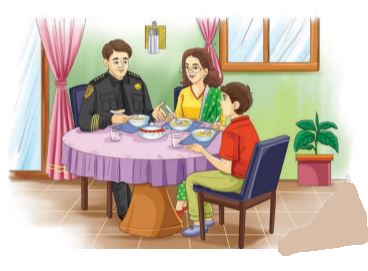
Read this story to find out how the boy wonder solves a case that has been troubling his father…
Passage: Encyclopedia’s father was Chief of Police. Everyone thought that he must be the smartest police chief in the country. Chief Brown was smart and quick. He didn’t sit around and worry. When he came up against a case he couldn’t solve, he acted at once. He cleared his desk, put on his hat, and went home to dinner. Encyclopedia solved the case for him before dinner was over.
Explanation: We are introduced to a character named Encyclopedia. His father was the Chief of the police force. Everyone thought Chief Brown to be the smartest police chief in the country. This was because Chief Brown was knowledgeable and sharp, and solved cases quickly. Chief Brown did not sit around and worry about a case. When he got a difficult case, he would simply pack his belongings, put his hat on, go back home for dinner, and come back to the office with a solution the next day. Everyone thought that he was solving the cases, but in reality, Chief Brown went home to his son, Encyclopedia, who solved the cases before the meal was over.
Passage: Chief Brown would have liked to tell everyone about his only child. But who would believe him? Who would believe that the best detective alive was an eighth grader? So, he said nothing.
Encyclopedia never spoke of the help he gave his father. He didn’t want to seem different from other boys. But there was nothing he could do about his nickname. He was stuck with it.
Word-meanings:
nickname: pet name
Explanation: Chief Brown wanted to tell everyone about how his son was the one solving the difficult cases. However, he believed that it was too unbelievable that an eighth grader was the best detective in the country. So, he did not tell anyone about his genius son. Encyclopedia also never spoke of how he helped his father on his cases. Here we see that even though Encyclopedia was a genius, he was a child, and so he wanted to be accepted by the other boys instead of being an odd one out. However, he was still given the pet name ‘Encyclopedia’. This means two things: one, that Encyclopedia was not the child’s real name. Second, that even though he never told anyone about how he was solving the cases, he was smart in other things as well, which led to the nickname.
Passage: Only his parents and teachers called him by his real name, Leroy. Everyone else called him Encyclopedia.
Explanation: The boy’s real name was Leroy. His real name was used only by his parents and teachers. Everyone else called Leroy by his nickname ‘Encyclopedia’.
Passage: An encyclopedia is a book or set of books filled with facts from A to Z. So was Encyclopedia’s head. He read more books than anyone in Idaville, and he never forgot a fact. His pals said he was like a library and computer rolled into one, and more user-friendly.
Word-meanings:
Idaville: located in White County, Indiana, USA
pals: casual or informal term for friends
Explanation: In this passage, we see the comparison between the book encyclopedia and the boy Encyclopedia. An encyclopedia is a book or set of books in which facts on a specific or general topics are written in alphabetical manner or from A to Z. This means that first facts start on a topic or sub-topic of letter A, then B, then C, and then all the way to Z. Encyclopedia’s head was exactly the same. The boy read many books and did not forget a fact that he had learned. His friends would describe him to be a combination of a library and computer in a more friendly and easygoing personality.
Passage: At the dinner table on Tuesday night, Chief Brown stared at his cream-of-mushroom soup. Encyclopedia and his mother knew what that meant. He had a mystery he could not solve.
“Tim Nolan died yesterday,” he announced in a matter-of-fact manner.
Word-meanings:
in a matter-of fact manner: without showing much emotion
Explanation: It was nighttime and the day was Tuesday. Chief Brown, Encyclopedia’s mother or Mrs. Brown, and Encyclopedia were all at the dinner table. Chief Brown was staring at his cream-of-mushroom soup. This had happened so many times before that Mrs. Brown and Encyclopedia exactly why Chief Brown was staring at his soup. This meant that Chief Brown had another difficult mystery. Then, Chief Brown said something without much emotion. He announced that Tim Nolan had died yesterday. This meant that the mystery he could not solve was the mystery of Tim Nolan’s death.
Passage: “That name is familiar,” Mrs. Brown said. “Wasn’t he mixed up in a jewellery robbery a few years ago?” “Five years ago,” Chief Brown replied. “Two masked men held up the Diamond Mart on Sixth Avenue. They got away with a million dollars worth of jewellery.”
Word-meanings:
familiar: something that has been heard, seen or felt before
be mixed up in: be involved in something regarded as dishonest
held up: to rob
Explanation: Mrs. Brown said that she had heard the name before. She then asked Chief Brown if Tim Nolan had been involved in a jewellery robbery a few years ago. Chief Brown told her about a robbery that took place five years ago. Two men wearing masks to hide their faces rob the Diamond Mart on Sixth Avenue. The robbery was successful and the two men escaped with expensive jewellery that amounted to a million dollars.
Passage: “I thought Tim Nolan was arrested,” Mrs. Brown said.
“He was questioned, not arrested,” Chief Brown corrected.
“I always believed that Nolan and a friend, a man named Daniel Davenport, pulled the hold-ups.
There wasn’t any proof, though.”
Word-meanings:
hold-ups: robberies conducted with the use of threat or violence
Explanation: Mrs Brown thought that Tim Nolan had been arrested, but Chief Brown informed her that he was questioned about the robbery but not arrested. Mrs. Brown then talked of how she had thought that Nolan and Nolan’s friend, Daniel Davenport conducted the robberies with the use of threat or violence. However, there was no proof to support this belief, and so Tim Nolan and Daniel Davenport were never arrested.
Passage: Encyclopedia sat quietly. He knew his mother and father were discussing the case for his benefit.
Explanation: Encyclopedia was just sitting quietly for now. He knew that his mother and father were giving out all the details of the case and the man named Tim Nolan. He simply listened to the facts and clues.
Passage: His father filled in the facts.
“Nolan and Davenport had met,” Chief Brown said, “while both were in prison in South Carolina.
They became friendly because of shared interests. Nolan was let out first. He settled in Idaville and started a small palm-tree nursery. It barely yielded him a living.”
Word-meanings:
nursery: a place where young plants and trees are grown for sale
yielded: resulted, produced
Explanation: Chief Brown continued to give out the details and facts. He explained the history of the friendship between Nolan and Davenport. The two had met in a prison in South Carolina. They became friends because they both had the same interests. Nolan was released from the prison first. He came to Idaville and started a palm-tree nursery. However, the nursery was unsuccessful as it did not result in sufficient money.
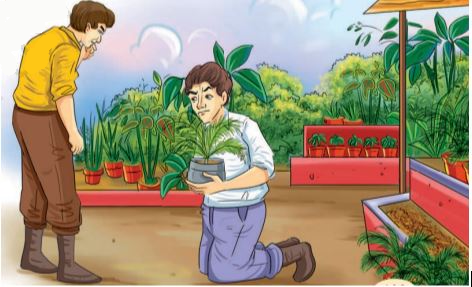
Passage: “Davenport came to live with Nolan a week before the jewellery store hold-up. During the hold-up, one gunman’s mask slipped. A clerk thought she recognised Nolan. But she wasn’t absolutely sure.”
Word-meanings:
clerk: receptionist
Explanation: Chief Brown continued and said that Davenport came to live with Nolan. A week later, the robbery occured. During the robbery, one of the two masked men’s masks slipped. One of the receptionists there thought that the robber looked like Nolan. However, the clerk was not sure if it was really him or someone else.
Passage: “I remember now,” Mrs. Brown said. “The clerk refused to testify against him, and no trace of the stolen jewellery ever turned up.”
“Davenport hasn’t been seen since the hold-up,” Chief Brown said. “My hunch is that he and
Nolan decided to hide the loot until things cooled down.”
Word-meanings:
testify: make a statement in court to prove that something is true
hunch: a strong feeling about something
loot: stolen goods
Explanation: Mrs Brown said that she remembered that the clerk did not make a statement in court against Tim Nolan. The jewellery was gone without leaving behind any traces. Chief Brown then said that Davenport had not been seen since the robbery. He then said that his guess was that he and Nolan had decided to hide the stolen jewellery until it was safe for them to use it.
Passage: “Didn’t you search Nolan’s house, dear?”
“I got a court order this morning,” Chief Brown said. “Officers Lewis and Maloney just about took Nolan’s house apart. They didn’t find one piece of the stolen jewellery.”
Explanation: Mrs. Brown asked Chief Brown if he had searched Nolan’s house. Chief Brown said that he had gotten an order to search the house from the court that morning. Two officers, Lewis and Maloney, searched Nolan’s house but they could not find a single piece of stolen jewellery.
Passage: “Is there some mystery about Nolan’s death yesterday?” Mrs. Brown inquired.
“Yes and no,” Chief Brown answered. “Nolan suffered from a bad heart for many years.
Yesterday morning he had a stroke. He must have realised he was dying. With his last strength, he managed to put his will on the kitchen table. It leaves everything he owns, including his palm-tree nursery to Davenport.”
Word-meanings:
stroke: a sudden serious illness causing inability to move
Explanation: Mrs. Brown asked if there was some mystery about Nolan’s death. Chief Brown said that the mystery was indirectly related to the death. Nolan suffered from a bad heart, and eventually died from a stroke. Nolan must have realized he was dying, and so he wrote his will, which was found on the kitchen table. The will contained all his possessions, leaving everything to Davenport, such as his palm-tree nursery.
II

Passage: “What’s suspicious about that?” Mrs. Brown asked.
“Nothing about the will itself—just about a sheet from his desk calendar. It was clipped to the will,” said Chief Brown.
Word-meanings:
will: (here) a legal document that says what is to happen to somebody’s money and property after their death
Explanation: Mrs. Brown asked what was suspicious about the will. Chief Brown said that the will was fine, but there was something in the will that was a bit mysterious. There was a sheet of calendar in the will, for which there was no explanation.
Passage: He took out his pocket notebook and leafed through the pages.
“I copied what Nolan wrote on the sheet,” he said. “Here it is.”
He handed the notebook to Mrs. Brown.
She read what he had copied. “It has Davenport’s name and address,” she said, “and a few words I don’t understand.”
Word-meanings:
leafed through: quickly turned (the pages)
Explanation: Chief Brown took out his pocket notebook and quickly turned it to where he had written what was on the calendar. He handed the notebook to Mrs. Brown. She said that it was Davenport’s name and address. Along with that, there were a few words that she didn’t understand.
Passage: She handed the notebook to Encyclopedia.
“What do you make of the four words, Leroy?”
Encyclopedia read the four words below Davenport’s name and address: Nom Utes Sweden Hurts.
Explanation: Mrs. Brown gave Encyclopedia the pocket notebook and asked him what the four words meant. Encyclopedia read the four words, which were Nom Utes Sweden Hurts.
Passage: Mrs. Brown looked at him hopefully. Usually he needed to ask only one question to solve a case before dessert.
They were still on the soup.
Encyclopedia leaned back and closed his eyes when he did his hardest thinking.
Explanation: Mrs. Brown was hoping that her son would figure out what the answer was. Encyclopedia was so brilliant that he would just ask one question to solve a case. The boy would solve the case before the dessert. Right now, they were drinking soup. Encyclopedia leaned back in his chair and closed his eyes to think very hard about all the facts of the case.
Passage: After several seconds, he opened his eyes and asked his question. “Is there a young fir tree in Mr. Nolan’s palm-tree nursery?” Chief Brown thought a moment. “Yes, there is… one.
On the south side of the house. How did you know?”
Explanation: After just seconds, Encyclopedia figured something out and opened his eyes. He asked if there was a young fir tree in Nolan’s palm nursery. Chief Brown thought for a moment and then said yes. There was a young fir tree on the south side of the house. He then asked Encyclopedia how he knew about that tree.
Passage: “The four words say so,” Encyclopedia answered.
“They do?” said Chief Brown.
“See for yourself,” Encyclopedia urged.
Word-meanings:
urge: to encourage someone strongly
Explanation: Encyclopedia said that the four words on the notebook told him that there was a young fir tree on his nursery. Chief Brown was surprised so Encyclopedia encouraged him to read the words again to see it.
Passage: Chief Brown studied the four words: Nom Utes Sweden Hurts. He shook his head and passed the notebook to Mrs. Brown again. “Can you figure it out?”
Explanation: Chief Brown read the four words over and over again. He then shook his head, meaning that he could not figure it out. He gave the notebook to Mrs. Brown again to see if she could figure out how the four words meant a young fir tree.
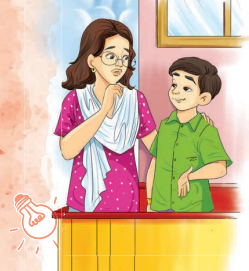
Passage: “Nom is a shortening of nominative, a grammatical term,” stated Mrs. Brown, who had taught English and other subjects in high school. “Utes are an American Indian tribe. Sweden is a country in northern Europe. Hurts is hurts.”
Word-meanings:
nominative: relating to or denoting a case of nouns, pronouns, and adjectives in languages, used for the subject of a verb
Explanation: Mrs. Brown worked as a high school teacher. So, she tried to find meaning in each of the four words. The first word ‘Nom’ could be a short form of the word ‘nominative’, which is a term used in grammar. The second word ‘Utes’ is an American Indian tribe. The third word ‘Sweden’ is a country in northern Europe. The fourth word ‘Hurts’ is a verb.
Passage: She lifted her gaze to Encyclopedia and shook her head.
“I can’t figure it out,” she confessed.
Word-meanings:
confessed: admitted
Explanation: Mrs. Brown then looked up from the notebook to look at Encyclopedia and shook her head. She admitted that she could not see how the four words related to the young fir tree.
Passage: “Davenport disappeared right after the hold-up,” Encyclopedia reminded her.
“As Dad said, Davenport and Nolan must have hidden the stolen jewellery. Probably not a week or so ago, Nolan changed the hiding place.”
Explanation: Encyclopedia looked at his mother and reminded her that Davenport vanished after the robbery. His father said that Davenport and Nolan had hid the stolen jewellery. However, Encyclopedia thought that the hiding place was changed so that the stolen goods would remain hidden.
Passage: “You think that he tried to tell Davenport by phone and failed to reach him?” Mrs. Brown asked. “So he wrote the four words as he was dying?”
Chief Brown nodded. “We’ll find Davenport now that we know his address.”
“He’ll learn he has been left the palm-tree nursery,” Mrs. Brown said. “And the four words will tell him where the jewellery is hidden!”
Explanation: Mrs. Brown then asked if Nolan wrote the four words while he was dying because he was unable to inform Davenport by phone. Chief Brown agreed with Mrs. Brown’s theory. He said that the police would find Davenport because they knew his address. Mrs. Brown then said that because of the will, Davenport would learn that he had been given the palm-tree nursery and the four words would lead him to the hidden jewellery before the police.
Passage: “Right,” Encyclopedia said. “The code is simple, especially as it’s written on a sheet from a calendar. Davenport will understand it easily. Still, it wouldn’t make much sense to someone who isn’t looking for a hiding place.”
Word-meanings:
code: hidden message
Explanation: Encyclopedia agreed with Mrs. Brown. The code was simple and Davenport would easily understand it. However, it would not make sense to someone who was not looking for the hiding place.
Passage: “Leroy!” Mrs. Brown exclaimed. “What do the four words mean?”
“You already guessed, Mom. They tell where the jewellery is hidden.”
Mrs. Brown looked ready to explode with impatience, “Where?”
Encyclopedia smiled.
“Why, under the fifth word,” he said.
What Was The Fifth Word?
Explanation: Mrs. Brown was eager and impatient to know what the four words meant. Encyclopedia told his mother that she had already guessed it. The four words reveal where the jewellery was hidden. Mrs. Brown was now becoming very impatient. She asked the boy where the jewellery was hidden. Encyclopedia smiled and explained that the hidden jewellery was under the fifth word.

Passage: To tell Davenport where he had hidden the stolen jewellery, Nolan wrote a four-word code.
As the key to the code, he wrote the four words on a sheet from a desk calendar.
The four words stood for days of the week.
Nolan dropped the letters d-a-y. Then he used the other letters to form words.
So, Nom = Monday, Utes = Tuesday, Sweden = Wednesday and Hurts = Thursday.
The unwritten fifth word was Fir, or Friday.
The jewellery was found inside a twenty-gallon jug of earth from which grew the young fir tree in Nolan’s nursery—just as Encyclopedia had foreseen.
Word-meanings:
foreseen: predicted
Explanation: Nolan wrote a four-word code to tell his friend Davenport where he had hidden the stolen jewellery. The key to the code was the fifth word. The four words were written on a sheet from a desk calendar. Each word related to each day of the week. Nolan removed ‘d-a-y’. So, there was Mon, Tues, Wednes, and Thurs. That would make the fifth word ‘Fri’. However, the answer was ‘Fir’. So, he jumbled the other words to Nom, Utes, Sweden, and Hurts. With this, the jewellery was found inside earth beneath the young fir tree in Nolan’s palm-tree nursery, just like Encyclopedia had figured out in seconds.
The Case of the Fifth FAQs
1. Who is Encyclopedia Brown and why is he called that?
Ans. Encyclopedia Brown, whose real name is Leroy, is an eighth-grader nicknamed “Encyclopedia” because he reads voraciously and never forgets a fact — his friends say he’s like a library and computer rolled into one
2. How does Encyclopedia help his father solve cases?
Ans. Chief Brown, his father, discusses difficult cases with his family over dinner, and Encyclopedia usually solves them before the meal is over — though he keeps his role secret since no one would believe an eighth-grader is the town’s best detective.
3. What was the mystery surrounding Tim Nolan’s death?
Ans. Nolan, a former jewel robber, died of a stroke and left a will along with a puzzling calendar sheet bearing four words — “Nom,” “Utes,” “Sweden,” “Hurts” — meant to tell his accomplice Davenport where the stolen jewellery was hidden.
4. How did Encyclopedia decode the four mysterious words?
Ans. He realized the words were days of the week with “d-a-y” removed and letters jumbled: Mon→Nom, Tues→Utes, Wednes→Sweden, Thurs→Hurts — pointing to the unwritten fifth word, “Fri,” which jumbled becomes “Fir.”
5. Where was the stolen jewellery finally found?
Ans. It was hidden inside a twenty-gallon jug of earth from which a young fir tree was growing in Nolan’s palm-tree nursery — exactly as Encyclopedia had deduced.
Conclusion
This post on NCERT Class 8 English Poorvi book Unit 3 Mystery And Magic Chapter 1 – The Case Of The Fifth Word. Students can check out the summary, word meanings and explanation of the lesson to get a better grasp and answer questions in the exam.