
I Too Had A Dream Summary and Explanation
CBSE Class 8 English Unit 2 – Values and Dispositions Chapter 3 – I Too Had A Dream Summary, Explanation along with Difficult Word Meanings from Poorvi Book
Updated for the CBSE 2026-27 session as per the rationalised syllabus.
I Too Had A Dream Summary– Are you looking for the summary, theme and lesson explanation for CBSE Class 8 English Unit 2 – Values and Dispositions Chapter 3 – I Too Had A Dream from English Poorvi Book. Get Lesson summary, theme, explanation along with difficult word meanings
CBSE Class 8 English Unit 2 Values and Dispositions Chapter 3 – I Too Had A Dream
Verghese Kurien
This chapter is about a letter Verghese Kurien wrote to his grandson and the various lessons he wanted to impart to him.
- I Too Had A Dream Summary
- I Too Had A Dream Summary in Hindi
- I Too Had A Dream Theme
- I Too Had A Dream Lesson Explanation
Related:
- I Too Had A Dream Question Answers
- I Too Had A Dream Character Sketch
- Class 8 English Poorvi Book Lesson Notes
I Too Had A Dream Summary
Kurien started the letter by greeting the receiver of his letter, his grandson Siddharth. He then went on to compare mobile communication with letters. For Kurien, letter-writing is better because letters last longer. Unlike mobile communication, it does not give just fleeting joy. Kurien wrote that the motive of the letter was not just to give wisdom to Siddharth, but also to give important teachings to the future generations. Kurien then wrote about his working life. He began work in Anand, Gujarat, right after India’s independence. He joined a dairy cooperative in the small town. Kurien wrote that in those times, the noblest task was to work for the country’s development. He chose to work for the nation’s farmers. He believed that the country could become a developed country by eradicating poverty, division and by upholding equality and liberty. He could have gotten a career in metallurgy, or he could have been a general in the Indian Army, or he could have moved to USA and become a successful NRI. Kurien’s wife, Siddharth’s grandmother, also worked for the country by working in the dairy cooperative and strongly supporting him. She was not upset that she was not living a comfortable life. Kurien believed that because of his wife’s support and his mentor, Tribhuvandas Patel, his success is not just his own. It belonged to all the people who supported and helped him along the way. When he received the Padma Vibhushan, he was deeply grateful to all the people he met and learnt from, along the way. He gave the medal to Siddharth, who was there at the ceremony. Siddharth, who was then just an innocent child, slipped the medal around his neck and innocently asked if he could keep it. His grandparents smiled and agreed. Kurien then wrote that he remembered gently telling him that he should not be satisfied in just his or someone else’s award. He told Siddharth that the challenge before him was to earn his own medals. He ended the letter on a hopeful and encouraging note, talking about how his musings could be helpful for the development of the country.
Summary of the Lesson I Too Had A Dream in Hindi
वी. कुरियन ने पत्र की शुरुआत अपने पत्र प्राप्तकर्ता, अपने पोते सिद्धार्थ का अभिवादन करके की। फिर उन्होंने मोबाइल संचार की तुलना पत्रों से की। कुरियन के लिए, पत्र-लेखन बेहतर है क्योंकि पत्र लंबे समय तक चलते हैं। मोबाइल संचार के विपरीत, यह केवल क्षणिक आनंद नहीं देता। कुरियन ने लिखा कि पत्र का उद्देश्य केवल सिद्धार्थ को ज्ञान देना ही नहीं था, बल्कि आने वाली पीढ़ियों को महत्वपूर्ण शिक्षाएँ देना भी था। इसके बाद कुरियन ने अपने कार्य जीवन के बारे में लिखा। उन्होंने भारत की स्वतंत्रता के तुरंत बाद, गुजरात के आणंद में काम करना शुरू किया। वे एक छोटे से गाँव में एक डेयरी सहकारी समिति में शामिल हो गए। कुरियन ने लिखा कि उस समय, सबसे महान कार्य देश के लिए काम करना था। उन्होंने देश के किसानों के लिए काम करना चुना। उनका मानना था कि गरीबी और विभाजन को मिटाकर और समानता व स्वतंत्रता को कायम रखकर देश एक विकसित देश बन सकता है। वे धातु विज्ञान में अपना करियर बना सकते थे, या भारतीय सेना में जनरल बन सकते थे, या अमेरिका जाकर एक सफल प्रवासी भारतीय बन सकते थे। कुरियन की पत्नी, सिद्धार्थ की दादी, ने भी डेयरी सहकारी समिति में काम करके और उनका पूरा समर्थन करके देश के लिए काम किया। वह इस बात से परेशान नहीं थी कि वह आरामदायक जीवन नहीं जी रही थी। कुरियन का मानना था कि उनकी पत्नी और उनके गुरु त्रिभुवनदास पटेल के सहयोग से उनकी सफलता सिर्फ़ उनकी अपनी नहीं है। यह उन सभी लोगों की है जिन्होंने इस यात्रा में उनका साथ दिया और उनकी मदद की। जब उन्हें पद्म विभूषण मिला, तो वे उन सभी लोगों के प्रति बहुत आभारी थे जिनसे वे मिले और जिनसे उन्होंने सीखा। उन्होंने सिद्धार्थ को पदक दिया, जो उस समारोह में मौजूद थे। सिद्धार्थ, जो उस समय एक मासूम बच्चा था, ने पदक उसके गले में डाल दिया और मासूमियत से पूछा कि क्या वह इसे रख सकता है। उसके दादा-दादी मुस्कुराए और सहमत हो गए। कुरियन ने आगे लिखा कि उन्हें याद है कि उन्होंने सिद्धार्थ से धीरे से कहा था कि उन्हें सिर्फ़ अपने या किसी और के पुरस्कार से संतुष्ट नहीं होना चाहिए। उन्होंने सिद्धार्थ से कहा कि उनके सामने चुनौती अपने पदक खुद अर्जित करने की है। उन्होंने पत्र का अंत एक आशावादी और उत्साहवर्धक टिप्पणी के साथ किया, जिसमें उन्होंने बताया कि कैसे उनके विचार देश के विकास में सहायक हो सकते हैं।
Theme of the Lesson I Too Had A Dream
The chapter is themed on the wisdom of an experienced and noble man. It conveys the importance of working for the common cause, the country over prioritising one’s own goals and ambitions. It shows how important it is to have a good support system to achieve your goals and dreams. It displays humility and how one’s achievement is not just their own effort, but the cumulative effort of the person, their support system, and the people who gave them opportunities. The chapter teaches not to rely on others’ achievements, but to work hard for one’s own achievements. The most important lesson for the future generations is to see life as a privilege and to use one’s talents at every given opportunity.
I Too Had A Dream Lesson Explanation
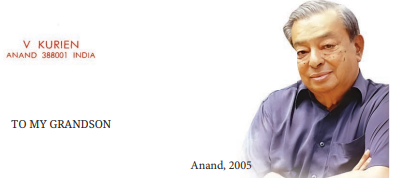
Passage: My dear Siddharth,
When did I write to you last? I have trouble even remembering! In today’s fast-paced world we have become so addicted to instant communication that we prefer to use a telephone. But speaking on the telephone only gives us an immediate but fleeting joy. Writing is different. Writing— even if it is a letter—not only conveys our present concerns and views of the events taking place around us but it becomes a possession that can be treasured and re-read over the years, with great, abiding pleasure.
Word-meanings:
Fast-paced: moving at a fast speed, changing fast
addicted: dependent on something
fleeting: momentary or short-lived
abiding pleasure: a feeling of happiness that continues for a long time
Passage Explanation: The letter started with V. Kurien greeting his grandson Siddharth. He first asked when he had last written to his grandson. He then said that he could not remember because they mostly used the telephone to communicate. Due to the rapid changing world, instant communication had become a necessity. However, V. Kurien preferred writing a letter which was old school means of communication. According to him, speaking on the telephone gives us happiness, which is short-lived and unfulfilling. On the other hand, letters can help the writer express their feelings and views, while also becoming a treasured possession that can be read multiple times, evoking a lasting sense of happiness and connection.
Passage: You may not wish to read it all right away but, perhaps, a couple of decades or more from now, you will pick up these jottings of mine again and they will give you a deeper understanding of what I have done, and the reasons I pursued a life of service to our nation’s farmers. You will then discover in them a valuable reminder of the days just before the world entered the twenty-first century. And you may want to share my memories with those of your generation, or even younger, to provide a glimpse of the world your grandparents lived in and knew.
Word-meanings:
jottings: brief notes
pursue: to follow
glimpse: a short glance at a wide picture
Passage Explanation: Letters are more advantageous because they can be reread after decades as well. After many years, Siddharth would get a better understanding of Kurien’s contributions because he would be more mature. Kurien’s letters to Siddharth would show him the world that was before the onset of the twenty-first century and the White Revolution, and his service to our nation’s farmers. The memories could be shared with his generation and future generations so that the next generations could understand the world their grandparents lived in.
Passage: I started my working life soon after our country became independent. The noblest task in those days was to contribute in whatever way we could towards building an India of our dreams—a nation where our people would not only hold their heads high in freedom but would be free from hunger and poverty. A nation where our people could live with equal respect and love for one another. A nation that would eventually be counted among the foremost nations of the world. It was then that I realised, in humility, that choosing to lead one kind of life means putting aside the desire to pursue other options. This transformation took place within me fifty years ago, when I agreed to work for a small cooperative of dairy farmers who were trying to gain control over their lives.
Word-meanings:
foremost: leading
humility: modesty/ quality of being humble
pursue: follow
Passage Explanation: Kurien started working for his country right after India became independent. In his time, it was said that contributing towards the development of India was the most noble task. He believed that India would become better if it were free from hunger and poverty, and everyone was treated with equal respect and love. With those two things, India could gradually become one of the leading countries of the world. He wished to make India one of the foremost nations, so he humbly gave up comfort and luxuries and other opportunities. He started this journey fifty years ago by agreeing to work for a small cooperative of dairy farmers.
Passage: To be quite honest, service to our nation’s farmers was not the career I had envisioned for myself. But somehow, a series of events swept me along and put me in a certain time with a choice that would transform my life. I could have pursued a career in metallurgy and become the chief executive of a large company. Or, opted for a commission in the Indian Army and maybe retired as a general. Or, I could have left for the US and gone on to become a highly successful NRI. Yet, I chose none of these because somewhere, deep down, I knew I could make a more meaningful contribution by working here in Anand, Gujarat.
Word-meanings:
envisioned: imagined or expected something to happen in a particular way
metallurgy: the branch of science and technology concerned with the properties of metals and their production and purification
commission: a group of people entrusted by a government or other official body with authority to do something
Passage Explanation: Kurien wrote in his letter that he had not imagined himself working for the country. There were many other paths he could have taken. First, he could have pursued a career in metallurgy, a branch of science and technology concerned with the properties of metals and their production and purification. Second, he could have gone in the Indian Army and retired as a general. Third, he could have gone to the US to become a successful NRI. However, Kurien did not choose his own success and fame. Instead, he chose to contribute to his country by working in a town in Gujarat named Anand.
Passage: Your grandmother too made an important choice. She knew, in those days, life in Anand could not offer even the simple comforts that we take for granted today. However, she ardently supported my choice to live and work in Anand. That choice of your grandmother to stand by me has given me an everlasting strength, always ensuring that I shouldered my responsibilities with poise.
Word-meanings:
ardently: in a way that shows strong feelings
shoulder: to take on responsibilities
poise: in a calm and confident manner
Passage Explanation: Kurien then talked about his wife, Siddharth’s grandmother. She too contributed to the development of the country by supporting Kurien. Life at Anand was not comfortable or happy, but she strongly supported his journey by living and working in Anand. The firm support gave Kurien strength and faith in himself. Because of his wife, he was able to tackle his problems and take on his responsibilities with calmness and confidence.
Passage: Whenever I have received any recognition for my contributions towards the progress of our country, I always emphasised that it is a recognition of the achievements of many people with whom I had a privilege to be associated with. I would like to stress even more strongly that my contributions have been possible only because I have consistently adhered to certain values. Values that I have inherited from my parents and other family elders; values that I saw in my mentor and supporter here in Anand—Tribhuvandas Patel. I have often spoken of integrity as the most important of these values, realising that integrity—and personal integrity, at that—is being honest to yourself. If you are always honest to yourself, it does not take much effort in always being honest with others.
Word-meanings:
privilege: a special right, advantage, or immunity granted or available only to a particular person or group
associated with: connected with something else
adhered: to continue to support
integrity: honest and strong moral principles
Passage Explanation: He wrote in his letter that his achievements are not just his own. His success is not just based on his efforts, it is a collective result of all the people who supported him in his mission. Kurien respected the people in his life so much and he was so humble that he wrote that it was a privilege to be connected with those people. He then wrote that it was because he strongly adopted certain values that he was able to achieve success. The first set of essential values is the one he learnt from his parents and other family elders. The second set of essential values is the one he learnt from his mentor in Anand. The name of his mentor was Tribhuvandas Patel. He then said that the most important value to him is integrity. Integrity means being honest and taking responsibility for the truth. He particularly valued personal integrity, which means being honest to oneself. According to his experience, if you are honest to yourself, you automatically become honest with others.
Passage: I have also learnt what I am sure you, too, will find out some day. Life is a privilege and to waste it would be wrong. In living this privilege called ‘life’, you must accept responsibility for yourself, always use your talents to the best of your ability and contribute somehow to the common good. That common good will present itself to you in many forms every day. If you look around you, you will find there is a lot waiting to be done: your friend may need some help, your teacher could be looking for a volunteer, or the community you live in will need you to make a contribution. I hope that you, too, will discover, as I did, that failure is not about not succeeding. Rather, it is about not putting in your best effort and not contributing, however modestly, to the common good.
Passage Explanation: Kurien said that life is a special thing which should not be wasted. Anyone who is living has many responsibilities- to themselves, to the mankind, and to use the abilities and talents for the common good. Many people think that there are not many opportunities for them. However, Kurien believed that opportunities always present themselves in one way or another. Opportunities come to those who look closely. Kurien also talked about failure. Failure is not about not succeeding. It is about not trying to contribute or not trying to the fullest.
Passage: In life you, too, will discover as I did, that anything can go wrong at any time and mostly does. Yet, there is little correlation between the circumstances of people’s lives and how happy they are. Most of us compare ourselves with someone we think is happier—a relative, an acquaintance, or often, someone we barely know. But when we start looking closely we realise that what we saw were only images of perfection. And that will help us understand and cherish what we have, rather than what we don’t have. Do you remember when you accompanied me at the magnificent ceremony in Delhi where our President awarded me the Padma Vibhushan in 1999? With great pride, you slipped the medal around your neck, looked at it in awe and asked me very innocently if you could keep it. Do you remember the answer your grandmother and I gave you? We told you that of course, this medal was yours as much as it was mine but that you should not be satisfied in merely keeping my award—the challenge before you was to earn your own reward for the work that you did in your lifetime.
Word-meanings:
correlation: a connection between two or more things
magnificent: extremely beautiful, elaborate, or impressive
Passage Explanation: Kurien then explained that anything could go wrong at any time. However, there was little correlation between the circumstances of people’s lives and how happy they were. Sometimes, things are not how they seem to be. Nothing in the world is perfect. Some people seem happy and to be leading the perfect life, but they could secretly be dissatisfied or struggling. Therefore, we should understand and enjoy what we have, rather than what we don’t have. He then talked about the time when he was awarded the Padma Vibhushan in 1999. Siddharth was there too, and after the ceremony, Kurien gave him the medal. Siddharth slipped the medal around his neck and asked with childish innocence if he could keep it. Kurien and his wife said yes, but then Kurien gently explained that Siddharth should not be satisfied with just keeping his award. Siddharth should work hard to earn his own rewards and successes.
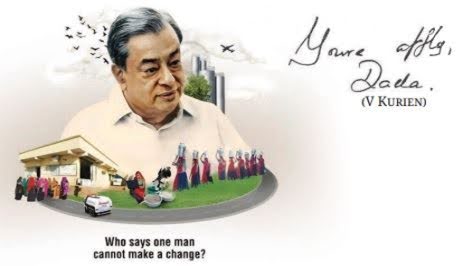
Passage: And in the end, if we are brave enough to love, strong enough to rejoice in another’s happiness and wise enough to know that there is enough to go around for all, then we would have lived our lives to the fullest.
I would like to dedicate these musings to you, Siddharth, and to the millions of other children of your generation in our country, in the hope that upon reading them you will be inspired enough to go bravely out into the world and work tirelessly in your chosen field for the larger good of the country, for the larger good of humanity. Remember, rewards that come to you then are the only true rewards for a life well-spent.
With my fondest love,
Word-meanings:
rejoice: feel or show great joy or delight
musings: thoughts on something one has been thinking about carefully for a long time
Passage Explanation: There are many things important for living our lives to the fullest. They are – to be brave enough to love, to be strong enough to feel joy when someone else is happy, and to be smart enough to know that there is enough love for everyone to feel loved and cared for. Kurien ended his letter by writing that with this letter, he was sending all those thoughts to Siddharth, his grandson, and the million other children and future generations. He hoped that his thoughts would be able to inspire the next generations to be brave and use their talents to contribute to the world and their country. Only the rewards of these contributions are true rewards for a life well-spent.
I Too Had A Dream FAQs
Q1. Who wrote “I Too Had A Dream”?
Ans. The letter was written by Verghese Kurien to his grandson, Siddharth.
Q2. Why did Kurien prefer writing letters over phone calls?
Ans. He felt phone calls only gave fleeting joy, while letters could be treasured, re-read, and cherished for years.
Q3. What career options did Kurien give up to work for dairy farmers?
Ans. He could have pursued metallurgy, become a general in the Army, or settled in the US as a successful NRI.
Q4. Whom did Kurien credit for his success?
Ans. He credited his wife’s support and his mentor, Tribhuvandas Patel, saying his success belonged to everyone who helped him.
Q5. What lesson did Kurien give Siddharth about the Padma Vibhushan medal?
Ans. He told Siddharth not to be satisfied just keeping his grandfather’s award, but to work hard and earn his own achievements.
Conclusion
This post on NCERT Class 8 English Poorvi book unit 2 Values and Dispositions chapter – I too had a Dream, tells us about the life and sacrifices made by Verghese Kurien. Students can check out the summary, word meanings and explanation of the lesson to get a better grasp and answer questions in the exam.