
CBSE Class 8 English Unit 2 Values and Dispositions Chapter 3 I Too Had A Dream Important Question Answers from Poorvi Book
Class 8 English I Too Had A Dream Question Answers – Looking for questions and answers for CBSE Class 8 English Unit 2 Values and Dispositions Chapter 3 – I Too Had A Dream? Look no further! Our comprehensive compilation of important questions will help you brush up on your subject knowledge. Practising Class 8 English question answers can significantly improve your performance in the exam. Improve your chances of scoring high marks by exploring Unit 2 Values and Dispositions Chapter 3 – I Too Had A Dream now. The questions listed below are based on the latest CBSE exam pattern, wherein we have given NCERT solutions to the chapter’s extract-based questions, multiple choice questions and Extra Question Answers
Also, practising with different kinds of questions can help students learn new ways to solve problems that they may not have seen before. This can ultimately lead to a deeper understanding of the subject matter and better performance on exams.
- I Too Had A Dream NCERT Solutions
- I Too Had A Dream Grammar Exercises
- I Too Had A Dream Extract Based Questions
- I Too Had A Dream Multiple Choice Questions
- I Too Had A Dream Extra Question Answers
Related:
- I Too Had A Dream Summary, Explanation
- I Too Had A Dream Character Sketch
- Class 8 English Poorvi Book Lesson Notes
I Too Had A Dream Textbook Questions (NCERT Solutions)
Exercises
Let us do these activities before we read.
1. Arrange the worldwide means of communication given below in the timeline provided. Share your answers with your classmates and teacher.
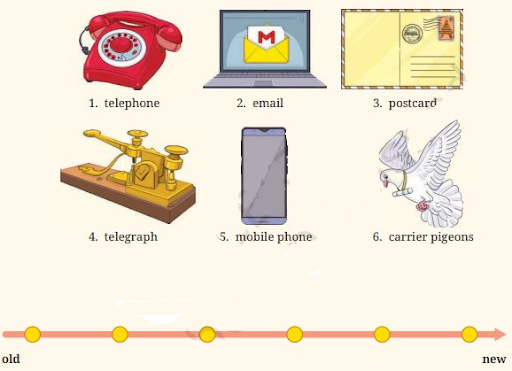
Ans. Carrier pigeons – Telegraph – Postcard – Telephone – Email – Mobile phone
II. Work in pairs and discuss the following things. Share your answers with your classmates and teacher.
1. The reasons for change in the means of communication over the years.
2. The means of communication that you prefer to use and the reason for your choice.
3. Communication through social media: its benefits and precautions that one should take against its misuse.
Ans.
1. As we all know, the means of communication have evolved from simple postcards to smartphones. There are many reasons for each change, which are not only necessary but also interesting to learn about.
Carrier pigeons were discontinued as a means of communication due to the endangerment of the species. The electric telegraph was discontinued due to the advent of radio and satellite technologies. The telegraph was too slow, inconvenient and used too much power. Postcards are still used but it’s also too slow compared to digital communication. It is a time-consuming method as it has to go through a detailed procedure and it has to cover large distances. With Industrial Revolution, telephones came into existence. However, it needs secure cable connections. Due to that, wireless communication like email and mobile phones became more popular due to instantaneous and productive communication. Additionally, with mobile phones, we can video call in realtime as well, making it the most superior mean of communication available in the present.
2. My preferred means of communication is mobile communication. I can leave messages in case I need to give quick and short replies. I can use it anytime and anywhere. Not just text messages, but I can video call in real time. I can see and talk to a family member or friend while being in two different countries.
3. Social media is now widely used by the majority of people nowadays. It has multiple benefits. It allows easy and smooth networking opportunities. We can post pictures of ourselves, our work, creativity, and accomplishments. We can share our experiences and journey online. However, social media is addictive and is misused by people, especially children. So, we need to adopt some precautions to make sure that we do not use social media incessantly. The precautions are: Do not use social media for more than an hour. Find other healthy hobbies, like reading, dancing, painting, singing, and cooking. Social media can be an unsafe place, so we should not post any personal information on it. Never tell an online stranger your age and where we live.
Let us discuss
A fact is something that can be proven true or false. A fact is not based on people’s beliefs. An opinion on the other hand is a belief, feeling or judgement, and can vary from one person to another. An opinion cannot be proven.
I. Identify which of the following statements are facts and which are opinions. Share your answers with your classmates and teacher.
1. But speaking on the telephone only gives us an immediate but fleeting joy.
2. I started my working life soon after our country became independent.
3. To be quite honest, service to our nation’s farmers was not the career I had envisioned for myself.
4. I knew I could make a more meaningful contribution by working here in Anand, Gujarat.
5. … values that I saw in my mentor and supporter here in Anand— Tribhuvandas Patel.
6. Life is a privilege, and to waste it would be wrong.
7. I hope that you, too, will discover, as I did, that failure is not about not succeeding.
8. … the magnificent ceremony in which the President awarded me the Padma Vibhushan in 1999?
Ans.
1. Opinion
2. Fact
3. Fact
4. Opinion
5. Fact
6. Opinion
7. Opinion
8. Fact
Let us think and reflect
I. Read the given extracts and answer the questions that follow.
1. In today’s fast-paced world we have become so addicted to instant communication that we prefer to use a telephone. But speaking on the telephone only gives us an immediate but fleeting joy. Writing is different. Writing—even if it is a letter—not only conveys our present concerns and views of the events taking place around us but it becomes a possession that can be treasured and re-read over the years, with great, abiding pleasure.
(i) Fill in the blank given below by selecting the correct option from the brackets.
When the writer refers to a ‘fast-paced world’, he is speaking of a world where _________________. (communication happens quickly but lacks depth/people have more time to write and reflect)
Ans. communication happens quickly but lacks depth
(ii) Select the option that applies correctly to both Assertion (A) and Reason (R).
(A): Writing letters can be treasured and re-read over the years.
(R): Speaking on the telephone provides long lasting joy.
A. Both (A) and (R) are true, and (R) is the correct explanation of (A).
B. Both (A) and (R) are true, but (R) is not the correct explanation of (A).
C. (A) is true, but (R) is false.
D. Both (A) and (R) are false.
Ans. C. (A) is true, but (R) is false.
(iii) Identify whether the statement given below is true or false.
The writer feels that letter-writing is a class apart from other kinds of writing.
Ans. False
(iv) Which of the following is the most appropriate title for the given extract?
A. The Rise of Instant Communication
B. The Fleeting Delight of Phone Calls
C. The Lasting Joy of Written Words
D. Living in a Fast-paced World
Ans. C. The Lasting Joy of Written Words
2. Your grandmother too made an important choice. She knew, in those early days, life in Anand could not offer even the simple comforts that we take for granted today. However, she ardently supported my choice to live and work in Anand. That choice of your grandmother to stand by me has given me an everlasting strength, always ensuring that I shouldered my responsibilities with poise.
(i) How can we say that the grandmother shared her husband’s dedication to a greater cause?
Ans. The grandmother shared her husband’s dedication to a greater cause by supporting him and working for the greater cause as well.
(ii) Complete the following with the correct option from the two given in brackets.
The fact that the writer (grandfather) praises his wife tells us that he _____________________ (truly values/quietly accepts) her role in his life.
Ans. truly values
(iii) Complete the following sentence with the correct option from those given below.
Based on the information in the extract, we can infer that the grandmother had all of the following traits EXCEPT ____________.
A. encouraging
B. understanding
C. comforting
D. thoughtful
Ans. C. comforting
(iv) Select the phrase that conveys— ‘showed grace under pressure and carried out my duties with dignity and confidence’.
Ans. The word ‘poise’ means ‘showed grace under pressure and carried out my duties with dignity and confidence.’
II. Answer the following questions.
1. What event does Dr. Kurien refer to when he mentions receiving the Padma Vibhushan?
Ans. Dr. Kurien mentioned that when he received the medal, his grandson and the receiver of the letter, Siddharth, slipped the medal around his neck and innocently asked if he could keep the medal. Dr. Kurien and Siddharth’s grandmother smiled and said, “Of course,” but then Dr. Kurien gently explained that he should not be satisfied with someone else’s achievements and that he should strive for rewards of his own efforts.
2. How did Dr. Kurien’s decision to join the cooperative in Anand affect his life?
Ans. Dr. Kurien’s decision to join the cooperative in Anand affected his life in a profound and manner. Life at Anand required hard work, endurance, and determination while offering little to no comfort. The joint cooperative of the dairy workers in Anand gave Dr. Kurien the opportunity to use his talents to contribute to the development of India by guiding the White Revolution. On a personal level, his wife sacrificed the comforts of life by settling in the small town, Anand. Her sacrifice and support gave immense strength to Verghese.
3. Dr. Kurien’s decision to work in Anand reveals his values and sense of duty. Explain.
Ans. Dr. Kurien’s decision to work in Anand reveals his values and sense of duty. First of all, Dr. Kurien abandoned a life of comfort and luxury to work for a common cause. This shows that he was a man of integrity above materialistic needs. He could have gone to the US to be a successful NRI, or could have gotten a career in metallurgy, or could have been a general in the Indian Army. However, he went to work in Anand to make a more meaningful contribution. This shows his selflessness and patriotism.
4. Why did Dr. Kurien write the letter to his grandson?
Ans. Dr. Kurien wrote the letter to his grandson so that his grandson, his generation, and the future generations would benefit and learn lessons of life from his journey and musings and contribute to the common good.
5. According to Dr. Kurien “life is a privilege and it is wrong to waste it”. What is your opinion on this?
Ans. According to Dr. Kurien, life is a privilege and it is wrong to waste it. I believe that this is a positive and important message to impart to his grandson and the future generations. Life is a special thing and not everyone is lucky enough to get it. It is a precious opportunity, which can be used to make the world and the country better for their fellow people and the future generations. Everyone should strive to uphold the ideals of an ideal world. We should use our talents and abilities and contribute to make life better for others.
6. What message does Dr. Kurien want to convey about selfless service and its long-term impact on the society?
Ans. The message Dr. Kurien wanted to convey about selfless service and its long-term impact on the society was: the future generations should utilize their abilities and talents for the sustainable and innovative development of the country.
I Too Had A Dream Grammar Exercises
Let us learn
1. Replace the underlined words in each sentence with the correct synonym from the box. You may refer to a dictionary.
| essential | swift | lifelong |
| momentary | useful | splendid |
1. He received the award in a magnificent ceremony.
2. I felt a fleeting joy when I received the appreciation for my song.
3. With today’s instant communication, we can share information across the world in seconds.
4. Our school focuses on the core values—collaboration, innovation, and unity.
5. My teacher’s advice on time management is a valuable reminder of the importance of planning.
6. Reading books and listening to music can give abiding pleasure that will last forever.
Ans.
1. splendid
2. momentary
3. swift
4. essential
5. useful
6. lifelong
II. Match the expressions from the text in Column 1 with their meanings in Column 2.
| Column 1 | Column 2 |
| 1. in all humility | (i) to speak in a truthful way |
| 2. hold their heads high | (ii) doing something using all your skills, talents, and knowledge |
| 3. to be quite honest | (iii) observed with great respect and wonder |
| 4. to the best of your ability | (iv) being humble and having no feeling of self-importance |
| 5. looked at in awe | (v) in the innermost part of the self |
| 6. somewhere deep down | (vi) be confident and have a positive feeling |
Ans.
| Column 1 | Column 2 |
| 1. in all humility | (iv) being humble and having no feeling of self-importance |
| 2. hold their heads high | (vi) be confident and have a positive feeling |
| 3. to be quite honest | (i) to speak in a truthful way |
| 4. to the best of your ability | (ii) doing something using all your skills, talents, and knowledge |
| 5. looked at in awe | (iii) observed with great respect and wonder |
| 6. somewhere deep down | (v) in the innermost part of the self |
III. Make as many words as you can out of the following words. One example has been done for you.
1. community — city, toy, tune, unity, mutiny, cot
2. important
3. magnificent
4. satisfied
5. generation
6. achievement
Ans.
1. community — city, toy, tune, unity, mutiny, cot
2. important— import, port, torn, tap, tint, tan, rot, rant, rat, tart
3. magnificent— cent, mint, mat, cat, face, gent, gem, nine, ten, tin
4. satisfied— sad, die, dies, fit, fits, sea, deaf, diet, fist, fast
5. generation— gent, ration, rat, nation, rot, not, rag
6. achievement— achieve, eve, ache, men, ten, have, hive, machete, vent, meant, cheat, eat, tea
IV. Let us play a word game—antakshari.
1. Write the synonym of the word according to the clues given below.
2. For example, the synonym of the first word, ‘IMPORTANT’ ends with the letter ‘T’. The synonym of the second word begins with ‘T’, ‘TROUBLE’. Then write the synonym of the third word starting with the letter ‘E’.
3. Now, continue with the word game

(i) major (synonym)
(ii) problem (synonym)
(iii) uneven (antonym)
(iv) related to post office
(v) our moral duty
(vi) related to time
(vii) prosperous (synonym)
(viii) related to being alive
Ans.
(i) major (synonym) — important
(ii) problem (synonym) — trouble
(iii) uneven (antonym) — even
(iv) related to post office — lender
(v) our moral duty — responsibility
(vi) related to time — years
(vii) prosperous (synonym) — successful
(viii) related to being alive — living
V. Study the highlighted punctuation marks in the following sentences from the text.
1. … but that you should not be satisfied in merely keeping my awards— the challenge before you was to earn your own rewards for the work that you did in your lifetime.
2. Writing—even if it is a letter—not only conveys our present concerns and views of the events taking place around us, but it becomes a possession.
The highlighted punctuation is a long dash that can be used to link words or numbers or to create a pause in a sentence. There are two main types: the shorter en dash (–) and the longer em dash (—).
| The en dash (–) represents a span or range in numbers or dates. For example, it can indicate time periods, like ‘train operates June– September’ or page numbers, such as ‘refer to pages 50–75’ or to show scores, ‘India won the series 2–1’. The em dash (—) is used to add extra information or to show a change in thought within a sentence. For example, ‘The exhibition—held in the main hall—features local artists.’ Or ‘I bumped into someone unexpected—my old teacher.’ |
Note: Do not add spaces around the dash and avoid overusing them.
Read the sentences below and insert either an em dash (—) or an en dash (–) suitably.
(i) The conference will be held from March 15 March 20.
(ii) I have lived in Kanpur Raipur for five years now.
(iii) The artist known for her vibrant paintings will be showcasing her work in Guwahati.
(iv) The scores for the final match were 2 3.
(v) My favourite snacks samosas, pakoras, and jalebis are all from India.
(vi) The train journey from Belagavi Bengaluru takes less than ten hours.
(vii) I just finished reading the book it was absolutely amazing!
(viii) The event will take place on September 1 September 5.
Ans.
(i) The conference will be held from March 15 – March 20.
(ii) I have lived in Kanpur—Raipur for five years now.
(iii) The artist—known for her vibrant paintings will be showcasing her work in Guwahati.
(iv) The scores for the final match were 2-3.
(v) My favourite snacks—samosas, pakoras, and jalebis are all from India.
(vi) The train journey from Belagavi—Bengaluru takes less than ten hours.
(vii) I just finished reading the book—it was absolutely amazing!
(viii) The event will take place on September 1- September 5.
VI. Study the highlighted words in the following sentences from the text.
1. We told you that of course, this medal was yours as much as it was mine…
2. …who were trying to gain control over their lives.
3. I have always emphasised that it’s a recognition of the achievements of many people…
In the given sentences, ‘yours’ and ‘theirs’ indicate possession— something belonging to you and them, respectively. But, ‘it’s’ does not indicate possession rather is the contracted form of ‘it is’.
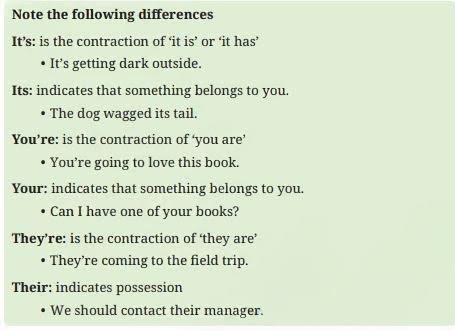
Fill in the blanks by choosing the correct word from the options given in the brackets.
(i) Please remember to bring ___________ (your/you’re) assignment book.
(ii) The team celebrated ___________ (their/they’re) victory after the match.
(iii) ___________ (its/it’s) important to stay hydrated during the hot summer days.
(iv) I can’t believe ___________ (your/you’re) going to the mango festival today.
(v) The students said ___________ (they’re/their) excited for the field trip tomorrow.
(vi) The tree lost ___________ (its/it’s) leaves in the winter.
Ans.
(i) Please remember to bring your assignment book.
(ii) The team celebrated their victory after the match.
(iii) It’s important to stay hydrated during the hot summer days.
(iv) I can’t believe you’re going to the mango festival today.
(v) The students said they’re excited for the field trip tomorrow.
(vi) The tree lost its leaves in the winter.
VII. Read the following phrases from the text.
1. In today’s fast-paced world
2. On the telephone
3. With great, abiding pleasure
4. In the chapters that follow
5. At a certain time
6. With equal respect and love
The given phrases are Prepositional Phrases.
| Prepositional phrases are groups of words that begin with a preposition and include a noun or pronoun as the object of the preposition. These phrases provide additional information about time, place, manner, cause, direction, or relationship. |
Now, complete the following sentences with suitable prepositional phrases.
(i) The children played happily in ___________________________________.
(ii) Nisha placed the vase on ___________________________________.
(iii) We discussed the project in ___________________________________.
(iv) Preethi found the lost book under ___________________________________.
(v) The cat slept on ___________________________________.
Ans.
(i) the lunch break
(ii) the cabinet
(iii) the empty classroom
(iv) the yellow bench
(v) the red leather couch
VIII. Rearrange the following jumbled words and phrases into meaningful sentences.
1. barked/at the strangers/the dog/loudly/the house/walking by
2. wrote/my classmate/during the/a story/summer vacations
3. enjoyed/under the trees/they/by the lake/a picnic
4. in his/grandfather’s room/hung/he/the painting
5. studied/with great determination/for/students/the/exam
Ans.
1. The dog barked loudly at the strangers walking by the house.
2. My classmates wrote a story during the summer vacations.
3. They enjoyed a picnic by the lake under the trees.
4. He hung the painting in his grandfather’s room.
5. Students studied for the exam with great determination.
Let us listen
I. You will listen to the passage about Evelyn Glennie’s journey in overcoming her hearing loss through music and turning a physical disability into a success story. (Transcript for teacher on page 100)
After listening, match the words given in Column 1 with their meanings given in Column 2.
| Column 1 | Column 2 |
| 1. percussionist | (i) a person who plays drums and similar instruments |
| 2. impaired | (ii) the ability to keep going despite difficulties |
| 3. vibrations | (iii) slow and steady over time |
| 4. determination | (iv) physical sensations caused by sound damaged or weakened |
| 5. gradual | (v) damaged or weakend |
Ans.
| Column 1 | Column 2 |
| 1. percussionist | (i) a person who plays drums and similar instruments |
| 2. impaired | (v) damaged or weakened |
| 3. vibrations | (iv) physical sensations caused by sound-damaged or weakened |
| 4. determination | (ii) the ability to keep going despite difficulties |
| 5. gradual | (iii) slow and steady over time |
1. Listen to the passage once again and state whether the statements given below are true or false.
1. Evelyn Glennie became deaf suddenly.
2. Her headmistress ignored the signs of her hearing loss.
3. Ron Forbes was a percussionist who helped Evelyn.
4. Evelyn used her skin and bones to sense music.
5. She gave up on music after her diagnosis.
Ans.
1. False.
2. False
3. True
4. True
5. False.
III. Answer the following questions in one or two words.
1. How did Evelyn turn her disability into strength?
2. What role did Ron Forbes play in her life?
3. What lessons can we learn from Evelyn’s story about how to treat others who have different abilities or challenges?
Ans.
1. Evelyn turned her disability into strength by feeling the vibrations of the percussion instruments through different parts of her body.
2. Ron Forbes was a percussionist and a teacher in her music school who helped Evelyn discover her ability to feel music through different parts of her body. He was the only teacher to encourage Evelyn to pursue her interest in music despite her disability.
3. We can learn that we should be supportive of one’s dreams, even if they do not have the abilities to be who they wish to be. We should help them find solutions to overcome their challenges and not to be discouraged by their different abilities.
Let us write
I. Write a letter to your grandparents thanking them for the valuable lessons they have taught you. Include how their wisdom has shaped your values and behaviour in life.
1. Thank them for teaching you important lessons, sharing stories, or helping others in the neighbourhood.
2. Share how their actions inspire you to contribute to the betterment of the society.
Ans. (Address)
Dear grandpa and grandma,
Hello! How are you? I hope my letter finds you in good spirits. Thank you for that insightful letter. Mumma and I were just thinking of you. We miss you very much.
I showed Mumma the letter and she was overcome with emotion. Reading about your struggles and achievements was inspiring. At my age, when I’m expected to make crucial decisions, I really appreciate your wisdom. I feel grateful to have your guidance and love, and I will strive to uplift the community just like you two did. Your stories and lessons are now an integral part of me, and I believe they will always show me the right direction in life.
Thank you again, for conveying the importance of hard work and determination. Mumma and I would love to visit you again.
To your good health,
(Your Name)
CBSE Class 8 English Unit 2 Chapter 3 I Too Had A Dream Extract-Based Questions
A. My dear Siddharth,
When did I write to you last? I have trouble even remembering! In today’s fast-paced world we have become so addicted to instant communication that we prefer to use a telephone. But speaking on the telephone only gives us an immediate but fleeting joy. Writing is different. Writing— even if it is a letter—not only conveys our present concerns and views of the events taking place around us but it becomes a possession that can be treasured and re-read over the years, with great, abiding pleasure.
You may not wish to read it all right away but, perhaps, a couple of decades or more from now, you will pick up these jottings of mine again and they will give you a deeper understanding of what I have done, and the reasons I pursued a life of service to our nation’s farmers. You will then discover in them a valuable reminder of the days just before the world entered the twenty-first century. And you may want to share my memories with those of your generation, or even younger, to provide a glimpse of the world your grandparents lived in and knew.
Q1. How is the writer related to Siddharth?
Ans. He is Siddharth’s grandfather.
Q2. Why do people prefer a telephone?
Ans. It is a form of instant communication that gives immediate joy.
Q3. How is writing a letter different from a telephonic conversation?
Ans. Writing a letter not only conveys our present concerns and views of the events taking place around us but it becomes a possession that can be treasured and re-read over the years, with great, abiding pleasure.
Q4. What does ‘jottings’ mean?
Ans. Jottings mean writings.
Q5. How will Siddharth’s re-reading of the letter after a few decades matter?
Ans. When he will read it again after a few decades, Siddharth will get a deeper understanding of what his grandfather had done for the nation.
B. I have also learnt what I am sure you, too, will find out some day. Life is a privilege and to waste it would be wrong. In living this privilege called ‘life’, you must accept responsibility for yourself, always use your talents to the best of your ability and contribute somehow to the common good. That common good will present itself to you in many forms every day. If you look around you, you will find there is a lot waiting to be done: your friend may need some help, your teacher could be looking for a volunteer, or the community you live in will need you to make a contribution. I hope that you, too, will discover, as I did, that failure is not about not succeeding. Rather, it is about not putting in your best effort and not contributing, however modestly, to the common good.
In life you, too, will discover as I did, that anything can go wrong at any time and mostly does. Yet, there is little correlation between the circumstances of people’s lives and how happy they are. Most of us compare ourselves with someone we think is happier—a relative, an acquaintance, or often, someone we barely know. But when we start looking closely we realise that what we saw were only images of perfection. And that will help us understand and cherish what we have, rather than what we don’t have. Do you remember when you accompanied me at the magnificent ceremony in Delhi where our President awarded me the Padma Vibhushan in 1999? With great pride, you slipped the medal around your neck, looked at it in awe and asked me very innocently if you could keep it. Do you remember the answer your grandmother and I gave you? We told you that of course, this medal was yours as much as it was mine but that you should not be satisfied in merely keeping my award—the challenge before you was to earn your own reward for the work that you did in your lifetime.
Q1. Why is wasting life wrong?
Ans. Life is a privilege and so, wasting it is wrong.
Q2. Which award did the Kurien get, when and from whom?
Ans. V Kurien was awarded with the Padma Vibhushan in 1999 by the President of India.
Q3. What is the writer’s outlook on failure?
Ans. According to him, failure is about not putting in your best effort and not contributing, however modestly, to the common good.
Q4. The circumstances of a person’s life are correlated with ____________________
Ans. how happy they are
Q5. What did Siddharth do with the award?
Ans. He was proud and slipped the medal around his neck. He was surprised to see it and asked his grandfather if he could keep it.
C. And in the end, if we are brave enough to love, strong enough to rejoice in another’s happiness and wise enough to know that there is enough to go around for all, then we would have lived our lives to the fullest.
I would like to dedicate these musings to you, Siddharth, and to the millions of other children of your generation in our country, in the hope that upon reading them you will be inspired enough to go bravely out into the world and work tirelessly in your chosen field for the larger good of the country, for the larger good of humanity. Remember, rewards that come to you then are the only true rewards for a life well-spent.
Q1. What does ‘rejoice’ mean?
Ans. Rejoice means to be happy.
Q2. What does ‘musings’ mean?
Ans. Musings means thoughts.
Q3. What helps us live our lives to the fullest?
Ans. If we are brave to love, strong to be happy in another’s happiness and wise to know that there is enough to be given to all; then we can live our life to the fullest.
Q4. What does Verghese hope?
Ans. He hopes that his letter inspires the younger generation to face the world bravely, work tirelessly for the larger good of the country and humanity.
Q5. What are the true rewards?
Ans. The true rewards are the rewards that come to a person when he works tirelessly for the good of his country and humanity.
D. Your grandmother too made an important choice. She knew, in those days, life in Anand could not offer even the simple comforts that we take for granted today. However, she ardently supported my choice to live and work in Anand. That choice of your grandmother to stand by me has given me an everlasting strength, always ensuring that I shouldered my responsibilities with poise.
Whenever I have received any recognition for my contributions towards the progress of our country, I always emphasised that it is a recognition of the achievements of many people with whom I had a privilege to be associated with. I would like to stress even more strongly that my contributions have been possible only because I have consistently adhered to certain values. Values that I have inherited from my parents and other family elders; values that I saw in my mentor and supporter here in Anand—Tribhuvandas Patel. I have often spoken of integrity as the most important of these values, realising that integrity—and personal integrity, at that—is being honest to yourself. If you are always honest to yourself, it does not take much effort in always being honest with others.
Q1. Who supported the writer and how?
Ans. The writer’s wife supported his decision to live in Anand. She sacrificed comforts of lifeand her support gave the writer a lot of strength.
Q2. Who was the writer’s mentor?
Ans. His mentor was Tribhuvandas Patel whose values impacted Verghese.
Q3. What is the most important value?
Ans. Integrity is the most important value that is being honest to oneself.
Q4. What happens when one is honest to oneself?
Ans. When one is honest to oneself, one can be honest with others.
Q5. What did the writer inherit from his parents?
Ans. He inherited precious values from them.
Class 8 I Too Had A Dream Multiple Choice Questions
Q1. Who is the writer of this lesson?
A. Siddharth
B. Verghese
C. None of these
D. Both A and B
Ans. B. Verghese
Q2. How is Verghese related to Siddharth?
A. Father
B. no relation
C. Grandfather
D. Teacher
Ans. C. Grandfather
Q3. Where did the writer live?
A. California
B. Anand
C. Ahmedabad
D. London
Ans. B. Anand
Q4. The writer dedicated his life to ______________
A. Space research
B. Dairy farmers
C. Agricultural development
D. Railways
Ans. B. Dairy farmers
Q5. Which dairy cooperative was founded by Dr Verghese Kurien?
A. Amul
B. Verka
C. Vita
D. Nandini
Ans. A. Amul
Q6. Who was Tribhuvan Patel?
A. Boss
B. mentor
C. friend
D. relative
Ans. B. mentor
Q7. What is the utmost value according to Kurien?
A. Teamwork
B. integrity
C. discipline
D. hard work
Ans. B. integrity
Q8. Which two modes of communication does Verghese compare?
A. Internet and mobile phone
B. telephone and pigeon
C. letter and telephone
D. none of these
Ans. C. letter and telephone
Q9. What provides instant communication?
A. letter
B. telephone
C. meditation
D. sleep
Ans. B. telephone
Q10. Jottings means _________
A. thoughts
B. short writings
C. teachings
D. arguments
Ans. B. short writings
Q11. Dr Kurien was honoured with the __________ award in the year 1999.
A. Padma Vibhushan
B. Padma Bhushan
C. Padma Shri
D. All of these
Ans. A. Padma Vibhushan
Q12. Complete the statement as given in the lesson- “Life is a privilege and to ________ it is wrong.”
A. end
B. live
C. waste
D. sleep through
Ans. C. waste
Q13. What is integrity?
1. hard work
2. honesty
3. Morality
4. dedication
A. 1, 2, 3, 4
B. 2, 3
C. 2, 3, 4
D. 1, 2
Ans. B. 2, 3
Q14. Anand is the name of a _______ in ______ state of India.
A. village, Gujarat
B. village, Haryana
C. town, Haryana
D. town, Gujarat
Ans. D. town, Gujarat
Q15. How did his wife support Verghese?
A. She worked in a school
B. She sacrificed the comforts of life
C. She also contributed financially
D. None of these
Ans. B. She sacrificed the comforts of life
Q16. There is little correlation between the circumstances of one’s life and ________
A. their financial status
B. their happiness
C. their success
D. all of these
Ans. B. their happiness
Q17. Whom does the writer want to inspire?
A. everyone
B. the younger generation
C. no one
D. the politicians
Ans. B. the younger generation
Q18. Which of these is NOT one of the career options that the writer could have chosen for himself?
A. Teacher
B. Join the army
C. Career in metallurgy
D. Go Abroad
Ans. A. Teacher
Q19. During those times, the noblest task was to ____________
A. become a priest
B. contribute towards building the nation
C. teach voluntarily
D. none of these
Ans. B. contribute towards building the nation
Q20. Who out of the following has NOT been mentioned in the lesson?
A. Wife of V Kurien
B. Sister of V Kurien
C. Grandson of V Kurien
D. All of them
Ans. B. Sister of V Kurien
CBSE Class 8 English Poorvi Book Unit 2 – Values and Dispositions Chapter 3 – I Too Had A Dream Extra Question and Answers
Answer the following questions-
Q1. What gave immense strength to Kurien?
Ans. The support of his wife to live in a small town called Anand and sacrifice the comforts of life gave immense strength to Kurien.
Q2. Whenever Kurien receives a recognition for his work, whom does he recognize and why?
Ans. He gives credit to his team members because it is their support that helps him gain success in the projects.
Q3. Elaborate on Kurien’s thought that life is a privilege?
Ans. As per Kurien, life should not be wasted because it is a privilege. One must take responsibility for oneself and use one’s talent to the optimum level. One must contribut to the common good like helping someone, volunteering at school, or in the community where one lives.
Q4. What is Kurien’s thought on happiness?
Ans. According to Kurien, there is no correlation between the circumstances of one’s life and the amount of happiness that one experiences. We should avoid comparing ourselves with those who seem to be happier because those are images of perfection. We need to cherish what we have.
Q5. Which award was presented to Kurien in the year 1999?
Ans. In 1999, he was honoured with India’s highest Civilian honour, the Padme Vibhushan, by the President of India. He was accompanied by his wife and grandson, Siddharth.