
CBSE Class 8 English Unit 1 Wit And Wisdom Chapter 2 A Concrete Example Important Question Answers from Poorvi Book
Updated for the CBSE 2026-27 session as per the rationalised syllabus.
“A Concrete Example” is a humorous poem by Reginald Arkell about the poet’s neighbour, Mrs. Jones, whose garden is filled with stones and tiny, delicate flowers. It ends with an ironic twist when the poet realizes he’s been standing on the very flower Mrs. Jones has been describing for the last fifteen minutes.
Are you looking for questions and answers for CBSE Class 8 English Unit 1 Wit And Wisdom Chapter 2 – A Concrete Example? Look no further! Our comprehensive compilation of important questions will help you brush up on your subject knowledge. Practising Class 8 English question answers can significantly improve your performance in the exam. Improve your chances of scoring high marks by exploring Unit 1 Wit And Wisdom Chapter 2 – A Concrete Example now. The questions listed below are based on the latest CBSE exam pattern, wherein we have given NCERT solutions to the chapter’s extract-based questions, multiple choice questions and Extra Question Answers
Also, practising with different kinds of questions can help students learn new ways to solve problems that they may not have seen before. This can ultimately lead to a deeper understanding of the subject matter and better performance on exams.
- A Concrete Example NCERT Solutions
- A Concrete Example Grammar Exercises
- A Concrete Example Extract Based Questions
- A Concrete Example Multiple Choice Questions
- A Concrete Example Extra Question Answers
Related:
A Concrete Example Textbook Questions (NCERT Solutions)
Let us do these activities before we read.
1. Read the names of items you usually find in a garden and write their names against each picture given below.
garden hose, sapling, hedge, flower beds, flower pot, pebbles, rockery, fence, vine, wheelbarrow
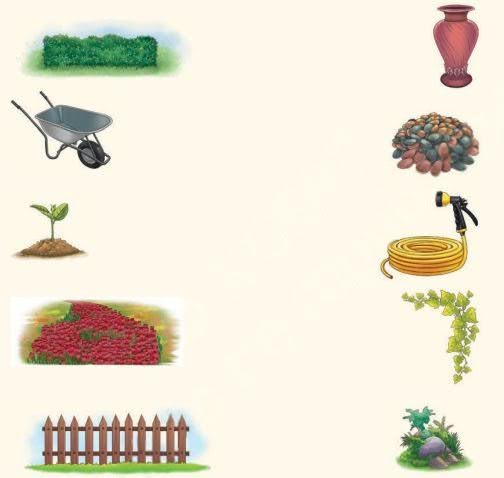
Ans.
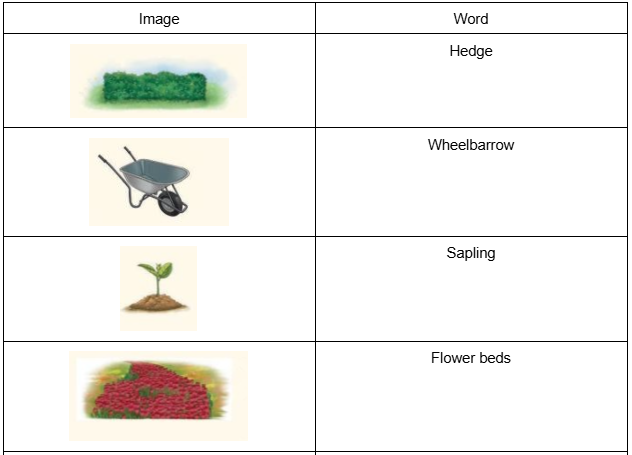
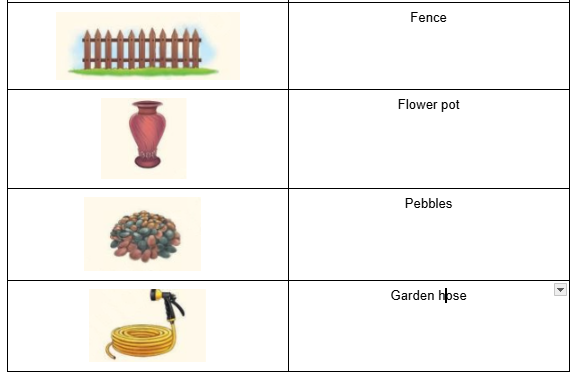
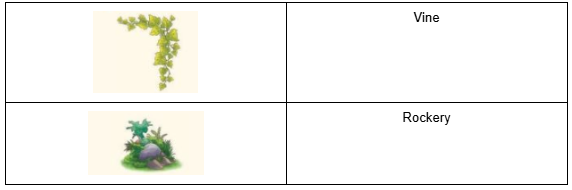
II. Work in groups of four. What kind of garden would you like to have? Mention the features that you can include and the reasons for your choice. Share your answers with your classmates and teacher.
III. Read the title of the poem. What comes to your mind when you read the word ‘concrete’? Does it have more than one meaning? Share your answers with your classmates and teacher.
Ans. The title of the poem is ‘A Concrete Example’. The word ‘concrete’ is used as an adjective here, and it has two meanings. Concrete is a building material made from a mixture of broken stone or gravel, sand, cement, and water. The other meaning of ‘concrete’ is something which exists in a solid or physical or material form.
Let us discuss
I. Complete the following summary with exact words from the poem. One example has been done for you. Share your answers with your classmates and teacher.
The poem describes Mrs. Jones, the speaker’s next-door neighbour, who has a unique garden filled with 1. _________. Her garden includes a peculiar 2. _________, a pond, and a rockery, along with an unusual 3. _________ that she finds charming. Mrs. Jones plants tiny, 4. _________ plants between the stones, which the speaker thinks must be so small that they are planted with a 5. _________. One day, Mrs. Jones invites the speaker to see her garden, and they discuss a 6. _________ that Mrs. Jones treasures. When the speaker asks where the 7. _________ flower is, Mrs. Jones says that the speaker has been 8. _________ on it all along.
Ans.
1. stones
2. path
3. sundial
4. flower
5. pin
6. flower
7. lovely
8. standing
II. Select the correct option to fill in the blanks for the following sentences.
1. The tone of the poem is ____________.
(i) mocking
(ii) humorous
(iii) mournful
(iv) amusing
(v) light-hearted
A. (i), (ii), and (iii)
B. (i), (ii), and (v)
C. (ii), (iii), and (iv)
D. (ii), (iv), and (v)
Ans. D. (ii), (iv), and (v)
2. The speaker in the poem is ____________.
(i) Mrs. Jones
(ii) the poet
(iii) a gardener
(iv) a child
Ans. (ii) the poet
3. The rhyme scheme of the poem is _________.
(i) AABBCC
(ii) ABABCC
(iii) AABCAC
(iv) ABBACC
Ans. (i) AABBCC
III. Complete the following sentences by choosing the correct answer given in the brackets.
1. The poet uses the word ‘stones’ in all stanzas in order to emphasise her ________. (obsession with a stony garden/pride in gardening skills)
Ans. obsession with a stony garden
2. The poet uses imagery to describe the features of the garden that help readers _____________. (understand Mrs. Jones’ love for plants/visualise the garden’s peculiar nature)
Ans. visualise the garden’s peculiar nature
IV. Pick examples of alliteration from the poem.
Ans. The phrase ‘next-door neighbour’ is an example of alliteration. The sound of the constant ‘n’ is used consecutively.
V. A refrain is a repeated line or phrase that appears in each stanza. Identify the refrain from the poem.
Ans. The line ‘My next-door neighbour, Mrs. Jones’ is the refrain from the poem. It is repeated in the beginning of each stanza.
VI. Irony is a literary device that emphasises the difference between what is expected and what actually happens. It often involves a situation where the outcome is the opposite of what is expected, creating a surprising or a humorous effect. For example, Mrs. Jones’ excitement about her garden contrasts with the speaker’s disappointment on how ordinary it is.
Identify the line(s) from the poem that display(s) situational irony.
Ans. The following two excerpts show situational irony.
1. We stood and talked about a flower
for quite a quarter of an hour.
“Where is this lovely thing?” I cried.
“You’re standing on it,” she replied.
2. A sundial with a strange device,
which Mrs. Jones thinks is rather nice.
VII. Complete the following sentences appropriately.
1. The word ‘concrete’ can refer to ______________ in Mrs. Jones’ garden.
Ans. the structures and decorations made of concrete
2. The title also has a symbolic meaning, as the poem provides a clear or ‘concrete’ example of Mrs. Jones’ ______________ gardening habits.
Ans. obsessive
VIII. The title ‘A Concrete Example’ carries both literal and symbolic (metaphorical) meaning. Such word play is called a pun. A pun is a figure of speech that uses words with multiple meanings or words that sound alike but have different meanings, creating a humorous effect.
• I tried arguing with my pencil but it kept making sharp points. (suggests the idea of an actual sharp pencil point and strong argument points)
• My pencil and I had a disagreement but we finally got to the point. (refers to solving an argument and the pencil’s tip)
Let us think and reflect
I. Read the given extract and answer the questions that follow.
1. My next-door neighbour, Mrs. Jones,
has got a garden full of stones:
A crazy path, a lily pond,
a rockery and, just beyond
A sundial with a strange device,
which Mrs. Jones thinks rather nice.
(i) What can be inferred about Mrs. Jones’s taste in gardening from the description of her garden being ‘full of stones’?
Ans. We can say that Mrs. Jones has a peculiar taste in gardening from the description of her garden being ‘full of stones’. Some, like the poet, find her to be obsessed with order and perfection when it comes to her garden.
(ii) Identify whether the following statement is true or false.
The garden serves as a means to reveal more about Mrs. Jones herself.
Ans. True.
(iii) What does the poet mean by ‘crazy path’?
Ans. ‘Crazy path’ means that the path surrounded by stones led to peculiar garden ornaments, like a lily pond, rockery, and a strange sundial.
(iv) What does the sundial with a ‘strange device’ suggest about Mrs. Jones’ personality?
A. She has a fascination with unusual items.
B. She prefers traditional garden decorations.
C. She is uninterested in her garden’s appearance.
D. She likes modern and expensive items.
Ans. A. She has a fascination with unusual items.
II. Answer the following questions.
1. How does Mrs. Jones feel about her garden? Support your answer with evidence from the poem.
Ans. Mrs. Jones is proud of her garden. She likes the objects with which she has decorated her garden. She enjoys discussing her garden and often invites people to explore it. The line – “A sundial with a strange device, which Mrs. Jones thinks is rather nice” suggests she likes the strange concrete ornaments even if others find it peculiar. “My next-door neighbour, Mrs. Jones, once asked me round to see her stones. We stood and talked about a flower for quite a quarter of an hour.” This line shows that Mrs. Jones likes to invite people to look at her garden. This shows her pride and also a slight obsession with her garden.
2. Why do you think the speaker describes the plants as being so small that they could be planted with a pin?
Ans. The speaker describes the plants as being so small that they could be planted with a pin. The speaker is fascinated by how the small plants and flowers are perfectly placed in between the stones. This also means that the speaker believes that Mrs. Jones is obsessed with perfection. In order to get the perfect look, Mrs. Jones goes as far as planting small plants between the stones with a pin.
3. What do we get to know about Mrs. Jones—based on her gardening style and her interaction with the speaker?
Ans. We get to know that Mrs. Jones is meticulous and a perfectionist. She is often fascinated by weird items of decoration. She is proud of her garden.
4. The poem portrays Mrs. Jones in a positive light. Support this statement.
Ans. The poem displays Mrs. Jones’s unusual taste in gardening. While the poet finds it peculiar, he also finds it to be interesting, creative, and a bit amusing. Mrs. Jones’s passion for gardening and her meticulous nature are admirable. Her garden is so perfect that the poet wonders if he used a pin to plant flowers at the perfect places. She is also open and jovial, inviting the poet to look at her garden, at her artistic display.
5. What does the poem tell us about the way people think differently about the world around them?
Ans. The poem talks about Mrs. Jones, the poet’s next-door neighbour who has a creative but peculiar garden. Her gardening skills are unique—beautiful but different. Many people find her to be a bit obsessive. Some find her to be a perfectionist. Despite all that, Mrs. Jones continues making her garden beautiful and full of unusual ornaments. She does not judge anyone and invites her neighbours to explore her garden. The poem tells us a lot about the way people think differently about the world around them. It shows that even though her garden is a bit peculiar, Mrs. Jones is still a nice person with a creative and open-minded artistic mindset.
A Concrete Example Grammar Exercises
Let us learn
I. Select the appropriate word from the brackets that correctly replaces the underlined word in the sentences from the text.
1. A sundial with a strange device,
(unusual, peculiar, new, rare, external)
Ans. rare
2. … which Mrs. Jones thinks rather nice.
(pleasant, superior, agreeable, gentle, charming)
Ans. charming
3. They are so delicate…
(delicious, fragile, dainty, graceful, weak)
Ans. fragile
4. “Where is this lovely thing?” I cried.
(exclaimed, wept, shouted, announced, whispered)
Ans. exclaimed
II. The ‘sundial’ is referred to as a ‘device’ in the poem. Work in pairs to infer the meaning of ‘device’. Share your thoughts with your classmates and teacher.
Now, match the type of instruments in Column 1 with their definitions in Column 2. Column 3 shows one example of each type of instrument. Add more examples in Column 3.
| Column 1 | Column 2 | Column 3 |
| 1. implement | (i) something that is electrical and is used to do work in the house | spade, knife |
| 2. tool | (ii) something small that is mechanical or electronic | hammer |
| 3. equipment | (iii) something that works on being moved by hand | cricket bat, helmet, batting gloves, etc. |
| 4. appliance | (iv) a set of necessary items for a particular purpose | mixer grinder |
| 5. gadget | (v) something used by hand to make or repair | mobile phone, laptop |
Ans.
| Column 1 | Column 2 | Column 3 |
| 1. implement | (iii) something that works on being moved by hand | spade, knife, scissors |
| 2. tool | (v) something used by hand to make or repair | hammer, axe |
| 3. equipment | (iv) a set of necessary items for a particular purpose | cricket bat, helmet, batting gloves, etc. office equipment |
| 4. appliance | (i) something that is electrical and is used to do work in the house | mixer, grinder, refrigerator, geyser |
| 5. gadget | (ii) something small that is mechanical or electronic | mobile phone, laptop, tablet, television |
III. Complete the table by making new words in Column 1 using the hints given in Column 2. Replace the first letter of the given word to create new words. One example has been done for you.
| Column 1 | Column 2 |
| nice | |
| (i) dice | cut into small pieces |
| (ii) rice | grain that we cook |
| (iii) mice | plural of mouse |
| (iv) vice | bad habit |
| Column 1 | Column 2 |
| soil | |
| (i) boil | heat something |
| (ii) toil | work very hard |
| (iii) coil | length of wire in a circle |
| (iv) foil | sheets to wrap food items |
Let us listen
I. You will listen to a presentation about the wonderful Rock Garden of Chandigarh. As you listen, answer the following questions using one to three exact words from the presentation. (Transcript for teacher on page 47)
1. Where was Nek Chand’s Rock Garden featured?
Ans. Nek Chand’s Rock Garden was featured on an Indian postage stamp in 1983.
2. What kind of sculptures does the Rock Garden have?
Ans. The Rock Garden has colorful sculptures made from waste materials.
3. How is the Rock Garden divided?
Ans. The Rock Garden is divided into three distinct phases. Each phase has a distinct showcase of artistry made from materials like terracotta pots, light fixtures, and broken toilet pots.
4. Name any one thing that has been transformed into a piece of art in the Rock Garden.
Ans. Broken toilets have been transformed into pieces of art in the Rock Garden.
5. Approximately, how many statues border the Rock Garden?
Ans. Approximately, 5,000 statues border the Rock Garden.
Let us speak
I The speaker of the poem might have felt sorry for stepping on Mrs. Jones’
flower. When we make a mistake, we must express regret and apologise
for our actions.
1. When we apologise to a friend or a family member, we use informal
language. Take turns to apologise for the following situations and
respond to the apology.
(i) You have eaten your brother’s share of sweets.
(ii) You have broken your sister’s flower craft.
(iii) You accidentally spilled ink on your mother’s important documents.
(iv) You forgot to bring your friend’s notebook to the school after borrowing it.
You may use the following phrases given below.
| Phrases for Apology | Phrases to Respond to Apology |
| • I’m sorry about… | • That’s alright. |
| • I’m really sorry… | • It’s no big deal. |
| • Please forgive me for… | • No problem |
| • Sorry, I didn’t mean to… | • These things happen. |
2. When we apologise to someone in authority like a Principal or a teacher in a formal setting, we use formal language. Work in pairs and take turns to apologise for the following situations and respond to the apology.
(i) You did not bring an assignment that was due for submission.
(ii) You were late to school for the past three days and had to meet the Principal.
(iii) You did not submit your project work and were asked to explain.
You may use the phrases given below.
| Phrases for Apology | Phrases to Respond to Apology |
| • I’m extremely sorry for… I promise it won’t happen again. | • I accept your apology. Please ensure you… |
| • I owe you an apology for… I’ll do my best not to repeat it. | • I appreciate you saying this, but… |
| • I really regret…I assure you that this will never happen again. | • I’m glad you realised your mistake… |
Let us write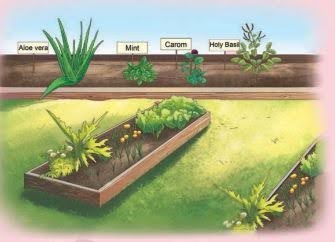
You are a member of the Nature Club of your school. Draft a notice informing the students of Grades 6–8 about the inauguration of the Herb Garden.
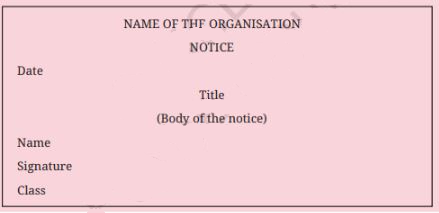
Points to remember:
• Mention the purpose of writing, date, time, venue, and any other relevant
information—whom to contact, when, and where.
• Use formal language in the third person form.
• Write the notice in a box
Ans.
|
SUNSHINE PUBLIC SCHOOL, SECTOR-1, CHANDIGARH NOTICE Date: 27 August, 2025 Inauguration of the Herb Garden Students of classes 6 to 8 are informed to attend the inauguration of the Herb Garden on 1 September at 10 am near the school grounds. For more information, kindly contact the undersigned. Ananda |
CBSE Class 8 English Unit 1 Chapter 2 A Concrete Example Extract-Based Questions
A.
My next-door neighbour, Mrs. Jones,
has got a garden full of stones:
A crazy path, a lily pond,
a rockery and, just beyond
A sundial with a strange device,
which Mrs. Jones thinks is rather nice.
Q1. What is the name of the poet’s neighbour?
Ans. The name of the poet’s neighbour is Mrs. Jones.
Q2. Does the extract have a rhyming scheme
Ans. Yes, the rhyming scheme of this extract is AABBCC.
Q3. Name any two concrete structures in her garden.
Ans. Two concrete structures in her garden are rockery and sundial.
Q4. Why is the path called ‘crazy’?
Ans. The path in Mrs. Jones’s garden is called ‘crazy’ because it is not a straight path and leads to unusual decorations, such as a lily pond, rockery, and sundial.
Q5. Name two poetic devices in the extract.
Ans. Alliteration and anaphora.
B.
My next-door neighbour, Mrs. Jones,
puts little plants between the stones
They are so delicate and small,
they don’t mean anything at all.
I can’t think how she gets them in,
unless she plants them with a pin.
Q1. What does the neighbour put between the stones?
Ans. She puts little plants between the stones.
Q2. How does the poet describe the plants?
Ans. He says that they are delicate and small.
Q3. Which word creates rhyme with ‘pin’?
Ans. ‘In’ creates rhyme with pin.
Q4. What does the poet mean by saying – ‘they don’t mean anything at all’?
Ans. He means to say that the plants are so small that their presence does not matter.
Q5. The word ‘plants’ has been used twice. Highlight the difference in meaning.
Ans. In the first instance, plants has been used as a noun which refers to small flowers or vegetable life. In the second place, the word plants is used as a verb which means to put something in the ground to grow.
C.
My next-door neighbour, Mrs. Jones,
once asked me round to see her stones.
We stood and talked about a flower
for quite a quarter of an hour.
“Where is this lovely thing?” I cried.
“You’re standing on it,” she replied.
Q1. How much time is a quarter of an hour?
Ans. A quarter of an hour is 15 minutes.
Q2. The poet and his neighbour taked about a _______
Ans. flower
Q3. What is the ‘lovely thing’?
Ans. It is a flower that they were discussing.
Q4. Which word rhymes with ‘hour’?
Ans. Flower rhymes with hour.
Q5. Identify the use of alliteration.
Ans. Next-door neighbour.
Class 8 A Concrete Example Multiple Choice Questions
Q1. Whose garden is the poet describing?
A. His neighbour’s
B. His own
C. His school’s
D. His friend’s
Ans. A. His neighbour’s
Q2. Which flowers grow in the pond?
A. Lotus
B. Lily
C. Rose
D. None of these
Ans. B. Lily
Q3. The _________ is a strange device.
A. stone
B. rockery
C. sundial
D. path
Ans. C. sundial
Q4. What is the rhyme scheme of the poem?
A. aabbccdd
B. ababcdcd
C. aaab cccd
D. None of these
Ans. A. aabbccdd
Q5. What is the name of the neighbour?
A. Mrs. Bones
B. Mrs. Jones
C. Mrs. Lones
D. Mrs. Domes
Ans. B. Mrs. Jones
Q6. The garden is full of _______
A. flowers
B. stones
C. dust
D. water
Ans. B. stones
Q7. Which of the following is NOT present in Mrs Jones’ garden?
A. rockery
B. flowers
C. swing
D. sundial
Ans. C. swing
Q8. Mrs. Jones puts small _______ between the stones.
A. animals
B. plants
C. clothes
D. mud
Ans. B. plants
Q9. Identify the correct pair of rhyming words as used in the poem-
A. pin – tin
B. cried-replied
C. Jones-bones
D. small-ball
Ans. B. cried-replied
Q10. Which phrase is repeated in the poem?
A. My next-door neighbour, Mrs. Lones,
B. My next-door neighbour, Mrs. Gones,
C. My next-door neighbour, Mrs. Bones,
D. My next-door neighbour, Mrs. Jones,
Ans. D. My next-door neighbour, Mrs. Jones,
CBSE Class 8 English Poorvi Book Unit 1 – Wit And Wisdom Chapter 2 – A Concrete Example Extra Question and Answers
Answer the following questions-
Q1. Describe Mrs Jones’ garden.
Ans. The garden has a path, a pond, a rockery and a sundial. There are small and delicate plants planted between the stones.
Q2. What opinion does the poet have for the garden?
Ans. He finds it strange. There are too many rocks and strange things made of concrete like the sundial. He wonders how Mrs Jones plants such tiny plants between the rocks.
Q3. What did the poet do when he visited Mrs Jones to see her garden?
Ans. He stepped on the flower that they were discussing.
Q4. Why does the poet say that the plants don’t mean anything at all?
Ans. The poet says that the plants have been planted between rocks. They are delicate and small. So, he says that their presence or absence does not make much difference.
Q5. What opinion does Mrs Jones have of her garden?
Ans. She has planned the garden in detail. Although it has a lot of stones and concrete, she considers it to be nice.