
A Funny Man Summary and Explanation
CBSE Class 7 English Unit 2 – Wit and Humour Chapter 2 A Funny Man Summary, Explanation along with Difficult Word Meanings from Poorvi Book
Updated for the CBSE 2026-27 session as per the rationalised syllabus.
“A Funny Man” is a playful poem by Natalie Joan about a quirky, polite stranger who does everything backwards — wearing a shoe on his head and hats on his feet, offering a bun instead of a rose — celebrating individuality and the joy of the unexpected.
Are you looking for the summary, theme and lesson explanation for CBSE Class 7 English Unit 2 – Wit and Humour Chapter 2 A Funny Man from Poorvi Book. Get Lesson summary, theme, explanation along with difficult word meanings
CBSE Class 7 English Unit 2 Wit and Humour Chapter 2 – A Funny Man
by Natalie Joan
- A Funny Man Summary
- A Funny Man Summary in Hindi
- A Funny Man Theme
- A Funny Man Explanation
- A Funny Man Poetic Devices
Related:
A Funny Man Summary
The poem A Funny Man, tells the story of a strange but polite man the speaker meets one day.
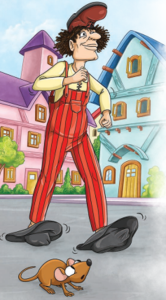
It begins by introducing this unusual man who walks down the street. The speaker quickly sees he’s different because he wears a shoe on his head and hats on his feet, which is the opposite of what most people do.
Even though he looks odd, when he sees the speaker, he acts kindly. He lifts the shoe from his head like it’s a hat and smiles politely. The speaker finds this very strange and says they’ve never seen anything so funny and odd.
Next, the man speaks eloquently. He offers to give the speaker a “rose,” calling him “Your Highness.” But instead of a rose, he pulls out a currant bun (a kind of sweet bread) and holds it up to the speaker’s nose.
The speaker is so surprised that he stumbles back against the wall. He says funnily that he has never known a “rose” to have such a “funny looking smell,” because he was smelling a bun, not a flower!
After that, the funny man sits down on the ground and starts singing. The speaker describes the song as having a “funny feeling sound.” This means it was very strange to listen to and made him feel peculiar.
Finally, the speaker gets curious and asks the man calling him his friend, why does he wear two hats on his feet. The man doesn’t answer. Instead, he simply turns around and, surprisingly, hops all the way home on his head.
Summary of the Poem A Funny Man in Hindi
कविता ए फनी मैन, एक अजीब लेकिन विनम्र व्यक्ति की कहानी बताती है जिससे वक्ता एक दिन मिलता है।
यह इस असामान्य व्यक्ति का परिचय देने से शुरू होता है जो सड़क पर चलता है। वक्ता जल्दी से देखता है कि वह अलग है क्योंकि वह अपने सिर पर जूता और पैरों पर टोपी पहनता है, जो अधिकांश लोगों के काम के विपरीत है।
भले ही वह अजीब लगता है, जब वह वक्ता को देखता है, तो वह दयालुता से व्यवहार करता है। वह अपने सिर से जूता टोपी की तरह उठाता है और विनम्रता से मुस्कुराता है। वक्ता को यह बहुत अजीब लगता है और कहता है कि उन्होंने इतना मज़ेदार और अजीब कभी नहीं देखा है।
इसके बाद, आदमी वाक्पटुता से बोलता है। वह वक्ता को एक “गुलाब” देने की पेशकश करता है, उसे “महामहिम” कहता है। लेकिन एक गुलाब के बजाय, वह एक किशमिश (एक तरह की मीठी रोटी) निकालता है और उसे वक्ता की नाक तक पकड़ता है।
वक्ता इतना आश्चर्यचकित होता है कि वह वापस दीवार से टकरा जाता है। वह मजाक में कहता है कि उसने कभी “गुलाब” को इस तरह की “मज़ेदार दिखने वाली गंध” के लिए नहीं जाना है, क्योंकि वह एक फूल नहीं, बल्कि एक बन सूंघ रहा था!
उसके बाद, मजाकिया आदमी जमीन पर बैठ जाता है और गाना शुरू कर देता है। वक्ता गीत के बारे में बताते हैं कि इसमें एक “मजेदार भावना ध्वनि” है। इसका मतलब है कि उसे सुनना बहुत अजीब था और उसने उसे अजीब महसूस कराया।
अंत में, वक्ता उत्सुक हो जाता है और उसे अपना दोस्त कहने वाले व्यक्ति से पूछता है कि वह अपने पैरों पर दो टोपी क्यों पहनता है। आदमी जवाब नहीं देता। इसके बजाय, वह बस मुड़ता है और, आश्चर्यजनक रूप से, अपने सिर पर पूरे रास्ते हॉप्स करता है।
Theme of the Poem A Funny Man
Celebration of Uniqueness
The main theme is celebrating uniqueness and individuality. The main character shows his unusual behaviour by wearing a shoe on his head and hats on his feet, offering a bun like a rose, and finally hopping on his head. These actions are considered charming expressions of his unique self, not flaws or signs of madness. The poem encourages readers to appreciate those who stand out, showing the joy and wonder that such distinct personalities can bring to our lives.
Breaking Conventional Norms
The poem explores how people can break away from expected norms. Every action the funny man takes contradicts what is seen as normal. He wears a shoe as if it were a hat, treats a bun like a rose, and uses his head to move. This reversal of expectations creates humour and encourages readers to question the strict rules of behaviour. It suggests that we can playfully reinterpret reality and that sticking too rigidly to convention can limit our sense of wonder and fun.
Humour and Whimsy
The poem highlights humour and whimsy. The silliness of the man’s actions, along with the speaker’s surprised but accepting reactions, creates a cheerful mood. The playful language, like the repeated use of “funny” and phrases that mix the senses, adds to this lighthearted feeling. The poem aims to entertain and make us smile, reminding us of the simple joys found in the strange and unexpected.
Acceptance and Understanding
There is a theme of acceptance in the poem. The speaker, although surprised, never shows fear or anger towards the funny man. Instead, they engage with him, ask a curious question, and seem to find his oddness endearing. This accepting tone encourages readers to view differences with curiosity and humour instead of fear, helping us appreciate the diverse and sometimes illogical aspects of life.
A Funny Man Poem Explanation
Let us read
Stanza
One day a funny kind of man
Came walking down this street
He wore a shoe upon his head
And hats upon his feet.
Word meanings
funny: The word “funny” here carries a double meaning – both humorous and strange.
came walking down: to arrive at a place by walking in a downward direction.
hats: there are hats for each foot.
Explanation —One day, a funny man walked down the street. He wore his shoe on his head instead of on his foot, and he put hats on his feet instead of on his head. This unique choice of clothing sets a silly and unusual tone for the poem. The opening line tells us that something strange is happening, and the word “funny” means both amusing and odd. The humour comes from switching everyday items around. Shoes belong on feet, and hats belong on heads. By reversing these, the poet creates a surprising and funny image. The simple language, like “shoe upon his head” and “hats upon his feet,” makes the silliness clear and easy to understand. There are no difficult words, so everyone can enjoy the humour.
Stanza
He raised the shoe and smiled at me,
His manners were polite;
But never had I seen before
Such a funny sounding sight.
Word meanings
polite: having or showing behaviour that is respectful and considerate of other people
funny sounding sight: ‘funny sounding sight’ is a subtle element of synesthesia (the blending of senses). A ‘sight’ is something that is seen, not heard. By calling the visual spectacle ‘sounding’ the poet enhances the peculiar man’s strangeness.
Explanation —This stanza describes the initial interaction between the speaker and the peculiar man. Despite his funny unconventional attire, the man performs a gesture of politeness, he lifts the shoe as one would lift their hat to greet someone and smiles at the speaker. The poet creates a stark contrast between appearances and manners, though the appearance of the peculiar man is strange, but his manners are polite. The poet through the admits that he hasn’t seen anything as visually odd as this as he quotes “never had I seen before”, which he finds as deeply unsettling (strange), something which goes beyond what one sees. The line ‘funny sounding sight’ is a subtle element of synesthesia (the blending of senses). A ‘sight’ is something that is seen, not heard. By calling the visual spectacle ‘sounding’ the poet enhances the peculiar man’s strangeness. The act of raising shoes is the act of subversion of normalcy.
Stanza
He said, “Allow me to present
Your Highness with a rose.”
And taking out a currant bun
He held it to my nose.
Word meanings
Allow me to present: A very formal and polite way of saying “Let me give.”
Present: To give or offer something.
Your Highness: A title of respect typically used for royalty or someone of very high rank, used here humorously given the situation
Currant bun: A small, sweet bread roll or cake containing dried currants (small raisins)
Held it to my nose: Implied to be for smelling, like one would smell a rose.
Explanation—The peculiar man continues his whimsical actions. He speaks to the speaker with an exaggerated formality, by referring to him as ‘Highness’. This polite and grand address, combined with the offer of a beautiful flower, sets up an expectation of conventional elegance. However, immediately after this dignified verbal offer, the man pulls out a “currant bun” instead of a rose. He then holds this baked good up to the speaker’s nose, directly substituting a food item with a flower, creating a comical sensory mix-up and a moment of pure absurdity. The most striking element is the stark contrast between the man’s refined language and his completely nonsensical action. The man directly substitutes one sensory experience (smelling a rose) with another (smelling a currant bun, usually associated with taste). By holding the bun to the nose, he forces the speaker into a situation where they are expected to react to a food item as if it were a fragrant flower.
Stanza
I staggered back against the wall
And then I answered, “Well!
I never saw a rose with such
A funny looking smell.”
Word meanings
Staggered back: To move unsteadily, as if about to fall; in this context, it implies a sudden, surprised, or taken-aback reaction.
Well!: An exclamation used to express surprise, consideration, or to introduce a statement.
Funny looking smell: This is a playful and nonsensical phrase, blending the senses of sight (“looking”) and smell. It humorously describes a smell that is unusual or unexpected, almost as if it has a visual quality that is strange.
Explanation— In this stanza, the speaker reacts to a man who offers a currant bun instead of a rose. The speaker is surprised and almost overwhelmed, as shown by their reaction of “staggering back against the wall.” After this surprise, the speaker responds with a hesitant “Well!” He then expresses his confusion, saying they have never seen a rose that has “such a funny looking smell.” This shows the confusion caused by the man’s actions, as the smell of a bun (which is food) doesn’t match the appearance of a rose (which is meant for looking at and smelling). The speaker also uses descriptive language to talk about a smell by saying “looking.” The phrase “A funny looking smell” perfectly captures the poem’s whimsical theme of sensory inversion and absurdity. Normally, smells are ‘good’ or ‘bad’, but to describe a smell as “funny looking” is to synesthetically attribute a visual quality to a smelling sensation. The speaker’s attempt to make sense of the man’s strangeness and nonsensicality eventually resulted in an equally nonsensical description
Stanza
He then began to sing a song,
And sat down on the ground;
You never heard in all your life
Such a funny feeling sound.
Word meanings
Funny feeling sound: A phrase that combines auditory (“sound”) with emotional (“feeling”) sensations, humorously describing a sound that is extremely strange.
Explanation —After the funny conversation about the “rose” (currant bun), the unusual man does something surprising. He starts to sing a song and sits down on the ground, showing that he is relaxed and carefree. The speaker then talks about the song, saying that in his whole life, he has never heard anything that made him feel so strange. The phrase “funny feeling sound” suggests that the song was not just odd to hear but also caused a weird, maybe unexplainable, physical or emotional reaction. The line “You never heard in all your life” uses hyperbole (exaggeration) to emphasize just how extraordinarily peculiar the song was.
Stanza
“My friend, why do you wear two hats
Upon your feet?” I said.
He turned the other way about,
And hopped home on his head.
Word meanings
Turned the other way about: He turned around to face the opposite direction.
Hopped home on his head: He moved by jumping and balancing on his head all the way home.
Explanation —In the last part of the poem, the speaker finally asks the strange man about his unusual clothes. The speaker calls him his ‘friend’ and asks why he wears two hats on his feet. This shows the speaker’s confusion about how the man is dressed. The man does not answer with words. Instead, he turns around and moves by jumping and balancing on his head all the way home. This is the last and most bizarre action that the speaker sees him do. The man’s choice not to speak is important. It shows his mysterious and playful nature. He doesn’t explain himself because his actions may be his only way to communicate. This adds to his charm as he isn’t trying to be logical. The poem’s ending highlights the celebration of extreme individuality. The man is completely unique, and his final act of hopping on his head shows his true self, free from societal expectations. He simply is, and the poem invites the readers to enjoy his strange individuality.
A Funny Man Poetic Devices
Alliteration
Alliteration is the repetition of initial consonant sounds in words that are close together. The poem uses this extensively to create a musicality and emphasize certain phrases, contributing to its whimsical tone. Some of the instances of alliteration in the poem ‘A Funny Man’ are “sounding sight” “He hopped home on his head” and “Funny feeling found”.
Consonance
Consonance is the repetition of consonant sounds (not necessarily at the beginning of words) within a short sequence of words. Some of the instances in the poem ‘AFunny Man’ are ‘One day a funny kind of man’, ‘And taking out a currant bun’, ‘And sat down on the ground’, ‘funny feeling sound’, and ‘He turned the other way about,/And hopped home on his head’.
Assonance
Assonance is the repetition of vowel sounds within a short sequence of words. Some of the instances of Assonance in the poem ‘ A Funny Man’ are ‘I staggered back against the wall’, ‘He wore a shoe upon his head’, ‘He raised the shoe’, ‘manners were polite’ and ‘And taking out a currant bun’.
Imagery
Imagery refers to language that appeals to the five senses (sight, sound, smell, touch, taste), creating vivid mental pictures for the reader. The poem is full of strong visual imagery, especially “He wore a shoe upon his head / And hats upon his feet.”, “And taking out a currant bun / He held it to my nose.” and “And hopped home on his head”. The poem also uses auditory imagery (“Such a funny feeling sound”) and olfactory imagery (“funny looking smell” – though this is also synesthesia).
Synesthesia
This is a prominent and highly effective poetic device in the poem. Synesthesia is the presentation of ideas in such a way that they appeal to more than one sense simultaneously, or describing one sense in terms of another. “Such a funny sounding sight” where ‘sight’ (visual) is described using ‘sounding’ (auditory). “Such a funny looking smell”: Here, ‘smell’ (olfactory) is described using ‘looking’ (visual). “Such a funny feeling sound”: Here, ‘sound’ (auditory) is described using ‘feeling’ (tactile/emotional). This device perfectly captures the bewildering and illogical nature of the funny man’s world, emphasizing how his actions defy normal sensory perceptions.
Repetition
In poetry, repetition is a literary device where a word, phrase, line, or even an entire stanza is repeated multiple times. The repetition of the word ‘funny’ in the poem ‘A Funny Man’ is to emphasize the eccentricity and subversion of normalcy in a humorous way.
A Funny Man FAQs
Q1. Who is the poet of “A Funny Man”?
Ans. The poem is written by Natalie Joan.
Q2. What is the theme of the poem “A Funny Man”?
Ans. It celebrates uniqueness and breaking away from conventional norms, encouraging readers to enjoy and accept people’s quirks with humour rather than judgment.
Q3. What strange things does the funny man do in the poem?
Ans. He wears a shoe on his head and hats on his feet, offers a currant bun calling it a “rose,” sings an odd song sitting on the ground, and finally hops home on his head.
Q4. What poetic device is used in phrases like “funny sounding sight” and “funny looking smell”?
Ans. These are examples of synesthesia, where one sense (like sight or smell) is described using words from another sense (like sound).
Q5. How does the poem end?
Ans. When the speaker asks why he wears hats on his feet, the funny man doesn’t reply — he simply turns around and hops all the way home on his head.
Conclusion
A Funny Man is a poem about a man who defies all conventional norms, particularly in his attire—wearing a shoe on his head and hats on his feet. Students can take help from this post to understand the poem and also learn the difficult word meanings to get a better grasp of A Funny Man. This lesson includes a summary of A Funny Man, which will help students in class 7 to get a quick recap of the poem.