
Animals, Birds, and Dr. Dolittle Summary and Explanation
CBSE Class 7 English Unit 2 – Wit and Humour Chapter 1 Animals, Birds, and Dr. Dolittle Summary, Explanation along with Difficult Word Meanings from Poorvi Book
Animals, Birds, and Dr. Dolittle Summary– Are you looking for the summary, theme and lesson explanation for CBSE Class 7 English Unit 2 – Wit and Humour Chapter 1 Animals, Birds, and Dr. Dolittle from English Poorvi Book. Get Lesson summary, theme, explanation along with difficult word meanings
CBSE Class 7 English Unit 2 Wit and Humour Chapter 1 – Animals, Birds, and Dr. Dolittle
by Hugh Lofting
Animals, Birds, and Dr. Dolittle is the story about Dr. Dolittle as a physician with a unique ability to communicate with animals. Dolittle’s world is a blend of human and animal life. The story sets the stage for his adventures as he cares for animals, learns their languages, and eventually leads a life to help them, particularly during times of crisis.
- Animals, Birds, and Dr. Dolittle Summary
- Animals, Birds, and Dr. Dolittle Summary in Hindi
- Animals, Birds, and Dr. Dolittle Theme
- Animals, Birds, and Dr. Dolittle Explanation
Related:
- Animals, Birds, and Dr. Dolittle Question Answers
- Animals, Birds, and Dr. Dolittle Character Sketch
- Class 7 English Summary and Lesson Notes
Animals, Birds, and Dr. Dolittle Summary
Animals, Birds, and Dr. Dolittle is a short story about the pivotal moments leading to John Dolittle’s transformation from a human doctor to a world-renowned animal doctor.
The story begins with the Cat’s-food-Man visiting Dr. Dolittle with a stomach-ache. During their conversation, the Cat’s-food-Man astutely observes Dr. Dolittle’s deep understanding of animals, even mentioning his wonderful book about cats, which the man’s scholarly wife, Theodosia, had read to him. He suggests that Dr. Dolittle should give up treating humans and become an animal doctor instead.
This idea is immediately reinforced by Polynesia, Dr. Dolittle’s parrot, after the Cat’s-food-Man leaves. Polynesia praises the man’s sense and strongly urges the Doctor to follow this path, disparaging his human patients as “silly people” who don’t appreciate his true abilities. She then reveals the extraordinary secret that animals can talk. Initially skeptical, Dr. Dolittle only acknowledges that parrots can talk. However, Polynesia proudly demonstrates that parrots speak both “people’s language” and “bird language,” even uttering a phrase in bird language (“Ka-ka oiee, fee-fee?”) and translating it for the astonished Doctor (“Is the porridge hot yet?”).
Intrigued and excited, Dr. Dolittle eagerly begins to learn bird language from Polynesia, meticulously writing down the words in a book. This marks the beginning of his journey into understanding the complex communication of the animal kingdom.
The narrative then shifts to Dr. Dolittle observing his dog, Jip, and realizing, with Polynesia’s guidance, that animals communicate in various ways beyond spoken words, using their ears, feet, tails, and even subtle movements like a twitch of the nose, which Polynesia explains means, “Can’t you see that it has stopped raining?”
As Dr. Dolittle’s understanding of animal language deepens, he abandons his human practice entirely and dedicates himself to treating animals. Word spreads quickly, starting with local pet owners bringing their overfed pugs and poodles, and farmers traveling miles with their sick livestock.
A significant turning point is the arrival of a plough horse who can speak horse language. The horse laments the incompetence of the local vet and correctly diagnoses his own ailment: blindness in one eye requiring spectacles. Dr. Dolittle, now able to understand the horse’s needs, readily agrees to provide green spectacles. This successful treatment not only cures the horse but also demonstrates the superiority of understanding animal language in veterinary care. Soon, it becomes common to see farm animals wearing glasses around Puddleby, and blind horses become a rarity.
The success with the plough horse is representative of Dr. Dolittle’s practice. Once animals realize he can understand them, they can clearly communicate their symptoms, making diagnosis and treatment much easier. This leads to a massive influx of animal patients of all kinds – not just common farm animals and pets, but also smaller creatures like harvest mice, badgers, and bats. Dr. Dolittle’s house and garden become so crowded that he has to create separate entrances for different species, even a tiny tunnel for the mice leading to the cellar waiting room.
The story concludes by emphasizing the widespread fame Dr. Dolittle achieves within the animal kingdom. Birds migrating to other countries spread the word of the kind doctor who could understand and help them. Within a few years, all living creatures for miles around, and even in foreign lands, knew of John Dolittle, M.D., the extraordinary animal doctor. He finds immense happiness and satisfaction in his unique life’s work.
Summary of the Lesson Animals, Birds, and Dr. Dolittle in Hindi
“एनिमल्स, बर्ड्स एंड डॉ. डुलिटल” उन महत्वपूर्ण क्षणों के बारे में एक लघु कहानी है जो जॉन डुलिटल के एक मानव डॉक्टर से विश्व प्रसिद्ध पशु डॉक्टर में परिवर्तन की ओर ले जाते हैं।
कहानी की शुरुआत कैट-फूड-मैन के पेट दर्द के साथ डॉ. डुलिटल के पास जाने से होती है। उनकी बातचीत के दौरान, कैट-फूड-मैन डॉ. डोलिटल की जानवरों के बारे में गहरी समझ को चतुराई से देखता है, यहां तक कि बिल्लियों के बारे में उनकी अद्भुत पुस्तक का उल्लेख करता है, जिसे उस व्यक्ति की विद्वान पत्नी, थियोडोसिया ने उन्हें पढ़ा था। उनका सुझाव है कि डॉ. डुलिटल को मनुष्यों का इलाज करना छोड़ देना चाहिए और इसके बजाय एक पशु चिकित्सक बनना चाहिए।
कैट-फूड-मैन के जाने के बाद डॉ. डुलिटल के तोते, पोलिनेशिया द्वारा इस विचार को तुरंत मजबूत किया जाता है। पोलिनेशिया आदमी की भावना की प्रशंसा करती है और डॉक्टर से इस रास्ते पर चलने का पुरजोर आग्रह करती है, अपने मानव रोगियों को “मूर्ख लोगों” के रूप में अपमानित करती है जो उसकी वास्तविक क्षमताओं की सराहना नहीं करते हैं। फिर वह उस असाधारण रहस्य का खुलासा करती है जो जानवर बोल सकते हैं। शुरू में संदेह करने वाले डॉ. डुलिटल केवल यह स्वीकार करते हैं कि तोते बात कर सकते हैं। हालांकि, पोलिनेशिया गर्व से दर्शाता है कि तोते “लोगों की भाषा” और “पक्षी भाषा” दोनों बोलते हैं, यहां तक कि पक्षी भाषा (“का-का ओइ, शुल्क-शुल्क?”) में एक वाक्यांश भी बोलते हैं। और आश्चर्यचकित डॉक्टर के लिए इसका अनुवाद करते हुए (“क्या दलिया अभी तक गर्म है? “)
जिज्ञासु और उत्साहित, डॉ. डुलिटल उत्सुकता से पोलिनेशिया से पक्षी भाषा सीखना शुरू करते हैं, सावधानीपूर्वक शब्दों को एक पुस्तक में लिखते हैं। यह पशु साम्राज्य के जटिल संचार को समझने की उनकी यात्रा की शुरुआत का प्रतीक है।
इसके बाद कथा डॉ. डुलिटल की ओर जाती है, जो अपने कुत्ते, जिप को देखता है, और पोलिनेशिया के मार्गदर्शन के साथ महसूस करता है कि जानवर अपने कान, पैर, पूंछ और यहां तक कि नाक के झुनझुनी की तरह सूक्ष्म गतिविधियों का उपयोग करके बोले गए शब्दों से परे विभिन्न तरीकों से संवाद करते हैं, जिसका पोलिनेशिया वर्णन करता है, “क्या आप नहीं देख सकते कि बारिश बंद हो गई है?”
जैसे-जैसे डॉ. डुलिटल की पशु भाषा की समझ गहरी होती जाती है, वह अपने मानव अभ्यास को पूरी तरह से छोड़ देता है और जानवरों के इलाज के लिए खुद को समर्पित कर देता है। यह खबर तेजी से फैलती है, जिसकी शुरुआत स्थानीय पालतू जानवरों के मालिकों द्वारा अपने अत्यधिक पोषित पग्स और पूडल्स लाने और किसानों द्वारा अपने बीमार मवेशियों के साथ मीलों की यात्रा करने से होती है।
एक महत्वपूर्ण मोड़ एक हल घोड़े का आगमन है जो घोड़े की भाषा बोल सकता है। घोड़ा स्थानीय पशु चिकित्सक की अक्षमता पर विलाप करता है और अपनी बीमारी का सही निदान करता हैः एक आंख में अंधेपन के लिए चश्मे की आवश्यकता होती है। डॉ. डुलिटल, जो अब घोड़े की जरूरतों को समझने में सक्षम हैं, आसानी से हरा चश्मा प्रदान करने के लिए सहमत हो जाते हैं। यह सफल उपचार न केवल घोड़े को ठीक करता है बल्कि पशु चिकित्सा देखभाल में पशु भाषा को समझने की श्रेष्ठता को भी दर्शाता है। जल्द ही, पुडलबी के आसपास खेत के जानवरों को चश्मा पहने देखना आम हो जाता है, और अंधे घोड़े दुर्लभ हो जाते हैं।
हल के घोड़े की सफलता डॉ. डुलिटल के अभ्यास का प्रतिनिधित्व करती है। एक बार जब जानवरों को एहसास हो जाता है कि वे उन्हें समझ सकते हैं, तो वे स्पष्ट रूप से अपने लक्षणों को बता सकते हैं, जिससे निदान और उपचार बहुत आसान हो जाता है। इससे सभी प्रकार के पशु रोगियों की भारी आमद होती है-न केवल आम खेत के जानवर और पालतू जानवर, बल्कि फसल चूहे, बैजर और चमगादड़ जैसे छोटे जीव भी। डॉ. डोलिटल के घर और बगीचे में इतनी भीड़ हो जाती है कि उन्हें विभिन्न प्रजातियों के लिए अलग-अलग प्रवेश द्वार बनाने पड़ते हैं, यहां तक कि चूहों के लिए एक छोटी सुरंग भी जो तहखाने के प्रतीक्षा कक्ष की ओर जाती है।
डॉ. डुलिटल द्वारा पशु साम्राज्य के भीतर हासिल की गई व्यापक प्रसिद्धि पर जोर देते हुए कहानी का समापन होता है। दूसरे देशों में प्रवास करने वाले पक्षियों ने उस तरह के डॉक्टर की बात फैलाई जो उन्हें समझ सकते थे और उनकी मदद कर सकते थे। कुछ वर्षों के भीतर, सभी जीवित प्राणी मीलों के लिए, और यहां तक कि विदेशी भूमि में, जॉन डोलिटल, M.D., असाधारण पशु डॉक्टर के बारे में जानते थे। उन्हें अपने अद्वितीय जीवन के काम में अपार खुशी और संतुष्टि मिलती है।
Theme of the Lesson Animals, Birds, and Dr. Dolittle
The Power of Interspecies Communication
The most prominent theme is the groundbreaking discovery and subsequent mastery of animal language by Doctor Dolittle. This ability transcends mere mimicry; it unlocks a world of understanding and allows for genuine dialogue between humans and animals. Polynesia’s role as the initial translator and teacher is crucial, highlighting the wisdom and inherent communicative abilities within the animal kingdom. This theme underscores the idea that communication barriers often prevent true understanding and that bridging these gaps can lead to profound connections. The story illustrates the practical benefits of this ability, enabling accurate diagnoses and effective treatments that were previously impossible.
Challenging Anthropocentrism and Valuing All Life
The story subtly critiques a human-centric view of the world. The plough horse’s insightful comment about humans assuming they can doctor animals simply because they don’t complain highlights the arrogance of this perspective. Doctor Dolittle’s willingness to learn and respect animal languages positions him as an exception, valuing animal intelligence and their capacity for expressing their needs and experiences. His dedication to treating all creatures, regardless of size or perceived importance (from horses and cows to harvest mice and bats), emphasizes the inherent worth of every living being.
Importance of Listening to Different Viewpoints
Doctor Dolittle’s willingness to listen to Polynesia’s advice, even though she was a parrot and he was a human doctor, shows how important it is to listen to different ways of seeing things. At first, he was a doctor for people, but he wasn’t very successful. It was the Cat’s-food-Man, an ordinary person, and then Polynesia, an animal, who suggested he become an animal doctor. Doctor Dolittle didn’t dismiss their ideas just because they weren’t other human doctors. Instead, he listened and realized they had a point because he loved animals and understood them well. Following Polynesia’s advice to learn animal languages opened up a whole new world for him and made him a very successful and happy doctor. This shows that good ideas and the right path can come from anyone, not just from people who seem important or who have the same background as you. Being open to different viewpoints can lead to unexpected and positive changes.
The Limitations of Conventional Approaches
The contrast between the traditional vet who blindly prescribes pills to the plough horse and Doctor Dolittle, who listens and correctly diagnoses the need for spectacles, underscores the limitations of conventional, human-centric approaches to animal care. The story suggests that true healing requires empathy, understanding, and a willingness to engage with animals on their own terms. The widespread adoption of spectacles by farm animals around Puddleby symbolizes the success of this unconventional, communication-based approach.
Empathy, Compassion, and the Doctor-Patient Relationship
Doctor Dolittle’s interactions with the animals are characterized by genuine empathy and compassion. He doesn’t treat them as mere objects of study but as individuals with feelings and needs. The animals, in turn, trust him implicitly, knowing that he understands them. This establishes a unique and effective doctor-patient relationship built on mutual respect and understanding, a stark contrast to the often-unilateral dynamic in human medicine.
The Joy of Purpose and Connection
The final lines emphasize Doctor Dolittle’s happiness and contentment in his chosen path. His life, filled with the constant presence and trust of animals from all walks of life, brings him profound joy. This theme suggests that finding a purpose aligned with one’s passions and fostering genuine connections, even across species lines, can lead to a deeply fulfilling life. The bustling and diverse animal community in his garden serves as a testament to the richness and reward of his unique vocation.
Animals, Birds, and Dr. Dolittle Lesson Explanation
I
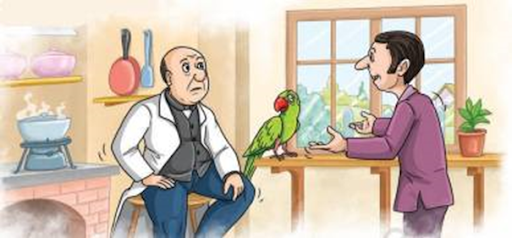
Passage: Doctor Dolittle was sitting in his kitchen talking with the Cat’sfood-Man who had come to see him with a stomach-ache.
“Why don’t you give up being a people’s doctor, and be an animal doctor?” asked the Cat’s-food-Man.
The parrot, Polynesia, was sitting in the window looking out at the rain and singing a sailor song to herself. She stopped singing and started to listen.
“You see, Doctor,” the Cat’s-food-Man went on, “you know all about animals—much more than what these vets here do. That book you wrote—about cats, why, it’s wonderful! I can’t read or write myself—my wife, Theodosia, is a scholar, and she read your book to me. You might have been a cat yourself. You know the way they think.”
Word meanings
vet(s): Short form of veterinarian, a doctor who treats animals.
scholar: a learned person
Explanation of the above passage—Doctor Dolittle was in his kitchen, engaged in a conversation with the Cat’s-food-Man who had sought his help for a stomach-ache. The Cat’s-food-Man inquired why Doctor Dolittle did not cease his practice as a doctor for people and instead become a doctor for animals.
Polynesia, the parrot, was perched by the window, observing the rain and humming a sailor’s tune to herself. She interrupted her singing and began to pay attention to the conversation.
The Cat’s-food-Man proceeded to explain to the Doctor that his knowledge of animals was extensive, surpassing that of the local veterinarians. He praised the Doctor’s book about cats, expressing his admiration for it. He confessed his own illiteracy, mentioning that his learned wife, Theodosia, had read the book to him. He remarked that the Doctor’s understanding of feline behavior was so profound that it seemed as though he might have once been a cat himself.
Passage: When the Cat’s-food-Man had gone the parrot flew off the window on to the Doctor’s table and said, “That man’s got sense. That’s what you ought to do. Be an animal doctor. Give the silly people up—if they haven’t brains enough to see you’re the best doctor in the world. Take care of animals instead— they’ll soon find it out. Be an animal doctor.”
“Oh, there are plenty of animal doctors,” said John Dolittle, putting the flowerpots outside on the windowsill to get the rain.
“Yes, there are plenty,” said Polynesia. “But none of them are any good at all. Now listen, Doctor, and I’ll tell you something. Did you know that animals can talk?”
“I knew that parrots can talk,” said the Doctor.
“Oh, we parrots can talk in two languages—people’s language and bird language,” said Polynesia proudly. “If I say, ‘Polly wants a cracker’, you understand me. But hear this: Ka-ka oiee, fee-fee?”
Word meanings
sense: good judgment; wisdom.
silly: foolish; lacking good sense.
brains enough: sufficient intelligence.
plenty: a large or sufficient amount or number; more than enough.
proudly: with a feeling of deep pleasure or satisfaction derived from one’s own achievements, the achievements of those with whom one is closely associated, or from qualities or possessions that one widely admires.
cracker: a thin, dry biscuit usually eaten with cheese
Explanation of the above passage—After the Cat’s-food-Man had departed, the parrot flew from the window and landed on the Doctor’s table. She stated that the man was sensible and advised the Doctor that he ought to become an animal doctor. She suggested he should give up treating foolish people, implying they lacked the intelligence to recognize his superior medical skills. She urged him to care for animals instead, asserting that they would soon recognize his abilities, and reiterated that he should be an animal doctor.
John Dolittle responded that there were already numerous animal doctors. He then proceeded to place the flowerpots outside on the windowsill so that they could receive the rain.
Polynesia agreed and said that there were many animal doctors but asserted that none of them were competent. She then instructed the Doctor to listen, as she had something significant to tell him. She inquired if he was aware that animals possessed the ability to talk.
The Doctor acknowledged that he knew parrots could talk.
Polynesia declared with pride that parrots were capable of speaking in two languages: the language of people and the language of birds. She clarified that if she said that Polly (she) wants a cracker, he would understand her. Following this, she uttered the phrase “Ka-ka oiee, fee-fee?” in bird language.
Passage: “Good Gracious!” cried the Doctor. “What does that mean?”
“That means, ‘Is the porridge hot yet?’—in bird language.”
“My! You don’t say so!” said the Doctor. “You never talked that way to me before.”
“What would have been the good?” said Polynesia, dusting some cracker crumbs off her left wing. “You wouldn’t have understood me if I had.”
“Tell me some more,” said the Doctor, all excited; and he rushed over to the drawer and came back with a book and a pencil. “Now don’t go too fast—and I’ll write it down. This is interesting—very interesting—something quite new. Give me the Birds’ A.B.C. first—slowly now.”
So that was the way the Doctor came to know that animals had a language of their own and could talk to one another. And all that afternoon, while it was raining, Polynesia sat on the kitchen table giving him bird words to put down in the book.
At teatime, when the dog, Jip, came in, the parrot said to the Doctor, “See, he’s talking to you.”
Word meanings
Good Gracious!: An exclamation of surprise or mild shock.
porridge: A dish made of oatmeal or another meal boiled in milk or water.
dusting: Lightly brushing or wiping to remove dust or small particles.
cracker crumbs: Small broken pieces of a dry, thin biscuit.
excited: Feeling or showing enthusiasm and eagerness.
rushed: Moved or went quickly or energetically.
drawer: A box-like storage compartment without a lid, made to slide horizontally in or out of a piece of furniture.
interesting: Arousing curiosity or interest; holding the attention.
quite: To a considerable extent; rather.
Birds’ A.B.C.: (here) the language that birds speak
teatime: The time in the late afternoon when tea is usually drunk, typically accompanied by light refreshments.
Explanation of the above passage—The Doctor exclaimed in surprise and asked, what “Ka-ka oiee, fee-fee?” meant.
Polynesia explained that it meant ‘if the porridge was hot yet’ in bird language.
The Doctor expressed his astonishment, saying he had never heard her talk that way to him before.
Polynesia replied, while dusting cracker crumbs off her left wing, that there would have been no point, as he wouldn’t have understood her if she had.
The Doctor, now very excited, asked her to tell him more. He quickly went to the drawer, retrieved a book and a pencil, and returned. He instructed her not to speak too quickly so that he could write it all down, stating that it was very interesting and something entirely new. He then asked her to give him the Birds’ A.B.C. first, speaking slowly.
And so, that was how the Doctor came to learn that animals possessed their own language and could communicate with each other. Throughout the afternoon, as it rained, Polynesia sat on the kitchen table and provided him with bird words to record in his book.
At teatime, when the dog, Jip, entered the room, the parrot pointed out to the Doctor that the dog was communicating with him.
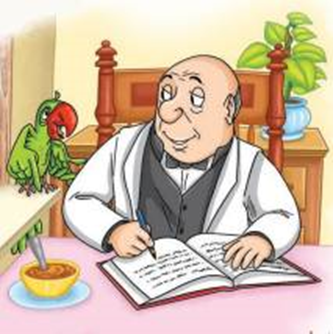
Passage: “Looks to me as though he were scratching his ear,” said the Doctor.
“But animals don’t always speak with their mouths,” said the parrot in a high voice, raising her eyebrows. “They talk with their ears, with their feet, with their tails—with everything. Sometimes they don’t want to make a noise. Do you see now the way he’s twitching up one side of his nose?”
“What’s that mean?” asked the Doctor.
“That means, ‘Can’t you see that it has stopped raining?’” Polynesia answered. “He is asking you a question. Dogs nearly always use their noses for asking questions.”
After a while, with the parrot’s help, the Doctor got to learn the language of the animals so well that he could talk to them himself and understand everything they said. Then he gave up being a people’s doctor altogether.
Word meanings
scratching: rubbing a part of the body with fingernails to relieve itching.
twitching: giving a sudden, involuntary jerking movement.
Explanation of the above passage—The Doctor observed that it looked as if the dog was scratching its ear. However, the parrot, Polynesia, explained in a high voice, raising her eyebrows, that animals do not always speak with their mouths. She said they communicate using their ears, feet, tails—with their whole bodies. Sometimes, she added, they don’t want to make a sound. She then asked if he could see how the dog was twitching one side of its nose.
The Doctor inquired about the meaning of that action. Polynesia replied that it meant that the dog is asking him if he can’t see that it has stopped raining. She clarified that the dog was asking him a question and that dogs almost always use their noses to ask questions.
After some time, with the parrot’s assistance, the Doctor became so proficient in the language of animals that he could speak to them directly and understand everything they said. Consequently, he completely stopped being a doctor for people.
II
Passage: As soon as the Cat’s-food-Man had told everyone that John Dolittle was going to become an animal doctor, old ladies began to bring him their pet pugs and poodles who had eaten too much cake; and farmers came many miles to show him sick cows and sheep.
Word meanings
pugs: A breed of small dog with a wrinkled face and short muzzle.
poodles: A breed of dog with a thick, curly coat that is often trimmed in various styles.
miles: A unit of distance equal to 5,280 feet (approximately 1.6 kilometers).
Explanation of the above passage— As soon as the Cat’s-food-Man had informed everyone of John Dolittle’s decision to become an animal doctor, elderly women started bringing their pet pugs and poodles to him, explaining that they had overeaten cake. Additionally, farmers traveled great distances to present their sick cows and sheep to him for treatment.
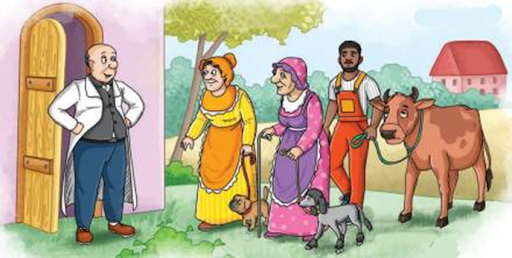
Passage: One day a plough horse was brought to him; and the poor thing was terribly glad to find a man who could talk in horse language.
“You know, Doctor,” said the horse, “that vet over the hill knows nothing at all. He has been treating me six weeks now—for something or the other. What I need is spectacles. I am going blind in one eye. There’s no reason why horses shouldn’t wear glasses, the same as people. But that stupid man over the hill never even looked at my eyes. He kept on giving me big pills. I tried to tell him, but he couldn’t understand a word of horse language. What I need is spectacles.”
Word meanings
plough horse: A horse used for pulling a plough, a large farming implement used for turning over the soil.
terribly glad: Extremely happy or pleased.
vet: Short form of veterinarian, an animal doctor.
something or the other: An unspecified ailment or problem.
spectacles: Eyeglasses.
going blind: Losing the ability to see.
stupid: Lacking intelligence or common sense.
pills: Small, solid doses of medicine to be swallowed.
Explanation of the above passage— One day, a farm horse that pulls a plough was brought to the doctor. The poor horse was extremely happy to find a person who could speak in horse language.
The horse told the doctor that the animal doctor who lived over the hill knew absolutely nothing. He had been treating the horse for six weeks for some unknown ailment. What the horse actually needed was eyeglasses because it was losing sight in one eye. The horse reasoned that there was no reason why horses shouldn’t wear glasses, just like people do. However, that foolish man over the hill had never even examined its eyes. Instead, he kept giving the horse large pills. The horse had tried to explain its problem to him, but the animal doctor couldn’t understand a single word of horse language. The horse reiterated that what it needed was spectacles.
Passage: “Of course—of course,” said the Doctor. “I’ll get you some at once.”
“I would like a pair like yours,” said the horse—“only green. They’ll keep the Sun out of my eyes while I’m ploughing the field.” “Certainly,” said the Doctor. “Green ones you shall have.”
“You know, the trouble is, Sir,” said the plough horse as the Doctor opened the front door to let him out—“the trouble is that anybody thinks he can doctor animals—just because the animals don’t complain. As a matter of fact, it takes a much cleverer man to be a really good animal doctor than it does to be a good people’s doctor.”
“Well, well!” said the Doctor.
“When will my glasses be ready?”
“I’ll have them for you next week,” said the Doctor.
“Come in again Tuesday—Good morning!”
Word meanings
at once: immediately; without delay.
ploughing: turning over and loosening soil with a plough, typically to prepare it for planting.
certainly: without doubt; definitely.
trouble: the problem
complain: express dissatisfaction or annoyance about something.
as a matter of fact: used to emphasize the truth of a statement.
cleverer: more intelligent or quick-witted.
Explanation of the above passage—The doctor readily agreed, saying ‘Of course, of course’, and promised to get the horse some glasses immediately. The horse clarified that it would be a pair similar to the doctor’s, but in green, as they would help keep the sun out of its eyes while it was ploughing the field. The doctor assured the horse that he would certainly get the green ones for the horse.
As the doctor opened the front door to let the plough horse out, the horse remarked that the trouble was that many people believed they could treat animals simply because animals did not complain. He asserted that, in reality, it required a much more intelligent person to be a truly good animal doctor than it did to be a good doctor for people.
The doctor responded with an exclamation of surprise. The horse then inquired when it’s glasses would be ready. The doctor replied that he would have them ready the following week and asked the horse to come again on Tuesday, bidding it good morning.

Passage: Then John Dolittle got a fine, big pair of green spectacles; and the plough horse stopped going blind in one eye and could see as well as ever.
And soon it became a common sight to see farm animals wearing glasses in the countryside, round Puddleby; and a blind horse was a thing unknown.
And so it was with all the other animals that were brought to him. As soon as they found that he could talk their language, they told him where the pain was and how they felt, and of course it was easy for him to cure them.
Word meanings
fine: good; of high quality.
spectacles: eyeglasses.
plough horse: a horse used for pulling a plough, a farm implement used for turning over and loosening the soil.
common sight: something that is seen frequently or regularly.
countryside: rural area
round Puddleby: in the area surrounding the town of Puddleby.
unknown: not known or familiar.
cure: to relieve the symptoms of a disease or condition.
Explanation of the above passage— Then John Dolittle acquired a good, large pair of green eyeglasses. As a result, the horse used for pulling the plough stopped losing its sight in one eye and regained its full vision.
Soon after, it became a normal occurrence to see farm animals wearing glasses in the rural area around Puddleby. A blind horse became something that no one had ever seen before.
The same thing happened with all the other animals that were brought to him. Once they realized that he could speak their language, they were able to tell him exactly where they felt pain and how they were feeling. Because of this clear communication, it was easy for him to cure them.
Passage: Now all these animals went back and told their brothers and friends that there was a doctor in the little house with the big garden who really was a doctor. And whenever any creatures got sick—not only horses and cows and dogs—but all the little things of the fields, like harvest mice, badgers, and bats, all came at once to his house on the edge of the town, so that his big garden was nearly always crowded with animals trying to get in to see him.
Word meanings
harvest mice: Small rodents that live in fields of tall grass, especially wheat and barley.
badgers: Heavily built omnivorous mammals with short legs and a black and white striped face, that typically live in underground dens.
bats: Mammals of an order Chiroptera, with forelimbs modified as wings, enabling flight.
edge of the town: The border or outer limit of the town.
crowded: Full of people or things; packed.
Explanation of the above passage— After all these animals returned to their homes, they informed their relatives and companions that in the small house with the large garden resided a doctor who was truly a doctor. Consequently, whenever any creature fell ill, not just horses, cows, and dogs, but also the small animals of the fields, such as harvest mice, badgers, and bats, they all arrived simultaneously at his house located on the outskirts of the town. As a result, his spacious garden was almost constantly filled with animals attempting to gain entry to consult him.
Passage: There were so many that came that he had to have special doors made for the different kinds. He wrote ‘HORSES’ over the front door, ‘COWS’ over the side door, and ‘SHEEP’ on the kitchen door. Each kind of animal had a separate door—even the mice had a tiny tunnel made for them into the cellar, where they waited patiently in rows for the Doctor to come round to them.
Word meanings
cellar: a room below ground level often used for storage
patiently: in a way that shows tolerance of delays or suffering without getting annoyed or anxious.
rows: a number of people or things arranged in a straight line.
come round: to visit someone’s home or a place where they are.
Explanation of the above passage—So many animals started coming to see Doctor Dolittle that he needed to have special doors made for the different types of animals. He put a sign that said ‘HORSES’ above the main door, ‘COWS’ above the door on the side of the house, and ‘SHEEP’ on the door to the kitchen. Each type of animal had its own separate entrance. Even the mice had a small tunnel built just for them that led into the basement. There, they would wait nicely in lines for the Doctor to come and examine them.
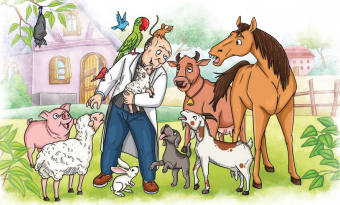
Passage : And so, in a few years’ time, every living thing for miles and miles got to know about John Dolittle, M.D. And the birds who flew to other countries in the winter told the animals in foreign lands about Dolittle who could understand their talk and help them in their troubles. In this way he became famous among the animals—all over the world. He was happy and liked his life very much.
Word meanings
miles and miles: a very long distance.
foreign lands: countries other than one’s own.
troubles: difficulties or problems.
famous: widely known and recognized.
Explanation of the above passage—And so, over a period of a few years, every animal and plant for a great distance came to know about John Dolittle, who was a medical doctor. The birds that flew to other countries during the winter season told the animals in those faraway places about Dolittle, who had the ability to understand their speech and assist them when they were in difficulty. In this manner, he became well-known among the animals across the entire world. He felt content and enjoyed his life greatly.
Conclusion
The story Animals, Birds, and Dr. Dolittle by Hugh Lofting is the story that establishes the eccentric Dr. Dolittle as a physician with a unique ability to communicate with animals. Students can take help from this post to understand the lesson and also learn the difficult word meanings to get a better grasp over Animals, Birds, and Dr. Dolittle. This lesson includes the summary of Animals, Birds, and Dr. Dolittle which will help students of class 7 to get a quick recap of the story.