
My Watch Summary and Explanation
CBSE Class 11 English (Elective) Essay Chapter 1- My Watch Summary, Explanation along with Difficult Word Meanings from Woven Words Book
My Watch Summary – Are you looking for the summary, theme and lesson explanation for CBSE 11 English (Elective) Essay Chapter 1 – My Watch from English Woven Words Book . Get My Watch Essay summary, theme, explanation along with difficult word meanings
CBSE Class 11 English (Elective) Essay Chapter 1 – My Watch
By Mark Twain
“My Watch” is a funny essay by Mark Twain. In it, he shares his annoying experiences trying to get his broken watch fixed. The story shows how unreliable some products can be and how bad customer service can be when seeking help. It humorously explores the problems of dealing with broken items and the people who say they can repair them.
Related:
My Watch Summary
A man owned a new watch that worked perfectly for eighteen months without any problems. He thought it was flawless. However, one night, he let the watch stop. Feeling upset, he set it by guessing, but decided to take it to a jeweler for the exact time.
The head jeweler took the watch, noted it was four minutes slow, and adjusted it despite the man’s attempts to explain that it kept perfect time. After this, the watch began to gain time rapidly, eventually running thirteen days ahead of the actual date. This caused him financial trouble with bills.
He then took it to a watchmaker, who found it needed cleaning, oiling, and regulating. After this repair, the watch became extremely slow, causing the man to miss appointments and feel like he was living in the past. He visited another watchmaker, who found a “swelled” barrel, and after its repair, the watch kept an average time but was very erratic, sometimes running incredibly fast and noisy, and other times slowing down significantly.
Still unsatisfied, the man took the watch to a different watchmaker, who claimed the “king-bolt” was broken. After this fix, the watch would run for a bit, then stop, then run again, seemingly at random. Frustrated, he went to yet another person. This repair led to the watch’s hands sticking together every day at ten minutes to ten, making it impossible to read the time.
A final repair attempt was made by another individual, who said the crystal was bent and the mainspring was crooked. After correcting these, the watch worked quietly for about eight hours, then suddenly buzzed loudly, and its hands spun so fast they became a blur, completing twenty-four hours in minutes before stopping abruptly. The man, having already spent thousands on repairs for a watch that originally cost two hundred dollars, went to one last watchmaker. He recognized this man as a former, incompetent steamboat engineer. This watchmaker confidently declared that the watch was making “too much steam” and needed a “monkey-wrench on the safety-valve.” In extreme frustration, the man describes hitting the watchmaker and burying him. He then recalls his deceased uncle’s saying that a good watch is only good until a repairer gets to it, and his uncle’s endless wonder about what happens to unsuccessful repairmen.
Summary of the Lesson My Watch in Hindi
एक आदमी के पास एक नई घड़ी थी जो बिना किसी समस्या के अठारह महीनों तक पूरी तरह से काम करती थी। उन्होंने सोचा कि यह त्रुटिहीन है। लेकिन एक रात उन्होंने घड़ी को बंद कर दिया। परेशान महसूस करते हुए, उन्होंने अनुमान लगाकर इसे सेट किया, लेकिन सटीक समय के लिए इसे एक जौहरी के पास ले जाने का फैसला किया।
प्रमुख जौहरी ने घड़ी ली, नोट किया कि यह चार मिनट धीमी थी, और आदमी के यह समझाने के प्रयासों के बावजूद कि यह सही समय रखता है, इसे समायोजित किया। इसके बाद, घड़ी तेजी से समय प्राप्त करने लगी, अंततः वास्तविक तिथि से तेरह दिन पहले चली। इससे उन्हें बिलों को लेकर आर्थिक परेशानी हुई।
फिर वह इसे एक घड़ी बनाने वाले के पास ले गया, जिसने पाया कि इसे साफ करने, तेल लगाने और विनियमित करने की आवश्यकता है। इस मरम्मत के बाद, घड़ी बेहद धीमी हो गई, जिससे वह व्यक्ति नियुक्तियों से चूक गया और महसूस किया कि वह अतीत में रह रहा था। वह एक अन्य घड़ी बनाने वाले के पास गया, जिसे एक “फूला हुआ” बैरल मिला, और इसकी मरम्मत के बाद, घड़ी ने औसत समय रखा, लेकिन बहुत अनियमित थी-कभी-कभी अविश्वसनीय रूप से तेज और शोर से चलती थी, और कभी-कभी काफी धीमी हो जाती थी।
फिर भी असंतुष्ट, वह आदमी घड़ी को एक अलग घड़ी बनाने वाले के पास ले गया, जिसने दावा किया कि “किंग-बोल्ट” टूट गया था। इस सुधार के बाद, घड़ी थोड़ी देर के लिए चलती, फिर रुकती, फिर फिर से चलती, ऐसा लगता है कि यादृच्छिक रूप से। निराश होकर वह एक और व्यक्ति के पास गया। इस मरम्मत के कारण घड़ी के हाथ हर दिन दस मिनट से दस मिनट तक एक साथ चिपके रहते थे, जिससे समय को पढ़ना असंभव हो जाता था।
एक अन्य व्यक्ति द्वारा मरम्मत का अंतिम प्रयास किया गया, जिसने कहा कि क्रिस्टल मुड़ा हुआ था और मुख्य स्प्रिंग टेढ़ा था। इन्हें ठीक करने के बाद, घड़ी ने लगभग आठ घंटे तक चुपचाप काम किया, फिर अचानक जोर से बजने लगा, और उसके हाथ इतनी तेजी से घूमते थे कि वे धुंधले हो गए, अचानक रुकने से पहले मिनटों में चौबीस घंटे पूरे कर लिए। वह आदमी, जो पहले से ही एक घड़ी की मरम्मत पर हजारों खर्च कर चुका था, जिसकी मूल कीमत दो सौ डॉलर थी, एक अंतिम घड़ी बनाने वाले के पास गया। उन्होंने इस व्यक्ति को एक पूर्व, अक्षम स्टीमबोट इंजीनियर के रूप में पहचाना। इस घड़ी बनाने वाले ने आत्मविश्वास से घोषणा की कि घड़ी “बहुत अधिक भाप” बना रही थी और उसे “सुरक्षा-वाल्व पर बंदर-रेंच” की आवश्यकता थी। अत्यधिक हताशा में, आदमी घड़ी बनाने वाले को मारने और उसे दफनाने का वर्णन करता है। फिर वह अपने मृत चाचा के उस कथन को याद करता है कि एक अच्छी घड़ी केवल तब तक अच्छी होती है जब तक कि एक मरम्मत करने वाला उसे प्राप्त नहीं कर लेता, और उसके चाचा के अंतहीन आश्चर्य के बारे में कि असफल मरम्मत करने वालों का क्या होता है।
Theme of the Lesson My Watch
The Loss of Innocence and Trust
The story begins with the narrator having a beautiful, perfect watch that he completely trusts. He believes it is “infallible” and “imperishable.” This perfect watch represents a kind of innocent trust in a flawless system. However, once it “runs down” and he takes it to a professional, this innocence is lost. The watch is never the same, and neither is the narrator’s trust in it or in watchmakers. The story suggests that sometimes, interfering with something that seems perfect can only lead to its ruin.
The Absurdity and Frustration of Expertise
A major theme is the narrator’s growing frustration with so-called “experts” – the watchmakers. Each one confidently diagnoses a new problem and “fixes” the watch, but only makes it worse in a different, often absurd, way. The narrator tries to explain the watch’s original perfection, but the watchmakers only see what they expect to see or what they are trained to fix. This highlights the idea that sometimes, “experts” can be blind to the actual problem or create new ones, making a simple situation incredibly complicated and frustrating. The continuous cycle of repairs leading to new, stranger malfunctions emphasizes the absurdity of their “solutions.”
The Tyranny of Time and Modern Life
Before the watch breaks, the narrator controls his time. Afterward, the watch dictates his life in a chaotic manner. It hurries up “house rent, bills payable,” making his life “ruinous.” Later, it makes him miss appointments and dinners, dragging him back into the past. This theme explores how time, and our reliance on precise timekeeping in modern society, can become a source of immense stress and control over our lives. The broken watch becomes a symbol of how technology, when it fails, can disrupt our entire existence and sense of order.
The Cost of Progress and Intervention
The narrator initially had a simple, functional watch. The problems only began when he sought professional help to “improve” it after a minor incident (letting it run down). He ends up paying thousands of dollars for “repairs” that consistently make the watch worse, both functionally and financially. This highlights a theme that sometimes, trying to fix or improve something that is already working fine, or intervening unnecessarily, can lead to much greater costs and worse outcomes than the original state. It’s a critique of excessive intervention and the expense of specialized services that might not be genuinely helpful.
The Humorous Exaggeration of Everyday Annoyances
Mark Twain uses extreme exaggeration (hyperbole) to make the everyday annoyance of a broken watch incredibly funny. The watch gains thirteen days, talks like a monster, and its hands shut like scissors. The narrator’s anguish, his “dancing around him in anguish,” and his final violent act towards the engineer, are all exaggerated for comedic effect. This theme uses humor to explore the universal frustration with faulty mechanics and incompetent service, making a relatable experience feel incredibly absurd and entertaining.
My Watch Lesson Explanation
I
Passage: My beautiful new watch had run eighteen months without losing or gaining, and without breaking any part of its machinery or stopping. I had come to believe it infallible in its judgments about the time of day, and to consider its constitution and its anatomy imperishable. But, at last, one night, I let it run down. I grieved about it as if it were a recognised messenger and forerunner of calamity. But by and by I cheered up, set the watch by guess, and commanded my bodings and superstitions to depart.
Word meanings
losing or gaining: slow or fast
infallible: always correct or accurate
constitution: The way something is put together or structured; its fundamental makeup.
anatomy: The structure of something, especially its internal parts, like the machinery of a watch.
imperishable: lasting forever
run down: to cause or allow (an engine, battery, etc) to lose power gradually and cease to function
grieved: Felt very sad or distressed
recognised messenger: Something that is widely known to bring news or signs.
forerunner of calamity: A sign or warning that a great misfortune is about to happen.
by and by: after a short period of time
commanded my bodings and superstitions to depart: Told his feelings of foreboding (a sense of future bad events) and irrational beliefs to leave his mind.
Explanation of the above passage—The narrator’s beautiful new watch had worked for a year and six months without becoming slow or fast, and without any of its inner parts breaking or stopping. He had started to believe it was always correct in telling the time, and he thought its build and its inner workings could never be destroyed. But finally, one night, he let it stop working because it gradually lost power and ceased to function. He felt very sad about this, as if the stopped watch was a clear sign and a warning that something very bad was about to happen. But eventually, he felt happier. He set the watch to what he thought was the right time, and he told his feelings of bad omens and old, irrational beliefs to go away.
Passage: Next day I stepped into the chief jeweller’s to set it by the exact time, and the head of the establishment took it out of my hand and proceeded to set it for me. Then he said, ‘she is four minutes slow— regulator wants pushing up’. I tried to stop him—tried to make him understand that the watch kept perfect time. But no; all this human cabbage could see was that the watch was four minutes slow and the regulator must be pushed up a little; and so, while I danced around him in anguish, and implored him to let the watch alone, he calmly and cruelly did the shameful deed. My watch began to gain. It gained faster and faster day by day. Within a week it sickened to a raging fever and its pulse went up to a hundred and fifty in the shade. At the end of two months it had left all the timepieces of the town far in the rear and was a fraction over thirteen days ahead of the almanac. It was away into November enjoying the snow, while the October leaves were still turning. It hurried up house rent, bills payable and such things in such a ruinous way that I could not abide it.
Word meanings
Chief jeweller’s: the most important jeweler’s shop in town.
Head of the establishment: the person in charge of the shop; the owner or manager.
proceeded to set it: started to adjust the time on it.
Regulator wants pushing up: The part of the watch that controls its speed needs to be adjusted to make it go faster.
Human cabbage: A disrespectful term used by the narrator to describe the jeweler, suggesting he is dull-witted or unresponsive.
Anguish: Severe mental suffering.
Implored him: Begged him strongly and emotionally.
Began to gain: Started to go too fast (showing a later time than it should).
Sickened to a raging fever: Became very faulty or out of control, like someone extremely ill with a high fever.
Pulse went up to a hundred and fifty in the shade: Refers to the watch ticking extremely fast, beyond normal limits, even in cooler conditions (in the shade implies a baseline, not direct heat).
Left all the timepieces of the town far in the rear: Was much, much faster than all other clocks and watches in the town.
Fraction over thirteen days ahead of the almanac: was more than thirteen days ahead of the correct date on the calendar.
Bills payable: Money that needs to be paid.
Ruinous way: In a very damaging or destructive manner.
abide it: tolerate
Explanation of the above passage—The next day, the narrator goes into the main jeweler’s shop to set his watch to the correct time. The owner of the shop took the watch from his hand and started to set it for him. Then, the owner said that the watch was four minutes slow, and its regulator needed to be moved up. The narrator tried to stop him; he tried to make the owner understand that the watch was working perfectly. But no; the owner, who the narrator disrespectfully called “human cabbage,” could only see that the watch was four minutes slow and that its regulator needed to be moved up a little. So, while the narrator moved around him quickly and anxiously, begging him to leave the watch alone, the owner calmly and unkindly did the terrible thing of moving up the regulator. After that, the narrator’s watch started to go too fast. It gained time more and more quickly each day. In just one week, it became very sick, like someone with a strong fever, and its speed (like a pulse) went up to a hundred and fifty even in cool conditions (in the shade). After two months, it was much faster than all the other clocks in the town and was more than thirteen days ahead of the calendar. It was already showing November and as if enjoying the snow, while the real world was still in October with leaves just changing color. The watch made things like house rent and bills that needed to be paid come up so quickly and in such a damaging way that the narrator could not stand it.
Passage: I took it to the watchmaker to be regulated. He asked me if I had ever had it repaired. I said no, it had never needed any repairing. He looked a look of vicious happiness and eagerly pried the watch open, and then put a small dice-box into his eye and peered into its machinery. He said it wanted cleaning and oiling, besides regulating, and asked me to come in a week. After being cleaned and oiled, and regulated, my watch slowed down to that degree that it ticked all appointments I go to, missing my dinner, I gradually drifted back into yesterday, then the day before, then into last week and by and by the comprehension came upon me that, all solitary and alone, I was lingering alone in week before last and the world was out of sight. I seemed to detect in myself a sort of sneaking fellow-feeling for the mummy in the museum, and a desire to swap news with him.
Word meanings
Regulated: Adjusted to make it keep accurate time.
Vicious happiness: A mean or cruel kind of joy, suggesting delight in someone else’s misfortune or a chance to mess with something.
Pried the watch open: Forced the watch casing open carefully.
Dice-box: A small container for throwing dice; here, it’s used humorously to describe a magnifying glass that a watchmaker might use, perhaps shaped like one or held like one.
Peered into its machinery: Looked very closely and carefully into its inner parts.
Ticked all appointments I go to: The watch ticked so slowly that it showed the wrong time, making the narrator miss his appointments.
Gradually drifted back: Slowly moved backward in time.
Comprehension: understanding
World was out of sight: The rest of the world was living in a different time, far ahead.
Sneaking fellow-feeling: A secret or quiet sense of shared understanding or sympathy.
Mummy in the museum: A preserved dead body, usually from ancient Egypt, implying something very old and out of touch with the present.
Swap news: Exchange information or stories.
Explanation of the above passage—The narrator took the watch to a watchmaker to be adjusted. The watchmaker asked him if he had ever had it fixed before. The narrator replied no, it had never needed any fixing. The watchmaker looked with a look of mean pleasure and excitedly forced the watch open. Then, he put a small magnifying glass (like a dice-box) to his eye and carefully looked into its inner workings. He said it needed cleaning and oiling, in addition to being adjusted, and asked the narrator to return in one week. After being cleaned and oiled, and adjusted, the narrator’s watch became so slow that it missed all the appointments he tried to go to, and he even missed dinner. He slowly found himself living in the past, first yesterday, then the day before, then last week. Eventually, he fully understood that, completely by himself and alone, he was stuck in the week before last, and the rest of the world seemed out of sight. He felt a sneaky sense of shared feeling of loneliness with a mummy in a museum, and a wish to exchange news with it.
Passage
I went to a watchmaker again. He took the watch all to pieces while I waited and then said the barrel was ‘swelled’. He said he could reduce it in three days. After this the watch averaged well, but nothing more. For a half day it would go like the very mischief, and keep up such a barking and wheezing and whooping and sneezing and snorting that I could not hear myself think for the disturbance: and as it held out there was not a watch in the land that stood any chance against it. But the rest of the day it would keep on slowing down and fooling along until all the clocks it had left behind caught up again. It would show a fair and square average, and no man could say it had done more or less than its duty.
Word meanings
Took the watch all to pieces: Disassembled the entire watch.
Barrel: A cylindrical part in a watch movement, usually containing the mainspring.
‘swelled’: Here, it means expanded, warped, or out of shape, causing a problem in the watch’s mechanism.
Barking and wheezing and whooping and sneezing and snorting: Exaggerated, loud, and irregular sounds made by the malfunctioning watch.
Stood any chance against it: Had any hope of competing with its speed.
Fooling along: Moving slowly and inefficiently, not keeping proper time.
Caught up again: Reached the same time as the problematic watch.
Fair and square average: A true and accurate average.
Done more or less than its duty: Performed better or worse than it was supposed to.
Explanation of the above passage—The narrator went to a watchmaker again. This watchmaker took the watch completely apart while he waited. Then, he said the main spring part (the barrel) was ‘swelled’ (meaning it was expanded or out of shape). He said he could make it smaller in three days. After this, the watch generally kept good time on average, but nothing more. For half a day, it would run extremely wildly and make such loud noises like barking, wheezing, whooping, sneezing, and snorting that the narrator could not think because of the disturbance. And for that half day, no other watch in the whole area could compete with its speed. But for the rest of the day, it would keep getting slower and moving slowly until all the other clocks it had gone past eventually caught up to it again. Overall, it would show a fair and correct average speed, and no one could say it had done more or less than its job.
II
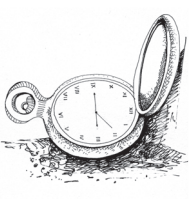 Passage: But a correct average is only a mild virtue in a watch and I took this instrument to another watchmaker. He said the king-bolt was broken. I said I was glad it was nothing more serious. To tell the plain truth, I had no idea what the king-bolt was, but I did not choose to appear ignorant to a stranger. He repaired the king-bolt but what the watch gained in one way it lost in another. It would run a while and then stop a while, and then run a while again, and so on, using its own discretion about the intervals. And every time it went off it kicked back like a musket. I padded my breast for a few days but, finally, took the watch to another watchmaker.
Word meanings
Mild virtue: A small or gentle good quality.
Instrument: A tool or device; here, referring to the watch.
King-bolt: A specific, likely made-up, part of a watch’s mechanism; the narrator pretends to know what it is.
Gained in one way it lost in another: Improved in one aspect but worsened in another.
Discretion: The freedom to decide what should be done in a particular situation; here, the watch made its own choices.
Intervals: The spaces of time between events.
Went off: Started to run
Kicked back like a musket: Jerked backward violently, like a gun when it fires.
Padded my breast: Put padding or protection on his chest (due to the watch’s kicking).
Explanation of the above passage—But the narrator felt that a watch’s ability to show a correct average time was only a small good quality. So, he took this instrument (the watch) to another watchmaker. This watchmaker said that the “king-bolt” was broken. The narrator said he was glad it was nothing more serious. To tell the simple truth, he had no idea what the “king-bolt” was, but he did not want to appear unknowledgeable to a stranger. The watchmaker repaired the “king-bolt,” but as the watch became better in one way, it got worse in the other. It would run for some time and then stop for some time, and then run again for some time, and so on, deciding by itself when to run and when to stop. And every time it started running, it strongly jerked backward like a musket firing. The narrator protected his chest for a few days, but, finally, he took the watch to another watchmaker.
Passage: He picked it all to pieces and turned the ruin over and over under his glass; and then he said there appeared to be fresh start. It did well now, except that always at ten minutes to ten the hands would shut together like a pair of scissors and from that time forth they would travel together. The oldest man in the world could not make head or tail of the time of day by such a watch, and so I went again to have the thing repaired. This person said that the crystal had got bent and the mainspring was not straight. He made these things all right and then my timepiece performed unexceptionably, save that now and then, after working along quietly for nearly eight hours, everything inside would let go all of a sudden and begin to buzz like a bee, and the hands would straightway begin to spin round and round so fast that their individuality was lost completely, and they simply seemed a delicate spider’s web over the face of the watch. She would reel off the next twenty-four hours in six or seven minutes, and then stop with a bang.
Word meanings
Picked it all to pieces: Took it apart completely.
Turned the ruin over and over: Examined the broken watch from all angles.
Appeared to be fresh start: It seemed like a new problem had begun.
Make head or tail of: To understand something at all.
Crystal: The clear cover over the face of a watch.
Mainspring: The coiled spring that provides power to a watch.
Performed unexceptionably: Worked perfectly,
Let go all of a sudden: Everything inside would suddenly release or stop working properly.
Individuality was lost completely: The hands moved so fast that they couldn’t be seen as separate.
Delicate spider’s web: A very fine and fragile web made by a spider.
Reel off: To quickly complete or produce something.
Explanation of the above passage—This new watchmaker took it completely apart and examined the ruined watch carefully under his magnifying glass. Then, he said it seemed like a new problem had started. The watch worked well now, except that always at ten minutes before ten o’clock, the hands would close together like a pair of scissors. From that time onward, they would move together. Even the oldest person in the world could not understand the time of day by such a watch. So, the narrator went again to have the item repaired. This new person said that the clear cover (crystal) had gotten bent, and the mainspring was not straight. He made these things correct. After that, the narrator’s timepiece worked perfectly, except that every now and then, after running quietly for almost eight hours, everything inside would suddenly let go and start to make a loud buzzing sound like a bee. The hands would immediately begin to spin very fast, so much that their individual shapes disappeared completely, and they looked simply like a delicate spider’s web over the watch’s face. The watch would quickly complete the next twenty-four hours in just six or seven minutes, and then stop suddenly with a loud noise.
Passage : I went with a heavy heart to one more watchmaker, and looked on while he took her to pieces. Then I prepared to cross-question him rigidly, for this thing was getting serious. The watch had cost two hundred dollars originally, and I seemed to have paid out two or three thousand for repairs. While I waited and looked on, I presently recognised in this watchmaker an old acquaintance—a steam-boat engineer of other days and not a good engineer, either. He examined all the parts carefully, just as the other watchmakers had done, and then delivered his verdict with the same confidence of manner.
Word meanings
Heavy heart: Feeling very sad or troubled.
Cross-question him rigidly: To question him very strictly and in detail, like a lawyer.
Presently recognised: Soon realized
Acquaintance: Someone known casually.
Steam-boat engineer of other days: Someone who used to operate engines on steam boats in the past.
Delivered his verdict: Gave his judgment or opinion.
Confidence of manner: A confident way of speaking and acting.
Explanation of the above passage—The narrator went with a sad heart to one more watchmaker, and watched as he took the watch apart. Then he prepared to question this watchmaker very strictly because the situation was becoming serious. The watch had originally cost two hundred dollars, and the narrator felt he had already paid two or three thousand dollars for repairs. While he waited and watched, he soon recognized in this watchmaker an old friend, a steam-boat engineer from earlier times, and not even a good engineer. The watchmaker examined all the parts carefully, just like the other watchmakers had done. Then he gave his judgment in the same confident manner.
Passage: He said:
‘She makes too much steam— you want to hang the monkey-wrench on the safety-valve!’ I brained him on the spot and had him buried at my own expense. My uncle William (now deceased, alas!) used to say that a good horse was a good horse until it had run away once, and that a good watch was a good watch until the repairers got a chance at it. And he used to wonder what became of all the unsuccessful tinkers, and gunsmiths, and shoe-makers, and engineers, and blacksmiths; but nobody could ever tell him.
Word meanings
She makes too much steam— you want to hang the monkey-wrench on the safety-valve!: a funny, non-sensical suggestion from the watchmaker, using terms from steam engines (which make “steam” and have “safety-valves”). He’s pretending the watch is like a steamboat engine that needs pressure released, even though it’s a watch.
Brained him on the spot: This is an exaggerated, humorous way of saying the narrator hit him on the head and killed him immediately. It’s not meant to be taken literally.
Deceased: Dead.
Alas!: An old-fashioned word used to show sadness or regret.
Tinkers: People who do small repairs, especially on metal items, often not very skillfully.
Gunsmiths: People who make or fix guns.
Blacksmiths: People who work with iron, usually by heating and shaping it with a hammer.
Explanation of the above passage—The watchmaker said that the watch was acting like it “makes too much steam,” and that the narrator needed to “hang the monkey-wrench on the safety-valve!” The narrator then hit him on the head and killed him right there, and paid for his burial too. The narrator’s uncle William (who is now dead, sadly!) used to say that a good horse stayed good until it ran away once. He also said that a good watch stayed good until repairers got a chance to work on it. And his uncle used to wonder what happened to all the repairmen (tinkers), gunsmiths, shoemakers, engineers, and blacksmiths who weren’t successful; but no one could ever tell him.
Conclusion
My Watch by Mark Twain talks about his annoying experiences trying to get his broken watch fixed. The story shows how unreliable some products can be and how bad customer service can be when seeking help. It humorously explores the problems of dealing with broken items and the people who say they can repair them. Students can take help from this post to understand the lesson and also learn the difficult word meanings to get a better grasp of My Watch. This lesson includes a summary of My Watch, which will help students in class 11 to get a quick recap of the lesson.