

Three Great Indians Summary and Explanation
PSEB Class 9 English Chapter 6 Three Great Indians Summary, Explanation along with Difficult Word Meanings from English Main Course Book
Three Great Indians Summary – Are you looking for the summary, theme and Lesson explanation for Punjab School Education Board (PSEB) Class 9 English Chapter 6 – Three Great Indians from English Main Course Book. Get Lesson summary, theme, explanation along with difficult word meanings
PSEB Class 9 English Main Course Book Chapter 6 – Three Great Indians
The chapter describes the journey and contributions to the liberation of India of three important freedom fighters: Sri Satguru Ram Singh Ji, Rani Laxmi Bai, and Udham Singh.
- Three Great Indians Summary
- Three Great Indians Summary in Hindi
- Three Great Indians Theme
- Three Great Indians Explanation
Related:
Three Great Indians Summary
The chapter describes the journey and contributions to the liberation of India of three important freedom fighters: Sri Satguru Ram Singh Ji, Rani Laxmi Bai, and Udham Singh. Sri Satguru Ram Singh Ji was a prominent non-violent revolutionary figure who arrived on India’s freedom scene before Tantya Tope, Rani Laxmi Bai, Dadabhai Naoroji, Sri Aurobindo, Lala Lajpat Rai, Pandit Jawahar Lal Nehru, Mahatma Gandhi, and other figures. He was born on February 3, 1816, in Raiyan, Ludhiana. He delivered his first sermon on 13 April 1857 on the Baisakhi Day. He strongly opposed child marriage, female foeticide, the taking of alcoholic drinks and non-vegetarian foods, the dowry system, religious fanaticism, cow slaughter and casteism. He encouraged his followers to lead a simple and honest life. He gave the slogan of ‘Unite and Fight’ to the people of India. He led the Kuka Movement, a non-violent protest against British rule. The Punjabi word ‘Kuka’ stands for a ‘roar’. Bishan Singh was a twelve-year-old follower who attacked a British man named Mr Cowen, who was the Deputy Commissioner of Ludhiana. In the end, Sri Satguru Ram Singh Ji was arrested and exiled to Burma. Rani Lakshmi Bai was born on 16th November 1834 in Varanasi, Uttar Pradesh. She grew up under her father’s care, learning horse-riding and martial arts. She got married to Raja Gangadhar Rao of Jhansi at the age of eight. After her son and husband’s death, Jhansi was annexed by the British. Laxmi Bai’s attempt to adopt a son under the doctrine of lapse was not accepted. On 4th June 1857, the sepoy regiment stationed at Jhansi rebelled. The British control broke down in Jhansi, and the British representative himself asked the people to obey the Rani. She became a powerful leader in the First War of Independence in 1857. She died on 18 June 1858 after being surrounded and defeated by Sir Hugh Rose’s army. Udham Singh was another revolutionary who grew up in the Khalsa Orphanage. He was born on 26 December 1899, a time when India was filled with people and organizations who opposed against the British rule. His father was Tehal Singh Kamboj and his mother was Narain Kaur. Both died when Udham was a child. He worked at the Jallianwala Bagh and he saw the massacre upfront, causing him to develop hatred towards the British. He changed his name to Ram Muhammad Singh Azad to sybolize India’s unity and joined the Gadar Party in America. He shot Michael O’Dwyer, the Lieutenant Governor of Punjab who approved the Jallianwala Bagh Massacre, on 13 March 1940 in Caxton Hall, London. Udham Singh was executed in London on 31 July 1940.
Summary of the Lesson Three Great Indians in Hindi
इस अध्याय में तीन महत्वपूर्ण स्वतंत्रता सेनानियों – श्री सतगुरु राम सिंह जी, रानी लक्ष्मीबाई और उधम सिंह – की भारत की मुक्ति में यात्रा और योगदान का वर्णन किया गया है। श्री सतगुरु राम सिंह जी एक प्रमुख अहिंसक क्रांतिकारी थे, जो तांत्या तोपे, रानी लक्ष्मीबाई, दादाभाई नौरोजी, श्री अरबिंदो, लाला लाजपत राय, पंडित जवाहरलाल नेहरू, महात्मा गांधी और अन्य प्रमुख हस्तियों से पहले आए थे। उनका जन्म 3 फरवरी, 1816 को लुधियाना के राययान में हुआ था। उन्होंने अपना पहला उपदेश 13 अप्रैल, 1857 को बैसाखी के दिन दिया था। उन्होंने बाल विवाह, कन्या भ्रूण हत्या, शराब और मांसाहारी भोजन के सेवन, दहेज प्रथा, धार्मिक कट्टरता, गौहत्या और जातिवाद का पुरजोर विरोध किया। उन्होंने अपने अनुयायियों को सरल और ईमानदार जीवन जीने के लिए प्रोत्साहित किया। उन्होंने भारत की जनता को ‘एकजुट होकर लड़ो’ का नारा दिया। उन्होंने ब्रिटिश शासन के विरुद्ध अहिंसक विरोध प्रदर्शन, कूका आंदोलन का नेतृत्व किया। पंजाबी शब्द ‘कूका’ का अर्थ है ‘गर्जना’। बिशन सिंह उनके बारह वर्षीय अनुयायी थे, जिन्होंने लुधियाना के उपायुक्त श्री कोवेन नामक एक ब्रिटिश अधिकारी पर हमला किया था। अंततः, श्री सतगुरु राम सिंह जी को गिरफ्तार कर बर्मा निर्वासित कर दिया गया। रानी लक्ष्मीबाई का जन्म 16 नवंबर 1834 को उत्तर प्रदेश के वाराणसी में हुआ था। वे अपने पिता की देखरेख में पली-बढ़ीं और घुड़सवारी और मार्शल आर्ट सीखीं। आठ वर्ष की आयु में उनका विवाह झांसी के राजा गंगाधर राव से हुआ। उनके पुत्र और पति की मृत्यु के बाद, झांसी को ब्रिटिश साम्राज्य में मिला लिया गया। 4 जून 1857 को झांसी में तैनात सिपाही रेजिमेंट ने विद्रोह कर दिया। झांसी में ब्रिटिश नियंत्रण समाप्त हो गया और स्वयं ब्रिटिश प्रतिनिधि ने जनता से रानी की आज्ञा का पालन करने का अनुरोध किया। 1857 के प्रथम स्वतंत्रता संग्राम में वे एक शक्तिशाली नेता के रूप में उभरीं। सर ह्यू रोज की सेना द्वारा घेर लिए जाने और पराजित होने के बाद 18 जून 1858 को उनका निधन हो गया। उधम सिंह एक और क्रांतिकारी थे जिनका पालन-पोषण खालसा अनाथालय में हुआ था। उनका जन्म 26 दिसंबर 1899 को हुआ था, उस समय भारत में ब्रिटिश शासन के विरुद्ध विद्रोह करने वाले लोगों और संगठनों की भरमार थी। उनके पिता का नाम तहल सिंह कंबोज और माता का नाम नारायण कौर था। उन्होंने जलियांवाला बाग हत्याकांड में काम किया और उसे अपनी आँखों से देखा, जिसके कारण उनके मन में अंग्रेजों के प्रति घृणा उत्पन्न हो गई। उन्होंने अपना नाम बदलकर राम मोहम्मद सिंह आजाद रख लिया और अमेरिका में गदर पार्टी में शामिल हो गए। उन्होंने 13 मार्च 1940 को लंदन के कैक्सटन हॉल में पंजाब के लेफ्टिनेंट गवर्नर माइकल ओ’डायर को गोली मार दी, जिन्होंने जलियांवाला बाग हत्याकांड को मंजूरी दी थी। उधम सिंह को 31 जुलाई 1940 को लंदन में फांसी दे दी गई।
Theme of the Three Great Indians
The chapter talks about the spirit of patriotism. It is not simply love and devotion for one’s country but also protecting it from being shaped and moulded by external forces. The text highlights the need for Indians to preserve their nationality, which Sri Satguru Ram Singh Ji, Rani Laxmi Bai, and Udham Singh died fighting for. The chapter sheds light on the sacrifice, preservation, determination, and bravery that the three embodied. Sri Satguru’s Kuka Movement fought for national freedom and the eradication of social evils. Rani Jhansi’s leadership shows the indomitable spirit of fierce leadership and a strong fight against the control of external threats. Udham Singh’s experience shows the impact of experiences on a human mind and how cruelty can be a powerful driving force for a purpose.
Three Great Indians Lesson Explanation
1. Sri Satguru Ram Singh Ji
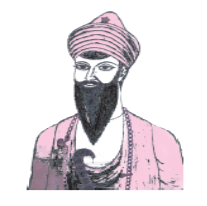
Passage: The historic period of 19th and 20th centuries witnessed the rise of many a great man in India who not only started a campaign against the social evils prevailing in the country but also raised a banner of revolt against the British Empire. “Freedom is our birthright,” declared Bal Gangadhar Tilak. Valiant fighters from all over the country – Tantya Tope, Rani Laxmi Bai, Dadabhai Naoroji, Khudi Ram Bose, Sri Aurobindo, Lala Lajpat Rai, Pandit Jawahar Lal Nehru, Mahatma Gandhi, Bhagat Singh – to name just a few came to join the national struggle for freedom and the eradication of social ills. An important name amongst them was that of Satguru Ram Singh of Punjab who gave birth to the great Kuka Movement that stood for social reforms and complete independence much before these national leaders.
Word-meanings:
witnessed: saw
social evils: harmful practices, behaviors, or injustices deeply rooted in society that negatively affect individuals and communities
prevailing: existing at a particular time
birthright: a particular right of possession or privilege a person has from birth
valiant: brave
eradication: the complete destruction of something
reforms: the action or process of improving an institution or practice
Explanation: Sri Satguru Ram Singh Ji is a prominent figure in the 19th and 20th centuries. He started campaigns against social injustices and the rule of the British Empire. Sri Satguru Ji started the freedom struggle before the several freedom fighters like Tantya Tope, Rani Laxmi Bai, Dadabhai Naoroji, Khudi Ram Bose, Sri Aurobindo, Lala Lajpat Rai, Pandit Jawahar Lal Nehru, Mahatma Gandhi, and Bhagat Singh. He came from Punjab and started the great Kuka Movement. He fought for social reforms and complete independence before all the other national leaders.
Passage: Born on February 3, 1816 in the village Raiyan in district Ludhiana, this child shot into prominence when Guru Balak Singh Ji declared him a ‘guru’, a religious guide. From his headquarters at Shri Bhaini Sahib in Ludhiana, the guru started preaching his divine message. His first sermon was delivered on the Baisakhi Day in 1857. In his teachings, he exhorted the people to believe in one God, lead a simple, honest life free from any kind of evil, to help the poor and the needy and to work for the freedom of the country. Thousands became his followers and flocked to his discourse every day. He strongly opposed child marriage, female foeticide, taking of alcoholic drinks and non-vegetarian foods, dowry system, religious fanaticism, cow slaughter and casteism. He encouraged people to live like brothers and fight for the freedom of their country from the British rule.
Word-meanings:
prominence: a position of fame
exhort: advise
foeticide: murder or destruction of the unborn child inside the womb
fanaticism: the quality of being fanatical or extreme
Explanation: Sri Satguru Ram Singh Ji was born on February 3, 1816, in the village of Raiyan, in the district of Ludhiana. Guru Balak Singh Ji declared him a ‘guru’, which made him famous. His headquarters were at Shri Bhaini Sahib in Ludhiana, from where he delivered his sermons. His first sermon was delivered on the Baisakhi Day in 1857. He advised people to believe in one God, lead a honest life, to help the poor and the needy, and to work for the freedom of the country. He strongly opposed child marriage, female foeticide, taking of alcoholic drinks and non-vegetarian foods, dowry system, religious fanaticism, cow slaughter and casteism.
Passage: Against the British policy of ‘Divide and Rule’, he gave the slogan of ‘Unite and Fight’ to the people of India. He started a movement of non-cooperation against the British rulers and called upon the people to boycott the British. It was he who introduced the concept of ‘Be Indian, buy Indian’ in the country. The British rulers came down heavily on his roaring followers. The Punjabi word ‘Kuka’ stands for a ‘roar. Sri Satguru Ram Singh’s followers who raised a loud voice against the British came to be popularly known as ‘Kukas’. The followers of this movement were named Namdharis. The Namdhari Sikhs soon became a brave force to be reckoned with.
Word-meanings:
to be reckoned with: someone or something is too powerful, influential, important, or formidable to be dismissed or taken lightly
Explanation: Sri Satguru Ram Singh Ji gave the slogan of ‘Unite and Fight’, which was used to fight against the British policy of ‘Divide and Rule’. He was the first one to start a non-cooperation movement against the British. He also gave the concept of ‘Be Indian, buy Indian’. The Kuka Movement was called that because of the followers who raised a loud voice against the British. ‘Kuka’ means ‘roar’ in Punjabi. The followers of this movement were named Namdharis and they soon became too strong to be dismissed lightly by the British rulers.
Passage: The British rulers could not tolerate the rise of such an inspired patriotic force against them. They let loose a reign of terror against the Kukas. Nine Namdhari Sikhs were sent to the gallows in 1871 while another 65 were blown up by cannon fire in an open field in 1872 at Malerkotla (Punjab). Amongst these martyrs was a twelve year old boy named Bishan Singh. He was offered pardon on the condition that he should deny his allegiance to the Kuka cause. He angrily pounced upon the British officer (Mr Cowen Deputy Commissioner, Ludhiana) and pulled at his beard. The enraged officer got both his hands severed and then beheaded him. The lovers of liberty refused to be cowed down by this repression but continued to fight with greater enthusiasm. Sri Satguru Ram Singh Ji was arrested and exiled to Burma and unknown foreign land. His spirit continues to guide his followers even today.
Word-meanings:
send to the gallows: hang by the neck
to be cowed down: to be discouraged or afraid
Explanation: The British rulers could not tolerate the Namdhari Sikhs. Nine Sikhs were sent to be hung in 1871, and 65 Sikhs were blown up by cannon fire in an open field in 1872 at Malerkotla, Punjab. There was a twelve-year-old boy, Bishan Singh, who was offered a deal. He would be pardoned if he would refuse his pledge and devotion to the Kuka Movement. The British officer who proposed this was Mr Cowen. He was the Deputy Commissioner of Ludhiana. Bishan Singh attacked Mr Cowen and also pulled at his beard. The attack injured his hands severely. Bishan Singh was beheaded. Ultimately, Sri Satguru Ram Singh Ji was arrested and exiled to Burma.
Passage: The followers of Sri Satguru Ram Singh Ji continue to flourish today under the able stewardship of their holy gurus and spread the message of universal brotherhood, national unity, secularism, simple living and high thinking.
Word-meanings:
stewardship: the job of supervising or taking care of something, such as an organization or property
Explanation: People follow Sri Satguru Ram Singh Ji till this day. They take up the duty to spread the message of universal brotherhood, national unity, secularism, simple living and high thinking.
2. Rani Laxmi Bai
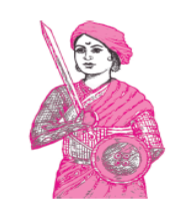
Passage: No other woman warrior in the history of India has made such a powerful impact on the minds of the Indian people as the Rani of Jhansi, Laxmi Bai. Her heroic battle against the British has become the subject of many folk songs and ballads all over the country. Her indomitable spirit as a fighter for the independence of her country was appreciated even by her enemies. Rani Laxmi Bai died fighting bravely for the sake of her country. The Rani of Jhansi became the most popular leader of the First War of Independence (1857).
Word-meanings:
warrior: a soldier, a person who fights in battle
impact: a strong impression or effect
ballad: a song or a poem that tells a story
indomitable: that cannot be defeated or suppressed
appreciate: to recognise and enjoy the good qualities of something
Explanation: Rani Laxmi Bai was a powerful woman warrior who also went by the title Rani of Jhansi. She made a powerful impact on the Indian people by being an unsuppressible spirit against British rule. Her bravery and sacrifice for her country are vividly acknowledged and appreciated through ballads and folk songs. She was the most popular leader during the First War of Independence in 1857.
Passage: Laxmi Bai was born on 16th November 1834, in Varanasi (U.P.). Her childhood name was Manikarnika or Manu. After the death of her mother she came to Bithur with her father. In Bithur, she learnt horse-riding and martial arts. When she was eight, she was married to Raja Gangadhar Rao of Jhansi and so she was called the ‘Rani of Jhansi’. In 1851, she gave birth to a son but by 1853, both her son and husband had died. The Rani of Jhansi adopted a son under the Policy of Lapse’, but the British Government did not recognize the adopted son and annexed Jhansi in 1853. On 4th June 1857, the sepoy regiment stationed at Jhansi rebelled. The British control broke down in Jhansi, and the British representative himself asked the people to obey the Rani.
Word-meanings:
martial art: any of the fighting sports
annex: to take control of a territory
regiment: a large military group commanded by a colonel
rebel: to fight against an authority
representative: an agent
Explanation: Laxmi Bai was born on 16th November 1834 in Varanasi, Uttar Pradesh. Her birth name was Manikarnika or Manu. When her mother died, she went to live with her father in Bithur, and there she learnt horse-riding and martial arts. She married to Raja Gangadhar Rao of Jhansi at the age of eight, making her Rani of Jhansi. She gave birth in 1851, but her husband and son died in 1853. There was a Policy of Lapse through which Jhansi Bai adopted a son. However, the British Government did not validate the son and took control of Jhansi. On 4 June 1857, the sepoy regiment at Jhansi fought against the British, and their struggle was victorious. The British representative in Jhansi also asked the people to obey the Rani after the attack.
Passage: The British forces under the leadership of Sir Hugh Rose later besieged Jhansi. The Rani continued to command her forces from inside the fort but ultimately she was forced to leave Jhansi. She then managed to reach Kalpi where she merged her forces with those of the Nawab of Banda, Tantia Tope. The British forces pursued her at Kalpi also and inflicted defeat on Kalpi. The Rani was surrounded from all sides, and so, she now tried to organize a retreat. While doing so, she was fatally wounded on 18th June 1858. She breathed her last on the battlefield.
Word-meanings:
besieged: surrounded by armed forces aiming to capture it or force surrender
pursue: to follow or chase
inflicted: to make somebody or something suffer
Explanation: Sir Hugh Rose and his army finally surrounded Jhansi at Kalpi. Jhansi had been forced to leave the fort, and she reached Kalpi, where she joined her army with the army of the Nawab of Banda. The British forces chased Jhansi down and defeated her. Jhansi was not allowed to retreat and was fatally wounded. She died on 18 June 1858.
III. Martyr Udham Singh (1899-1940)
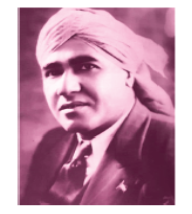
Passage: A great revolutionary, Udham Singh was son of Tehal Singh Kamboj and Narain Kaur. He was born on 26th December, 1899 at Sunam, now known as Sunam Udham Singh Wala. He lost his parents in childhood and was admitted in Khalsa Orphanage, Amritsar. This was the time when the whole atmosphere was surcharged with the activities of revolutionaries.
Word-meanings:
orphanage: a home for children whose parents are dead
surcharged: overly filled
revolutionaries: people who oppose somebody in authority over them in and organisation
Explanation: Udham Singh was another revolutionary who grew up in the Khalsa Orphanage. He was born on 26 December 1899, a time when India was filled with people and organizations who opposed against the British rule. His father was Tehal Singh Kamboj and his mother was Narain Kaur.
Passage: On 13th April, 1919 in Jallianwala Bagh, General Dyer opened fire on a peaceful gathering without giving any warning where people were protesting against Rowlatt Act. Hundreds were killed and thousands were injured in Jalliawala Bagh massacre where Udham Singh was serving water. This was a turning point in Udham Singh’s life. This cruel bloodshed filled his mind with hatred against the British. Later, he met revolutionary leaders of Gadar party and worked for it in America. When he returned back to India, he was arrested in Amritsar under the Arms Act and was awarded five-years of rigorous imprisonment. After his release from prison, he wrote his name as Ram Muhammad Singh Azad, symbolizing the unity of India.
Word-meanings:
peaceful: not involving a fight or argument
massacre: the killing of a large number of people
rigorous: strict
symbolizing: representing a more general quality or situation
Explanation: On 13th April 1919, the Jallianwala Bagh Massacre took place. General Dyer opened fire on a non-violent protest against the Rowlatt Act. Udham Singh was there at that time, serving water. The massacre filled his mind with hatred against the British and he went to America to join the Gadar Party. When he returned to India, he was arrested under the Arms Act. After five years of strict imprisonment, he changed his name to Ram Muhammad Singh Azad. The new name symbolised unity of India.
Passage: He left India to fulfill his vows. On 13th March, 1940 in Caxton Hall, London, Udham Singh fired six shots killing Michael O’Dwyer who had approved Dyer’s action, as the Lieutenant Governor of Punjab. At police station when he was told that he could be sentenced to death, Udham Singh said, “I don’t care about the sentence of death, it’s not worrying me, I am dying for a purpose.” In court proceedings he said, “We are suffering from British imperialism….”
Word-meanings:
approved: to think or declare that somebody/something is good
proceedings: the process of using a court to settle an argument or a complaint
imperialism: a policy of extending a country’s power and influence through colonization, use of military force, or other means
Explanation: He left India as Ram Muhammad Singh Azad to fulfil his commitment to free India. He shot Michael O’Dwyer, the Lieutenant Governor of Punjab who approved the Jallianwala Bagh Massacre, on 13 March 1940 in Caxton Hall, London. Udham Singh did not care if he would get the death sentence. He felt satisfied because he would die for a meaningful purpose. He said that India was suffering due to colonisation and imperialism in the court proceedings.
Passage: On July 31, 1940, Udham Singh was executed in London. He sacrificed his life for the liberation of India.
Word-meanings:
liberation: the act or process of freeing a country or a person from external control
Explanation: Udham Singh was executed in London on 31 July 1940. He sacrificed his life to fulfil his vow to free India from the control of the British.
Conclusion
This post on the lesson “Three Great Indians” from PSEB Class 9 English Main Course book comprises the summary, word meanings and lesson explanation. Students can take help of the content and get a quick revision.