

Gulliver in Lilliput Summary and Explanation
Jammu and Kashmir Board Class 9 English Chapter 2 Gulliver in Lilliput Summary, Explanation along with Difficult Word Meanings from English Tulip Book
Gulliver in Lilliput Summary – Are you looking for the summary, theme and Lesson explanation for Jammu and Kashmir Board of Secondary Education (JKBOSE) Class 9 English Chapter 2 – Gulliver in Lilliput from Tulip Book. Get Lesson summary, theme, explanation along with difficult word meanings.
JKBOSE Class 9 English Main Course Book Chapter 2 – Gulliver in Lilliput
By Jonathan Swift
“Gulliver in Lilliput” is an extract from Jonathan Swift’s famous satirical novel Gulliver’s Travels (1726). The story follows Lemuel Gulliver, an English ship captain who gets shipwrecked in the Atlantic and lands on the island of Lilliput, inhabited by people not more than six inches tall. Initially imprisoned by the Lilliputians, Gulliver eventually earns their trust and is freed. This extract begins two weeks after his release when Chief Secretary Reldresal visits him to discuss the empire’s serious political problems, bitter internal party divisions and an impending invasion from the neighboring empire of Blefuscu. Through this seemingly innocent adventure story, Swift brilliantly satirizes the petty political disputes, religious conflicts, and wars of his own time, showing how trivial matters can lead to devastating consequences when people refuse to compromise or see reason. The second part describes Gulliver’s heroic capture of the Blefuscan fleet, demonstrating both his physical power and diplomatic loyalty.
- Gulliver in Lilliput Summary
- Gulliver in Lilliput Summary in Hindi
- Gulliver in Lilliput Theme
- Gulliver in Lilliput Explanation
Related:
Gulliver in Lilliput Summary
Part I:
Two weeks after obtaining freedom, Gulliver receives a visit from Reldresal, Chief Secretary for Private Affairs, who comes with one servant for a private conversation. Gulliver receives him with honor, offering to lie down for easier conversation, but Reldresal prefers sitting in Gulliver’s hand.
Reldresal congratulates Gulliver on his freedom and explains he was released early partly because the state faces many difficult internal and external problems, and authorities thought Gulliver might help solve them.
He explains Lilliput’s internal divisions: the country is split between High Heels and Low Heels parties, distinguished by shoe heel heights. These parties oppose each other bitterly, members refuse to eat, drink, or talk with the opposing party. Though High Heels are more in number, the Emperor favors Low Heels and wears only low heels himself, so the government is controlled by Low Heels. They fear the young Prince sympathizes with High Heels, as one of his heels is higher than the other, giving him a limp.
Besides internal problems, Lilliput faces invasion from Blefuscu, described as “the other great empire of the Universe.” According to Lilliputian scientists and historians, only Lilliput and Blefuscu exist as great regions. These empires have been engaged in a bloody war for thirty-six “moons” (about three years). A Moon is a time duration of almost twenty eight days.
The war began over whether one should break an egg at the bigger end or smaller end. The ancient practice was breaking eggs at the bigger end, but the present Emperor’s grandfather cut his finger breaking an egg this way when he was a boy. His father, the Emperor, then prohibited breaking eggs at the bigger end, requiring people to use the smaller end instead.
This new law faced bitter opposition and frequent rebellions. One emperor lost his life and another his crown in these conflicts. Hundreds of books were published on the question, but Big Endian books were prohibited. At least 11,000 people chose death rather than submit to the new practice. Many rebels escaped to Blefuscu, where the Emperor gave them sympathy and encouragement, interfering in Lilliput’s internal affairs.
The Emperor of Blefuscu frequently charged the Lilliputian Emperor with causing religious division by forcing people to disobey their ancient religion. Their holy book’s 54th chapter states: “All believers shall break their egg at the convenient end.” But Reldresal considers this charge baseless, arguing that which end is “convenient” should be decided by each person’s conscience.
The two empires continue fighting. Currently, Blefuscu is preparing to invade, scouts report a fleet is ready to sail. The Emperor wants Gulliver’s help to defend against the invasion.
Gulliver diplomatically avoids discussing party politics or religious principles, stating that as a foreigner, he has no right to interfere. However, he tells Reldresal to inform the Emperor that he is a loyal soldier, ready to defend the Emperor’s honor and the country if there is an invasion.
Part II:
The Empire of Blefuscu lies to the northeast of Lilliput, separated by a channel about 800 meters wide. Gulliver avoids that coast so the enemy won’t spot him, as they have no news of him yet. Scouts report the enemy fleet lies anchored, ready to sail with favorable wind.
Gulliver walks to the northeast coast, hides behind a small hill, and observes the enemy fleet through field glasses. He counts at least fifty warships plus numerous transport ships. He frames a plan to capture the warships.
Consulting experienced Lilliputian seamen, he learns the channel is mostly five feet deep, nowhere exceeding six feet. Gulliver orders strong cable (as thick as pack-thread to him) and iron bars (size of knitting-needles). He twists cables together making fifty strong cords, then makes fifty hooks by twisting three bars together, fastening hooks to cords.
Armed with these, he wades into the channel, swims partway, and in about half an hour reaches the enemy fleet. The terrified enemy, approximately 30,000 people, leap from ships and swim ashore. He attaches hooks to each warship’s prow, leaving transport ships alone.
While working, Blefuscu’s men shoot several thousand arrows at Gulliver. Many stick in his hands and face, causing sharp pain. He quickly puts on eye-glasses to protect his eyes and continues working.
After fastening all warship hooks, Gulliver ties cord ends into a knot and pulls, but ships don’t move, they’re held by anchors. He releases cords, cuts anchor cables, then takes the knotted end again and easily draws the entire enemy fleet after him.
The men of Blefuscu shout in despair, not having initially guessed his intention. Out of danger, Gulliver stops to pull arrows from his face and applies ointment given by Lilliputians, which relieves pain immediately.
The Emperor, attended by his court, waits on shore to see the adventure’s outcome. They see the entire fleet advancing in a half-moon shape but cannot distinguish Gulliver because he’s neck-deep in water. They think he’s drowned and the enemy fleet is advancing for battle. When they see Gulliver emerge, they feel greatly relieved. He holds up his hand from beneath the water, crying loudly, “Long live the mightiest Emperor of Lilliput!” The Emperor receives him with honor and immediately makes him a Great Lord.
Summary of the Lesson Gulliver in Lilliput in Hindi
भाग I:
अपनी स्वतंत्रता प्राप्त करने के दो सप्ताह बाद, गुलिवर को निजी मामलों के मुख्य सचिव रेल्ड्रेसल की यात्रा मिलती है, जो एक नौकर के साथ निजी बातचीत के लिए आते हैं। गुलिवर उन्हें सम्मान के साथ प्राप्त करते हैं, आसान बातचीत के लिए लेटने की पेशकश करते हैं, लेकिन रेल्ड्रेसल गुलिवर के हाथ में बैठना पसंद करते हैं।
रेल्ड्रेसल गुलिवर को उनकी स्वतंत्रता पर बधाई देते हैं और बताते हैं कि उन्हें जल्दी रिहा किया गया क्योंकि राज्य कई कठिन आंतरिक और बाहरी समस्याओं का सामना कर रहा है, और अधिकारियों ने सोचा कि गुलिवर उन्हें हल करने में मदद कर सकते हैं।
वे लिलिपुट के आंतरिक विभाजनों की व्याख्या करते हैं: देश हाई हील्स और लो हील्स पार्टियों में विभाजित है, जूते की एड़ी की ऊंचाई से पहचानी जाती हैं। ये पार्टियाँ एक-दूसरे का कड़ाई से विरोध करती हैं, सदस्य विरोधी पार्टी के लोगों के साथ खाने, पीने या बात करने से इनकार करते हैं। हालांकि हाई हील्स अधिक हैं, सम्राट लो हील्स को पसंद करता है और स्वयं केवल लो हील्स पहनता है, इसलिए सरकार लो हील्स के नियंत्रण में है। उन्हें डर है कि युवा राजकुमार हाई हील्स के प्रति सहानुभूति रखता है, क्योंकि उसकी एक एड़ी दूसरे से ऊंची है, जिससे उसे लंगड़ापन है।
आंतरिक समस्याओं के अलावा, लिलिपुट ब्लेफुस्कु से आक्रमण का सामना करता है, जिसे “ब्रह्मांड का दूसरा महान साम्राज्य” बताया गया है। लिलिपुटियन वैज्ञानिकों और इतिहासकारों के अनुसार, केवल लिलिपुट और ब्लेफुस्कु ही महान क्षेत्र हैं। ये साम्राज्य छत्तीस “चन्द्रमाओं” (लगभग तीन साल) से खूनी युद्ध में हैं।
युद्ध इस पर शुरू हुआ कि अंडे को बड़े सिरे से तोड़ना चाहिए या छोटे से। प्राचीन प्रथा बड़े सिरे से अंडे तोड़ने की थी, लेकिन वर्तमान सम्राट के दादा ने, जब वे एक लड़के थे, इस तरह अंडा तोड़ते समय अपनी उंगली काट ली। उनके पिता, सम्राट ने, फिर बड़े सिरे से अंडे तोड़ने को प्रतिबंधित कर दिया, लोगों को छोटे सिरे का उपयोग करने की आवश्यकता थी।
इस नए कानून को कड़े विरोध और बार-बार विद्रोह का सामना करना पड़ा। एक सम्राट ने अपनी जान गंवाई और दूसरे ने अपना ताज खो दिया। इस प्रश्न पर सैकड़ों पुस्तकें प्रकाशित हुईं, लेकिन बिग एंडियन पुस्तकों को प्रतिबंधित कर दिया गया। कम से कम 11,000 लोगों ने नई प्रथा के सामने झुकने के बजाय मौत को चुना। कई विद्रोही ब्लेफुस्कु भाग गए, जहाँ सम्राट ने उन्हें सहानुभूति दी।
ब्लेफुस्कु के सम्राट ने अक्सर लिलिपुटियन सम्राट पर धार्मिक विभाजन पैदा करने का आरोप लगाया। उनकी पवित्र पुस्तक का 54वां अध्याय कहता है: “सभी विश्वासियों को अपने अंडे को सुविधाजनक सिरे पर तोड़ना चाहिए।” लेकिन रेल्ड्रेसल इसे निराधार मानते हैं, यह तर्क देते हुए कि कौन सा सिरा “सुविधाजनक” है, यह प्रत्येक व्यक्ति की अंतरात्मा द्वारा तय किया जाना चाहिए।
दोनों साम्राज्य लड़ना जारी रखते हैं। वर्तमान में, ब्लेफुस्कु आक्रमण की तैयारी कर रहा है, स्काउट्स रिपोर्ट करते हैं कि एक बेड़ा तैयार है। सम्राट आक्रमण से बचाव में गुलिवर की मदद चाहता है।
गुलिवर कूटनीतिक रूप से पार्टी राजनीति या धार्मिक सिद्धांतों पर चर्चा से बचते हैं, यह कहते हुए कि एक विदेशी के रूप में, उन्हें ऐसे मामलों में हस्तक्षेप करने का कोई अधिकार नहीं है। हालांकि, वे रेल्ड्रेसल को सम्राट को सूचित करने के लिए कहते हैं कि वे एक वफादार सैनिक हैं, आक्रमण होने पर सम्राट के सम्मान और देश की रक्षा के लिए तैयार हैं।
भाग II:
ब्लेफुस्कु का साम्राज्य लिलिपुट के उत्तर-पूर्व में स्थित है, लगभग 800 मीटर चौड़ी एक चैनल द्वारा अलग किया गया है। गुलिवर उस तट से बचते हैं ताकि दुश्मन उन्हें न देख सके। स्काउट्स रिपोर्ट करते हैं कि दुश्मन का बेड़ा बंदरगाह में लंगर डाले हुए है।
गुलिवर उत्तर-पूर्वी तट पर चलते हैं, एक छोटी पहाड़ी के पीछे छिपते हैं, और फील्ड ग्लास के माध्यम से दुश्मन के बेड़े को देखते हैं। वे कम से कम पचास युद्धपोतों और कई परिवहन जहाजों की गिनती करते हैं। वे युद्धपोतों पर कब्जा करने की योजना बनाते हैं।
अनुभवी लिलिपुटियन नाविकों से परामर्श करते हुए, वे सीखते हैं कि चैनल ज्यादातर पांच फीट गहरा है। गुलिवर मजबूत केबल और लोहे की छड़ें मंगवाते हैं। वे केबलों को मोड़कर पचास मजबूत डोरियाँ बनाते हैं, फिर तीन छड़ों को मोड़कर पचास हुक बनाते हैं।
इनसे लैस होकर, वे चैनल में उतरते हैं, थोड़ा तैरते हैं, और लगभग आधे घंटे में दुश्मन के बेड़े तक पहुँच जाते हैं। भयभीत दुश्मन, लगभग 30,000 लोग, जहाजों से कूदकर किनारे पर तैर जाते हैं। वे प्रत्येक युद्धपोत के प्रॉ से हुक जोड़ते हैं।
काम करते समय, ब्लेफुस्कु के लोग गुलिवर पर हजारों तीर चलाते हैं। कई उनके हाथों और चेहरे में चुभ जाते हैं। वे जल्दी से आंखों के चश्मे पहनते हैं और काम जारी रखते हैं।
सभी युद्धपोत हुकों को बांधने के बाद, गुलिवर डोरी के सिरों को एक गांठ में बांधते हैं और खींचते हैं, लेकिन जहाज नहीं हिलते, लंगर से पकड़े हुए हैं। वे लंगर की केबलों को काटते हैं, फिर गांठ वाले सिरे को फिर से लेते हैं और आसानी से पूरे दुश्मन बेड़े को अपने पीछे खींच लेते हैं।
ब्लेफुस्कु के लोग निराशा में चिल्लाते हैं। खतरे से बाहर, गुलिवर अपने चेहरे से तीर निकालते हैं और लिलिपुटियन द्वारा दिया गया मरहम लगाते हैं, जो तुरंत दर्द से राहत देता है।
लिलिपुट के सम्राट, अपने दरबार के साथ, किनारे पर प्रतीक्षा करते हैं। वे पूरे बेड़े को अर्धचंद्राकार आकार में देखते हैं लेकिन गुलिवर को नहीं पहचान सकते क्योंकि वे गर्दन तक पानी में हैं। वे सोचते हैं कि वे डूब गए हैं। जब वे गुलिवर को उभरते देखते हैं, तो उन्हें राहत मिलती है। वे पानी से हाथ उठाते हुए जोर से चिल्लाते हैं, “लिलिपुट के सबसे शक्तिशाली सम्राट जीवित रहें!” सम्राट उन्हें सम्मान के साथ प्राप्त करता है और तुरंत उन्हें एक महान लॉर्ड बनाता है।
Theme of the Lesson Gulliver in Lilliput
Political Satire and Party Politics: Swift satirizes bitter political divisions through the High Heels and Low Heels parties. These absurd divisions based on the height of the shoe’s heel represent meaningless differences between political parties that hate each other despite having no fundamental disagreements, reflecting the Whigs and Tories of Swift’s England.
Religious Intolerance and Conflict: The war between Lilliput and Blefuscu over which end of an egg to break satirizes religious conflicts, particularly the Protestant-Catholic disputes in Europe. Swift mocks how supposedly spiritual matters become excuses for violence, persecution, and war, with 11,000 people dying over something as trivial as egg-breaking methods.
Absurdity of War: The thirty-six-year war between two empires over egg-breaking demonstrates the foolishness of prolonged conflicts fought over trivial matters. Swift criticizes how nations waste lives and resources on pointless disputes while claiming noble principles.
Pride and Narrow-mindedness: The Lilliputians’ belief that their two tiny islands are “the two great regions of the universe” satirizes human arrogance and ethnocentrism. They refuse to believe in larger worlds beyond their experience, representing humanity’s tendency towards narrow-mindedness and self-importance.
Conscience vs. Authority: The question of the “convenient end” of egg-breaking raises issues of individual conscience versus state authority. Swift suggests that matters of personal choice and conscience should not be dictated by government, criticizing authoritarian control over personal and religious practices.
Power and Loyalty: Despite being freed, Gulliver is immediately expected to serve the empire that imprisoned him. His willingness to help demonstrate both diplomatic wisdom and the reality of how power structures use individuals for their purposes. His capture of the fleet shows how physical power, when combined with strategy and courage, can achieve what seems impossible.
Gulliver in Lilliput Lesson Explanation
Part I
Passage: One morning, two weeks after I had obtained my freedom, Reldresal, the Chief Secretary for Private Affairs, came to my house, attended only by one servant. He wanted to have a private conversation with me, because he had been sent by the Emperor to discuss with me some important problems of state.
Word Meaning:
Obtained: got
Chief Secretary: high government official
Private Affairs: confidential matters
attended: accompanied
private: secret
Emperor: ruler of an empire
state: government
Explanation: Two weeks after Gulliver was set free, Reldresal a senior government official visited him with only one servant. He wished to talk secretly because the Emperor had sent him to discuss serious political matters concerning the state.
Passage: I received him with honour and offered to lie down so that he could conveniently speak to me; but he preferred to let me hold him in my hand during our conversation.
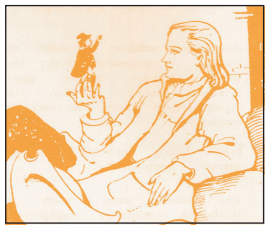
He congratulated me on my freedom, and added that I had obtained it so soon partly on account of the many difficult internal and external problems that faced the state just then. It was thought that if I was released, I might be of help to the state in solving them.
Word Meaning:
honour: respect
conveniently: comfortably
preferred: chose
congratulated: expressed happiness
obtained: got
internal: within the country
external: outside the country
account of: because of
Explanation: Gulliver welcomed Reldresal respectfully and offered to lie down so that the small official could speak easily but Reldresal chose to sit in Gulliver’s hand. Reldresal then congratulated Gulliver on his freedom and explained that it was granted early because the state was facing serious internal and external problems and the government believed Gulliver could help in dealing with them.
Passage: Reldresal told me that Lilliputians were divided into two parties called High Heels and Low Heels, according to the high or low heels of their shoes, which distinguished one party from the other. They opposed each other bitterly, and hated each other so much that the members of one party would hardly eat, drink or talk with those of the other. Although the High Heels were more numerous than the Low Heels, His Majesty the Emperor was in favour of the Low Heels, and himself wore low heels only. So the Government was in their hands now. Reldresal himself was a member of the Low Heels party. They feared, however, that the young Prince was sympathetic to the High Heels; at least, it was clear that one of his heels was higher than the other; and that gave him a limp in his walking.
Word Meaning;
divided: split into groups
parties: political groups
distinguished: identified or set apart
bitterly: with great hatred
numerous: many in number
in favour of: supporting
Government: ruling authority
sympathetic: showing support
limp: an uneven way of walking
Explanation: Reldresal explained that the people of Lilliput were split into two unfriendly political groups based on the height of their shoe heels called High Heels and Low Heels.These groups hated each other so deeply that they avoided even basic social interaction. Although the High Heels were greater in number, the Emperor supported the Low Heels and wore low heels himself which placed power in their hands. Reldresal also belonged to this party. They were worried that the young Prince favoured the High Heels because one of his heels was higher than the other causing him to walk with a limp.
Passage: To add to their problems, they now had to face a great external danger. The country was threatened with an invasion from Blefuscu, which, Reldresal told me, was the other great empire of the Universe. As for my report that there were other regions in the world inhabited by men like myself, he hardly believed it; according to their scientists and historians Lilliput and Blefuscu were the two great regions of the universe. These mighty powers had been engaged in a bloody war for thirty-six ‘moons*. The war began about a question of religious principle, namely, whether one should break an egg at the bigger end or at the smaller end. The ancient practice of course was to break it at the bigger end.
*Lilliputians used a smaller time scale than we do. “A moon” is 28 days or about a 12th part of a year.
Word Meaning:
external: outside or foreign
threatened: faced danger
invasion: attack by entering forcefully
empire: large kingdom ruled by one authority
inhabited: lived in
bloody: extremely violent
religious principle: belief related to religion
ancient: very old
Explanation: Reldresal further explained that apart from internal conflicts Lilliput was facing a serious external threat from Blefuscu which was believed to be the only other empire in the universe. The Lilliputians did not believe Gulliver’s account of other human civilizations because their scholars considered only these two regions to exist. These two powerful empires had been fighting a violent war for thirty-six moons. This passage explains that the Lilliputians measured time differently and used the term “moon” for a period of twenty-eight days. The cause of the war was a religious dispute over whether eggs should be broken at the bigger end or the smaller end although traditionally eggs were broken at the bigger end.
Passage: But the present Emperor’s grandfather, when he was a boy, happened to cut one of his fingers when breaking an egg at the bigger end. So the Emperor, his father, published an order prohibiting the practice of breaking eggs at the bigger end. There was bitter opposition to the new law, and there were frequent rebellions on account of it; one emperor lost his life, and another his crown, in these rebellions. Many hundred books were published about the question, but people were prohibited from reading the books of the Big Endians.
At least 11,000 people suffered death at various times because they preferred death to dishonour. Many rebels escaped to Blefuscu; the Emperor of Blefuscu gave them his sympathy and encouragement, thus interfering in the internal affairs of Lilliput.
Word Meaning:
bitter: intense and violent
opposition: resistance or disagreement
rebellions: armed resistance against authority
crown: royal power or kingship
prohibited: not allowed
dishonour: loss of respect or dignity
rebels: people who rise against authority
interfering: getting involved without permission
Explanation: The passage explains how a trivial personal incident led to a major political and religious conflict. The Emperor’s grandfather injured his finger while breaking an egg at the bigger end which resulted in a law banning the practice. This law caused strong opposition and repeated rebellions leading to the death of one emperor and the loss of the throne by another. Many books were written on the issue but were banned. At least 11,000 people chose to die rather than accept what they believed was dishonour. Many rebels fled to Blefuscu where they were supported by its Emperor who thereby interfered in Lilliput’s internal matters.
Passage: He frequently charged the Lilliputian Emperor with causing a division in religion by encouraging people to disobey a basic teaching of their ancient religion, which is given in the 54th chapter of their holy book: ‘All believers shall break their egg at the convenient end.’
But Reldresal thought that his charge was baseless, for, which was the convenient end was a question for each man to decide according to his conscience.
The two empires were engaged in a war over this question and there were frequent battles. Just now the men of Blefuscu were intending to invade Lilliput. The scouts sent out by Lilltiput had reported that a fleet was getting ready to start. In this situation, the Emperor wanted my help in defending Lilliput against the invaders.
Word Meaning:
charged: accused formally
division: separation or disagreement
disobey: refuse to follow orders or rules
ancient: very old
baseless: without any proof or foundation
conscience: inner sense of right and wrong
engaged: involved
invade: enter a country by force
scouts: persons sent to gather information
fleet: group of ships
invaders: attackers entering another country
Explanation: The passage shows how religious differences became the cause of political conflict.The Emperor of Blefuscu accused the Lilliputian Emperor of dividing religion by forcing people to break eggs in a particular way. Reldresal believed this accusation was meaningless because the holy book allowed individuals to decide what was convenient for them. This disagreement led to war between the two empires with frequent battles. At that time Blefuscu was preparing to invade Lilliput and their scouts had reported the movement of a fleet. Therefore the Emperor sought Gulliver’s help to defend Lilliput from the attackers.
Passage: I avoided entering into a discussion of their party questions or religious principles with Reldresal. I told him that as a foreigner I had no right to interfere in them. But I asked him to tell the Emperor that I was his loyal soldier, ready to defend his honour and the honour of the country in case there was an invasion.
Word Meaning:
avoided: kept away from
discussion: detailed talk or debate
principles: basic beliefs
foreigner: a person from another country
interfere: to involve oneself in others’ matters
loyal: faithful and devoted
honour: respect and dignity
invasion: attack by entering a country by force
Explanation: Gulliver clearly states that he did not wish to involve himself in the political or religious disputes of Lilliput because he was a foreigner. However he assured Reldresal of his loyalty to the Emperor and promised to defend the Emperor’s honour and the safety of the country if Blefuscu carried out an invasion.
PART II
Passage: The empire of Blefuscu is an island situated to the north-east of Lilliput. It is separated from Lilliput by a channel about 800 metres wide. I had not seen Blefuscu; and now I avoided appearing on that side of the coast in case some of the enemy should see me. So far they had no news of me.
Word Meaning:
empire: a group of territories ruled by one authority
situated: located or placed
north-east: direction between north and east
separated: kept apart
channel: a narrow stretch of water between two lands
avoided: kept away from
appearing: coming into view
enemy: an opposing or hostile force
coast: land beside the sea
Explanation: This passage describes the location of Blefuscu and its distance from Lilliput. Gulliver explains that Blefuscu is an island lying to the north-east and is separated by a narrow channel. He had never seen Blefuscu and deliberately stayed away from that side of the coast so that the enemy would not notice him. At this point the people of Blefuscu were completely unaware of his existence.
Passage: Our scouts reported that the enemy fleet lay at anchor in the harbour ready to start with the first favourable wind. I walked to the north-east coast and, hiding myself behind a small hill, in case the enemy should see me, I looked at their ships through my field glasses. I distinguished at least fifty warships and a great number of other ships for transporting men and supplies. I framed a plan to capture the warships. I got the advice of the most experienced seamen of Lilliput, who told me that the channel was about five feet deep in most places and nowhere more than six. I ordered a great quantity of the strongest cable and bars of iron.
Word Meaning:
scouts: soldiers sent to gather information
fleet: a group of ships
lay at anchor: were fixed in one place in the water
harbour: a sheltered place for ships
favourable: suitable or helpful
field glasses: binoculars
distinguished: recognized clearly
warships: ships used for fighting
transporting: carrying from one place to another
supplies: necessary goods
framed: planned
seamen: sailors
channel: narrow stretch of water
quantity: amount
cable: thick strong rope
Explanation: In this passage Gulliver learns from the scouts that the enemy fleet is ready to sail. As a precaution, he hides behind a hill on the north-east coast and observes the ships through his field glasses. He counts about fifty warships along with many supply ships. After studying the situation, he plans to capture the warships. He consults experienced sailors who inform him about the shallow depth of the channel. Based on this information he orders strong cables and iron bars to carry out his plan successfully.
Passage: The cable was as thick as pack-thread, and the bars were of the size of knitting-needles. I twisted the cables together and made fifty strong cords. Then I made fifty hooks by twisting three bars together at a time, and fastened the hooks carefully to the cords.
Armed with these I waded into the channel, swam a little way, and in about half an hour got near the enemy fleet. The enemy was so frightened to see me that they leapt out of their ships and swam ashore. I guess they were at least 30,000 in number. I took out the cords and fastened a hook to the prow of each warship, leaving the transport alone.
Word Meaning:
pack-thread: a strong thin string used for tying parcels
bars: long pieces of metal
twisted: wound together
cords: thick strong strings
hooks: curved pieces of metal used for catching or holding
fastened: fixed tightly
armed: equipped with tools or weapons
waded: walked through water
channel: narrow stretch of water
leapt: jumped suddenly
ashore: onto the land
prow: the front part of a ship
transport: ships carrying men or supplies
Explanation: In this passage Gulliver prepares for his plan by making strong cords and hooks using cables and iron bars. He then enters the shallow channel and swims towards the enemy fleet. The sight of Gulliver terrifies the enemy soldiers and they jump into the water and swim to land in fear. He estimates their number to be very large. Calmly and carefully, Gulliver attaches a hook to the front of each warship while leaving the transport ships untouched. This shows his strength, intelligence and strategic thinking.
Passage: While I was engaged in this work, the men of Blefuscu shot at me several thousand arrows as big as knitting-needles; many of them stuck in my hands and face and gave me sharp pain. I quickly took out my eye-glasses, and put them on in case the arrows should strike my eyes, and then went on with my work.
When I had fastened the hooks to the prows of all the warships, I tied their ends together into a knot. Taking the knotted end in my hand, I pulled; but not a ship moved, for they were all held fast by their anchors. So I let go the cords and began to cut the cables that fastened the anchors. Then I took up the knotted end of the cords again, and with ease drew after me the entire fleet of the enemy.
Word Meaning:
Let go: to stop holding or gripping ( something or someone)
engaged: busy doing something
knitting-needles: thin pointed metal needles used for knitting
stuck: pierced and remained fixed
sharp pain: sudden intense pain
eye-glasses: spectacles worn to protect or improve sight
fastened: firmly attached
prows: the front parts of ships
knot: a tying together of rope or cord
anchors: heavy metal objects used to hold ships in place
cut: sliced with a sharp tool
ease: without difficulty
entire: whole
Explanation: Gulliver is attacked by the soldiers of Blefuscu while he is carrying out his plan. They shoot thousands of arrows at him causing pain but he protects his eyes with spectacles and continues working undisturbed. After fixing hooks to all the warships he tries to pull them but fails because they are bound to the earth below. He then cuts the anchor cables and easily pulls the whole enemy fleet behind him. This episode highlights Gulliver’s courage, endurance and immense strength as well as his determination to complete his mission despite danger.
Passage: When the men of Blefuscu saw this, they shouted in despair; at first they had not guessed my intention. When I was out of danger, I stopped a while to pull out the arrows that stuck in my face. I rubbed on an ointment that the Lilliputians had given me for the purpose, and it relieved the pain at once.
The Emperor of Lilliput, attended by all his court, was waiting on the shore to see the outcome of this great adventure. They saw the entire fleet advance in the shape of a large half-moon, but could not distinguish me because I was up to my neck in water. So they thought that I had been drowned and that the enemy fleet was advancing for battle. They felt greatly relieved when they saw me. I held up my hand from the water and cried in a loud voice, “Long live the mightiest Emperor of Lilliput!” The Emperor received me with honour and made me a Great Lord on the spot.
Word Meaning:
despair: complete loss of hope
guessed: formed an idea without certainty
intention: purpose or plan
ointment: a soothing medicinal paste
relieved: reduced pain or discomfort
attended: accompanied
court: the group of nobles around a king
outcome: result
distinguish: recognize clearly
relieved: freed from worry
honour: respect and high regard
Explanation: When the soldiers from Blefuscu realized Gulliver’s plan they cried out in hopelessness. After reaching safety, Gulliver removed the arrows from his face and applied the ointment which quickly eased his pain. Meanwhile, the Emperor of Lilliput and his court watched anxiously from the shore. Mistaking Gulliver for having drowned they feared an enemy attack but were soon overjoyed to see him alive. Gulliver hailed the Emperor loudly and as a reward for his bravery and success, he was immediately honoured with the title of a Great Lord. This shows Gulliver’s heroism and the Emperor’s gratitude.
Conclusion
This post covers the lesson Gulliver in Liliput from JKBOSE Class 9 English Tulip textbook. Students can get a better understanding of the lesson with the help of the summary, word meanings and explanation.