

Yayati Summary and Explanation
BSEB Class 9 English Chapter 2 Yayati Summary, Explanation along with Difficult Word Meanings from English Panorama-I Book
Yayati Summary – Are you looking for the summary, theme and Lesson explanation for Bihar School Education Board (BSEB) Class 9 English Chapter 2 – Yayati from English Main Course Book. Get Lesson summary, theme, explanation along with difficult word meanings
BSEB Class 9 English Panorama-I Book Chapter 2 – Yayati
This lesson shows the juxtaposition of youth and old age. Emperor Yayati is cursed by Sukracharya and becomes prematurely old. He then goes on to beg his five sons to take his curse on themselves so he can have his youth back.
Related:
Yayati Summary
Emperor Yayati was the Pandavas’ ancestor. He was religious, strong, and could not be defeated. He was loved by his subjects because of how devoted he was towards their welfare. He then got cursed by Sukracharya, his father-in-law, because he had wronged his own wife, Devayani. He became old prematurely. He had suppressed his desires for sensual pleasures when he was young but now his youth had been stolen from him.
So, Yayati approached his five young sons. He wanted one of them to take his old age and give him his youth. He even promised to give back their youth after some time and they could rule his kingdom in return. The first son refused because he did not want to be mocked at by women and servants. The second son was not strong enough to give up his beauty, strength, and wisdom. The third son did not wish to be helpless because old men could not even ride a horse or an elephant. The fourth son also did not want to be helpless because old people could not wash their own bodies. The fifth son, Puru, was moved by his father’s plight and filial love. He was known for never refusing his father’s demands. He accepted it and became an old man. Puru ruled the kingdom and became renowned for his wisdom, whereas Yayati went later to the garden of Kubera and spent many years with an apsara maiden.
When he discovered that nothing could fulfil his sensual desires, he went back to Puru. He told his son that he realised that desire can never be quenched by indulgence. Desire is like fire and indulgence is like ghee. Indulgence will only make the desire grow. Yayati took back his old age and lived a simple life in the forest that sent him to heaven. Puru got back his youth and became the next king.
Summary of the Lesson Yayati in Hindi
सम्राट ययाति पांडवों के पूर्वज थे। वे धार्मिक, बलवान और अजेय थे। अपनी प्रजा के कल्याण के प्रति उनकी अटूट निष्ठा के कारण वे प्रजा के प्रिय थे। पत्नी देवयानी के साथ अन्याय करने के कारण उन्हें शुक्राचार्य ने श्राप दिया। ययाति असमय वृद्ध हो गए। उन्होंने युवावस्था में अपनी कामुक इच्छाओं को वश में रखा था, लेकिन अब उनकी युवावस्था छिन गई थी। इसलिए वे अपने पाँचों युवा पुत्रों के पास गए। वे चाहते थे कि उनमें से कोई एक उनका वृद्धावस्था ग्रहण करके उन्हें उनकी युवावस्था प्रदान करे। उसने कुछ समय बाद उनकी जवानी लौटाने का वादा भी किया और उन्हें अपने राज्य पर शासन करने का अवसर दिया। पहले बेटे ने मना कर दिया क्योंकि वह उपहास का पात्र नहीं बनना चाहता था। दूसरा बेटा अपनी सुंदरता, शक्ति और बुद्धिमत्ता को त्यागने के लिए पर्याप्त रूप से सक्षम नहीं था। तीसरा बेटा असहाय नहीं रहना चाहता था क्योंकि बूढ़े लोग घोड़े या हाथी की सवारी भी नहीं कर सकते थे। चौथा बेटा भी असहाय नहीं रहना चाहता था क्योंकि बूढ़े लोग अपने शरीर को स्वयं नहीं धो सकते थे। पांचवां पुत्र पुरु अपने पिता की दुर्दशा और उनके प्रेम से द्रवित हो गया। वह अपने पिता की किसी भी मांग को कभी अस्वीकार न करने के लिए प्रसिद्ध था। उसने उनकी बात मान ली और वृद्धावस्था तक जीवित रहा। पुरु ने राज्य पर शासन किया और अपनी बुद्धिमत्ता के लिए प्रसिद्ध हुआ, जबकि ययाति बाद में कुबेर के उद्यान में गया और एक अप्सरा कन्या के साथ कई वर्ष बिताए। जब उसे पता चला कि उसकी कामुक इच्छाओं को कोई भी चीज संतुष्ट नहीं कर सकती, तो वह पुरु के पास लौट आया। उन्होंने अपने पुत्र से कहा कि उन्हें यह अहसास हो गया है कि भोग-विलास से इच्छा कभी शांत नहीं होती। इच्छा आग के समान है और भोग-विलास घी के समान। भोग-विलास तो इच्छा को और भी बढ़ा देता है। ययाति ने अपना वृद्धावस्था पुनः प्राप्त कर वन में सादा जीवन व्यतीत किया जिससे उन्हें स्वर्ग की प्राप्ति हुई। पुरु ने अपनी युवावस्था पुनः प्राप्त कर ली और अगले राजा बने।
Theme of the Lesson Yayati
This lesson shows the juxtaposition of youth and old age. Youth stands for beauty, strength, and wisdom, whereas old age is characterised by wrinkles, grey hair, frail body, and low energy. The chapter highlights the desire for sensual pleasures and how they are always unquenchable. The lesson sheds light on how materialistic and sensual desires can never be fulfilled. A human heart always desires more. It is important to control desires and to be satisfied with what you get in life. However, it is also equally necessary to enjoy what you have right now and live in the moment. What one has in the present may or may not be there in the future. Youth should be enjoyed, not always suppressed. The lesson also teaches us to understand the beauty of old age and to accept ageing as a natural process. The relation of desire and indulgence is also shown with the similarity to fire and ghee, respectively. Like ghee makes the fire stronger, indulgence will also make the desire stronger.
Yayati Lesson Explanation
Passage: Emperor Yayati was one of the ancestors of the Pandavas. He had never known defeat. He followed the dictates of the sastras, adored the gods and venerated his ancestors with intense devotion. He became famous as a ruler devoted to the welfare of his subjects.
Word-meanings:
ancestors: people from whom one is descended
dictate: an order which one has to obey
sastras: works of sacred scriptures
venerated: respected deeply
Explanation: Emperor Yayati was the ancestors of the Pandavas. Emperor Yayati was so powerful that he had never been defeated. He followed the sastras devotedly and worshipped the gods and his ancestors. He was devoted to the well-being of his subjects which made him a famous ruler.
Passage: He became prematurely old by the curse of Sukracharya for having wronged his wife Devayani. In the words of the poet of the Mahabharata: “Yayati attained that old age which destroys beauty and brings on miseries.” It is needless to describe the misery of vigorous youth suddenly blighted into age, where the horrors of loss are accentuated by pangs of recollection.
Word-meanings:
prematurely: before the usual or proper time
curse: solemn invocation of divine wrath on a person or thing
wronged: treated unjustly
blighted: something that spoils or damages
Explanation: He became old earlier than he should have. This was because he was cursed by Sukracharya for treating his wife Devayani unfairly. The old age destroyed beauty and brought miseries because he had lost his energy and youth and the memories of the past brought pain.
Passage: Yayati, who found himself suddenly an old man, was still haunted by the desire for sensual enjoyment. He had five beautiful sons, all virtuous and accomplished. Yayati called them and appealed piteously to their affection: “The curse of your grandfather Sukracharya has made me unexpectedly and prematurely old. I have not had my fill of the joys of life; for not knowing what was in store for me. I lived a life of restraint, denying myself even lawful pleasures. One of you ought to bear the burden of my old age and give his youth in return. He who agrees to this and bestows his youth on me will be the ruler of my kingdom. I desire to enjoy life in the full vigour of youth.”
Word-meanings:
piteously: in a way that generates pity
restraint: self-control
Explanation: Yayati was now suddenly an old man. He still felt the desire for sensual enjoyment but could not fulfill them because of his old age. He had five virtuous and successful sons. Yayati would beg for their affection. He told his sons that because he spent his youth in self-control, he did not know that he would be old so soon. He begged one of his sons to take the burden of his youth and give his youth back. In return, the son could rule his kingdom while he enjoyed the youth he got back.
Passage: He first asked his eldest son to do his bidding. That son replied: “O great king, women and servants will mock at me if I were to take upon myself your old age. I cannot do so. Ask of my younger brothers who are dearer to you than myself.”
Word-meanings:
bidding: command
mock: ridicule
Explanation: He asked his eldest son to fulfil his command. The son did not wish to take the King’s old age upon himself because he did not want women and servants to mock him. He then told his father to ask his younger brothers, whom he loved more than him.
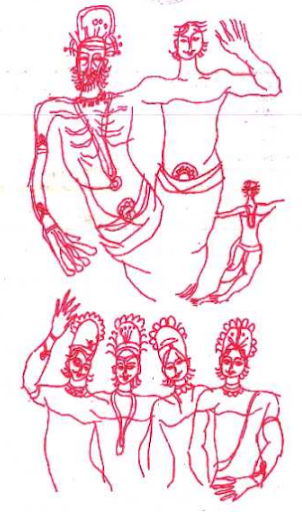
Passage: When the second son was asked, he gently refused with the word: “Father, you ask me to take up old age which destroys not only strength and beauty but also-as I see-wisdom. I am not strong enough to do so.”
Explanation: Yayati then appealed to his second son, who gently refused his father’s requests.The second son said that he was not strong enough to destroy his strength, beauty, and wisdom which he could see to have been destroyed in his father.
Passage: The third son replied: “An old man cannot ride a horse or an elephant. His speech will falter. What can I do in such a helpless plight? I cannot agree.”
Word-meanings:
falter: lose strength and rhythm
plight: unfortunate condition
Explanation: Yayati then appealed to his third son, who did not wish to be old and sacrifice his ability to ride a horse or an elephant and his ability to speak properly. The third son did not want to be in a helpless condition.
Passage: The king grew angry when he saw that his three sons had declined to do as he wished. He hoped for better from his fourth son, to whom he said, “You should take up my old age. If you exchange your youth with me, I shall give it back to you after some time and take back the old age with which I have been cursed.”
Explanation: The king was furious with his three sons and approached his fourth son. He told his fourth son that he should take up his old age. Yayati promised to give his fourth son his youth back after some time.
Passage: The fourth son begged to be forgiven, as this was a thing he could by no means consent to. An old man has to seek the help of others even to keep his body clean, a most pitiful plight. No, much as he loved his father, could not do it.
Explanation: The fourth son refused to accept his father’s old age and begged for his forgiveness. He believed that an old man was pitiful because he had rely on others to keep his body clean. Although he loved his father but he could not take the curse put on his father.
Passage: Yayati was struck with sorrow at the refusal of the four sons. He paused for some time and then supplicated his last son who had never yet opposed his wishes: “You must save me. I have got this old age with its wrinkles, debility and grey hairs as a result of the curse of Sukracharya. I cannot bear it. If you take upon yourself these infirmities, I shall enjoy life for just a while more and then give you back your youth and resume my old age and all its sorrows. Puru, do not refuse as your elder brothers have done.” Puru, the youngest son, moved by filial love, said: “Father, I gladly give you my youth and relieve you of the sorrows of old age and the cares of State. Be happy.” Hearing these words Yayati became a youth. Puru, who accepted the old age of his father, ruled the kingdom and acquired great renown.
Word-meanings:
supplicated: addressed humbly
debility: physical weakness
infirmities: physical and mental weakness
filial: family
Explanation: Yayati was devastated when the four sons declined to take his curse. He humbly spoke to his fifth and last son, Puru, who had never once refused to accept his wishes. Yayati begged Puru to save him from the curse of Sukracharya. He spoke of the wrinkles, debility and grey hair that came with old age. He could not bear the miserable state any longer and wanted to be young again. He requested Puru not to deny him, as his elder brothers had. Puru could not refuse his father’s demand out of filial love. Yayati became young and Puru, who accepted the old age of his father, ruled the kingdom. Puru got recognition for his work and sacrifice.
Passage: Yayati enjoyed life for long and, not satisfied, went later to the garden of Kubera and spent many years with an apsara maiden. After long years spent in vain efforts to quench desire by indulgence, the truth dawned on him. Returning to Puru, he said:
Word-meanings:
apsara: celestial nymph
vain: useless
quench: fulfil the need or thirst of something
indulgence: the act of getting satisfaction and gratification
dawn: to become understood
Explanation: Yayati enjoyed the youth he had got from Puru. He went to the garden of Kubera and spent many years with a celestial maiden. He spent many years trying to fulfil the desires by indulging into them, but then he realised something.
Passage: “Dear son, sensual desire is never quenched by indulgence, any more than fire is by pouring ghee in it. I had heard and read this, but till now I had not realised it. No object of desire – corn, gold, cattle and women – nothing can ever satisfy the desires of man. We can reach peace only by a mental pose beyond likes and dislikes. Such is the state of Brahman. Take back your youth and rule the kingdom wisely and well.”
Explanation: He told his son that he realised that sensual desire can never be fulfilled by indulgence. He compared desire to fire and indulgence to ghee. So, indulging in desire is like pouring ghee on a fire. No amounts of corn, gold, cattle, or women can satisfy the desires of men. It is human nature to keep asking for more. Yayati realised that he could reach peace only by mentally strengthening himself. He then decided to reach the state of Brahman and told Puru to take back his youth and rule the kingdom.
Passage: With these words Yayati took back his old age. Puru, who regained his youth, was made king by Yayati who retired to the forest. He spent his time there in austerities and in due course attained heaven.
Word-meanings:
austerity: plainness and simplicity in appearance
Explanation: Yayati took back his old age and lived in the forest, where he spent his life in simplicity. He went to heaven when he finally passed away. Puru regained his youth and became the next king.
Conclusion
This post covers the lesson Yayati from BSEB Class 9 English Panorama book. Students can go through the summary, word meanings and explanation to get a clear understanding of the text.