

Saint of the Gutters Summary and Explanation
Jammu and Kashmir Board Class 9 English Chapter 3 Saint of the Gutters Summary, Explanation along with Difficult Word Meanings from English Tulip Book
Saint of the Gutters Summary – Are you looking for the summary, theme and Lesson explanation for Jammu and Kashmir Board of Secondary Education (JKBOSE) Class 9 English Chapter 3 – Saint of the Gutters from Tulip Book. Get Lesson summary, theme, explanation along with difficult word meanings.
JKBOSE Class 9 English Main Course Book Chapter 3 – Saint of the Gutters
By Prof. Neerja Mattoo
“Mother Teresa” is an inspiring biographical essay that traces the remarkable life journey of one of the twentieth century’s greatest humanitarians. Born as Agnes Gonxha Bojaxhiu in Albania, she transformed into Mother Teresa, a global symbol of selfless service and compassion. The essay chronicles her spiritual calling at age fifteen, her decision to become a missionary in India, her work among Kolkata’s poorest residents, and the founding of the Missionaries of Charity.
- Saint of the Gutters Summary
- Saint of the Gutters Summary in Hindi
- Saint of the Gutters Theme
- Saint of the Gutters Explanation
Related:
Saint Of the Gutters Summary
Mother Teresa is recognized as one of the twentieth century’s greatest figures. Despite holding no political power, she ruled hearts and minds worldwide, receiving the Nobel Peace Prize and highest honors. Yet she owned nothing, dedicating herself to poverty and humble submission to God. Paradoxically, the rich and powerful flocked to her mission seeking life’s meaning.Agnes Gonxha Bojaxhiu was born on August 26, 1910, in Skopje. Her father died when she was eight; her mother Drana supported the family through stitching. Raised in devout Roman Catholic tradition, Agnes loved church activities and listening to missionary stories.At fifteen, during a mountain trip, Agnes heard a voice saying “Follow God and serve others.” She decided to become a missionary in India, serving “the poorest of the poor.” She went to Ireland, joined the Sisters of Loreto to learn English, then arrived in Kolkata in 1929. After her novitiate in Darjeeling, she learned Hindi and Bengali, taught in schools, and took final vows in 1937 as Sister Theresa. While teaching affluent students at St. Mary’s School, Sister Theresa couldn’t ignore the desperately poor living in appalling conditions on streets. She sometimes carried the worst cases herself, cleaned and cared for them. She couldn’t bear anyone dying without dignity.
In 1946, while traveling to Darjeeling, she heard a voice telling her to leave the convent and live among the poor. Feeling she couldn’t disobey, “to fail would be to break faith”, she founded the Missionaries of Charity in 1948, becoming its first Mother Superior. She wore a simple blue-bordered white sari and established Nirmal Hriday homes for the poor, orphans, and dying. She received the Nobel Peace Prize in 1979.
In 1970, Malcolm Muggeridge saw her cleaning a half-dead man’s sores without disgust, her face glowing with peace and love. Deeply impressed, he wrote a book and made a documentary titled Something Beautiful for God, bringing world attention to her work.
Before her death in 1997, she opened Missionaries of Charity branches in numerous countries. Mother Teresa taught “give love till it hurts.” She was truly a saint who brought comfort to the destitute and made the most insignificant feel that God remembered them.
Summary of the Lesson Saint Of the Gutters in hindi
मदर टेरेसा बीसवीं सदी की सबसे महान हस्तियों में से एक हैं। बिना राजनीतिक शक्ति के, उन्होंने दुनिया भर में दिलों पर राज किया, नोबेल शांति पुरस्कार प्राप्त किया। फिर भी उनके पास कुछ नहीं था, उन्होंने खुद को गरीबी और ईश्वर के प्रति समर्पित कर दिया। एग्नेस गोन्क्सा बोजाक्सिहु का जन्म 26 अगस्त, 1910 को स्कोप्जे में हुआ। आठ साल की उम्र में पिता की मृत्यु हो गई; माँ द्राना ने सिलाई से परिवार का भरण-पोषण किया। धर्मपरायण कैथोलिक परिवार में पली, एग्नेस को चर्च की गतिविधियाँ और मिशनरी कहानियाँ सुनना पसंद था। पंद्रह साल की उम्र में, पहाड़ की यात्रा के दौरान, एग्नेस ने आवाज़ सुनी “भगवान का अनुसरण करो और दूसरों की सेवा करो।” उन्होंने भारत में मिशनरी बनने, “सबसे गरीब लोगों” की सेवा करने का फैसला किया। वह आयरलैंड गईं, सिस्टर्स ऑफ लोरेटो में शामिल हुईं, 1929 में कोलकाता पहुंचीं। दार्जिलिंग में प्रशिक्षण के बाद, हिंदी-बंगाली सीखी, स्कूलों में पढ़ाया, 1937 में सिस्टर थेरेसा बनीं। सेंट मैरी स्कूल में समृद्ध छात्रों को पढ़ाते समय, सिस्टर थेरेसा सड़कों पर भयानक स्थिति में रहने वाले गरीबों को अनदेखा नहीं कर सकीं। वह खुद सबसे बुरे मामलों को उठाती, साफ करती और उनकी देखभाल करती थीं। वह किसी को बिना गरिमा के मरते नहीं देख सकती थीं।
1946 में, दार्जिलिंग जाते समय, उन्होंने आवाज़ सुनी कि कॉन्वेंट छोड़ें और गरीबों के साथ रहें। “असफल होना विश्वास तोड़ना होगा” मानते हुए, उन्होंने 1948 में मिशनरीज ऑफ चैरिटी की स्थापना की। उन्होंने सरल नीली किनारी वाली सफेद साड़ी पहनी और निर्मल हृदय घर स्थापित किए। 1979 में नोबेल पुरस्कार मिला।
1970 में, मैल्कम मुगेरिज ने उन्हें बिना घृणा के आधे मृत व्यक्ति के घाव साफ करते देखा, चेहरे पर शांति और प्यार की चमक। प्रभावित होकर उन्होंने समथिंग ब्यूटीफुल फॉर गॉड पुस्तक और फिल्म बनाई।
1997 में मृत्यु से पहले, उन्होंने कई देशों में शाखाएं खोलीं। मदर टेरेसा ने सिखाया “प्यार तब तक दो जब तक दुख न हो।” वह सच्ची संत थीं जिन्होंने निराश्रितों को आराम दिया और सबसे महत्वहीन को महसूस कराया कि भगवान उन्हें याद करते हैं।
Theme of the Lesson Saint Of the Gutters
Selfless Service and Compassion: The central theme is Mother Teresa’s complete dedication to serving the poorest of the poor. She gave up material comforts, lived in poverty, and devoted her life to caring for those society had abandoned, the sick, dying, orphaned, and homeless, demonstrating that true fulfillment comes from serving others.
Spiritual Calling and Faith: Mother Teresa’s life was guided by divine calling, first at age fifteen when she heard a voice telling her to “Follow God and serve others,” and again in 1946 on the train to Darjeeling. Her unwavering faith in God’s plan shaped her mission and gave her strength to continue despite overwhelming challenges.
Dignity in Death: Mother Teresa believed that every death deserves dignity. She couldn’t bear seeing people die on the streets without care or compassion. Her establishment of Nirmal Hriday (homes and hospices) ensured that even the poorest received dignified care in their final moments, affirming every human’s inherent worth.
Simplicity and Humility: Despite worldwide fame and honors including the Nobel Peace Prize, Mother Teresa lived with extreme simplicity. She owned no material possessions, wore a simple cotton sari costing less than fifty rupees, and chose to live like the poor she served, showing that greatness lies in humility, not wealth or power.
Love Beyond Boundaries: Mother Teresa’s love transcended religious, national, and social boundaries. Though a Roman Catholic nun, she served people of all faiths in India and eventually worldwide. Her famous saying “give love till it hurts” embodied her philosophy that love requires sacrifice and complete self-giving.
Transformation Through Purpose: The essay shows how finding one’s true purpose transforms life. Agnes, a young girl from Albania, became Mother Teresa, a global icon, by dedicating herself completely to her mission. Her example demonstrates that meaningful life comes from serving something greater than oneself.
Saint Of the Gutters Lesson Explanation
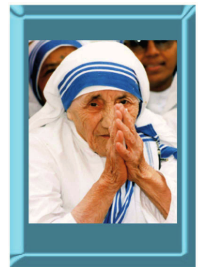
Passage: One of the greatest figures of the twentieth century is a woman, known all over the world as Mother Theresa. She did not hold any powerful position in politics or government, yet she ruled over the hearts and minds of countless numbers of people in almost every country. She was awarded the highest honours by a grateful world, including the Nobel Peace Prize. She had no material possessions of her own, as she had dedicated herself to a life of poverty and a humble submission to God, yet the rich, the famous and the powerful flocked to her to become a part of her mission and to give some real meaning to their lives. How did she acquire this stature? Let us trace the journey of this saint of our times in order to find an answer to this question.
Word Meaning:
figures: important and well-known people
ruled: exercised influence or control
countless: too many to be counted
honours: awards or distinctions
dedicated: devoted completely
material possessions: physical belongings or property
humble: modest and without pride
submission: complete obedience or surrender
flocked: gathered in large numbers
mission: a special task or purpose
stature: level of respect and importance
Explanation: The passage describes Mother Theresa as one of the most influential personalities of the twentieth century. Although she held no political or governmental power she deeply influenced people across the world through her selfless service. She lived a life of poverty, devotion and humility yet received the highest global recognition including the Nobel Peace Prize. Her simplicity, compassion and dedication attracted rich, powerful and famous people who wanted to make their life meaningful The passage raises the question of how she achieved such greatness and introduces her life journey to understand the source of her spiritual and moral authority.
Passage: On 26 August, 1910 a girl child was born in Skopje, a city which was a part of Albania at that time, but later became a part of Yugoslavia. She was named Agnes Gonxha Bojaxhiu. Her father, a successful businessman, died when she was eight. Then the family was looked after by the mother, Drana, whose skill at stitching and needlecraft provided her with a livelihood. The family was raised in a devout Roman Catholic tradition. Right from her childhood, Agnes would love to spend time in the church, decorating it with flowers, hanging flags and banners for festivals and singing in the church choir.
Word Meaning:
girl child: a female baby
Skopje: a city in Europe
Albania: a country in Europe
Yugoslavia: a former country in Europe
businessman: a person engaged in business
livelihood: means of earning a living
devout: deeply religious
tradition: beliefs and customs passed down
needlecraft: skill of sewing and embroidery
choir: a group of people who sing together in church
Explanation: The passage describes the early life of Mother Teresa. She was born on 26 August 1910 in Skopje which later became part of Yugoslavia. Her original name was Agnes Gonxha Bojaxhiu. Her father died when she was very young and her mother Drana supported the family through stitching and needlework. Agnes grew up in a deeply religious Roman Catholic family. From childhood she showed strong devotion by spending time in church helping with decorations and singing in the church choir. This early religious influence shaped her spiritual life and future path.
Passage: She was also a keen listener to stories of Christian Missionaries going to different parts of the world to serve, educate and tend to the poor, the illiterate and the sick. Their life of dedication fascinated her. These activities alone, however, would not make her out as an exception. It was when she was fifteen that something happened that charted an entirely different course for her.
Word Meaning:
keen: very eager or interested
missionaries: people sent to spread religious teachings and serve others
tend: take care of
illiterate: unable to read or write
dedication: complete devotion or commitment
exception: someone different from others
charted: planned or determined
Explanation: Agnes was deeply influenced by stories of Christian missionaries who devoted their lives to helping the poor, the uneducated and the sick. She admired their spirit of service and selfless dedication. However,this interest alone did not make her life unusual. The real turning point came when she was fifteen years old, when an important event occurred that changed the direction of her life completely and set her on a new path.
Passage: She was on a trip to the mountains when suddenly she had a feeling that someone was calling out to her, saying, “Follow God and serve others”. In our own Eastern mystic tradition too, it is believed that an inner voice calls out to a person if God has some special task cut out for him or her. So this experience of hers should not come as a surprise to us. About this time Agnes had also heard that somewhere out there is a place called India and had already made up her mind to become a missionary. She now decided to leave home, become a nun, lead a life of poverty and chastity and serve the people.
Word Meanings
mountains: high natural elevations of land
suddenly: unexpectedly
inner voice: a voice felt within one’s mind or heart
mystic: relating to spiritual belief beyond ordinary understanding
missionary: a person sent to spread religion and serve people
nun: a woman devoted to religious life
chastity: purity of life and conduct
Explanation: During a trip to the mountains, Agnes felt a strong inner call asking her to follow God and serve others. Such experiences are also believed in Eastern spiritual traditions where an inner voice guides a person chosen for a special purpose. Therefore, this moment was not unusual in a spiritual sense. By this time Agnes had already heard about India and had decided to become a missionary. She resolved to leave her home, embrace religious life, take vows of poverty and chastity and dedicate herself to serving people.
Passage: She now decided to leave home, become a nun, lead a life of poverty and chastity and serve the people. She had also resolved that she would go to Kolkata in India to serve the poorest of the poor- that was to be the mission of her life. As preparation for her real mission, she went to Ireland and joined the convent of “The Sisters of Loreto” in order to learn English before she went to Bengal.
Agnes arrived in Kolkata in 1929 and was sent by her Order to Darjeeling in West Bengal to begin her novitiate, i.e., the period of study and prayer which every nun must undergo before she finally becomes a nun at the convent. Apart from prayer, she spent her time here in learning Hindi and Bengali, so that she could speak to the people whom she had come to serve. Then she began to teach in schools run by the Sisters of Loreto, first at Darjeeling and then at Kolkata.
Word Meanings
resolved: decided firmly
poverty: state of having very little money or possessions
chastity: purity of life and conduct
mission: important life purpose
convent: a religious residence for nuns
novitiate: training period before becoming a nun
Order: a religious group
apart from: besides
serve: help or work for others
Explanation: Agnes firmly decided to dedicate her life to God and the service of people especially the poorest of the poor in Kolkata. To prepare herself for this mission she went to Ireland and joined the convent of the Sisters of Loreto to learn English. She arrived in Kolkata in 1929 and was sent to Darjeeling to begin her novitiate which included prayer and religious training. During this period she also learned Hindi and Bengali so that she could communicate with the people she wished to serve. After completing her training she began teaching in Loreto schools first in Darjeeling and later in Kolkata. This phase prepared her for her future work of service.
Passage: She took her final vows as a nun in 1937 and assumed the name “Theresa’, because that was the name of the patron saint of missionaries.
While teaching the Indian girl students from affluent backgrounds at St. Mary’s school, Kolkata, Sister Theresa, as she was now called, could not keep her eyes away from the desperately poor and homeless who lived on the streets of the city, in slums. The conditions in which they existed were appallingly unhygienic. The filth and stink were nauseating and it was no wonder that they suffered from all kinds of diseases. Sister Theresa could see that the hospitals and other civic amenities were stretched to the limit in this teeming metropolis, so she would sometimes carry the worst cases off the street herself, clean them up and look after them till they recovered or died. She could not bear to see anyone dying without the dignity that every death deserves.
Word Meanings
final vows: permanent religious promises
assumed: adopted or took
patron saint: a saint regarded as a protector
affluent: wealthy
desperately: extremely
slums: overcrowded poor areas
appallingly: shockingly
unhygienic: unhealthy and dirty
nauseating: causing sickness or disgust
civic amenities: public services like hospitals
teeming: overcrowded
dignity: respect and honour
Explanation: In 1937, Sister Theresa took her final vows and adopted the name Theresa in honour of the patron saint of missionaries. While she was teaching rich Indian girls at St. Mary’s School in Kolkata, she was deeply troubled by the sight of the poor and homeless living in the slums on the streets. Their living conditions were extremely dirty and unhealthy, which caused many diseases. She realized that hospitals and public services were already overburdened in the crowded city. Sometimes she herself carried the most seriously ill people from the streets, cleaned them, and looked after them until they recovered or died. She believed that every person deserved to die with respect and could not bear the sight of death without such dignity.
Passage: One day in 1946, when she was travelling in a train from Kolkata to Darjeeling, she again heard a voice, like the one she had heard before, telling her that now she must leave the convent and help the poor by living with them. She felt that it was an order which she could not disobey and to quote her words, ‘to fail would be to break faith’. This was the final turning point that gave birth to the Mother Theresa we all know about.
Word Meaning
travelling: going from one place to another
convent: a religious residence for nuns
disobey: refuse to follow an order
quote: repeat someone’s exact words
turning point: a moment that causes a major change
faith: strong belief and trust
Explanation: In 1946, while travelling by train from Kolkata to Darjeeling, Sister Theresa again heard an inner voice calling her to leave her convent and live among the poor to serve them. She believed this call to be a divine command that could not be ignored and felt that disobedience would mean a break in faith. This moment proved to be the final and most important turning point of her life, which led to the birth of Mother Theresa, the great servant of humanity known all over the world.
Passage: She asked her church order to give her permission to leave the convent and to start a new order of nuns who would help her in her work among the poor. She got the permission and the order of the “Missionaries of Charity” was born in 1948, with her as its first Mother Superior.
Now she gave up her nun’s habit and dressed in a cotton blue bordered white sari which reflected her simplicity. She wanted to look like the poor Indian women, who dressed similarly with their heads covered by the sari. She set up Nirmal Hriday, home and hospices for the poor, the orphans and the dying. She was awarded the Nobel Peace Prize in 1979.
Word Meanings
church order: a religious organization
permission: approval to do something
convent: residence of nuns
order: a religious group
Missionaries of Charity: a religious order founded by Mother Theresa
Mother Superior: head of a convent or religious order
habit: traditional dress of a nun
simplicity: plain and humble way of life
hospices: places that care for the sick and dying
orphans: children without parents
awarded: given as an honour
Explanation: Mother Theresa asked her church order to permit her leave from the convent and form a new religious order dedicated to serving the poor. With approval the order of the “Missionaries of Charity” was founded in 1948 and she became its first Mother Superior. She gave up her traditional nun’s habit and adopted a simple white cotton sari with a blue border to resemble poor Indian women and reflect her simple life. She established Nirmal Hriday and many homes and hospices for the poor orphans and the dying. In recognition of her selfless service and humanitarian work she was awarded the Nobel Peace Prize in 1979.
Passage: Now began her great, legendary work of selfless charity and care to the poor. In 1970, Malcolm Muggeridge, a well known British writer came to Kolkata. While walking through a street, he happened to see a small little figure in a slum, cleaning the sores on the body of a half- dead man without the slightest trace of disgust at the stench. He could not believe that a human being could look so happy while doing such a repelling task. The deep, warm glow of peace and love on her face, while cheerfully busy in her unflinching service to the wretched of the earth, made such a deep impression on his mind that he wanted the whole world to know about this saintly person and her extraordinary work. The result was his book and a documentary film on Mother Theresa, appropriately titled, Something Beautiful for God, which brought world attention to her otherwise quiet work.
Word Meanings
legendary: famous and admired for greatness
selfless: thinking of others before oneself
charity: help given to the needy
slum: overcrowded poor area
sores: wounds or infected areas on the body
stench: strong bad smell
repelling: extremely unpleasant
unflinching: not showing fear or hesitation
wretched: very poor and miserable
saintly: holy and morally pure
documentary: a factual film or programme
Explanation: This passage describes the beginning of Mother Theresa’s great and selfless mission of serving the poor. In 1970 the British writer Malcolm Muggeridge visited Kolkata and witnessed Mother Theresa cleaning the wounds of a severely ill man in a slum without any feeling of disgust. He was amazed that she looked peaceful and happy while performing such an unpleasant task. Her calm expression and loving devotion to the suffering poor deeply moved him. As a result he wanted the world to know about her remarkable service. He wrote a book and made a documentary film called Something Beautiful for God which brought global attention to Mother Theresa’s quiet but extraordinary work.
Passage: Before her death in 1997, she oversaw the opening of branches of her “Missionaries of Charity” in a number of countries to continue her work among the poorest of the poor.
Mother Theresa used to say that one must give love till it hurts. She was truly a saint of our times, who brought comfort to the destitute, gave care to those who had no one to care for them and made the most insignificant and unwanted human feel that God, through the agency of Mother Theresa, remembered them.
Word Meanings
oversaw: supervised and guided
branches: centers or units in different places
Missionaries of Charity: the religious order founded by Mother Theresa
poorest of the poor: people living in extreme poverty
destitute: extremely poor and needy
agency: means or instrument through which something is done
insignificant: considered unimportant or worthless
Explanation: Before her death in 1997 Mother Theresa made sure that her work continued by establishing branches of the Missionaries of Charity in many countries. She believed that true love meant giving without limit and even when sacrificing oneself. Her life and work proved this belief as she brought comfort to the poor, gave care to those who were abandoned and helped the most ignored and unwanted people feel that God still remembered them through her. She was therefore, truly a saint of modern times.
Conclusion
This post on the lesson Saint of the Gutters from JKBOSE Tulip book for class 9 provides lesson summary, word meanings and explanation. Students can take help of the text to grasp the lesson better.