
BSEB Class 9 English Chapter 3 A Silent Revolution Important Question Answers from English Panorama-I Book
BSEB Class 9 English A Silent Revolution Question Answers – Looking for questions and answers for BSEB Class 9 English Panorama-I Book Chapter 3 A Silent Revolution? Look no further! Our comprehensive compilation of important questions will help you brush up on your subject knowledge. Practising Class 9 English question answers can significantly improve your performance in the exam. Improve your chances of scoring high marks by exploring Chapter 3 A Silent Revolution now. The questions listed below are based on the latest BSEB exam pattern. All the Questions Answers given at the back of the lesson have also been covered.
Related:
BSEB Class 9 English Chapter 2 A Silent Revolution Textbook Questions
A. Work in small groups and discuss these questions:
1. How do you send your message to your friends and relatives?
Ans. We send messages to our friends and relatives through Whatsapp via Instant Messaging Service.
2. Have you ever sent an SMS? How did you write your message? How did you send it?
Ans. Yes, I have sent an SMS before. I wrote the message by typing it on the phone. The message is sent by tapping on the send button when the mobile phone is connected to the internet.
B. Answer the following questions briefly:
1. What does SMS stand for?
Ans. SMS stands for Short Messaging Service.
2. How was it conceived?
Ans. Short Messaging Service or SMS was conceived as a part of the Global System for Mobile Communication (GSM) digital standard.
3. What ability does it have?
Ans. SMS gives users the ability to send and receive alphanumeric messages on their mobile phones.
4. How are messages sent and routed?
Ans. Messages are not sent directly from the sender to the receiver. There is a Short Messaging Service Centre or SMSC run by the service provider that ensures that the message is delivered at the destination mobile even if it is switched off or out of the coverage area. When the destination device comes online, the SMSC will forward the stored message to the device.
5. What ensures that the message is delivered at the destination mobile even if it is switched off or out of the coverage area?
Ans. The Short Messaging Service Centre or SMSC run by the service provider ensures that the message is delivered at the destination mobile even if it is switched off or out of the coverage area.
6. What does SMSC stand for?
Ans. The SMSC stands for Short Messaging Service Centre.
7. What is its function?
Ans. The Short Messaging Service Centre or SMSC run by the service provider ensures that the message is delivered at the destination mobile even if it is switched off or out of the coverage area.
8. On what account may the delivery of a message be delayed?
Ans. The delivery of a message can be delayed due to congestion of users using the internet.
9. What is the beauty of SMS?
Ans. The beauty of SMS is that messages can be sent and received even while making voice calls.
10. What is a voice call?
Ans. A voice call is a connection between two devices where the sender and receiver can communicate verbally.
11. How does it differ from SMS?
Ans. SMS is a text messaging service in which two users communicate via texting. A voice call is a service in which two users can communicate verbally. Moreover, SMS can be sent while making voice calls because a voice call occupies a radio channel, but SMS travels over and above the radio channel using the signalling path.
C.1. LONG ANSWER QUESTIONS
1. How has SMS brought about a silent revolution?
Ans. SMS brought about a silent revolution because of its sleepy start. The cellular operators at first did not believe in the potential of the SMS technology. SMS had a very silent beginning because when it first arrived in Asia, no one advertise it as an attraction for mobile users. However, when the potential of the SMS technology was realised by cellular operators and mobile manufacturers, it soon spread nationwide, causing a revolution in the digital world.
2. How do you think that SMS has now become the most preferred option for communication?
Ans. SMS is more accessible because of its easy availability. Nowadays, SMS comes integrated with service providers and even from the mobile manufacturers. SMS can be tapped into by simply registering the network service centre in the handset. Due to this, SMS has now become the most preferred option for communication.
3. What is the attractive feature of SMS? How does a voice call differ from SMS?
Ans. The attractive feature of SMS is that it follows a different channel than a voice call. A voice call can travel only through a specific radio path but an SMS travels through a signalling path above the radio channel. Therefore, we can send SMS while talking to someone on a voice call.
4. “The launch of SMS has opened a new vista in the field of text communication.” Explain.
Ans. Before SMS, e-mails were the only way to communicate via text. SMS brought in a new and separate channel for text message communication. It utilises SMSC in the same way as e-mail services, but is more specialised towards simplified and fast text communication. SMS paved the way for IMS or Instant Messaging Service, and MMS or Multimedia Messaging Service technologies.
C. 3. COMPOSITION
1., Write a paragraph in about 80 words on each of the following:
(a) The mobile as a companion
Ans. The mobile phone acts as a reliable companion, connecting us to our family and friends via calls and messages, helping navigate routes, and providing quick access to news, music, and apps. It tracks our fitness, manages our busy schedules for higher productivity, and captures memorable moments effortlessly. Modern life revolves around our smartphones being our constant companion. While the technology is now permanently integrated with our lives, we should wisely balance its usage with our health in mind.
2. Learn how to write a memo/memorandum:
MEMO/MEMORANDUM
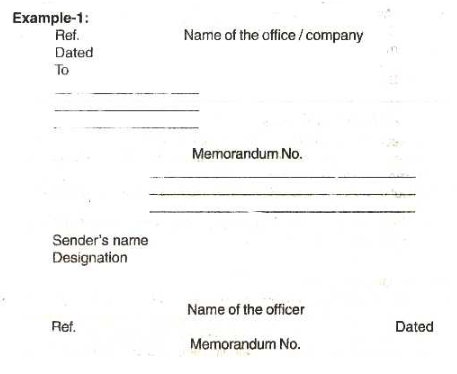
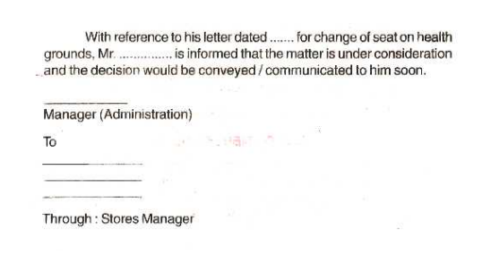
A memo is a short official note that is written from one person to another within the same company or organization. Requiring an employee to explain his conduct, intimation regarding grant of permission to do certain things requested for epc. are usually given in the form of a memorandum. It is addressed to the individual concerned and sent through the departmental / sectional head so that the latter is aware of the matter contained in the memo. The actual format of a memorandum varies from company to company or from an organisation to author.
Ex. 1. You are a head teacher in a govt. school. Write a memorandum to your subordinate informing him/her that special casual leave has been granted to him/her for enabling him to participate in the All India Teachers Conference to be held in Delhi.
Ans.
ABC Government School, Delhi
To: Shri/Shrimati [Teacher’s Name]
From: [Your Name], The Head Teacher, ABC Government School, Delhi
Date: January 20, 2026
Subject: Grant of Special Casual Leave for All India Teachers Conference, Delhi
Dear [Subordinate’s Name],
I am pleased to inform you that special casual leave has been sanctioned for 26 January, 20XX to enable your participation in the All India Teachers Conference scheduled in Delhi. This leave is granted in recognition of the professional value of the event. Please ensure all classes are covered through prior arrangements and submit a report on key takeaways upon return.
Regards,
[Your Name]
Head Teacher
ABC Government School, Delhi
Ex.2. You are Ashok Soni, Manager Soni Sports, Patna.Write a memorandum to Mr S. P. Jain informing him about your inability to give him a job in your firm.
Ans.
Soni Sports
To: Mr S. P. Jain
From: Ashok Soni, Manager Soni Sports, Patna
Date: January 20, 2026
Subject: Refusal to grant job in Soni Sports
Dear Mr S. P. Jain,
I regret to inform you that we have rejected your application for the position of Junior Manager at the Soni Sports. We thank you for your response and application for the job. We hope you find success at another firm.
Regards,
Ashok Soni
Manager Soni Sports
Patna
D. WORD STUDY
D.1. Dictionary Use
Ex. 1. Correct the spelling of the following words:
| messege | recieve | concieved | coverege |
| conjestion | simelteniosly | enthuziasts | begining |
| addres | seagnaling | arriveal | distination |
Ans.
| message | receive | conceived | coverage |
| congestion | simultaneously | enthusiasts | beginning |
| address | signalling | arrival | destination |
Ex.2. Find out words from the lesson which have the following meanings:
| means of access | information | occurring immediately |
| tiresomely long | encouraged | able to coexist |
| handed over | formally introduce (a new product) | |
| time or place at which anything begins | ||
Ans.
| channel | message | instant |
| tedious | buoyed | simultaneous |
| delivered | advertise | |
| conceived | ||
Ex.3. Match the words given in Column A with their meanings given in Column B
| A | B |
| manufacture | occurring immediately |
| especially | place where a person lives |
| vary | make possible |
| share | make articles on an industrial scale |
| address | portion of a whole |
| instant | be or become different |
| enable | particularly |
| comprehend | carry, communicate |
| signal | understand |
| convey | sign conveying information |
Ans.
| A | B |
| manufacture | make articles on an industrial scale |
| especially | particularly |
| vary | be or become different |
| share | portion of a whole |
| address | place where a person lives |
| instant | occurring immediately |
| enable | make possible |
| comprehend | understand |
| signal | sign conveying information |
| convey | carry, communicate |
D.2. WORD FORMATION
purchase- purchasable – purchasibility
able – ability
You see that sufix ‘-ity’ is added to an adjective to make a noun of quality add ‘-ity’ to the followings words to make nouns:
durable, sensible, flexible, inable, possible, accessible, feasible
Ans. durability, sensibility, flexibility, inability, possibility, accessibility, feasibility
D.3. Phrases
Read the lesson carefully and find out the sentences in which the following phrases have been used, and then use them in sentences of your own:
| even if | at times | go/come a long way. |
Ans. even if
This ensures that the message is delivered at the destination mobile even if it is switched off or out of the coverage area.
I love English even if it is difficult to speak sometimes.
at times
Normally, messages are delivered instantly but at times there can be delay of some hours due to congestion.
At times, it rains so heavily that roads get completely flooded.
go/come a long way.
From the first short message, believed to have been sent in December 1992 from a PC to a mobile phone on the Vodafone GSM network in the UK, SMS has come a long way today.
From being an inexperienced and nervous girl, Reema has come a long way today.
E. GRAMMAR
Read the following sentences carefully:
However, messages are not sent directly from the sender to the receiver. They are routed through a short Messaging Service Centre (SMSC) by the service providers.
We use ‘however‘ when we add a comment which is surprising or which contrasts with what has just been said.
This was an easy decision. It is, however, a decision that we had to take.
Sometimes we use ‘however’ before an adverb or adjective to emphasis that the degree or extent of something cannot change a situation.
However fast he ran, he failed to win.
Ex.1. Use ‘however’ in both forms at least in five sentences each.
Ans. ‘However’ as a conjunction.
- I love winters. However, I get easily sick in that weather.
- I eat a lot. However, I do not gain weight easily.
- I am good at my job. However, I am still not confident in my skills.
- I am quite sleepy. However, I have to go to school no matter what.
- It is raining heavily. However, I cannot skip work.
‘However’ as an adverb.
- However careful he was, he still made silly mistakes.
- You cannot succeed at everything, however talented you are.
- You have to work hard, however gifted you are.
- You should accept your flaws, however disheartening they are.
- You should not give up, however challenging life is.
Ex.2. What do these words mean?
Use ‘it can…….’ or ‘it can’t.……’ to explain the meaning of each of the words given below. Use a dictionary if necessary. One is done for you.
1. washable, it can be washed
2. unusable,……………..
3. edible,……………….
4. eligible,……………..
5. readable,……………..
6. invisible……………..
7. inexplicable…………..
8. disposable…………….
9. audible……………….
10. inaudible…………….
Ans.
1. it can be washed
2. it can’t be used
3. it can be eaten
4. it can be read
5. it can read
6. it can’t be seen
7. it can’t be explained
8. it can be thrown away easily
9. it can be heard
10. it can’t be heard
G TRANSLATION
Translate into Hindi/ your mother tongue
The beauty of SMS is that messages can be sent and received even while making voice calls. This is possible because a voice call takes over a dedicated radio channel for the duration of the call, while the short messages travel over and above the radio channel using the signalling path.
Ans. एसएमएस की सबसे बड़ी खूबी यह है कि वॉइस कॉल करते समय भी संदेश भेजे और प्राप्त किए जा सकते हैं। ऐसा इसलिए संभव है क्योंकि वॉइस कॉल के दौरान एक समर्पित रेडियो चैनल का उपयोग किया जाता है, जबकि छोटे संदेश सिग्नलिंग पथ का उपयोग करके रेडियो चैनल के ऊपर से गुजरते हैं।
Bihar Board Class 9 English Chapter 3 A Silent Revolution Extra Question and Answers
Extract-Based questions
A. Short Messaging Service or SMS was conceived as a part of the Global System for Mobile Communication (GSM) digital standard. It is the ability to send and receive text messages (alphanumeric) on a mobile phone. SMS, like e-mail, is a store and forward service that utilizes gateways to send messages from senders to the recipients. However, messages are not sent directly from the sender to the receiver but are routed through a Short Messaging Service Centre, (SMSC) run by the service provider. This ensures that the message is delivered at the destination mobile even if it is switched off or out of the coverage area.
Q1. SMS stands for __________
Ans. Short Messaging Service.
Q2. SMS is a store and forward service like _______
Ans. e-mail
Q3. An SMS is routed through a __________
Ans. Short Messaging Service Centre (SMSC)
Q4. What does the SMSC ensure?
Ans. It ensures that the message is delivered even if the destination mobile is switched off or out of coverage area.
Q5. SMS service is a part of _________
Ans. GSM (Global System for Mobile communication)
B. The beauty of SMS is that messages can be sent and received even while making voice calls. This is possible because a voice call takes over a dedicated radio channel for the duration of the call, while the short messages travel over and above the radio channel using the signalling path.
The process of sending messages and reading them generally varies from handset to handset. However, confirmation of message delivery is immediate and there is always an alert signal to convey the arrival of a message.
Q1. What feature makes SMS unique?
Ans. Messages can be sent and received even while making video calls.
Q2. A voice call uses a ____ channel.
Ans. Radio
Q3. How much time does the confirmation of message delivery take?
Ans. The confirmation of message delivery is immediate.
Q4. How is the arrival of a message conveyed?
Ans. It is conveyed through an alert signal.
Q5. What travels on the signalling path?
Ans. SMS travels on the signalling path.
C. SMS messages are immediate but not simultaneous like the Instant Messaging Service, which allows virtual real time text conversations with people who are simultaneously logged on to the Internet. Access to SMS is generally free and a beginner has only to register the network service centre into his/her handset.
Q1. What do SMSes lack?
Ans. They are not simultaneous.
Q2. What differentiates SMS from IMS?
Ans. SMS does not allow virtual real time conversations which are supported by Instant Messaging Services (IMS).
Q3. Is SMS paid?
Ans. Generally, access to SMS is free.
Q4. What should a beginner do to access SMS on his handset?
Ans. He should register the network service centre on his handset to access SMS.
Q5. Mention a feature of SMS messages.
Ans. They are immediate.
D. Judging by its success, at present not many would believe that SMS had a very silent beginning. Not even the cellular operators could comprehend the potential of this sleepy technology initially and cared little to advertise it as an attraction for mobile users. However, all that is history now. Today every market player, from cellular operators to mobile handset manufactures, is keen to capture its share of the pie. Nokia recently launched the first Hindi compatible handsets 3350, to give its users the option of sending messages in Hindi.
Buoyed by the success of SMS, the industry is now preparing for the more advanced MMS or multi-media messaging service, which would enable pictures, sounds and longer formatted texts to be sent to other MMS-enabled terminals or e-mail addresses via the mobile.
Q1. Who could not comprehend the potential of SMS?
Ans. Cellular operators.
Q2. What did Nokia launch?
Ans. A Handset that could type in Hindi.
Q3. MMS is ___________
Ans. Multi-media messaging service
Q4. What does MMS enable?
Ans. It enables sending pictures, sounds and longer formatted texts
Q5. Does an MMS work on a mobile phone?
Ans. Yes
Multiple Choice Questions (MCQs)
Q1. Which service does ‘A silent revolution’ tell about?
A. MMS
B. SMS
C.IMS
D. None of these
Ans. B. SMS
Q2. Which company was the first to launch a Hindi typing set?
A. Apple
B. Nokia
C. Samsung
D. None of these
Ans. B. Nokia
Q3. SMS stands for-
A. Sincere Messages Sent
B. Short Messaging Service
C. Swift Massage System
D. None of these
Ans. B. Short Messaging Service
Q4. Who wrote ‘A Silent Revolution’?
A. Kunal Verma
B. Kunal Sharma
C. Kiran Verma
D. Kiran Sharma
Ans. A. Kunal Verma
Q5. SMS is a part of ______
A. GSM
B. MMS
C. IMS
D. E-mail
Ans. A. GSM
Q6. Choose the correct option-
The SMS text is _______
A. only alphabets
B. only numeric
C. alphanumeric
D. alphanumeric and GIF-enabled
Ans. C. alphanumeric
Q7. SMS Can be sent to ______
A. mobile phone
B. laptop
C. desktop
D. calculator
Ans. A. mobile phone
Q8. Messages are not sent directly from __________ to receiver.
A. message centre
B. sender
C. phone
D. none of these
Ans. B. sender
Q9. Which feature shows a similarity between SMS and e-mail?
A. Deliver or return
B. Store and return
C. Store and delete
D. Store and forward
Ans. D. Store and forward
Q10. Who runs the SMSC?
A. User
B. Government
C. Service provider
D. All of these
Ans. C. Service provider
Q11. The ability to send and receive text messages in a mobile phone is called ______
A. IMS
B. SMS
C. MMS
D. All of these
Ans. B. SMS
Q12. What ensures that SMS is delivered at the destination mobile even if it is switched off or out of coverage area?
A. GSM
B. MMS
C. SMSC
D. None of these
Ans. C. SMSC
Q13. What is the ‘beauty’ of SMS?
A. Messages are delivered even if the mobile phone is off
B. alphanumeric messages can be sent and received even while on voice call
C. It can be accessed on laptop also
D. none of these
Ans. B. alphanumeric messages can be sent and received even while on voice call
Q14. What conveys the arrival of an SMS?
A. Arrival of SMS man
B. alert signal
C. e-mail notification
D. none of these
Ans. B. alert signal
Q15. How does SMS differ from IMS?
A. Not spontaneous
B. Not immediate
C. Not simultaneous
D. All of these
Ans. C. Not simultaneous
Q16. IMS communication needs access to the ________
A. internet
B. laptop
C. OTP
D. SMS verification
Ans. A. internet
Q17. Which of these is a drawback of sending SMS?
A. small keypads for typing
B. Characters limited to 160
C. both A and B
D. None of these
Ans. C. both A and B
Q18. The SMS revolution is rooted in ________
A. Japan
B. USA
C. Europe
D. All of these
Ans. C. Europe
Q19. When was the first SMS sent?
A. October 1992
B. December 1992
C. November 1992
D. September 1994
Ans. B. December 1992
Q20. Which phone was the first to launch a Hindi typing keypad?
A. Iphone 7
B. Nokia 2350
C. Nokia 3350
D. I phone 5
Ans. C. Nokia 3350
Extra Questions
Answer the following questions-
Q1. Why is the advent of SMS considered a ‘Silent Revolution’?
Ans. The cellphone companies and cellular operators could not estimate the potential of SMS technology. It got unimaginable success and so is called a silent revolution.
Q2. What are the limitations of SMS? Do these deter users?
Ans. The limitations of SMS are that only 160 characters can be typed in a single message. Also, the size of the mobile phone keypad is small. However, these limitations have not deterred users.
Q3. Discuss the advanced version of SMS?
Ans. An MMS is the next version of an SMS. It supports sharing pictures, sounds and longer formatted texts that can be sent to mobile phones and e-mail addresses.
Q4. Why is SMS not sent directly from sender to receiver?
Ans. An SMS is not sent directly. It is routed through SMSC or Short Messaging Service Centre. This is done so that message are delivered to the mobile phone even if it is switched off or out of coverage area at that moment.
Q5. What causes delay in delivery of SMS?
Ans. Generally, SMS is delivered instantly. However, there can be a delay in case there is congestion or greater traffic on the communication route.