
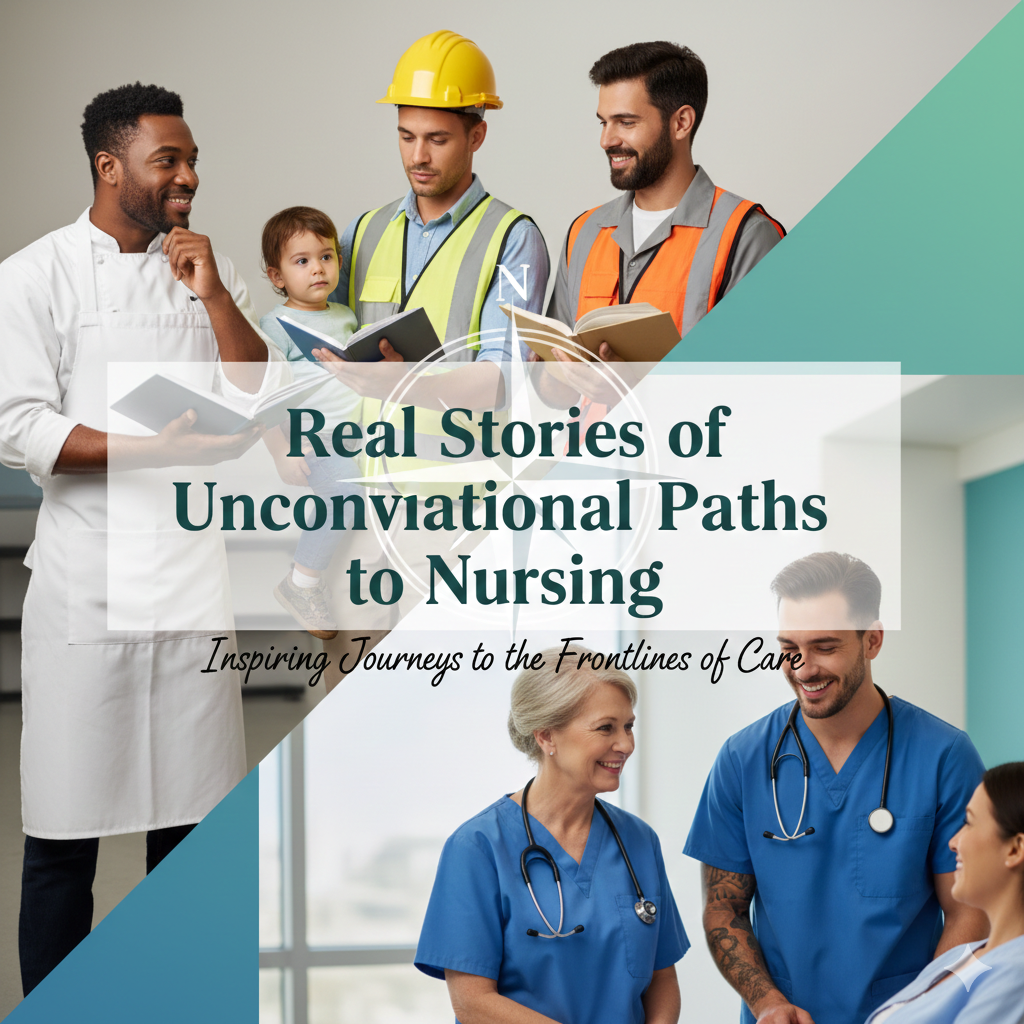
From Spreadsheets to Stethoscopes
Marcus spent eight years climbing the corporate ladder at a mid-sized investment firm in Chicago. He was good at his job—really good. His analytical mind could spot market trends others missed, and his portfolio consistently outperformed benchmarks. But somewhere around his thirty-second birthday, sitting in yet another conference room discussing quarterly projections, he realized something fundamental: he didn’t care about any of it.
“I kept thinking about my dad’s hospitalization the year before,” Marcus tells me over coffee. “The nurses who took care of him were incredible. They knew him, remembered details about his life, and actually seemed invested in whether he got better. Meanwhile, I was moving numbers around that represented nothing real to me.”
The decision to leave finance wasn’t impulsive. Marcus spent months researching options, talking to nurses, shadowing in hospitals during vacation days. When he finally enrolled in an accelerated BSN program online, his colleagues thought he’d lost his mind. The pay cut alone seemed insane. But Marcus had done the math—not just financial calculations, but a different kind of equation about meaning and purpose.
The transition wasn’t smooth. “That first pharmacology exam nearly broke me,” he admits. “In finance, I could BS my way through if I didn’t know something. In nursing, people die if you don’t actually know your stuff. The stakes felt terrifyingly real.” His finance background did help with time management and handling pressure, but the learning curve was steep. He struggled with the hands-on components initially, his years of desk work leaving him clumsy with physical tasks that came naturally to younger students.
Today, Marcus works in a cardiac ICU. He’s been a nurse for three years now and says he’ll never go back to finance. “I make less money, work harder physically, and deal with way more bodily fluids than I ever imagined. And I’ve never been happier.”
The Teacher Who Wanted More Autonomy
Rachel had taught high school biology for twelve years in a small town in Oregon. She loved her students, loved seeing concepts click in their minds. But she grew increasingly frustrated with standardized testing mandates, administrative bureaucracy, and the feeling that she was preparing kids for tests rather than life.
“I wanted to teach in a way that mattered immediately,” she explains. “In healthcare, you’re teaching patients about their own bodies, their own survival. There’s no abstraction there.”
Her path to nursing felt almost inevitable in retrospect. She’d always been the person friends called with medical questions, the one who researched symptoms and treatment options when someone got diagnosed with something serious. She’d even volunteered as a health educator at a local clinic on weekends. But making the leap meant confronting real obstacles: two kids still in middle school, a mortgage, and a husband whose teaching salary couldn’t cover everything alone.
An online accelerated program became the only viable option. Rachel could complete coursework in the evenings after her kids went to bed, on weekends, during summer breaks. She spent a full year researching programs, trying to identify the most ideal online bsn program for bachelor’s degree holders like herself who needed maximum flexibility without sacrificing quality. The program she chose offered clinical placements within driving distance and asynchronous coursework that fit around her teaching schedule.
“I basically didn’t sleep for sixteen months,” Rachel says with a tired laugh. “I’d teach all day, come home and make dinner, help with homework, then start my nursing coursework around nine and work until midnight or one. My husband was a saint about it.”
What surprised Rachel most was how much her teaching background transferred. She excelled at patient education, could break down complex medical information into understandable chunks, and had patience with confused or frightened patients that some of her classmates lacked. “Explaining diabetes management to a newly diagnosed patient? That’s not so different from explaining cellular respiration to a frustrated sophomore.”
She now works in community health, doing exactly the kind of patient education she’d dreamed about. The irony isn’t lost on her that she’s essentially still teaching—just with higher stakes and more immediate feedback.
The Restaurant Manager Who Saw Too Much
Jesse had managed restaurants for fifteen years, working his way up from dishwasher to general manager of a popular downtown gastropub. He was good at handling chaos—the kitchen fires (literal and metaphorical), the staff drama, the health inspections, the demanding customers. But the pandemic broke something open for him.
“I watched my entire industry collapse overnight,” Jesse says. “But I also watched my sister, who’s an ER nurse, become a hero. People were banging pots and pans for healthcare workers while restaurant people like me were just… forgotten. It made me rethink everything.”
Jesse had never considered college before. He’d gone straight into restaurant work at eighteen, and the idea of being a student felt foreign and intimidating at forty-one. But he had an associate degree he’d completed years ago at community college, mostly to make his mother happy. That credential, gathering dust, suddenly became his ticket to an accelerated nursing program.
The online format worked perfectly for someone with his background. “Restaurant management is all about juggling fifty things at once, staying calm under pressure, and reading people quickly,” Jesse explains. “Turns out those are pretty useful skills in nursing too.”
His clinical rotations revealed an unexpected advantage: he could talk to anyone. The elderly veteran who refused to cooperate with physical therapy? Jesse got him laughing about old war stories and working on his exercises. The anxious teenager terrified of surgery? Jesse’s years of calming panicked customers on their anniversary dinners translated perfectly.
“People think nursing is all science and procedures,” Jesse reflects. “But so much of it is just being good with humans, making them feel seen and safe. I spent fifteen years doing that in restaurants. Now I do it in a way that actually saves lives instead of just serving them overpriced appetizers.”
He works nights in an emergency department now, and the chaos feels familiar—just with different stakes and better purpose.